01
Door stuck open
A door that will not close may leave vehicles, tools, storage, and interior access exposed.

Request urgent help when a garage door is stuck open, stuck closed, off track, hanging unevenly, blocking a vehicle, or leaving the property unsecured.
The first goal is to identify whether the door can be stabilized and repaired safely. Springs, cables, tracks, rollers, panels, opener parts, and controls may all need to be checked before normal use resumes.
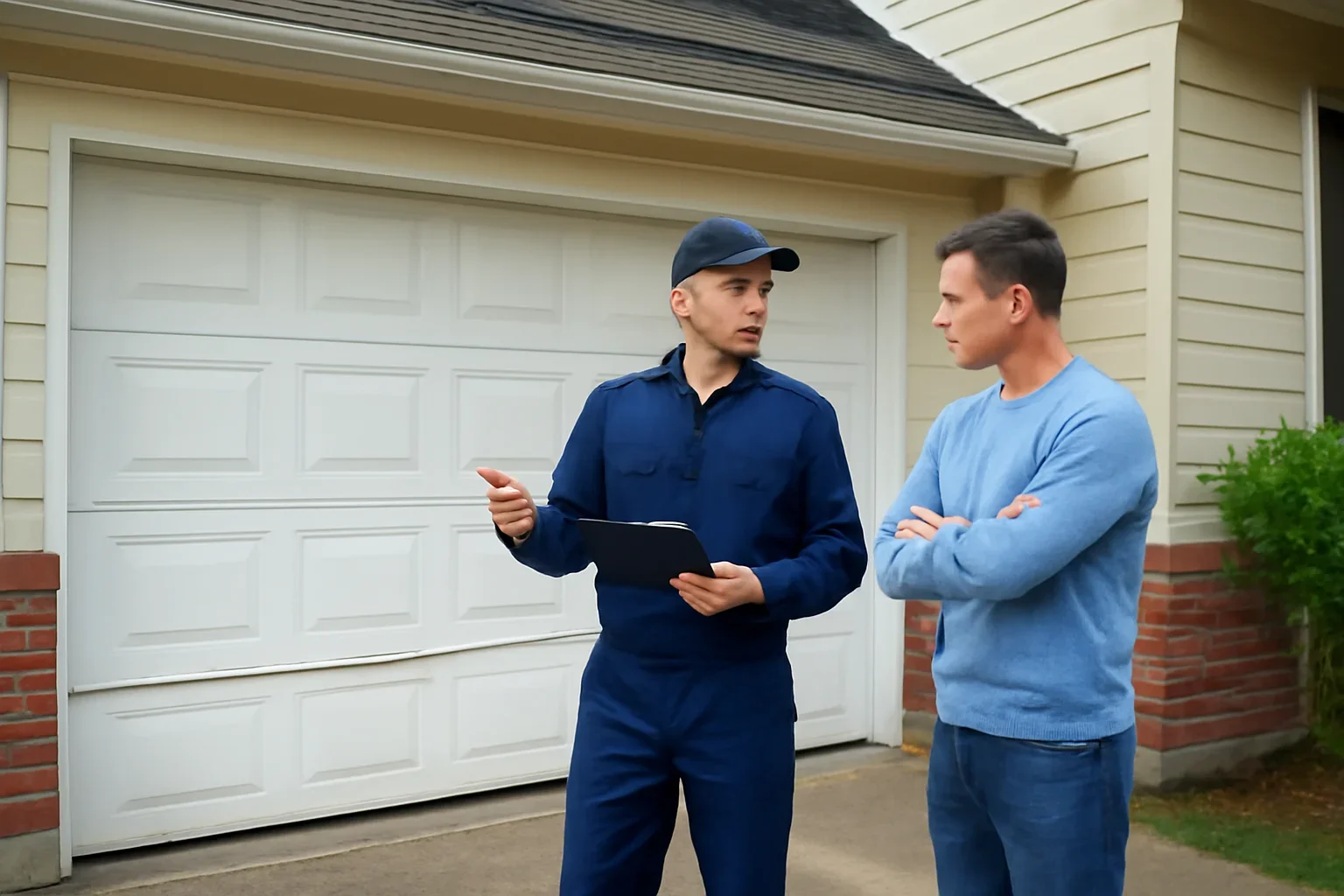
An emergency is usually about safety, access, security, or the risk of additional damage rather than noise alone.
A door that will not close may leave vehicles, tools, storage, and interior access exposed.
A broken spring, cable, opener, or track issue may prevent the door from opening safely.
An uneven or off-track door may shift, jam, drop, or damage connected components if operated again.
High-tension parts should not be touched or adjusted by the homeowner.
Panels, tracks, rollers, hinges, brackets, cables, and the opening may need to be checked together.
Sensor, opener, travel, force, track, balance, or physical obstruction issues may be involved.
Door downtime may affect deliveries, vehicles, security, staff movement, or normal business access.
A damaged or open door may allow moisture, debris, cold air, and unauthorized entry into the garage.
Keep people, pets, and vehicles away if the door is off track, hanging unevenly, supported by a loose cable, or visibly damaged around the spring system.
Do not force the door, repeatedly run the opener, or adjust springs, cables, drums, bottom brackets, tracks, or other high-tension parts.
The visible symptom may come from more than one part. The door, lifting system, tracks, hardware, opener, controls, and safety equipment may need to be checked together.
Open, closed, partway, crooked, jammed, or disconnected from the opener.
Broken, separated, overstretched, mismatched, or no longer balancing the door correctly.
Loose, frayed, off the drum, damaged, or carrying uneven tension.
Bent, separated, misaligned, obstructed, or damaged after impact or cable failure.
Running without movement, straining, reversing, disconnected, or damaged by an unbalanced door.
Repair, temporary stabilization, restricted use, part replacement, or a larger replacement estimate.
The same symptom can have several causes, so the failed part should be confirmed before repairs are approved.
The door may become extremely heavy, stop opening, or place excessive strain on the opener.
Review Spring RepairThe door may hang unevenly, jam, or lose controlled support on one side.
Review Cable RepairImpact, cable trouble, damaged tracks, worn rollers, or loose brackets can push the door out of alignment.
The motor, rail, trolley, drive, controls, sensors, or settings may stop the door from operating normally.
Review Opener RepairBent sections may interfere with hinges, tracks, rollers, seals, and safe movement through the opening.
Misalignment, damaged wiring, blocked lenses, balance, settings, or track resistance may prevent secure closing.
Review Sensor RepairClear information helps determine the likely service category, property risk, access concern, and parts that may be needed.
Say whether the door is stuck open, stuck closed, off track, uneven, unsecured, or blocking a vehicle.
Mention loose cables, broken springs, bent tracks, impact damage, opener behaviour, sounds, and safe photos.
The door, springs, cables, tracks, rollers, panels, opener, controls, and sensors may be checked together.
The next step may be immediate repair, stabilization, part replacement, restricted use, or a replacement estimate.
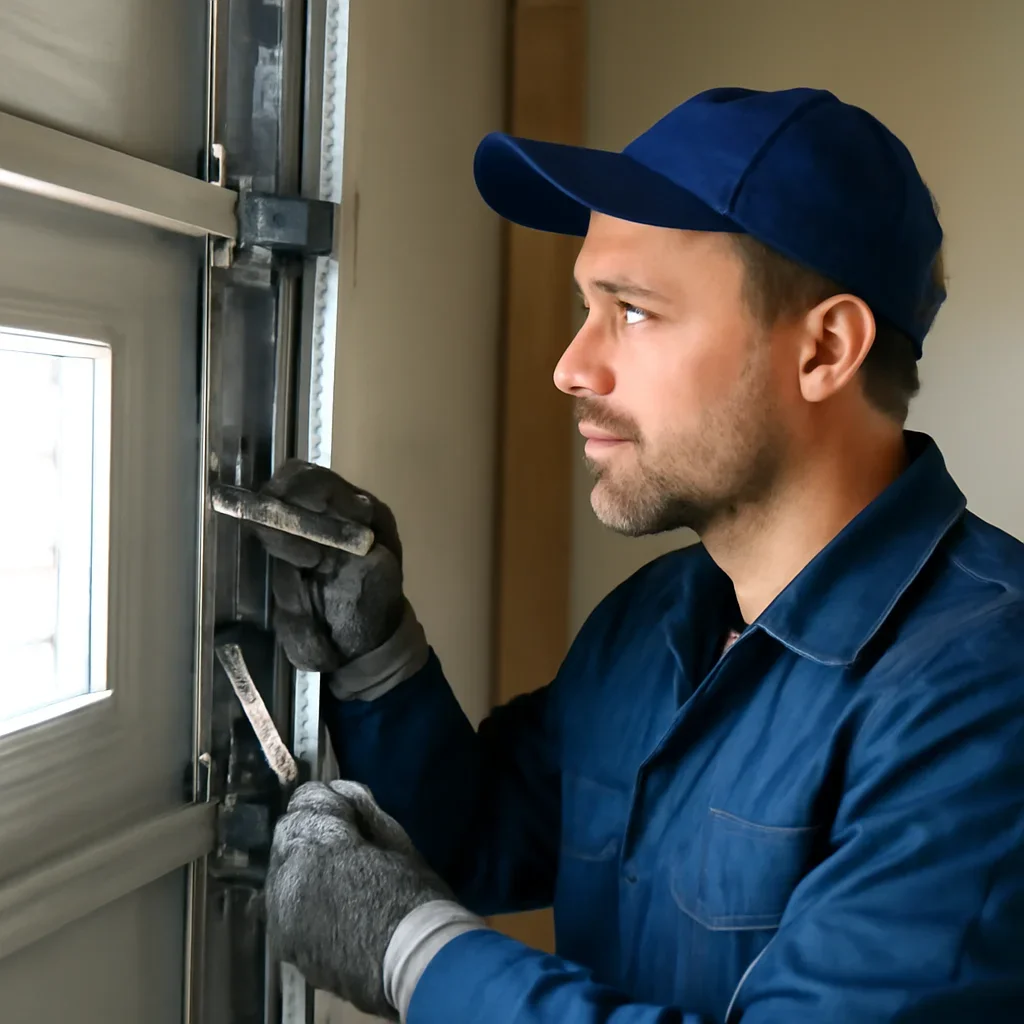
You do not need to identify the failed component. A clear description of the situation helps prepare for the appointment.
An urgent visit may restore access or stabilize the door, but widespread damage can make replacement more practical than repairing each part separately.
Repair may be practical when the failed part is limited and the remaining door, tracks, hardware, and opener are serviceable.
The immediate goal may be to secure the property or leave the door in a safe position until the correct parts or replacement can be arranged.
Replacement may be worth comparing after major impact, structural panel damage, widespread wear, repeated failures, or unavailable parts.
Review Door ReplacementTownhouses and newer homes may have compact access, shared driveways, quiet openers, and smart-control systems.
Established homes may involve older springs, hardware, tracks, openers, and replacement-part compatibility.
Attached residential garages may place extra importance on access, security, weather protection, and quiet operation.
Older or custom properties may require careful measurement, framing review, and compatibility planning.
Detached garages, workshops, acreages, and rural properties may involve larger doors and different site access.
Townhouses, detached homes, acreages, workshops, commercial bays, and rural properties may require different scheduling, access, equipment, and parts preparation.
Use the standard repair page for noisy, slow, worn, unreliable, or damaged doors when the property remains secure and normal scheduling is practical.
Explore Garage Door RepairUse the same-day repair page when the situation is time-sensitive but the door is not creating an immediate unstable or unsecured condition.
Explore Same-Day RepairEmergency service may be appropriate when the door is unstable, stuck open, blocking vehicle access, off track, hanging unevenly, or leaving the property unsecured.
Stop using the door, keep people and vehicles away, and do not push rollers back into the track. Describe the door position and visible damage when requesting service.
A broken spring can make the door extremely heavy and unstable. Avoid forcing the door or repeatedly using the opener. Arrange inspection before attempting normal operation.
State that the property may be unsecured. Keep the opening clear, avoid forcing the door, and provide the current door position and visible damage when booking.
Yes, but the opener may also be reacting to a broken spring, poor balance, track resistance, cable failure, or another mechanical door problem.
Not always. Completion can depend on the damage, door stability, required parts, compatibility, site conditions, and whether replacement is safer or more practical.
Provide the address, neighbourhood, door position, vehicle-access issue, security concern, visible damage, opener behaviour, and safe photos of the full door and affected parts.
Review the garage door repair cost guide and share the problem details before requesting an estimate or approving work.
Share the address, current door position, visible damage, opener behaviour, security concern, trapped-vehicle issue, and safe photos so the next step can be planned clearly.