The motor runs but the door does not move
The trolley may be disconnected, the drive system may be worn, or a spring, cable, track or balance problem may be making the door too difficult to lift.

Get practical help when your garage door opener hums, clicks, stops partway, reverses, flashes an error, loses remote access or runs without moving the door. The opener, controls, sensors and moving door should be checked together before the cause is confirmed.
Willoughby homes often use the garage as a daily entrance, vehicle access point and storage area. In newer detached homes and townhome developments, quiet operation, keypad access, smart controls and dependable safety sensors can be just as important as the motor itself.
The same symptom can come from the opener, the controls, the safety system or resistance in the garage door. These common signs help you describe the problem without guessing which part has failed.
The trolley may be disconnected, the drive system may be worn, or a spring, cable, track or balance problem may be making the door too difficult to lift.
Sensor alignment, wiring, an obstruction, travel settings, floor contact, track resistance or poor door balance may trigger the reversal.
Motor, capacitor, control-board, gear, belt, chain, rail or door-resistance issues can create sound without dependable movement.
Batteries, programming, lock mode, device compatibility, receiver response, account access or opener power may need review.
Travel limits, force settings, rail resistance, overheating, worn drive parts or a heavy and unbalanced door may be involved.
Dirty lenses, shifted brackets, wiring damage, alignment problems or an opener fault can prevent normal closing.
Grinding, rattling, vibration or squealing may come from the motor, drive, rail, mounting, rollers or other moving hardware.
Network connection, gateway status, permissions, compatibility, opener power or the door system itself may interrupt app-based control.
Do not remove covers, adjust springs or force the door. These simple checks only involve controls and visible conditions.
Try the wall control, remote and keypad separately. Note whether one works while the others do not.
Note whether the opener light, wall control or sensor lights are on, off or flashing.
From a safe standing position, look for boxes, bins, stored items or debris blocking the sensors near the floor.
Explain whether the opener clicks, hums, grinds, starts moving or stops at the same position each time.
An opener can only work properly when the door moves safely and with appropriate balance. The assessment should separate an electrical or control fault from a mechanical door problem.
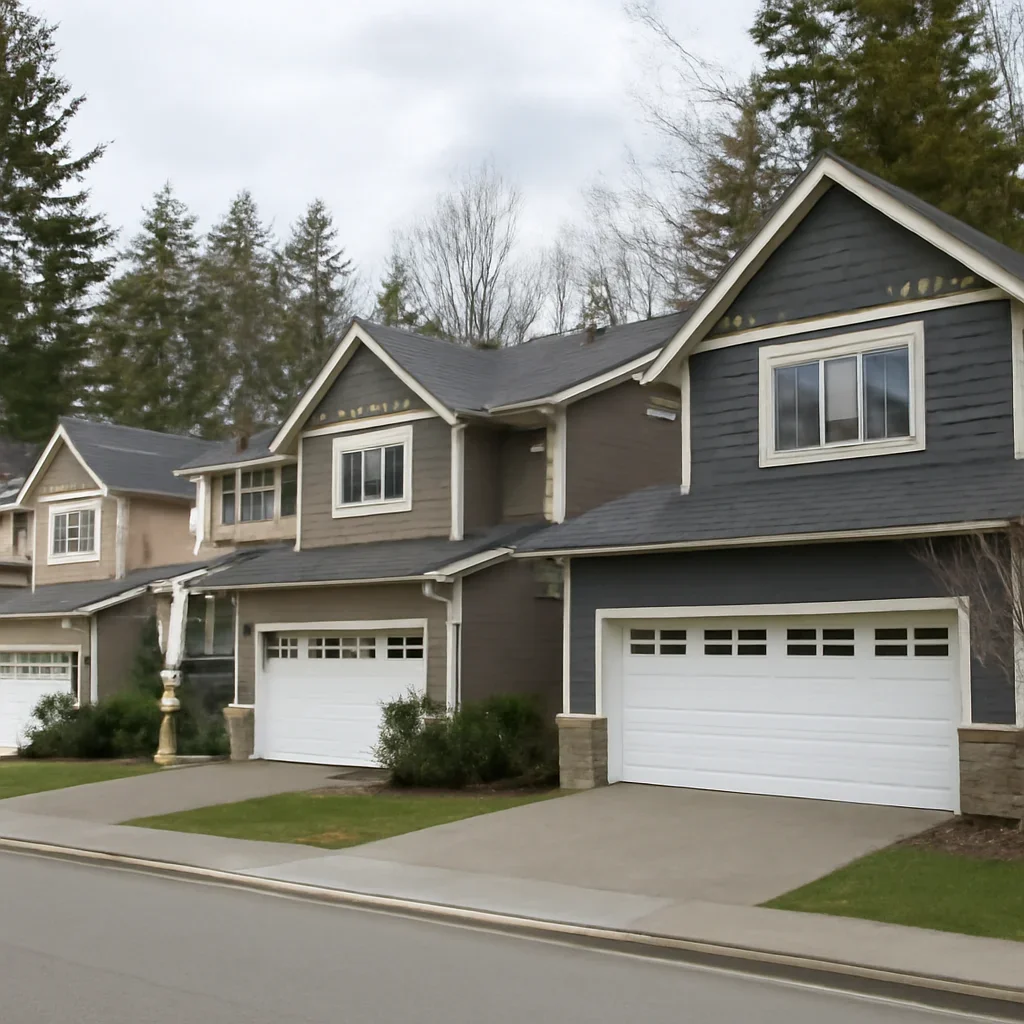
Willoughby is a fast-growing Township of Langley community with detached homes, townhomes, apartments and mixed-use areas around neighbourhoods such as Yorkson, Smith, Gordon and Williams. Homes near Willoughby Town Centre, the 200 Street corridor and the Langley Events Centre may also have different parking, access and strata arrangements.
Rear-lane garages are common in newer ground-oriented developments. For a service request, mention whether the garage opens to a lane, shared driveway or strata roadway, and whether visitor parking, gates, unit numbers or ceiling storage affect access to the opener.
For attached garages: opener vibration can travel into rooms above or beside the garage. Tell us when noise is the main concern, whether the opener is chain, belt or another drive type, and whether the door itself rattles during movement.
For strata and rental properties: explain who controls approval, whether the opener is individually owned and whether the replacement must retain specific remotes, keypads or building-access arrangements.
Testing more than one control helps identify whether the issue is limited to a device, the opener receiver or the complete system.
Choose sensor repair when lights are blinking, the door will not close normally, brackets have shifted or visible wiring is damaged.
Review garage door sensor repairProgramming, battery condition, compatibility, lock mode, receiver memory and lost-device access may need attention.
Review remote programmingA keypad may need new batteries, compatible programming, code changes or troubleshooting when only outside access has failed.
Review keypad programmingThe goal is to correct the confirmed cause rather than changing settings to hide resistance, poor balance or damaged door parts.
Observe the controls, sounds, indicator lights, movement, stopping point and reversal behaviour.
Review door balance, hardware, sensors, motor, rail, trolley, drive system and mounting.
Consider repair scope, compatible parts, opener condition, features and the needs of the property.
Test travel, reversal, sensors, controls, remotes, keypad, app access and complete operating cycles.
The best option depends on the failed component, opener condition, available parts, compatibility, reliability and features your household actually uses.
Use the estimate path when you want to compare repair with a new opener, new controls or a larger upgrade before choosing.
Opener model, failed component, controls, sensors, rail type, compatibility, access and door condition can all affect the scope.
An opener fault can overlap with door balance, damaged hardware or a time-sensitive access problem. These links help keep the request on the right service path.
A working opener can struggle when the garage door is poorly balanced or difficult to move.
Review balance adjustmentUse the main repair page for spring, cable, track, roller, hinge, panel or unstable-door problems.
View garage door repairCheck the time-sensitive service path when the door is stuck, unsecured or preventing normal vehicle access.
Check same-day repairMaintenance can include operating checks for door balance, hardware, sensors, controls, rail, drive and safety response.
Send the Willoughby location, opener brand, current door position, sounds, lights and which controls still work.
These direct answers are designed to help you identify urgency, describe the symptom and prepare useful information before booking.
An opener problem may involve controls, sensors, the motor, rail, trolley, drive system or settings. A door problem may make the door feel heavy, uneven, binding or difficult to move. Because the same symptom can involve both systems, the opener and complete door should be assessed together.
The trolley may be disconnected, a drive component may be damaged, or the door may have a broken spring, loose cable, poor balance, track restriction or other mechanical problem. Stop repeated opener use if the door looks uneven or moves only a few inches.
Common causes include sensor alignment, damaged wiring, an obstruction, incorrect travel settings, resistance in the tracks, poor door balance or the door contacting the floor incorrectly.
Yes. A broken or weak spring can make the door too heavy for the opener. The motor may hum, stop, reverse or lift the door only a short distance. Do not increase opener force to compensate for a heavy door.
They can be reviewed as part of the opener system. The final scope may involve batteries, programming, compatibility, receiver response, lock mode, network access, permissions or the condition of the device.
Share the opener brand and model, whether the door is open or closed, sounds or flashing lights, controls that still work, sensor behaviour, recent power interruptions and safe photos of the opener label and full door.
Availability can depend on the address, schedule, service scope and required parts. Use the same-day service page or explain that the opener problem is blocking access or leaving the property unsecured when booking.
Include your Willoughby address or nearest intersection, opener brand, current door position, sounds, flashing lights, controls that still work, sensor behaviour and preferred timing.