Enter without carrying a remote
Household members can access the garage using an approved code rather than keeping an extra remote in a bag, vehicle or pocket.

A garage door keypad lets approved household members open the garage without carrying a remote or physical key. The right keypad should match the opener, support the way the property is used and remain dependable in an outdoor Langley installation.
We help homeowners compare keypad installation, replacement, programming and troubleshooting options. Compatibility should be confirmed before purchasing because keypads that look similar may use different radio systems, security generations and setup procedures.
Serving Langley City and Township of Langley communities. Product suitability depends on the opener model, security system, mounting location and features required.
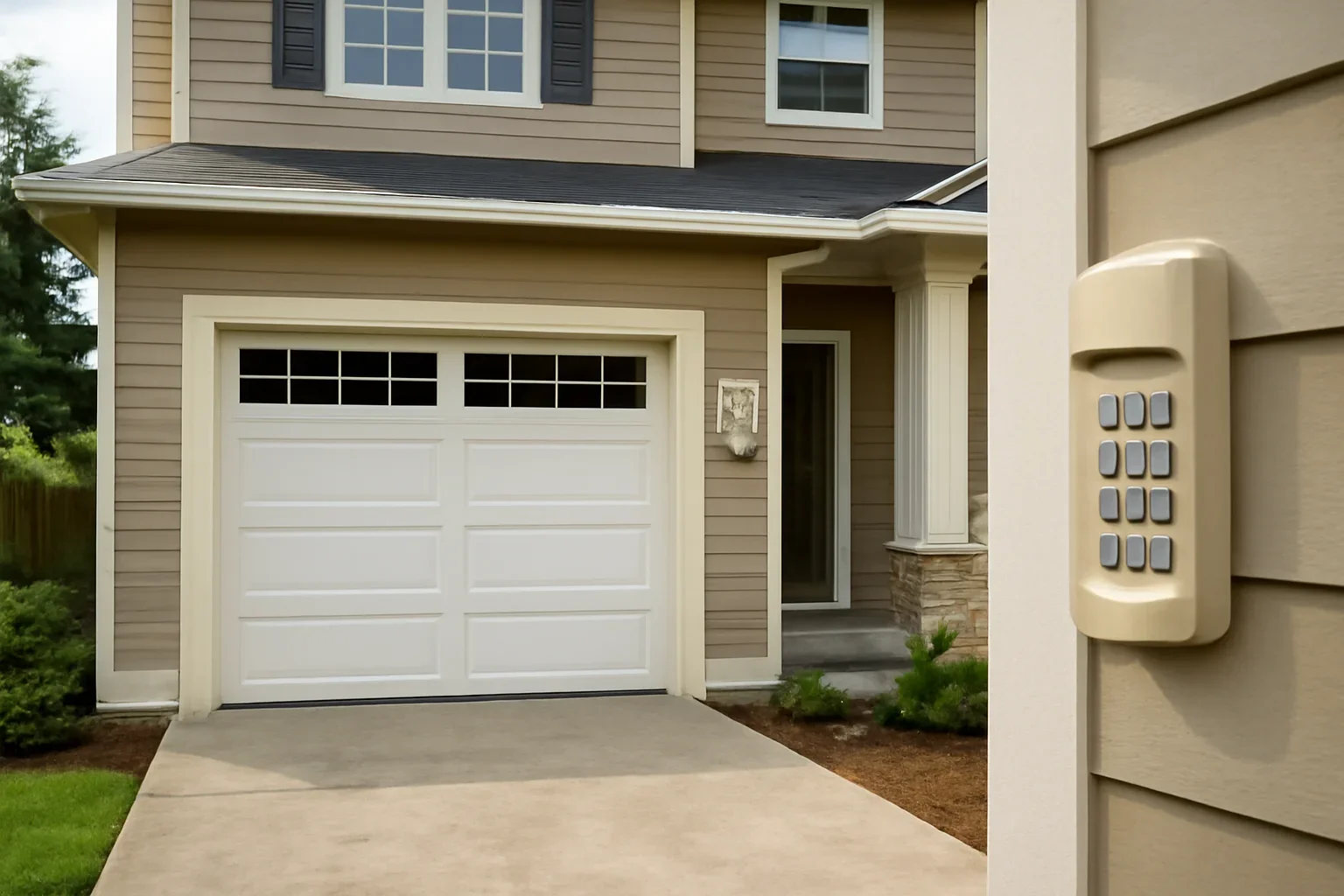
The opener brand alone may not confirm compatibility. The model, age, learn-button system and security generation can also matter.
A garage door keypad is an exterior access control that sends a programmed signal to a compatible opener after the correct personal identification number is entered. It can provide keyless access for household members, children, caregivers or other approved users. Some models also support temporary or limited-use access features, but capabilities vary by opener and keypad.
A keypad is most useful when it solves a real access need and works reliably with the existing opener. The value comes from convenience, controlled access and fewer situations where a remote must be shared.
Household members can access the garage using an approved code rather than keeping an extra remote in a bag, vehicle or pocket.
A keypad can be useful for families, multigenerational households and homes where the garage is a main daily entrance.
Keyless entry can help after walking, cycling, gardening or other activities where carrying a remote is inconvenient.
The access code can normally be updated when users change, a code has been shared too widely or the property changes occupants.
Langley includes newer residential areas, established neighbourhoods, townhouse communities and rural Township properties. The most useful keypad setup depends on the garage location, number of users, opener age and how often the garage serves as a household entrance.
Newer townhouse garages in areas such as Willoughby may use modern openers and smart-connected controls, while established homes in Walnut Grove, Murrayville or Brookswood may have older opener generations that require closer compatibility checks.
Outdoor mounting also matters. A keypad installed beside an exposed driveway may face more rain, shade, debris and temperature change than one protected by a porch, overhang or recessed garage entrance.
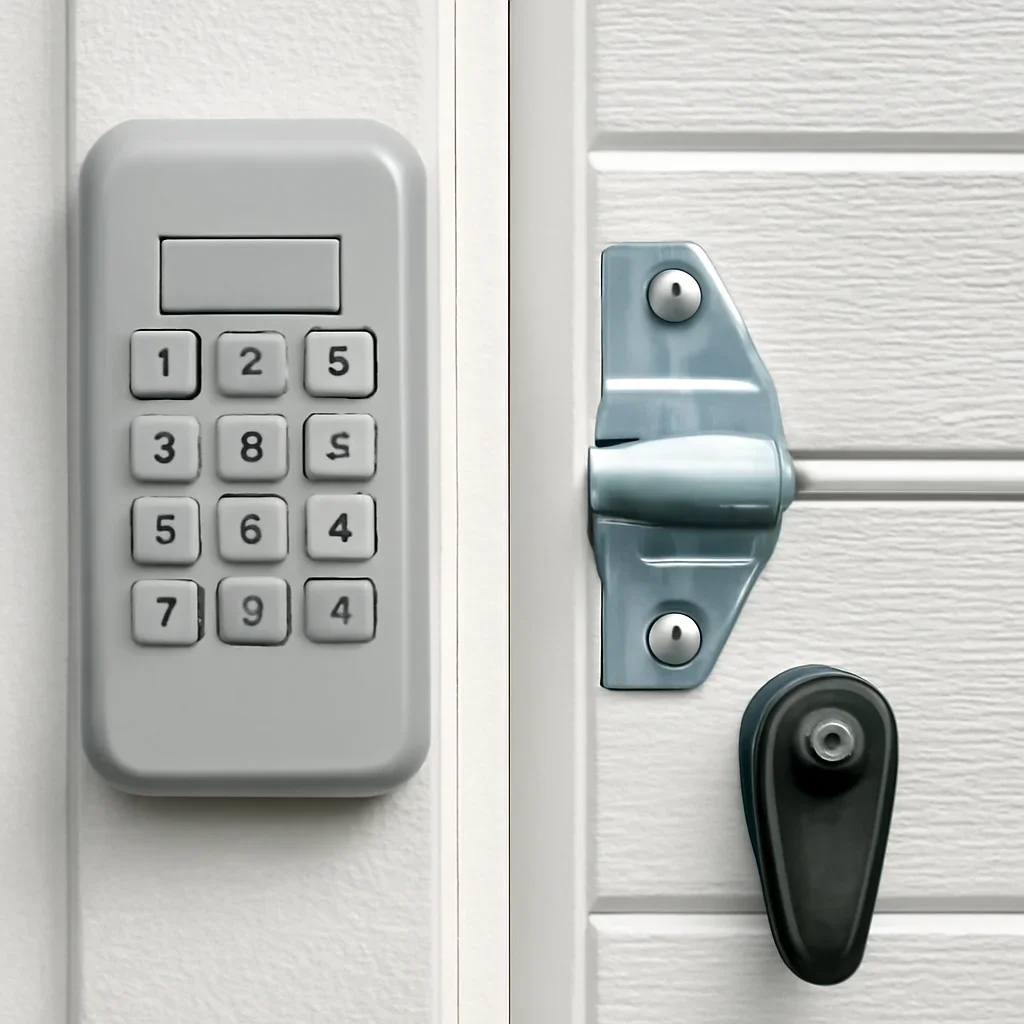
The main difference is not usually the number pad itself. It is the communication system, compatibility range, available access features and how the keypad is programmed.
These are designed for selected opener families from the same manufacturer. They may provide straightforward programming when the exact opener generation is supported.
A universal keypad may support several brands and opener generations, but compatibility should be confirmed from the model information rather than assumed from the word “universal.”
Some newer opener systems combine keypad access with app control, activity alerts or guest-access tools. Feature availability depends on the opener, account setup and connected accessories.
The keypad communicates with the opener system already installed. Smart alerts, temporary access, remote monitoring and advanced security features may require a compatible opener or additional equipment. Review garage door opener options when the existing motor and controls no longer support the features you need.
A clear compatibility check reduces failed programming attempts, unnecessary returns and the risk of buying a keypad that communicates with a different opener generation.
Locate the opener label and record the complete model number. Brand name alone may cover several incompatible generations.
The location, colour and type of programming button may help identify the radio and security system used by the opener.
Older openers may use discontinued communication systems or require a receiver solution instead of a current keypad alone.
Some keypads can operate more than one compatible door, while others are programmed for a single opener.
Consider backlit buttons, one-button closing, temporary codes, multiple-door control and smart-connected access where supported.
Confirm that the wall, trim or door frame provides a practical position with comfortable reach, visibility and weather protection.
A keypad that does not work does not always need replacement. The battery, code, programming sequence, compatibility and opener response should be considered first.
Match the keypad to the manufacturer, model, programming system and required features before installation.
Place the keypad where users can reach it comfortably without standing in the door path or interfering with trim and drainage.
Confirm that the keypad activates the correct door consistently and that normal remotes and wall controls still operate.
Explain how to change the code and how any temporary or multi-door features work when they are supported.
The code may need to be re-entered, the keypad may have lost programming or the opener may not be receiving the signal.
Battery condition, worn buttons, moisture, mounting position, signal strength or opener-receiver trouble may be involved.
Programming may need to be restored after opener replacement, control-board work, a reset or another system change.
Cracked housing, failed buttons, corrosion or ongoing water entry may make replacement more practical than repeated programming.
The keypad is convenient because it provides exterior access. Code selection and user management should therefore be handled with the same care as remotes, keys and smart-garage accounts.
You do not need to know the radio frequency or security generation. Basic opener information and clear photos can help narrow the options.
A few clear photos can help identify the system without removing covers or disconnecting any opener components.
Use labels and controls that are visible from the exterior of the opener housing. Avoid exposed wiring, internal electronics and moving opener parts.
The process should confirm compatibility first, then address mounting, programming, testing and code-management guidance.
Review the manufacturer, model, age and programming system before selecting or approving a keypad.
Determine whether the request involves new installation, reprogramming, battery service, troubleshooting or replacement.
Mount the keypad in a practical location, connect it to the compatible opener and establish the approved code.
Confirm keypad response, door selection, remotes, wall controls and any supported guest or temporary-access features.
A keypad is one part of the opener and access-control setup. These pages help with door selection, opener compatibility, troubleshooting and project pricing.
These answers cover compatibility, installation, programming, reliability and practical keypad security.
Not every keypad works with every opener. Compatibility depends on the manufacturer, model, age, radio system and security generation. Some older openers may require a specific keypad, an external receiver or a broader opener upgrade.
Find the opener manufacturer, complete model number and programming or learn-button information. Compare those details with the keypad’s supported opener list before purchasing or programming it.
The keypad may have lost programming, the code may be incorrect, the opener may not be receiving the signal or the keypad may be incompatible. The opener should also be checked when remotes and wall controls are having problems.
Some models can control multiple compatible openers, while others operate only one door. The keypad and each opener must support the required multi-door programming.
Many wireless exterior keypads use replaceable batteries. Battery type and replacement procedure vary by model. Intermittent lights, weak response or lost operation can be signs that the battery needs attention.
It should be mounted beside the garage where approved users can reach and read it comfortably without standing in the door path. The surface should provide secure mounting and reasonable protection from direct water, impact and debris.
In most compatible systems, the personal access code can be changed. The exact steps depend on the keypad and opener. Changing the code is sensible after moving, changing approved users or sharing a code that should no longer remain active.
Universal keypads normally support a defined list of brands and opener generations rather than every opener ever produced. Check the compatibility chart against the exact opener information.
Replace only the keypad when the opener works correctly with its wall control and remotes and a compatible replacement is available. Consider opener service or replacement when several controls fail, the receiver is unreliable or the existing system cannot support the access features you need.
Include the Langley property location, opener brand and model, keypad condition, what happens when the code is entered, whether other controls work and photos of the opener label, programming area and existing keypad.
Share your Langley location, opener manufacturer and model, whether you need a new keypad or help with an existing one, and the access features that matter to your household. Include clear photos when the opener or keypad model is difficult to identify.