The door is crooked
One side may rise faster or remain lower when a cable is loose, snapped, displaced, or no longer winding correctly on its drum.

Frayed, snapped, loose, or off-drum lift cables can leave a garage door crooked, heavy, stuck, or partly unsupported. Cable problems should be assessed with the springs, drums, bottom fixtures, tracks, rollers, and door balance because these parts share the lifting load.
Aldergrove homes, detached garages, acreages, and workshops may use different door sizes and lifting systems. The correct repair depends on the cable type, spring setup, door weight, current position, visible damage, and whether the door can be accessed safely.
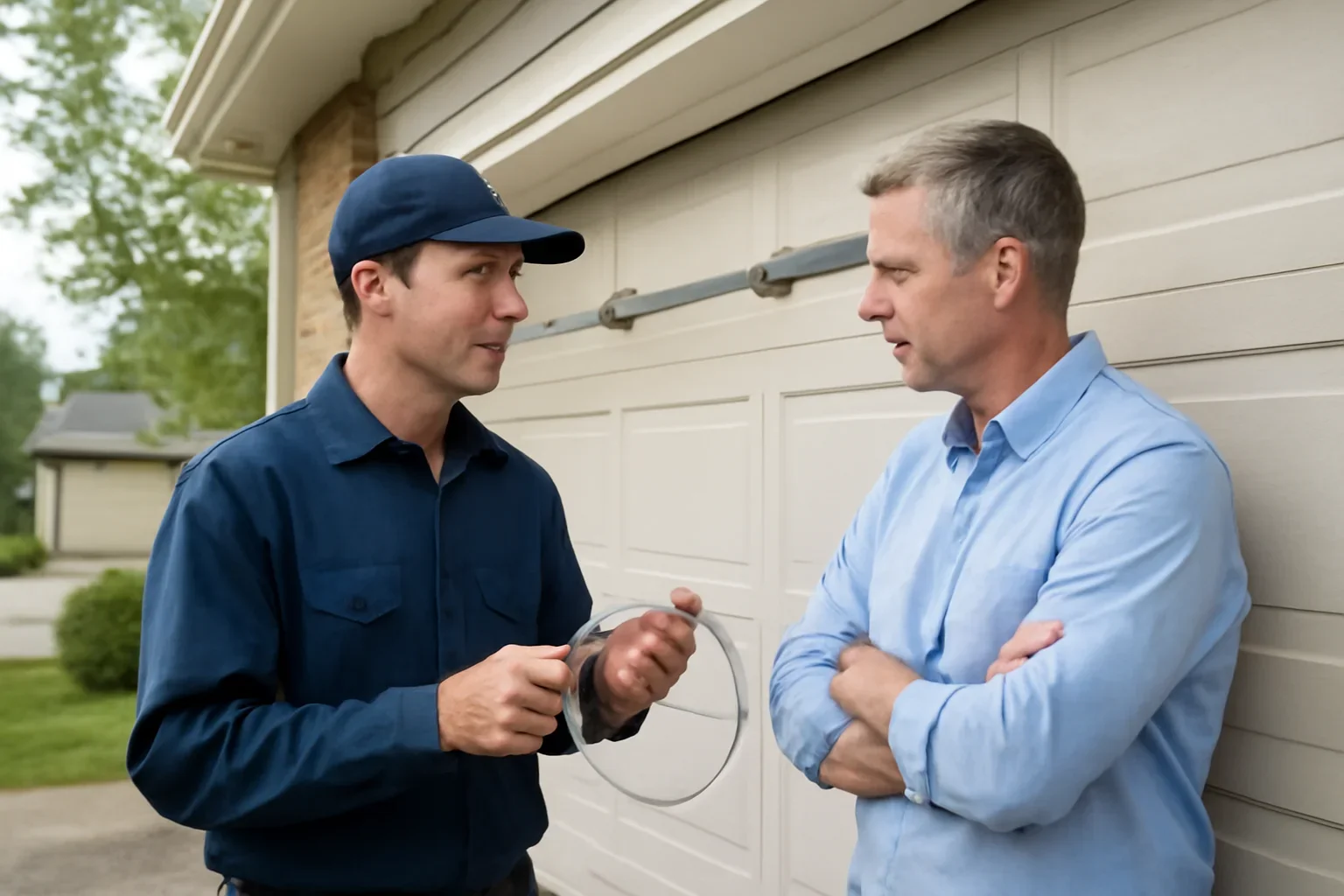
Cable problems may happen suddenly after a snap or develop as individual wire strands wear, rust, or begin winding incorrectly.
One side may rise faster or remain lower when a cable is loose, snapped, displaced, or no longer winding correctly on its drum.
A loose cable may have come off a drum, lost tension after a spring problem, or been affected by a jammed door.
Broken wire strands, flattening, corrosion, or kinks can weaken the cable and make continued use less predictable.
A cable or drum issue can leave the door suspended unevenly. Keep clear and avoid trying to force it closed.
The opener may be pulling against uneven cable tension, a heavy door, a jammed roller, or a related spring problem.
Overlap, slack, or an incorrect groove position may point to drum, shaft, balance, track, or door-alignment trouble.
Lift cables work with high-tension springs, drums, shafts, and bottom fixtures. A loose-looking cable may still be connected to a system holding significant force, and a crooked door may be unstable.
A cable rarely fails in isolation. The inspection should identify whether normal wear, corrosion, impact, poor balance, a drum problem, or another damaged part caused the cable to fray, slip, or snap.
The useful repair decision addresses the damaged cable and the condition that placed abnormal wear or load on it.
Repeated door cycles bend and load the cable. Individual strands may break before the complete cable fails.
Corrosion can weaken the cable, especially in detached garages and buildings exposed to damp air or changing temperatures.
A cable that overlaps, jumps a groove, or winds unevenly may fray and pull the door out of level.
When spring support changes, cables may lose tension, unwind, or carry uneven loads on opposite sides of the door.
A jammed roller, bent track, loose hinge, or panel problem can make one side resist movement and overload the cable.
Impact, corrosion, loose fasteners, or structural damage near the cable attachment can affect safe lifting.
A vehicle, trailer, mower, or stored item can shift tracks, panels, rollers, or cables even when the visible dent appears limited.
Mismatched cable length, poor drum position, or unresolved balance issues can create uneven travel and early wear.
The exact work depends on the cable system, door position, spring condition, drum setup, connected damage, and whether the door can be controlled safely.
The door angle, cable position, drum winding, sounds, and opener behaviour help identify the affected side and likely cause.
A crooked, raised, partly open, or off-track door requires a safety-first plan before cable or drum work begins.
Both cables, drums, springs, shaft, bearings, bottom fixtures, tracks, rollers, and balance should be checked together.
The recommendation may involve one cable, a matched cable pair, drum work, spring service, or related hardware repair.
The cable path and drum winding should support level movement without slack, overlap, rubbing, or uneven side loading.
The door should be observed through full travel for alignment, cable tracking, balance, sound, stopping, and opener interaction.
A snapped or displaced cable changes how the door’s weight is carried and can create secondary damage if the door keeps moving.
Springs provide lifting support while the cables transfer force to the bottom of the door. A broken spring or incorrect balance may allow cable slack, uneven loading, or drum problems.
Visible spring trouble may require separate garage door spring repair.
Cables must wind evenly through the drum grooves. Shaft movement, worn bearings, loose hardware, or incorrect drum position can affect cable tracking.
A bent track, seized roller, loose hinge, or damaged panel can make one side resist travel and pull the door out of level.
The opener should move a balanced door. Repeated use with uneven cable support can strain the trolley, rail, belt, chain, motor, or internal drive parts.
One cable may be damaged more visibly, but both sides have often experienced similar age, cycles, moisture, and lifting loads. Whether one or both should be replaced depends on the system, condition, compatibility, and the balance that can be restored.
Cable replacement alone may not be enough when the door is off-track, panels are bent, rollers are displaced, springs are damaged, drums are worn, or the door opening is no longer square.
For multiple connected issues, compare the cable work with broader garage door repair. A door that is hanging unevenly or blocking access may also fit the same-day repair service path.
Exact pricing depends on the lifting system and damage found at the property. Photos help identify the likely issue, but the final scope should be confirmed after the door is assessed.
Torsion, extension, high-lift, and other compatible setups may use different cable lengths, attachments, drums, or pulleys.
The opposite cable’s condition, age, and compatibility can affect whether one component or a matched pair is recommended.
Single, double, insulated, reinforced, oversized, and workshop doors place different loads on the lifting system.
Worn drums, incorrect winding, broken springs, bearing issues, or poor balance can expand the work beyond the cable itself.
A closed door differs from one that is crooked, partly open, off-track, or blocked by a vehicle or equipment.
Bent tracks, displaced rollers, damaged panels, and bottom-fixture concerns may require additional repair planning.
Local context matters because cable length, door weight, access, exposure, and use can differ across Aldergrove properties.
Share whether the garage is attached, detached, acreage-based, used for equipment, or part of a workshop. Door width, ceiling height, current position, and driveway access also help frame the service plan.
Older doors may have cables, drums, springs, bearings, rollers, and openers with similar cycle wear.
Moisture, temperature changes, dust, storage, and less frequent inspection can contribute to corrosion or delayed wear detection.
Larger doors, longer access routes, equipment use, and less common hardware may affect parts and scheduling.
Heavier doors, repeated cycles, high ceilings, and work equipment can place additional demands on cables, drums, and spring systems.
A cable problem may overlap with spring failure, poor balance, an off-track door, opener strain, or a broader repair issue.
Do not touch the cable, spring, drum, or bottom fixture. From a safe distance, note:
Routine garage door inspection can identify broken wire strands, corrosion, poor drum winding, loose hardware, balance changes, rough rollers, and spring problems before a cable fails completely.
Keep the lower track and bottom corners clear of stored items and vehicle contact. Stop using the opener when the door becomes crooked or heavy, and do not apply makeshift cable or spring adjustments.
These answers explain urgency, safety, connected parts, and what helps before an appointment.
Cable repair is urgent when the door is crooked, hanging partly open, off-track, blocking access, no longer securing the opening, or has a snapped or loose cable that leaves one side unsupported. Stop using the door and keep the area clear.
A frayed cable may still be carrying part of the door’s weight, but broken strands can continue to weaken. Avoid repeated use and stop immediately if the door lifts unevenly, the cable becomes loose, or the door looks unstable.
No. Cable drums work with high-tension springs and a heavy door. A cable that has come off may be caused by spring, balance, track, roller, or drum trouble. Do not pull the cable, loosen the drum, or adjust the spring.
Replacing both may be worth comparing when the cables share similar age, corrosion, broken strands, or cycle history. The decision depends on cable condition, compatibility, drum setup, door weight, spring support, and final balance.
One side may have lost cable tension or proper drum winding. A crooked door can also involve a broken spring, bent track, displaced roller, damaged hinge, or panel alignment issue. Keep the door unused until the lifting system is assessed.
Yes. An opener that keeps pulling against an uneven or heavy door can strain the motor, rail, trolley, belt, chain, or internal drive parts. The mechanical lifting problem should be corrected before opener force or travel is changed.
Share the Aldergrove location, property type, door width, current door position, affected side, visible fraying or loose cable, drum position, spring concerns, recent impact, opener behaviour, access details, and clear photos when safe.
Use the contact page for questions about symptoms, access, urgency, or whether cable repair is the right service. Do not move an unstable door or touch the cable just to gather more information.
Send the property type, door width, current position, affected side, cable condition, drum position, visible spring or track damage, opener behaviour, access details, and photos when safe. Keep the door unused if it is crooked, partly open, or unstable.