The door will not open
A door that stays closed may have a spring, cable, opener, lock, trolley or power-related issue.
- The opener runs but the door stays down
- The door feels unusually heavy
- The opener clicks but does not move

Get practical help for a garage door that is stuck, noisy, uneven, slow to respond or no longer opening and closing reliably.
A repair should begin with the full door system, not a guess based on one symptom. Springs, cables, rollers, tracks, hinges, sensors, opener movement and door balance may all affect how the door operates.
Serving detached homes, townhomes and residential garage properties across Willoughby, Langley.
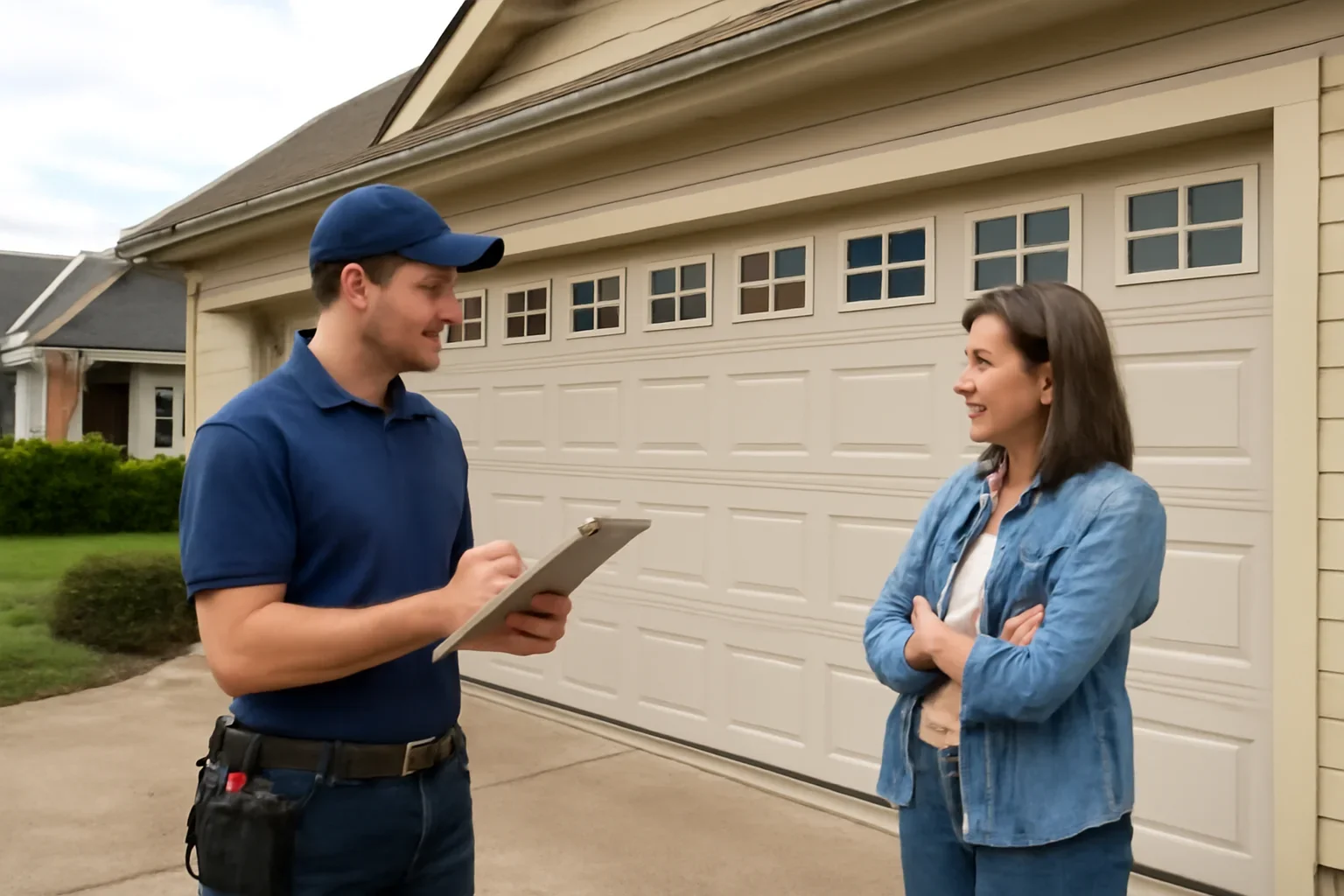
The way the door moves, sounds and responds can help narrow down the likely service area. Similar symptoms may have different causes, so inspection is still important.
A door that stays closed may have a spring, cable, opener, lock, trolley or power-related issue.
Crooked or rough movement can involve cables, rollers, tracks, hinges, spring balance or damaged sections.
Remote, keypad and wall-control problems may come from programming, power, sensors, wiring or the opener itself.
Do not keep testing a door that has a visible broken spring, loose cable, displaced roller, severely bent track or uneven hanging position. Keep people and vehicles away from the opening and review the same-day garage door repair service when the garage cannot be used or secured safely.
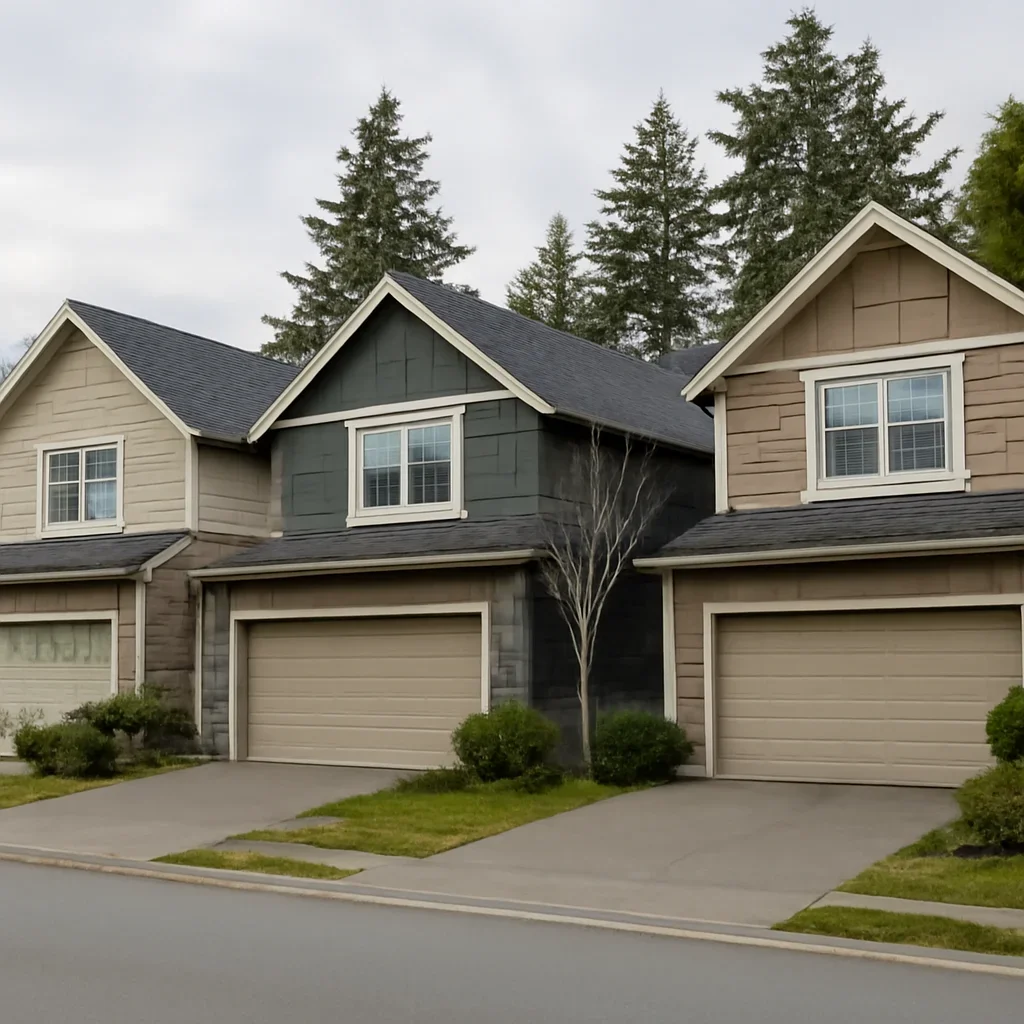
Willoughby includes neighbourhood areas such as Yorkson, Smith, Williams, Carvolth, Latimer, Jericho, Routley and Southwest Gordon. Garage layouts can vary from front-facing double doors on detached homes to compact single garages and rear-lane townhome access.
Those property differences affect service access, door size, hardware, insulation and opener configuration. A repair request is easier to assess when the exact property type and access arrangement are included.
Garage doors operate as connected systems. Replacing one visible part without checking the surrounding components can leave the original cause unresolved.
The correct repair depends on which component failed and whether that failure affected other parts of the system.
A spring problem can make the door feel extremely heavy or prevent the opener from lifting it. Spring work involves high-tension components and should not be treated as a homeowner adjustment.
Lift cables help support door movement. A loose, frayed or displaced cable may cause one side to drop, bind or move differently from the other.
Grinding, rattling or repeated vibration may involve rollers, hinges, tracks or door balance rather than a single noisy component.
Track damage or interference can restrict roller movement and may cause the door to hesitate, shake or move out of alignment.
A door that starts closing and reverses may have a sensor, obstruction, track, force-setting or door-balance issue.
Intermittent controls, unusual opener sounds or incomplete travel should be diagnosed before replacing the entire opener.
A structured inspection helps separate the immediate failure from secondary wear and unrelated issues.
The service request begins with what changed, when it started and whether the door remains safely open, closed or secured.
Door balance, springs, cables, tracks, rollers, hinges, sensors and opener behaviour are reviewed as applicable.
The recommended next step should identify the failed component, related concerns and whether repair remains practical.
Many operating problems can be repaired without replacing the complete door. Replacement becomes more relevant when the main door structure or several connected systems are no longer suitable.
The door sections remain in usable condition and the problem is limited to springs, cables, rollers, tracks, hinges, weatherstripping, sensors or opener components.
A focused repair may also make sense when the system has one clear failure and the remaining hardware is compatible and serviceable.
Several panels are badly damaged, the door no longer fits the opening properly, repeated failures are occurring or major components are incompatible with the intended upgrade.
Appearance, insulation and opener features can be considered after the current safety and operating condition is understood.
Clear information can help identify the likely issue, required access and whether the service request should be treated as urgent.
Routine repairs, urgent safety concerns and general questions require different service paths.
Direct answers for homeowners dealing with stuck doors, broken springs, opener problems and uncertain repair decisions.
Treat the issue as urgent when the door is hanging unevenly, a spring or cable appears broken, a roller has left the track, the door is stuck open or the garage cannot be secured. Stop operating the system and keep the opening clear.
The opener may be disconnected from the door, or the door may have a broken spring, cable problem, trolley issue or excessive resistance. Avoid repeatedly running the opener until the door and counterbalance system are checked.
Common causes include blocked or misaligned safety sensors, track resistance, an obstruction, incorrect travel behaviour or a door that is not moving freely. The sensor and mechanical systems should both be checked.
Some noise comes from ordinary wear or loose hardware, but grinding, banging, uneven movement or a sudden change in sound can indicate a developing problem. Stop using the door when the noise is paired with visible damage or unstable movement.
Yes. A binding roller, weak spring, damaged cable or track problem can add resistance and place additional strain on hinges, the opener and nearby hardware when the door continues operating.
The decision depends on the failed component, opener condition, parts compatibility, door balance and required features. A door that is difficult to move should be corrected before assuming that a stronger opener is the solution.
Springs and lift cables are part of a high-tension counterbalance system. Do not attempt to loosen, adjust or remove these components without the proper training and equipment.
Send a full view of the closed door, the inside track area, the opener and any visible damage. Keep a safe distance and do not move or touch a loose cable, damaged spring or unstable door to take a closer photo.
Include your Willoughby location, the current door position, the symptom and any visible damage. Mention whether the garage can still be accessed and secured.