The door will not close
An open garage can affect security and weather protection. The cause may involve sensors, tracks, cables, springs, opener travel, wiring, or an obstruction.
A garage door problem may need prompt attention when a vehicle is trapped, the door will not close, the opening cannot be secured, or damaged hardware makes continued use unsafe. Same-day garage door repair in Aldergrove is intended for priority service requests where access, security, or safety cannot reasonably wait for routine scheduling.
Same-day availability depends on the time of the request, current appointments, travel and site access, door condition, repair complexity, and whether suitable parts are available. Clear photos and accurate details help identify the likely repair path before an appointment window is confirmed.
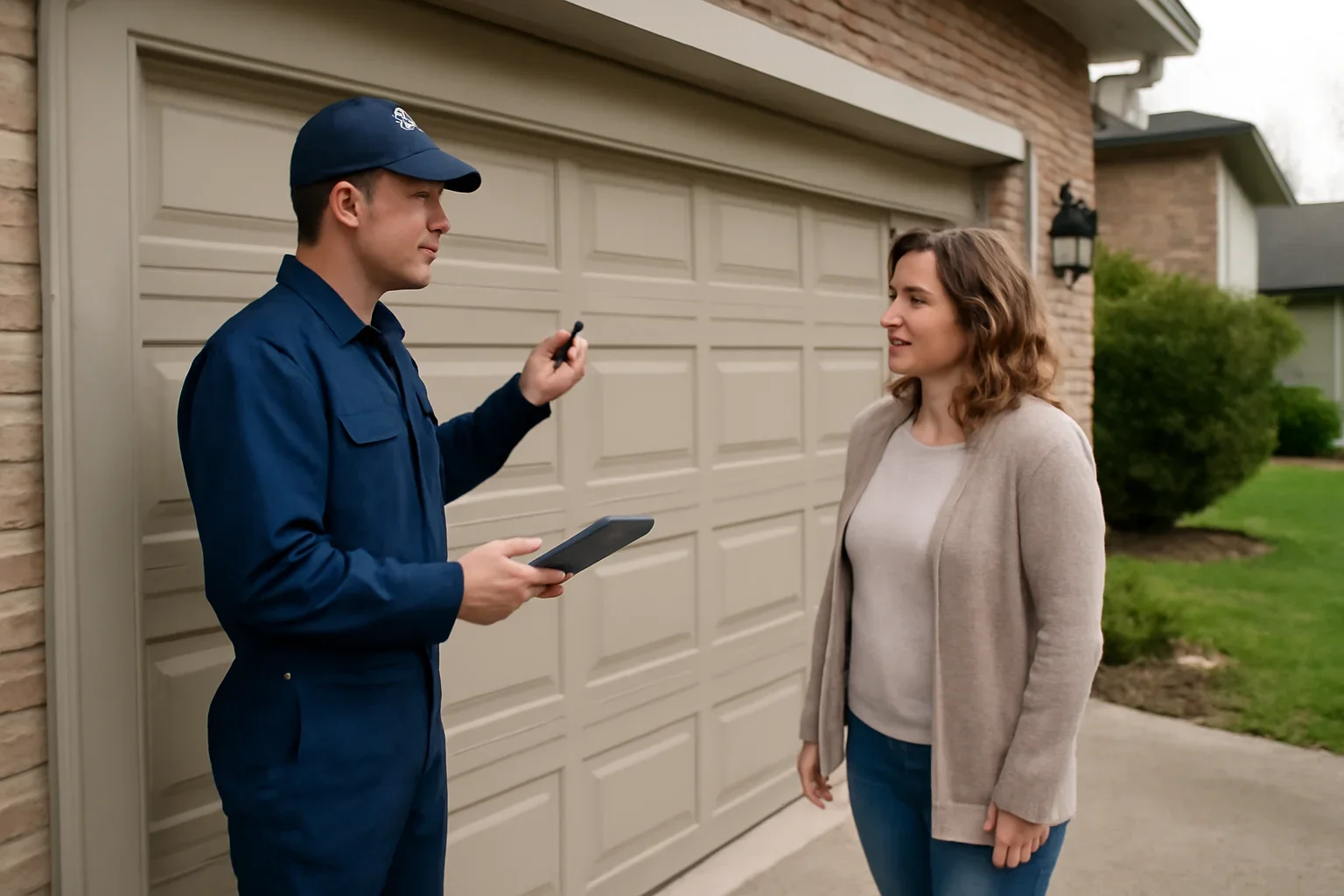
Urgency does not mean the door should be forced. Repeated opener use can worsen damage when a spring, cable, roller, track, hinge, panel, or opener component has failed.
The most urgent requests usually involve immediate safety, security, vehicle access, essential equipment, or damage that could spread if the door keeps moving.
An open garage can affect security and weather protection. The cause may involve sensors, tracks, cables, springs, opener travel, wiring, or an obstruction.
A failed spring, cable, opener, or off-track condition can prevent safe opening. Avoid forcing the door to create clearance.
A tilted door can place uneven load on cables, rollers, hinges, panels, and tracks. Leave it in position and keep the opening clear.
A loud snap, visible spring gap, loose cable, unexpectedly heavy door, or uneven lift points to a high-tension repair.
The problem may involve the trolley, drive system, release mechanism, spring balance, or lifting hardware. Continued operation can add strain.
A vehicle, trailer, tractor, mower, ladder, or storage item can bend panels, tracks, brackets, rollers, or lower fixtures.
Two doors with a similar symptom may have different urgency. The first review should focus on safety, access, security, and the chance of wider damage.
Priority service should be requested as early as possible, but availability and completion cannot be assumed until the request and likely repair scope are reviewed.
Earlier requests may provide more scheduling options. Later requests can be limited by existing calls, travel time, daylight, and property access.
Traffic, weather, rural roads, gates, long driveways, parking, and distance between town-lot and acreage properties can affect arrival timing.
Standard residential parts may be easier to source than custom panels, unusual springs, oversized tracks, older opener components, or workshop-door hardware.
An unstable or heavily damaged door may need more time to secure, diagnose, and make safe before a complete repair can be approved.
The safest first-visit outcome may be a complete repair, restored access, a secured opening, or temporary stabilization while a specific part or wider repair is arranged.
The order of work should protect people and property first, then restore safe operation where the door condition and available parts allow.
The door position, access problem, security concern, visible damage, recent events, opener behaviour, and property details are reviewed.
A crooked, heavy, off-track, hanging, or partly open door should be secured before damaged components are adjusted or removed.
Springs, cables, drums, tracks, rollers, hinges, panels, sensors, opener travel, supports, and door balance may all need assessment.
The available same-day repair, temporary safety step, required parts, and any replacement comparison should be explained before approval.
“The door will not work” can describe several failures. Identifying the exact component prevents the wrong service from being booked.
A broken spring or failed cable can make the door heavy, uneven, or impossible to lift safely. Drums, bottom fixtures, balance, and related hardware should be checked.
A roller outside the track, bent track, loose bracket, seized roller, or cable issue can leave the door unstable and damage panels during movement.
Motor, rail, trolley, drive system, wall control, remote, keypad, power, sensor, wiring, or travel-setting problems can prevent normal operation.
Photo-eye alignment, damaged wiring, obstruction, track resistance, opener settings, or damaged hardware may cause the door to reverse or remain open.
A bent section can affect hinges, rollers, tracks, seals, and the shape of the full door. Panel or full-door replacement may need comparison.
Opener release, lock, bottom section, track, sensor, cable, or travel problems may affect security. The cause should be corrected rather than restrained with improvised hardware.
The best outcome depends on the door condition, repair complexity, part availability, and whether a safe lasting repair is practical during the first visit.
The final scope depends on the actual failure, not only the fact that the request is urgent.
For broader cost factors, review the garage door repair cost guide.
Aldergrove includes older homes, town-lot garages, detached buildings, acreages, barns, and workshops. Older doors may have worn hardware, previous repairs, discontinued components, or non-standard framing that changes the first-visit plan.
Detached and rural garages may have gated access, long driveways, limited interior entry, taller ceilings, unfinished walls, or vehicles and equipment blocking the work area. Workshops and acreage buildings may use larger, heavier, or high-cycle doors that need different springs, tracks, openers, and supports.
Share the building type, gate instructions, driveway conditions, door size, ceiling height, and whether a vehicle, trailer, tractor, or work equipment is trapped.
The symptom can help narrow the service path that best matches the urgent problem.
Use the contact page for a general question that is not creating an immediate safety, access, or security problem.
These answers explain when to request priority service, what affects availability, and how to keep the area safer before inspection.
Request same-day repair when the door cannot close, a vehicle or essential equipment is trapped, the opening cannot be secured, the door is crooked or off track, a spring or cable has failed, or continued use may worsen the damage.
No. Availability depends on the time of the request, existing appointments, travel and site access, door safety, repair complexity, and whether compatible parts are available. Timing should be confirmed after the request is reviewed.
Keep people, pets, vehicles, livestock, and equipment away from unstable hardware. Avoid repeatedly using the opener, pulling cables, adjusting springs, or standing under the door while trying to secure the area.
A door with a broken spring may be extremely heavy and difficult to control. Do not try to lift it alone or disconnect the opener while the door is in an unsafe position. Arrange an assessment instead.
It may be possible when the fault is identified, the door can be handled safely, and suitable parts are available. Custom parts, extensive damage, or an unstable door may require temporary stabilization and planned follow-up work.
They can. Taller, wider, heavier, or high-cycle doors may use different springs, tracks, openers, supports, and controls. Rural roads, gates, long driveways, ceiling height, and equipment around the opening may also affect timing and scope.
Share your Aldergrove address, access instructions, building type, current door position, whether a vehicle or equipment is trapped, visible damage, recent impact or loud sounds, door size, opener details, clear photos, and preferred timing.
The scope should be based on the failed component, connected damage, door condition, required parts, travel and site access, and whether repair, temporary stabilization, panel work, or replacement is recommended. Confirm the work before approval.
Include your address, building type, gate or driveway instructions, the current door position, whether access or security is affected, trapped vehicles or equipment, visible damage, recent sounds or impact, opener behaviour, photos, and preferred timing.