The motor hums or clicks
The opener receives a command but cannot complete the movement. The motor, capacitor, drive, trolley or door resistance may be involved.

Get help diagnosing an opener that hums, clicks, stops partway, reverses unexpectedly, ignores the controls or runs without moving the garage door.
A reliable diagnosis considers the opener and the physical garage door together. Motor, rail, trolley, drive, sensor or control problems can create similar symptoms to worn rollers, poor balance, track resistance, damaged hardware or a failing spring system.
Start with the motor, power, wall control, remote, keypad and receiver symptoms.
Review sensor repair when lights blink or the door refuses to complete its closing cycle.
Use the general repair path when the opener problem may involve springs, cables, tracks or balance.
Opener problems can involve power, controls, electronics, settings, the drive system, safety equipment or resistance within the garage door itself.
The opener receives a command but cannot complete the movement. The motor, capacitor, drive, trolley or door resistance may be involved.
The trolley may be disconnected, the drive may be damaged, or the door may have a spring, balance or hardware problem.
Sensor alignment, travel settings, force settings, an obstruction or mechanical resistance may interrupt the operating cycle.
Remote batteries, programming, lock mode, compatibility, receiver response, keypad settings or app access may need review.
A heavy, crooked, binding or off-track door should be inspected before force or travel settings are changed. Stop using the opener if the door hangs unevenly, a cable appears loose or the door seems difficult to control.
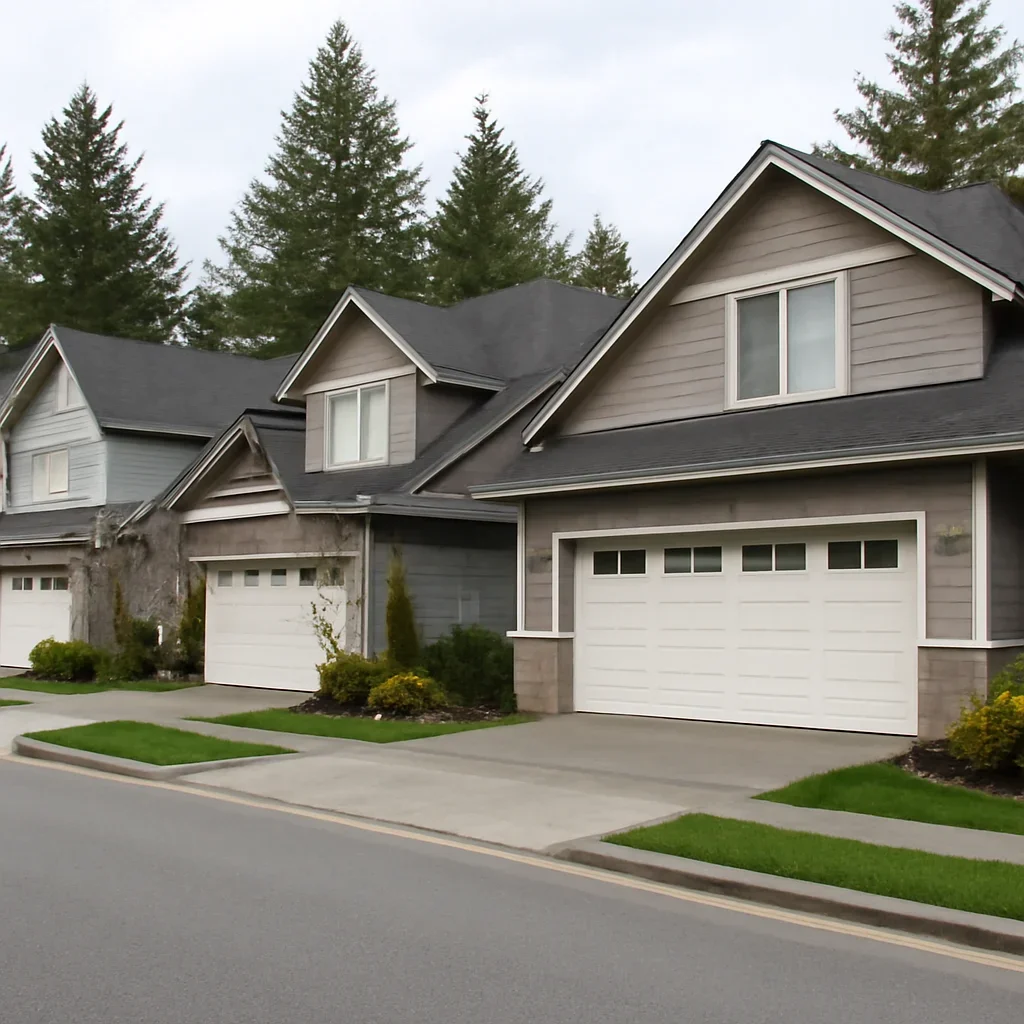
Langley City is a compact urban municipality with a mix of established detached homes, attached garages, townhome developments, strata properties and newer residential projects. Opener access and installation conditions can vary considerably between properties.
A compact garage may have limited ceiling space, storage beside the rail or restricted parking during the appointment. An older detached home may use an opener, wiring system, control or rail that requires compatibility checks before parts are replaced.
Include the full service address, postal code and any strata, visitor parking or access instructions when arranging the appointment.
The same symptom can begin in the controls, opener mechanism or moving garage door. Checking the connected system helps avoid replacing a working component while the actual cause remains.
Power, lock mode, batteries, programming, stored devices, compatibility and receiver response can affect whether the opener accepts a command.
Motor response, drive wear, unusual sounds, rail movement and the connection between the trolley and door should be reviewed.
Sensor lights, wiring, brackets, alignment, obstructions and automatic reversal behaviour can prevent normal closing.
Read the sensor guideSprings, cables, tracks, rollers, hinges and door balance should be checked when the opener stalls, strains or cannot move the door smoothly.
Use the urgent-service path when the door is stuck open, trapping a vehicle, preventing normal access or leaving the garage unable to be secured. Same-day availability must be confirmed after the request is reviewed.
A focused repair process confirms the cause, checks connected components and tests the complete opener and door before the job is considered finished.
Observe the controls, motor sounds, lights, door movement, stopping position, reversal behaviour and any recent changes.
Review the power, controls, sensors, motor, rail, trolley, drive, balance, springs, cables, rollers and tracks.
Correct the confirmed fault, then test travel, force, reversal, sensors and approved controls through several full cycles.
The decision should consider the failed part, repair history, compatibility, available components, desired features and the condition of the garage door.
Repair may be appropriate when the problem is isolated and the remaining motor, rail, controls and safety systems are compatible and in serviceable condition.
Replacement may be more practical when problems recur, major components are worn, parts are unavailable or the system no longer supports the controls and reliability the property needs.
These resources can help you describe the problem, understand common repair factors and determine whether a service appointment is the appropriate next step.
Review when a reset may be relevant and when resetting the unit will not correct a mechanical, sensor or compatibility problem.
Read the opener reset guideLearn how the failed component, connected damage, door condition, parts, labour and property access can affect repair scope.
Review repair cost factorsCompare the information needed when planning opener repair, replacement, installation or wider garage-door work.
View pricing guidanceThese answers explain common opener symptoms, safety concerns and the information that helps before a repair appointment.
The trolley may be disconnected, the drive system may be damaged or the door may have a spring, cable, balance, track or hardware problem. The door and opener should be checked together.
Possible causes include sensor alignment, damaged wiring, an obstruction, incorrect travel settings, force settings, track resistance or poor door balance.
Yes. A broken or weak spring can make the door too heavy for the opener, causing humming, slow movement, stopping, reversal or no movement.
No. Higher force can hide resistance and may affect safe reversal. The door balance, tracks, rollers, springs, cables and hardware should be checked first.
Yes. Batteries, programming, lock mode, compatibility, receiver response, stored devices, network access and account permissions may all affect control operation.
Include the Langley City address, opener manufacturer and model, current door position, sounds, flashing lights, controls that still work, sensor behaviour, recent power issues and safe photos.
No. Availability depends on the request time, existing appointments, property location, repair complexity, door safety and whether suitable parts are available.
Share the service address, opener model, door position, unusual sounds, flashing lights, controls that still work and your preferred timing. You do not need to identify the failed part before reaching out.