One side hangs lower
The door may be out of level because a roller has left the track, a cable has lost tension, or the lifting system is pulling unevenly.

A garage door that has left its track can become crooked, jammed, partly unsupported, or difficult to control. Off-track repair should begin with stabilizing the door and finding out whether the cause involves rollers, tracks, hinges, cables, springs, panels, or impact damage.
Aldergrove homes, detached garages, acreages, and workshops may use different door sizes, track layouts, and lifting systems. The correct service plan depends on the door’s current position, how far it has shifted, visible damage, access, and whether high-tension parts are involved.
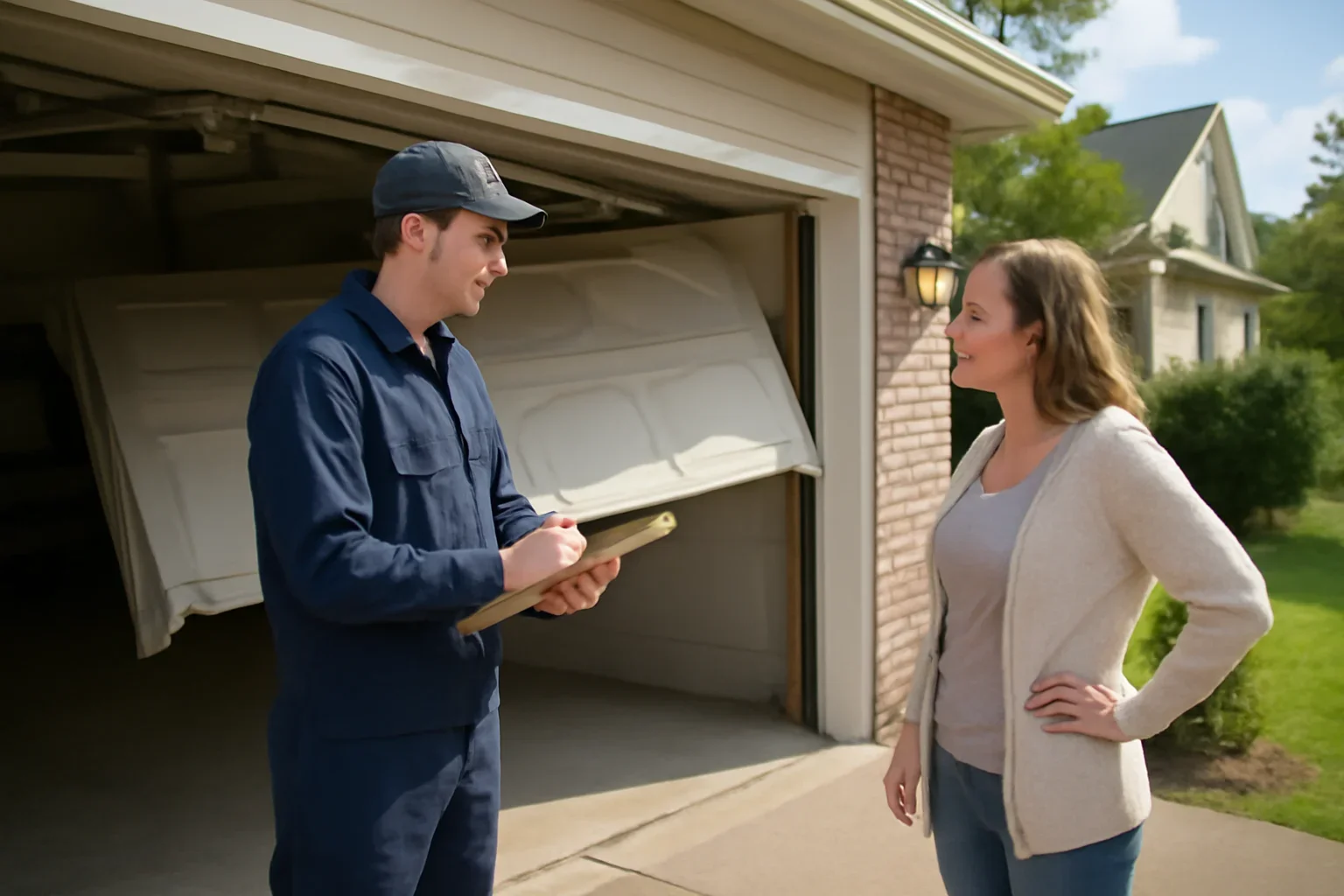
Some off-track problems are obvious, while others begin with one displaced roller, a crooked section, or a repeated catching point.
The door may be out of level because a roller has left the track, a cable has lost tension, or the lifting system is pulling unevenly.
A displaced roller can leave a section unsupported and may point to track damage, hinge failure, impact, or panel misalignment.
A crooked door may bind against the tracks, opening, floor, or frame. Do not use the opener to force it straight.
Loose wall brackets, flag brackets, ceiling supports, or fasteners can let the roller path shift during operation.
A cable may have slipped off the drum or lost tension after a spring, track, roller, or door-alignment problem.
A roller leaving its path can create sharp noises, panel movement, track contact, and rapid changes in door position.
An off-track door may be carrying its weight unevenly through one cable, one track, or a small number of rollers. The door can shift, fall, or damage surrounding hardware without warning.
Putting a roller back into the track is not enough when the original cause remains. The door and lifting system should be checked for the condition that allowed it to leave its normal path.
Off-track movement is usually a result of impact, failed guiding hardware, uneven lifting, or a track path that can no longer hold the rollers correctly.
A car, trailer, mower, bicycle, ladder, or stored item can bend a track, shift a panel, or knock a roller out of position.
A dent, spread track, loose bracket, or weak overhead support can create enough space for a roller to escape.
Cracked wheels, seized bearings, bent stems, and excess side play can make a roller bind or leave its normal path.
A loose, cracked, or bent hinge changes the roller angle and can push a door section toward the edge of the track.
Loss of cable support on one side can pull the door crooked and force rollers against or out of the opposite track.
Uneven lifting force can cause one side to rise first, twist the door, and overload the tracks, rollers, and cables.
A bent section can move its hinges and rollers sideways even when the track itself looks only slightly damaged.
Stored items, debris, equipment, ice, or a jammed roller can stop one side while the other side continues moving.
The exact process depends on how the door is positioned, whether it is supported safely, and which connected parts caused or suffered damage.
The first priority is understanding how the door’s weight is being carried and whether it may shift, fall, or damage nearby property.
The affected rollers, track sections, cable position, door angle, and panel movement show how far the system has moved out of place.
Tracks, brackets, rollers, hinges, cables, drums, springs, panels, balance, and impact points should be checked together.
The recommendation may involve realignment, roller or hinge replacement, track work, cable service, panel repair, or a broader repair plan.
The door should return to a supported, correctly spaced track path without forcing damaged parts to continue carrying load.
After the agreed repair, the door should be checked for level movement, balance, sound, cable tracking, and opener interaction.
A door usually leaves its track because another part failed, moved, or allowed uneven loading. Each connected system should be considered before normal use resumes.
Rollers follow the tracks, hinges hold their stems, and panels keep those hinges aligned. Damage in any one of these parts can push a roller sideways or leave a section unsupported.
Vertical tracks, curved sections, flag brackets, wall attachments, and ceiling supports must hold the roller path without spreading, shifting, or sagging.
Uneven cable tension or spring support can twist the door and force rollers out of alignment. Visible cable trouble may require separate garage door cable repair.
An opener can keep pulling after one side binds, which may worsen track, roller, panel, and cable damage. Opener force should not be used to overcome mechanical misalignment.
Realignment may be practical when the door remains structurally sound, the tracks are not severely damaged, the cables and springs remain suitable, and the displaced rollers or supports can be restored safely.
A larger repair may be needed when tracks are badly bent, several rollers or hinges are damaged, cables are displaced, springs have failed, or panels are twisted or separating.
For several connected failures, compare the off-track work with broader garage door repair. If the complete door is badly damaged or no longer well fitted, replacement may also be worth discussing.
The final scope depends on the door’s position, the number of displaced parts, the cause, and whether high-tension or structural components are damaged.
A closed door with one displaced roller differs from a heavy door hanging partly open or leaning out of both tracks.
One upper roller may be limited in scope. Several displaced rollers can indicate track, panel, cable, or balance damage.
Loose supports may be repairable, while sharply bent, cracked, twisted, or weakened track may require replacement.
Loose cables, off-drum winding, broken springs, and uneven tension can expand the repair beyond the roller path.
Impact-damaged sections, torn hinges, loose reinforcement, or shifted panels may require additional parts or repair planning.
Double, insulated, oversized, workshop, high-ceiling, blocked, and detached-garage doors may require a different service approach.
Local context matters because door weight, track layout, driveway access, building exposure, and equipment use can change both the cause and the safe service plan.
Share whether the garage is attached, detached, acreage-based, workshop-focused, or used for larger vehicles and equipment. Door width, ceiling height, current position, and recent impact history are also important.
Older tracks, rollers, hinges, cables, springs, and openers may share wear that becomes visible after one part shifts.
Moisture, temperature changes, storage, dust, and delayed maintenance can contribute to corrosion, loose supports, or roller problems.
Longer driveways, equipment access, gravel, larger openings, and less common hardware can affect damage patterns and service access.
Heavier doors, repeated cycling, high tracks, large vehicles, trailers, and equipment movement can increase impact and alignment risk.
An off-track door may involve cables, springs, poor balance, bent tracks, opener strain, or a larger repair need.
Do not touch the door, rollers, cables, springs, drums, or bottom fixtures. From a safe distance, note:
Routine garage door inspection can identify rough rollers, loose hinges, track movement, cable wear, spring imbalance, and opener strain before the door leaves its normal path.
Keep vehicles, trailers, bicycles, ladders, tools, and storage clear of the vertical tracks. Stop using the opener when the door becomes crooked, catches at one point, or begins shaking more than usual.
These answers explain urgency, safe use, likely causes, and what helps before an appointment.
Off-track repair is urgent when the door is crooked, hanging partly open, blocking access, no longer securing the opening, or has rollers outside the track with loose cable or unstable panels. Stop using the door and keep the area clear.
No. Pushing or pulling an off-track door can make it fall, twist panels, damage tracks, or release cable tension unexpectedly. Do not use the opener, force rollers into the track, or stand beneath the door.
Common causes include vehicle impact, bent or loose tracks, worn rollers, damaged hinges, loose or snapped cables, spring imbalance, panel damage, and an obstruction that stops one side of the door.
One displaced roller may be repairable when the track, hinge, panel, cable, and spring system remain sound. The cause should be identified first so the roller does not leave the track again.
Yes. An opener that keeps pulling against a crooked or jammed door can strain the motor, rail, trolley, belt, chain, or internal drive parts. Mechanical alignment should be corrected before opener settings are changed.
Not always. Minor movement or limited bends may be repairable when the metal remains sound. Track replacement may be more practical when the track is sharply creased, split, twisted, badly rusted, or weakened at several supports.
Share the Aldergrove location, property type, door width, current position, affected side, roller position, visible track or panel damage, cable and spring condition, recent impact, opener behaviour, access details, and clear photos when safe.
Use the contact page for questions about symptoms, property access, urgency, or whether off-track repair is the correct service. Do not move or touch an unstable door just to gather more information.
Send the property type, door width, current position, affected side, displaced roller location, track and panel damage, cable or spring concerns, opener behaviour, access details, and photos when safe. Keep the door unused if it is crooked, partly open, or unstable.