The door will not open
The opener runs, but the door stays closed, feels unusually heavy or rises only a short distance.

Get practical help with a garage door that is stuck, noisy, uneven, difficult to operate or no longer responding correctly to the opener.
Garage door problems can involve the springs, cables, rollers, tracks, hinges, safety sensors, opener or more than one part of the system. Start by describing what changed so the appropriate repair path can be identified without replacing parts unnecessarily.
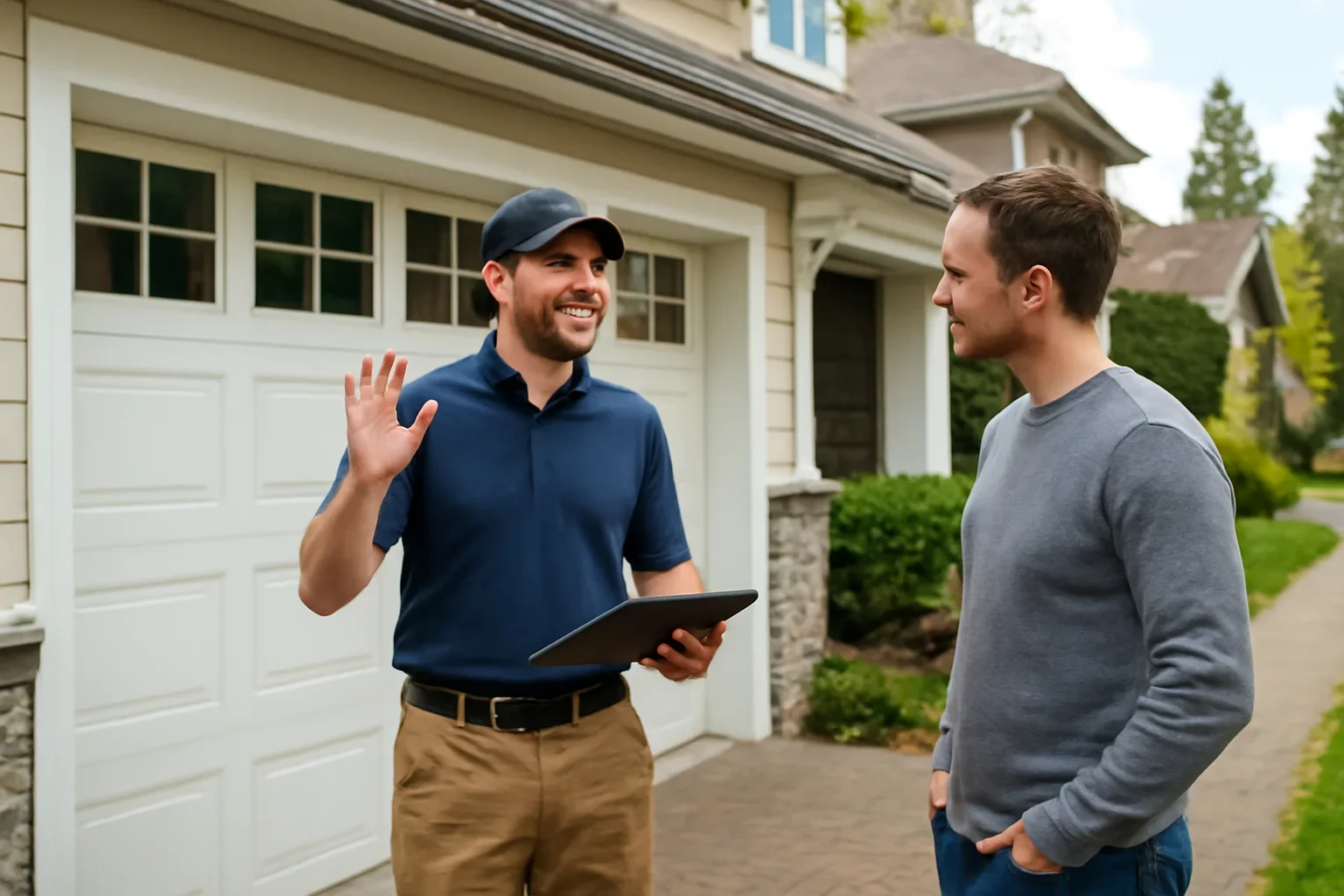
Start with repair information for doors that are stuck, uneven, noisy or difficult to move.
Review same-day options when the door is blocking access or cannot secure the garage properly.
Describe the symptom, door position and any unusual sound when submitting your service request.
The symptom is often the best starting point. Avoid repeatedly operating the door when movement is uneven, a cable appears loose or the system makes a sudden grinding or popping sound.
The opener runs, but the door stays closed, feels unusually heavy or rises only a short distance.
One side sits lower, the door binds during movement or a cable appears loose or out of position.
The door starts closing and then returns upward, which may involve sensors, resistance, alignment or opener settings.
Grinding, rattling, squeaking or popping may indicate worn rollers, loose hardware, poor alignment or balance problems.
You do not need to diagnose the door yourself. Explain what happens when you press the control and whether the door is currently open, closed or partially open.
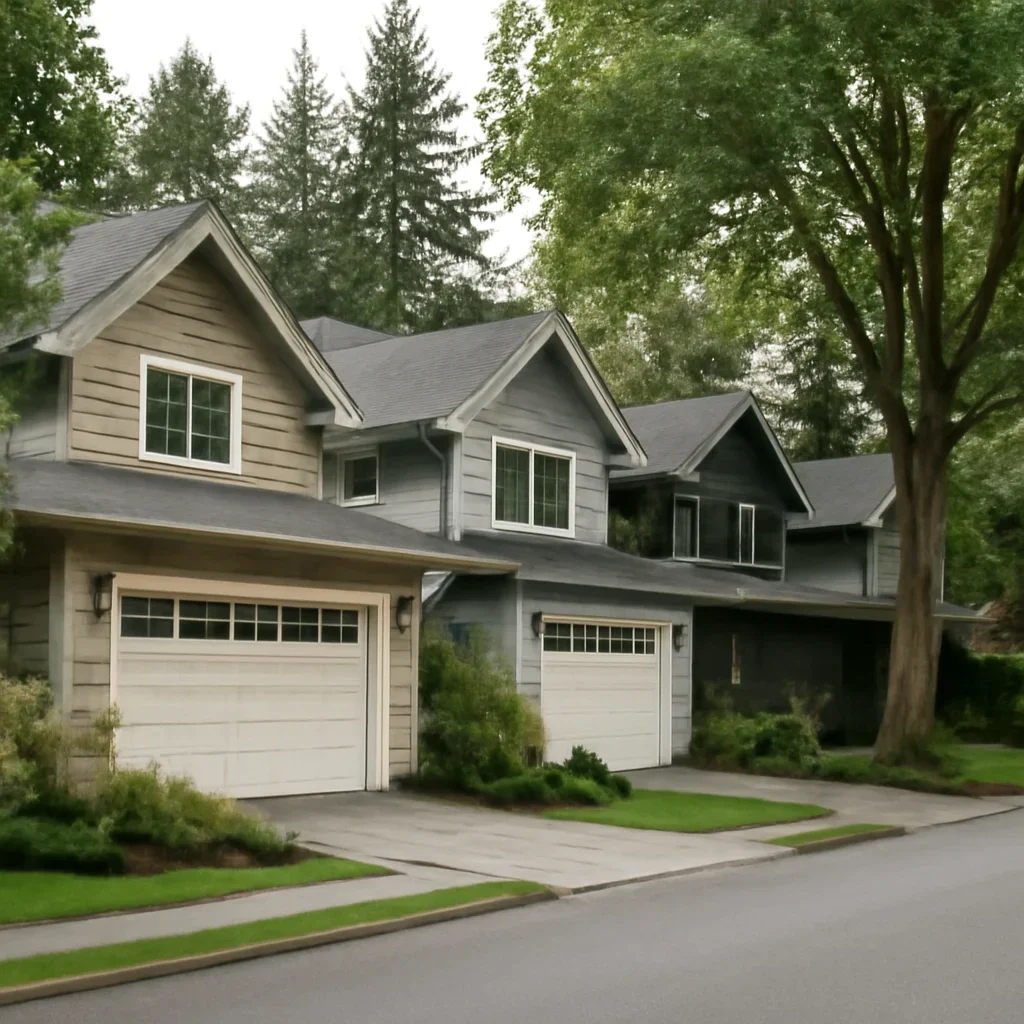
Fort Langley includes properties near the historic village core, established residential streets and homes in surrounding Township areas. Door age, construction, daily use and architectural appearance can all affect the most practical repair approach.
Some Fort Langley properties are within a recognized heritage conservation area. That does not mean every home is formally protected, but it does make careful attention to visible materials, detailing and overall appearance relevant when repair work could affect the exterior of the property.
Heritage context should not be used to assume that a property is formally designated. Property-specific requirements should be confirmed before exterior alterations are planned.
Not every garage door problem requires the same response. The current position of the door, safety risk and effect on access should help determine how quickly service is needed.
Standard repair may be appropriate when the garage can still be secured and the door is not creating an immediate access or safety concern.
A quicker response may be worth requesting when the door cannot secure the opening, is blocking access or appears unstable.
Do not loosen, pull or attempt to adjust garage door springs and cables. These components operate under significant tension. Stop operating the door if it is hanging unevenly, a cable is loose or the system appears unstable.
A few clear details can help identify the likely service category and whether additional information is needed before the visit.
Explain whether the door is stuck, uneven, reversing, moving slowly or not responding to the wall control or remote.
Mention whether the door is open, closed or partially open and whether a vehicle is currently trapped inside or outside.
Photos of the complete door, tracks and any visible damage can help show alignment issues without requiring you to touch the hardware.
Include your Fort Langley location, the problem, the door position and whether the garage can currently be secured.
These direct answers can help you decide whether to stop using the door, arrange a regular repair or request more urgent assistance.
A repair request becomes more urgent when the door is hanging unevenly, cannot secure the garage, is blocking required access or appears unsafe to operate. Same-day availability can depend on the schedule, location and nature of the problem.
A minor squeak may not indicate immediate failure, but grinding, popping, sudden rattling or increasingly uneven movement should not be ignored. Stop operating the door if the movement appears unstable or a cable is visibly loose.
Yes. A balance, roller, cable or track problem can place additional strain on the opener and other moving components, especially when the door continues to be operated.
Yes. However, an opener that struggles or reverses may also be reacting to door resistance, poor balance, sensor alignment or another mechanical issue. The door and opener should be considered as one system.
Some properties are located within a heritage conservation area, but requirements depend on the individual property and the work being planned. Routine mechanical repair is different from an exterior alteration that changes visible materials or appearance.
Include your location, the door position, a short description of the symptom, any unusual sounds and whether the wall control, remote and safety sensors respond. Photos can also be useful.
Springs and cables operate under significant tension and should not be loosened or adjusted without appropriate training, equipment and safety procedures.
Explain what the door is doing, whether it is currently open or closed and whether the garage can still be accessed and secured. These details help direct the request to the appropriate repair path.