Deep dents and sharp creases
A light surface dent may be cosmetic, but a sharp crease can weaken the panel skin, deform internal reinforcement, and affect the way the section stacks through the tracks.

A damaged garage door section can affect more than appearance. A dent, crack, crease, rusted edge, broken stile, or impact-damaged panel may change hinge alignment, roller movement, weather sealing, door strength, and the load placed on the opener.
Garage door panel replacement in Aldergrove should begin with confirming the panel profile, height, construction, insulation, window layout, colour, finish, and compatibility with the remaining sections. The connected hinges, tracks, rollers, reinforcement, cables, springs, and door balance should also be checked before one section is replaced.
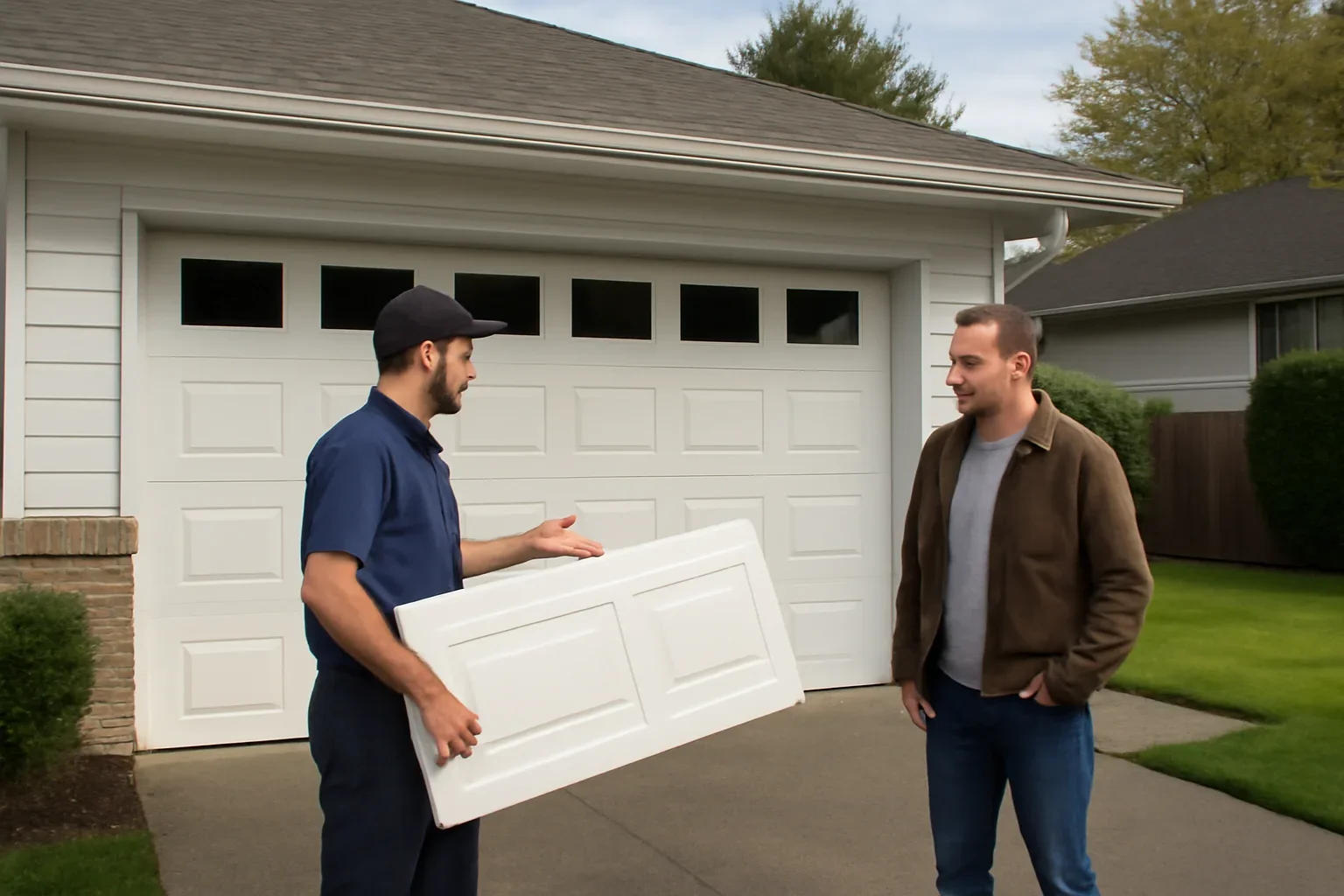
A badly bent or separated panel can flex during travel, pull hinges out of position, force rollers toward the track edge, or place extra load on the opener and lifting system.
The decision depends on whether the damage is cosmetic, structural, affecting travel, or exposing the inside of the section to moisture and further deterioration.
A light surface dent may be cosmetic, but a sharp crease can weaken the panel skin, deform internal reinforcement, and affect the way the section stacks through the tracks.
Impact can damage the panel, hinges, rollers, tracks, bottom seal, opener reinforcement, and neighbouring sections even when one area looks most obvious.
A cracked face, split edge, loose stile, or separating layers can reduce section strength and allow moisture into insulated construction.
Corrosion near the bottom can affect the panel skin, retainer, weather seal, fixtures, and ability to hold fasteners securely.
Damage around hinge fasteners or the opener attachment can spread under repeated movement and may not be solved by replacing hardware alone.
A damaged glazed section may involve inserts, frames, panel profile, daylight openings, privacy, and matching the window pattern across the door.
Replacing one section only makes sense when the rest of the door can support it and the damage has not changed the overall geometry of the system.
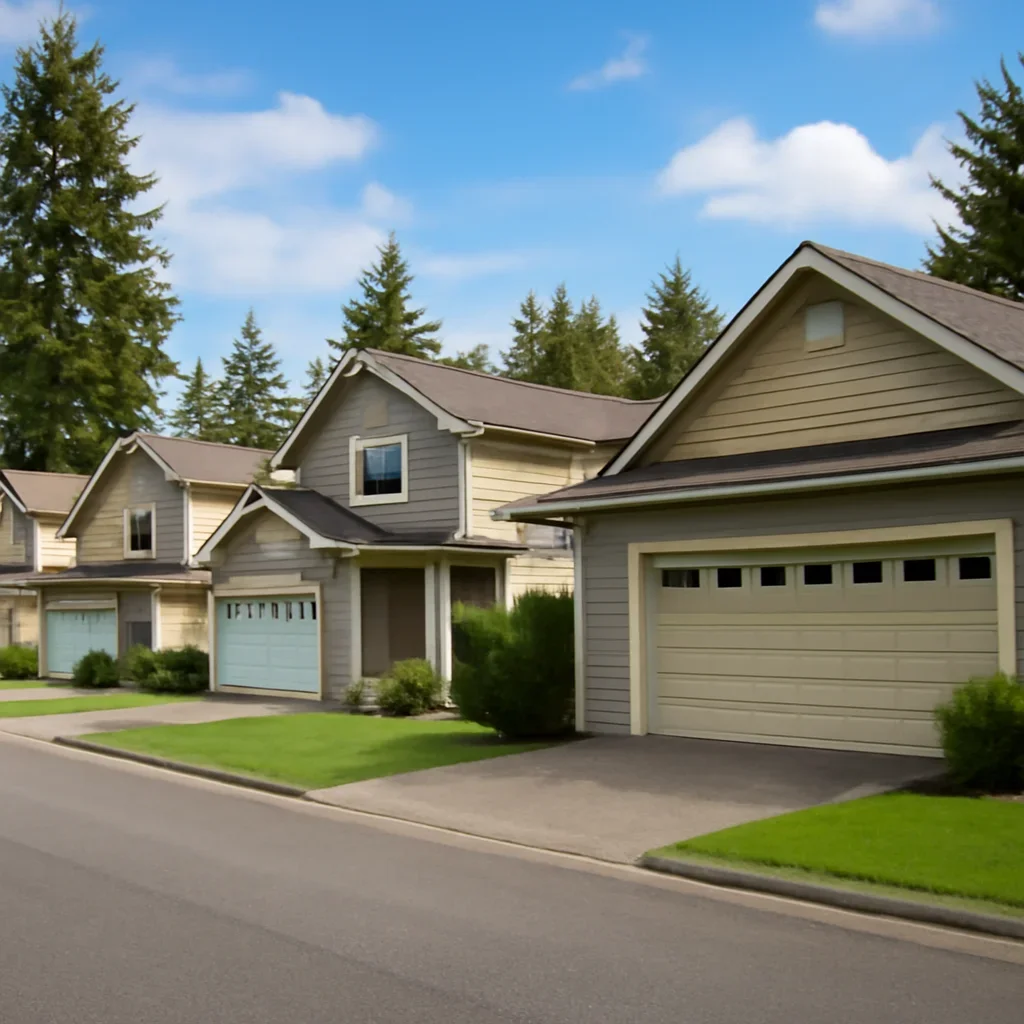
A useful match should preserve safe movement and a consistent door system. Appearance matters, but dimensions and construction come first.
The section height, tongue-and-groove shape, edge design, hinge placement, and exterior pattern must align with the existing sections.
A different core, skin thickness, or reinforcement can change section weight and may require the spring balance to be checked after installation.
Even the correct factory colour may look different beside older sections because of sun exposure, weathering, cleaning, oxidation, and finish changes over time.
Window size, frame shape, insert pattern, glass appearance, and placement should align with the remaining door where a visual match is required.
The exact process depends on which section is damaged, whether the door can move safely, and how the panel connects to hinges, rollers, cables, and opener reinforcement.
Measurements, panel profile, section position, construction, finish, windows, labels, hardware, damage, and photos are reviewed before a match is proposed.
Hinges, rollers, tracks, brackets, reinforcement, weather seals, cables, springs, and neighbouring sections are inspected for impact or alignment problems.
The approved panel is fitted with compatible hardware and aligned with the remaining sections without disturbing high-tension parts unnecessarily.
Manual travel, section alignment, hinge movement, roller path, spring balance, opener operation, sealing, and safety behaviour are checked before normal use.
A strike to one section can transfer force into the door system. The visible dent may not be the only part that needs attention.
A bent section can twist hinges, change roller angle, pull brackets, or force rollers against the track. These parts should be checked before the new section is used.
Panel construction affects door weight. A replacement section and any impact-related movement should be considered when confirming safe balance.
Damage to the upper section can affect the opener arm, reinforcement strut, travel path, and load placed on the trolley and rail.
The best option depends on compatibility, availability, the number of damaged sections, age, corrosion, appearance, insulation, and the condition of the full system.
Compare garage door replacement when the damage extends beyond one section or matching the existing door is not practical.
The final scope depends on the door, the damaged section, replacement availability, and related hardware work.
A panel-specific estimate should confirm compatibility, included hardware, likely colour variation, and any connected repair before approval.
Aldergrove includes older homes, detached garages, acreages, workshops, barns, and town-lot properties. Older doors may have discontinued profiles, faded finishes, previous repairs, or corrosion along the lower sections.
Detached shops and acreage garages may use wider, taller, heavier, or custom doors that require stronger panels, additional reinforcement, different hinges, and more detailed spring-balance checks. Impact from trailers, mowers, work vehicles, recreational equipment, or stored materials can also affect more than the visible section.
Share the building type, door size, section position, impact history, gate or driveway access, and photos from both inside and outside.
These pages can help compare panel work with broader repair or replacement options.
Use the service booking page instead of a planned estimate when the door is currently unstable, off track, stuck, or unable to secure the opening.
These answers cover panel damage, matching, colour, insulation, safety, connected hardware, and replacement decisions.
It may be possible when the damage is limited to one section, a compatible panel can be sourced, and the remaining sections, tracks, springs, cables, hinges, rollers, and opener are still suitable for service.
The panel height, width, profile, edge shape, material, insulation, thickness, hinge locations, exterior pattern, windows, finish, and weight should be compared with the existing door before approval.
An exact visual match cannot be assumed. Even a correct factory colour may look different beside older sections because of fading, sun exposure, weathering, cleaning, oxidation, and changes in the original finish.
It depends on the damage, but continued use can worsen hinge, roller, track, cable, spring, opener, or neighbouring-panel problems. Stop using the door if the section flexes, binds, separates, makes the door crooked, or affects safe travel.
Yes. A bent or misaligned section can create resistance, alter the travel path, damage top reinforcement, and place extra load on the opener arm, trolley, rail, and drive system.
Full replacement may be worth comparing when several sections are damaged, the panel model is unavailable, matching is poor, corrosion is widespread, the door fits badly, or extensive hardware and opener work is also needed.
Share your Aldergrove address, door size and age, which section is damaged, impact history, material, insulation, windows, colour concerns, whether the door still moves, clear interior and exterior photos, access details, and preferred timing.
Use the service booking page and stop operating the door. Mention whether it is stuck, open, crooked, off track, or unable to secure the opening, and include photos of the damaged panel and connected hardware.
Include your address, door size and age, damaged section position, impact history, material, insulation, windows, colour concerns, whether the door still moves safely, photos from inside and outside, access details, and preferred timing.