Several sections are damaged
Multiple dents, bends, cracks, separations, or impact-damaged sections can make individual panel work difficult to match or less practical than replacing the full door.

Garage door replacement can be the practical next step when an older door has widespread damage, repeated hardware failures, poor insulation, heavy corrosion, an unreliable fit, or a design that no longer suits the home.
Garage door replacement in Brookswood should be planned around the opening, mature-home framing, ceiling layout, quiet operation, insulation, curb appeal, weather sealing, opener compatibility, driveway access, and daily family use.
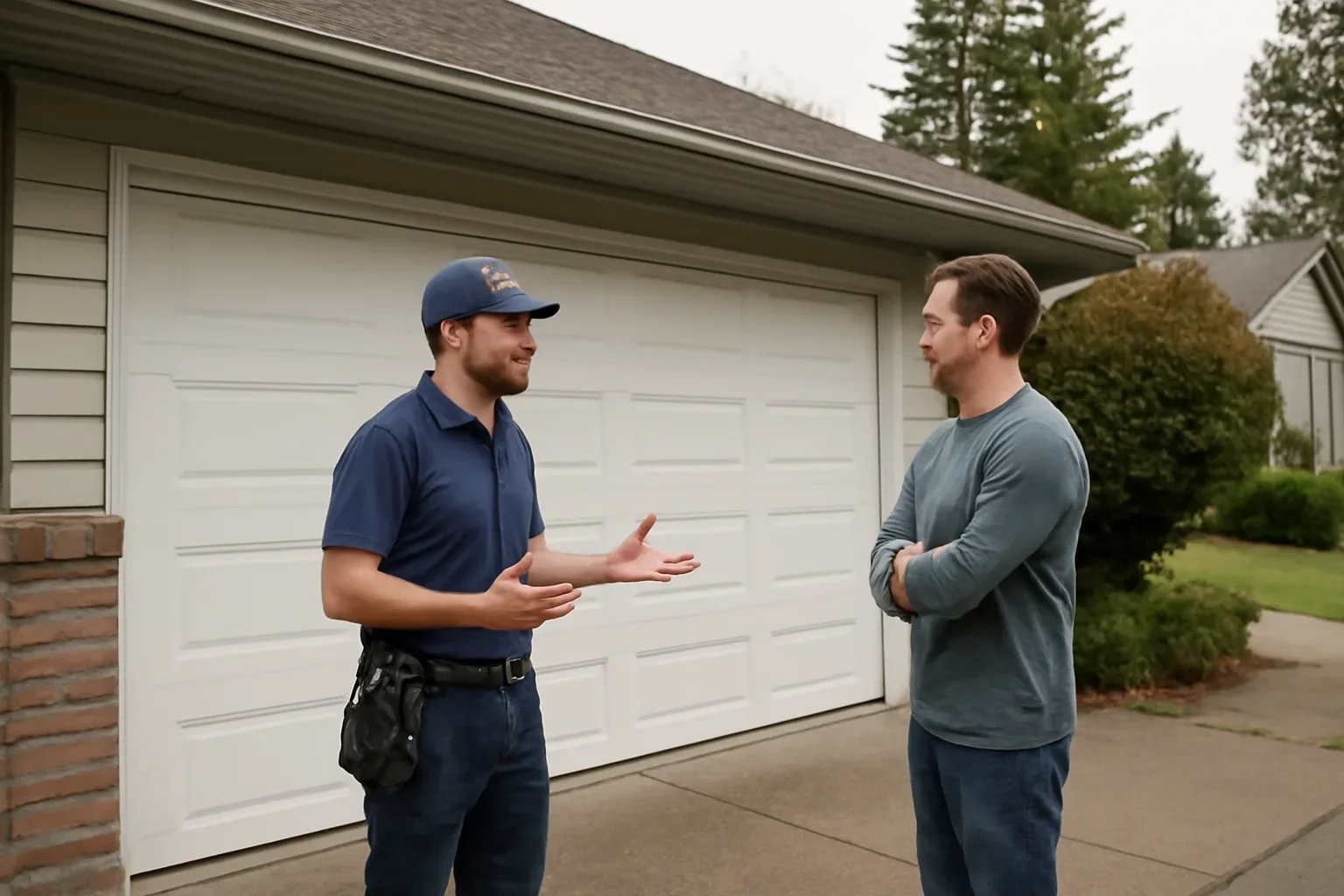
A new door should do more than cover the opening. It should fit the structure, move safely, seal consistently, work with the planned opener, and suit the home’s appearance and daily routine.
One failed part does not always mean the full door needs replacement. Replacement becomes more practical when problems are widespread, repeated, or built into the door itself.
Multiple dents, bends, cracks, separations, or impact-damaged sections can make individual panel work difficult to match or less practical than replacing the full door.
Rust along lower edges, seams, stiles, retainers, or fastener points can reduce strength and create repeated sealing and hardware problems.
Repeated work on panels, hinges, rollers, tracks, springs, cables, seals, and opener parts may show that the complete system is nearing the end of practical service.
Uneven gaps, bowing sections, difficult travel, rattling, weak weather sealing, or an opening that has changed may make a properly fitted replacement worth comparing.
An attached garage, hobby space, home gym, workshop, or room above the garage may benefit from improved door construction and perimeter sealing.
A different panel design, window layout, finish, colour, or hardware setup may support an exterior renovation and better match an established Brookswood property.
A proper replacement plan reviews the opening, the existing system, the proposed door, and the property conditions that may affect installation.
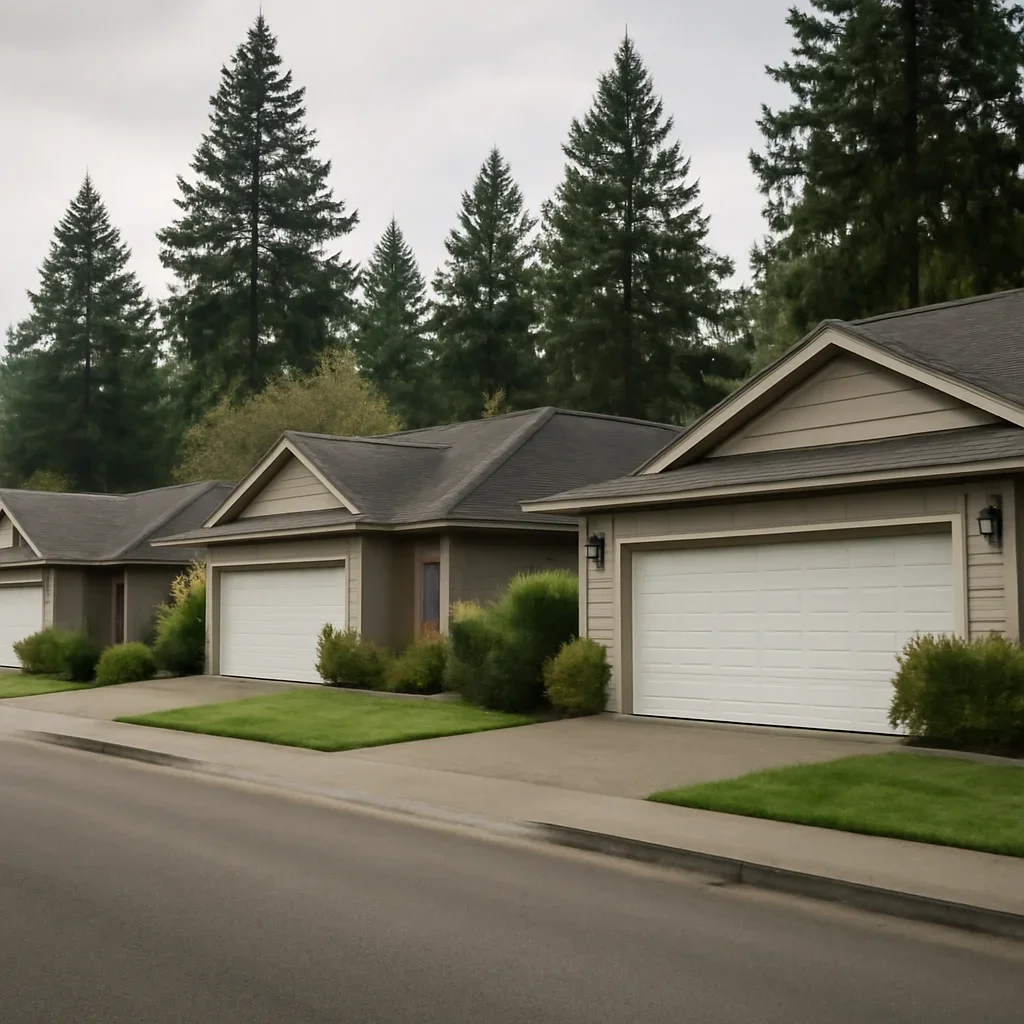
The best choice balances fit, insulation, weight, maintenance, quiet operation, appearance, and the way the garage is used.
Single, double, tall, wide, and custom openings need matching sections, tracks, springs, cable drums, reinforcement, and ceiling support.
Door construction can affect temperature control, rigidity, sound, weight, weather sealing, and the spring and opener setup required.
Panel profile, colour, texture, window placement, privacy, daylight, and exterior style should suit the home while staying practical for the door system.
Balanced springs, aligned tracks, suitable rollers, secure hardware, and a compatible opener all contribute to smoother and quieter operation.
The exact process depends on the old door condition, the opening, the selected replacement, and whether tracks, springs, seals, and the opener are also changing.
The opening, old door, hardware, ceiling, floor, access, selected door, insulation, windows, opener, and related preparation are reviewed.
Door sections, springs, cables, tracks, hardware, seals, and opener components are removed only as included in the approved scope and with high-tension parts controlled.
Sections, tracks, rollers, hinges, springs, cables, supports, reinforcement, and weather seals are fitted and adjusted for smooth manual travel.
Balance, alignment, fasteners, seals, opener travel, force behaviour, sensors, reversal, controls, remotes, and manual release are checked as applicable.
Noise can travel through framing and shared walls. A quieter result depends on the whole system rather than one product feature.
A properly balanced door that follows correctly spaced tracks creates less strain, shaking, and opener effort during each cycle.
Suitable rollers, secure hinges, tight supports, and correctly fitted hardware can reduce rattling, vibration, and metal movement.
The opener, rail, drive system, ceiling supports, and attachment to the door should suit the garage layout and nearby living space.
A replacement door can change the weight, reinforcement, travel, and clearance requirements of the opener system.
The opener may remain suitable if its condition, rail, controls, sensors, capacity, and compatibility match the replacement door. Reuse should be confirmed rather than assumed.
A replacement project can coordinate the opener rail, power, controls, keypad, sensors, ceiling supports, and top-section reinforcement.
The spring system should support the replacement door correctly so the opener guides movement instead of compensating for excess weight or binding hardware.
Compare garage door opener replacement when the current unit is unreliable, incompatible, or already approaching major repair needs.
The right path depends on how much of the door is affected and whether the existing system still meets the property’s needs.
Compare garage door panel replacement when damage appears limited to one section.
The final estimate depends on the selected door and the preparation and related system work required.
A replacement estimate should clearly identify the door, hardware, removal, installation, opener work, preparation, and excluded work before approval.
Brookswood includes many mature detached homes, attached garages, larger driveways, and established exterior styles. Older openings may be out of square, have uneven floors, previous framing changes, dated trim, or ceiling storage that affects the replacement plan.
Attached garages may place more value on quiet operation, insulation, and a design that fits the home. Tree cover can also create uneven fading, moisture exposure, and seasonal debris around seals and lower tracks.
Share driveway conditions, parked vehicles, opening measurements, ceiling height, current door problems, exterior preferences, and photos from inside and outside.
These pages can help compare replacement, installation, repair, and local service options.
Springs, cables, drums, bottom fixtures, and door sections can move suddenly. Existing-system removal should be included in the approved replacement scope.
Use the service booking page if the current door is stuck, off track, hanging unevenly, unable to secure the opening, or creating an immediate access or safety problem.
Review the garage door repair cost guide for general factors that affect repair, panel work, opener service, and replacement scope.
These answers cover replacement timing, measurements, insulation, quiet operation, opener compatibility, panel alternatives, and estimate preparation.
Replacement may be worth comparing when several sections are damaged, corrosion is spreading, repairs are becoming frequent, the door fits poorly, noise is increasing, insulation needs have changed, or the current style no longer suits the home.
It may be possible when the damage is isolated, a compatible section can be sourced, and the remaining panels, tracks, springs, cables, hinges, rollers, finish, and opener are still suitable. Full replacement may be more practical when several sections or systems are affected.
The opening width and height, side room, headroom, garage depth, ceiling obstructions, floor condition, framing, vehicle clearance, and existing track and opener layout should be reviewed before the replacement door is selected.
Insulation may be useful for an attached garage, hobby space, home gym, workshop, or room beside or above the garage. The choice depends on use, budget, door size, construction, and the condition of the walls, ceiling, floor, and weather seals.
A properly balanced replacement door with aligned tracks, suitable rollers, secure hardware, and a compatible opener may reduce rattling, vibration, scraping, and strain. Noise from loose framing or opener mounting should also be considered.
It may be reusable when its condition, capacity, rail, controls, sensors, and compatibility suit the replacement door. Reuse should be confirmed after the new door’s weight, height, reinforcement, and track layout are known.
Share your Brookswood address, garage type, opening measurements, ceiling height, photos inside and outside, current door damage and age, quiet-operation and insulation priorities, style preferences, opener details, driveway access, and preferred timing.
Use the service booking page and stop operating the door if it is crooked, off track, hanging, stuck, or unable to secure the opening. Include the door position, visible damage, impact history, photos, and whether access or security is affected.
Include your address, garage type, opening measurements, ceiling clearance, current door condition, photos, quiet-operation and insulation priorities, window and style preferences, opener details, driveway access, and preferred timing.