Visible daylight around the door
Light under the bottom section or beside the door often shows where the seal is no longer making full contact with the floor or frame.

A worn garage door seal can leave visible daylight around the opening and allow drafts, wind-driven rain, dust, leaves, insects, and small pests into the garage. The right replacement depends on where the gap is, the door profile, the existing retainer, and how evenly the door meets the floor and frame.
Garage door weather seal replacement in Langley can involve the bottom seal, side and top weatherstripping, or both. The door should also be checked for uneven closing, damaged retainers, floor gaps, and alignment issues that a new seal alone may not correct.
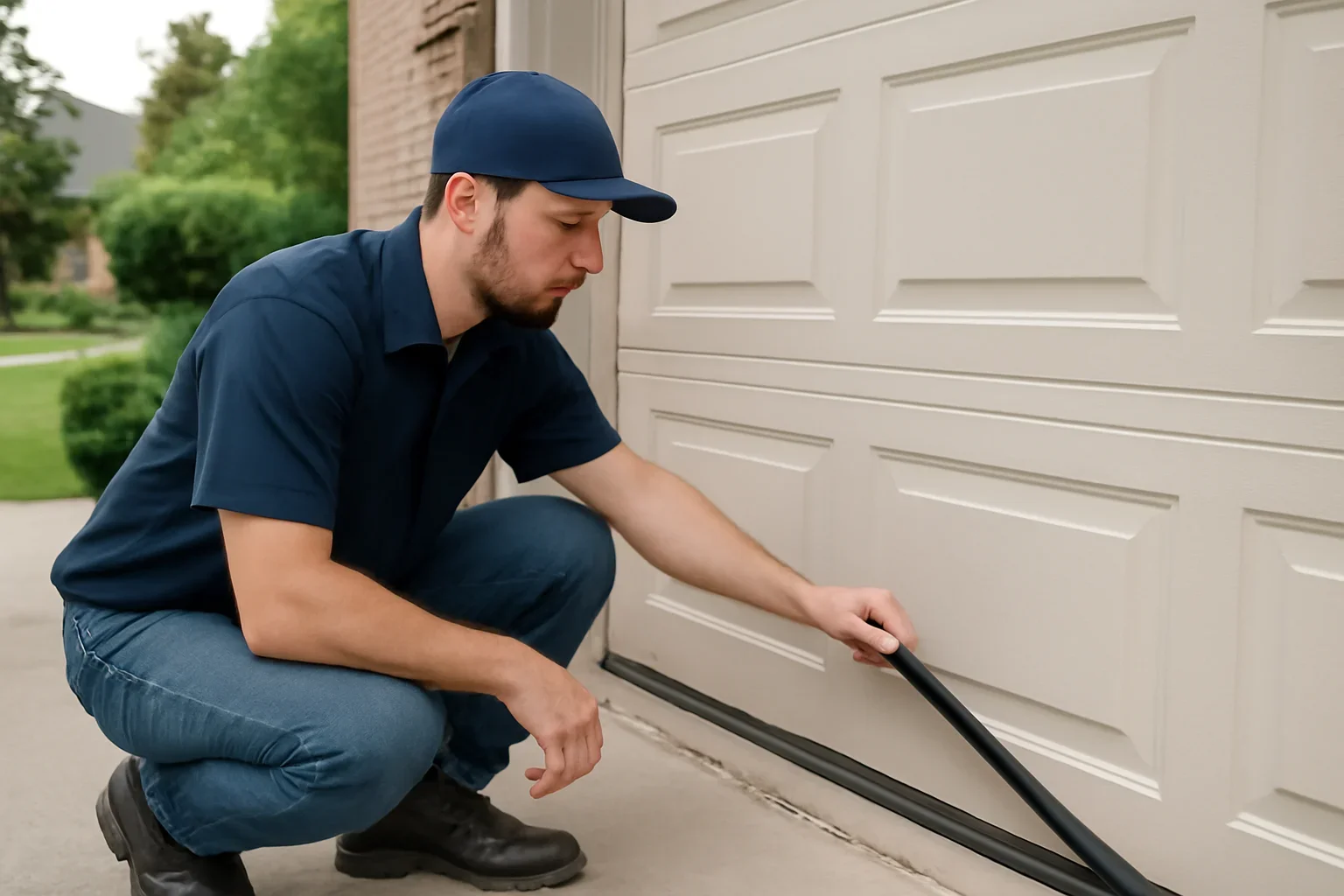
Daylight or moisture at the bottom does not always mean the rubber insert is the only problem. A sloped slab, worn retainer, uneven door, damaged bottom section, or incorrect closing position can leave gaps even after new weatherstripping is installed.
Weather seals become less effective as the material hardens, tears, shrinks, flattens, or pulls away from the door and frame.
Light under the bottom section or beside the door often shows where the seal is no longer making full contact with the floor or frame.
Cold air in winter and warm outside air in summer can enter through gaps, especially when the garage shares walls or a ceiling with living space.
Moisture, leaves, grit, or mud near the closed door may indicate poor bottom contact, a torn seal, or water being directed toward the opening.
Open corners and compressed sections can create entry points. A properly fitted seal can reduce access, although larger building gaps may need separate attention.
Older rubber or vinyl may lose flexibility and remain compressed instead of returning to shape when the door opens.
A loose insert can drag on the floor, catch during travel, or fall from a damaged or incompatible bottom retainer.
Different products serve different parts of the opening. Matching the seal to the location and existing hardware is more important than choosing by appearance alone.
The flexible insert along the bottom of the door compresses against the slab. Its shape must fit the existing retainer, and its size should suit the normal floor gap without creating excessive drag.
Perimeter seals mount around the jambs and header so the flexible flap rests against the exterior face of the closed door. Cracked or pulled-away sections can leave long vertical gaps.
The metal or vinyl channel holds the bottom insert. If it is bent, corroded, loose, or incompatible with available seal profiles, retainer work may be needed before a new insert can fit correctly.
A useful assessment looks at the opening as a complete seal line rather than replacing only the most visibly damaged strip.
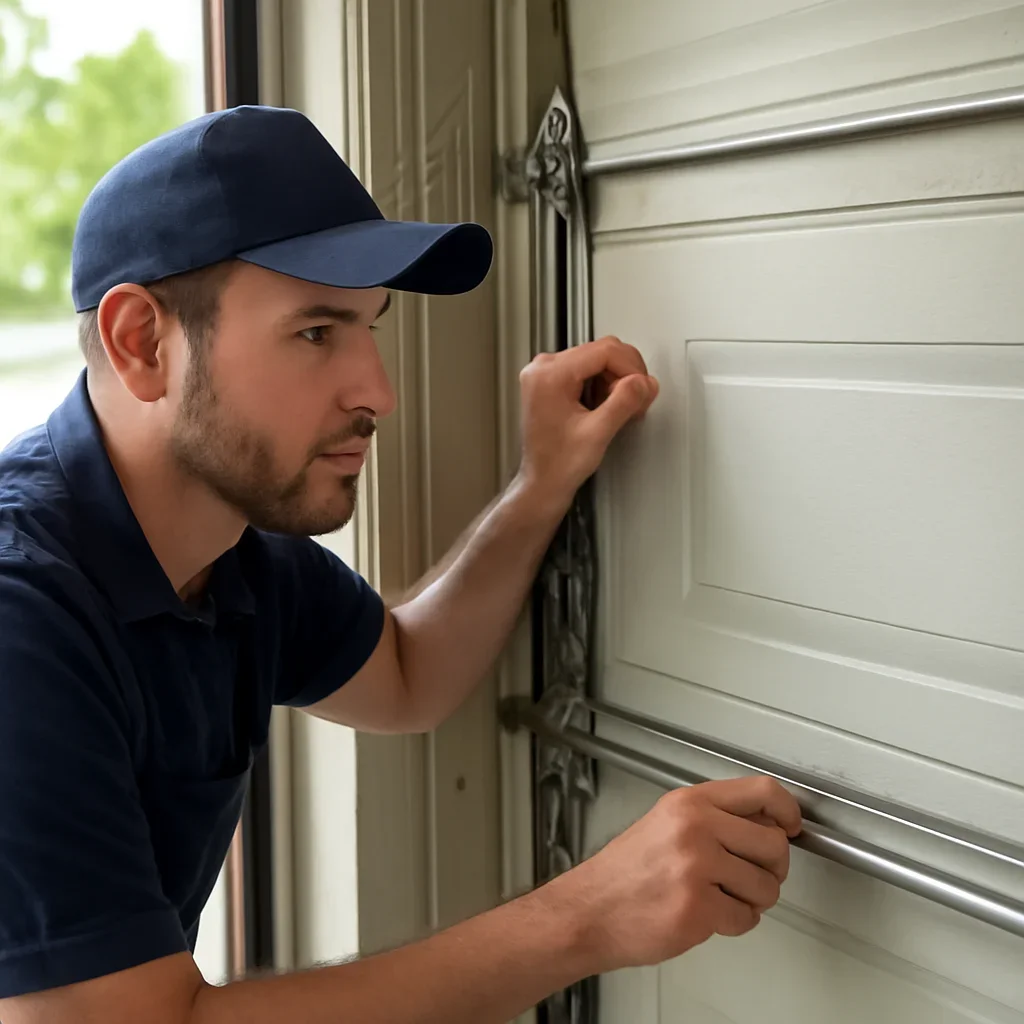
The exact steps depend on the existing seal system, access, door condition, and whether the floor and door meet evenly.
The bottom, corners, sides, and top are checked to confirm where air, light, water, or debris is entering.
The existing channel and insert profile are reviewed so the replacement can slide, lock, or fasten into the correct system.
Worn bottom or perimeter seals are removed and replaced. Loose trim or retainer issues may need correction so the new material stays in position.
The finished seal line is checked for even contact, corner gaps, folding, rubbing, and any effect on opener travel or door movement.
Weatherstripping follows the shape and position of the door, frame, and floor. Larger alignment or building issues should be identified rather than hidden under an oversized seal.
A slab that dips near one corner can leave a local opening even when the rest of the bottom seal compresses properly.
Cable, balance, track, or panel problems can make one side close lower than the other and create uneven seal pressure.
A bent or rusted lower panel may not hold the retainer straight, causing the new insert to wave or leave gaps.
A door that stops too high may not compress the seal, while excessive down travel can crush the material and place extra force on the door.
The correct choice depends on whether the weatherstripping is the cause of the gap or simply showing a problem elsewhere in the door system.
The size of the opening and the type of sealing system usually matter more than the visible length of damaged material.
For broader service factors, review the garage door repair cost guide.
Langley garages face wet winters, wind-driven rain, seasonal debris, and temperature swings. Newer townhouses in Willoughby may have shared exterior standards or strata requirements for visible perimeter trim. Established homes in Walnut Grove and attached garages in Murrayville may place more value on reducing drafts beside living space.
Older or custom properties around Fort Langley can have irregular slabs, non-standard openings, or previous door changes. Acreages, workshops, and detached garages in Aldergrove may use wider or taller doors and may see more dust, leaves, insects, and wind exposure.
The neighbourhood alone does not determine the seal. Door size, opening shape, floor condition, exposure, and current hardware should guide the replacement.
Some weather-seal symptoms overlap with alignment, opener, or general door problems.
Some lower door hardware is connected to lift cables under high tension. Bottom brackets, cables, drums, and springs should not be adjusted as a DIY sealing step.
These answers cover common questions about drafts, water, pests, bottom seals, perimeter weatherstripping, fit, and replacement decisions.
Replacement may be appropriate when the seal is cracked, brittle, flattened, torn, missing, pulling out of the retainer, or leaving visible daylight, drafts, debris, insects, or moisture around the closed door.
It can. The bottom insert and the perimeter weatherstripping are separate parts. The right scope depends on whether the gaps appear under the door, along the jambs, across the header, or in more than one area.
A properly fitted seal can reduce wind-driven rain and minor water entry, but it may not stop water caused by a sloped driveway, poor drainage, deep slab gaps, or water collecting against the opening.
A corner gap may be caused by an uneven floor, crooked door, track or cable issue, bent bottom section, worn retainer, or incorrect opener close position. The cause should be checked before relying on a thicker seal.
Weather seals can reduce small entry gaps for insects and some pests when the door, frame, and floor meet properly. They cannot correct larger wall openings, damaged trim, or gaps elsewhere in the garage structure.
Usually, yes, when the bottom section and retainer are in usable condition and a compatible insert is available. Retainer repair or wider door work may be needed if the channel is bent, corroded, loose, or damaged.
Share your Langley neighbourhood, door width and height, where daylight or moisture appears, whether the gap is even, the condition of the bottom and side seals, floor irregularities, and clear photos of the full closed door and seal profile.
Use the booking page to describe the affected seal areas and preferred timing. Mention drafts, water, pest entry, visible damage, or a door that does not close evenly so the request can be reviewed with the right context.
Provide your neighbourhood, door size, the location of drafts or moisture, whether daylight shows at the bottom, sides, or top, the condition of the retainer, any uneven floor gaps, and photos of the closed door and existing seal.