The door will not open
The opener may hum, click or move the door only a few inches. Springs, cables, door balance, the trolley or the drive system may be involved.

Is your garage door stuck, unusually noisy, moving unevenly or no longer responding the way it should? The visible symptom may come from the opener, springs, cables, rollers, tracks, sensors, panels or more than one connected component.
We help Willowbrook homeowners describe the problem clearly and choose the most relevant service path. The aim is to identify what is causing the failure, restore dependable movement and avoid replacing parts that are not responsible for the issue.
Serving homes and residential properties throughout Willowbrook. Appointment timing depends on the address, urgency, access, technician availability and required parts.
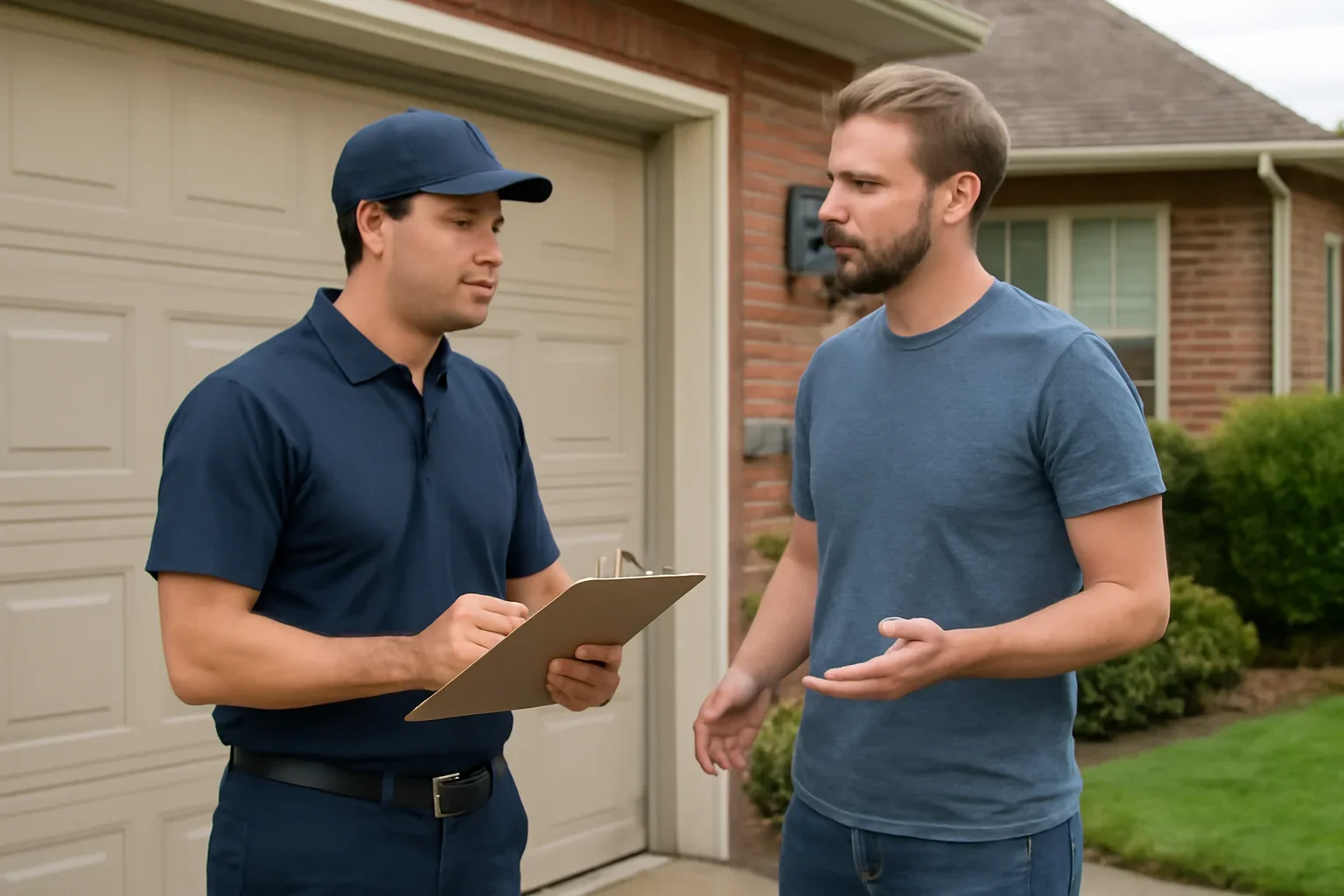
You do not need to identify the failed part before booking. Describe the movement, sound, door position and controls that still work.
Arrange garage door repair when the door becomes noisy, uneven, unusually heavy, difficult to open, unable to close, unreliable or visibly damaged. Stop operating it when a cable is loose, a roller has left the track, the door hangs crooked or the spring system appears damaged. A complete inspection helps separate a door-hardware problem from an opener or sensor fault.
The timing and location of the symptom can help narrow down the cause. Mention whether the issue occurs while opening, closing, stopping, reversing or using a specific control.
The opener may hum, click or move the door only a few inches. Springs, cables, door balance, the trolley or the drive system may be involved.
One side may sit lower, bind in the track or move ahead of the other because of cable, roller, track or lifting-system trouble.
Sensor alignment, wiring, travel settings, resistance, poor balance or an obstruction may cause the door to reopen.
Grinding, scraping, squeaking, rattling or popping may point to worn rollers, loose hardware, alignment trouble or opener strain.
Springs and cables operate under substantial tension, while a damaged door can shift unexpectedly. Repeated opener use may also increase damage to the tracks, rollers, panels and motor system.
Willowbrook includes detached properties, townhouse and multifamily developments, shopping areas and employment lands. Local service requests can therefore involve a private attached garage, a compact townhouse lane, a strata-managed property or a garage close to a busy commercial route.
Homes around Langley Meadows and 64 Avenue may have different door, opener and access arrangements than properties closer to Willowbrook Drive, 200 Street, Fraser Highway or the Langley Bypass. The property type and garage layout should be considered before the repair scope is confirmed.
A garage used as the household’s main entrance may cycle several times each day. That frequent use can make developing roller, spring, cable, sensor and opener problems noticeable through new sounds, slower movement or inconsistent operation.
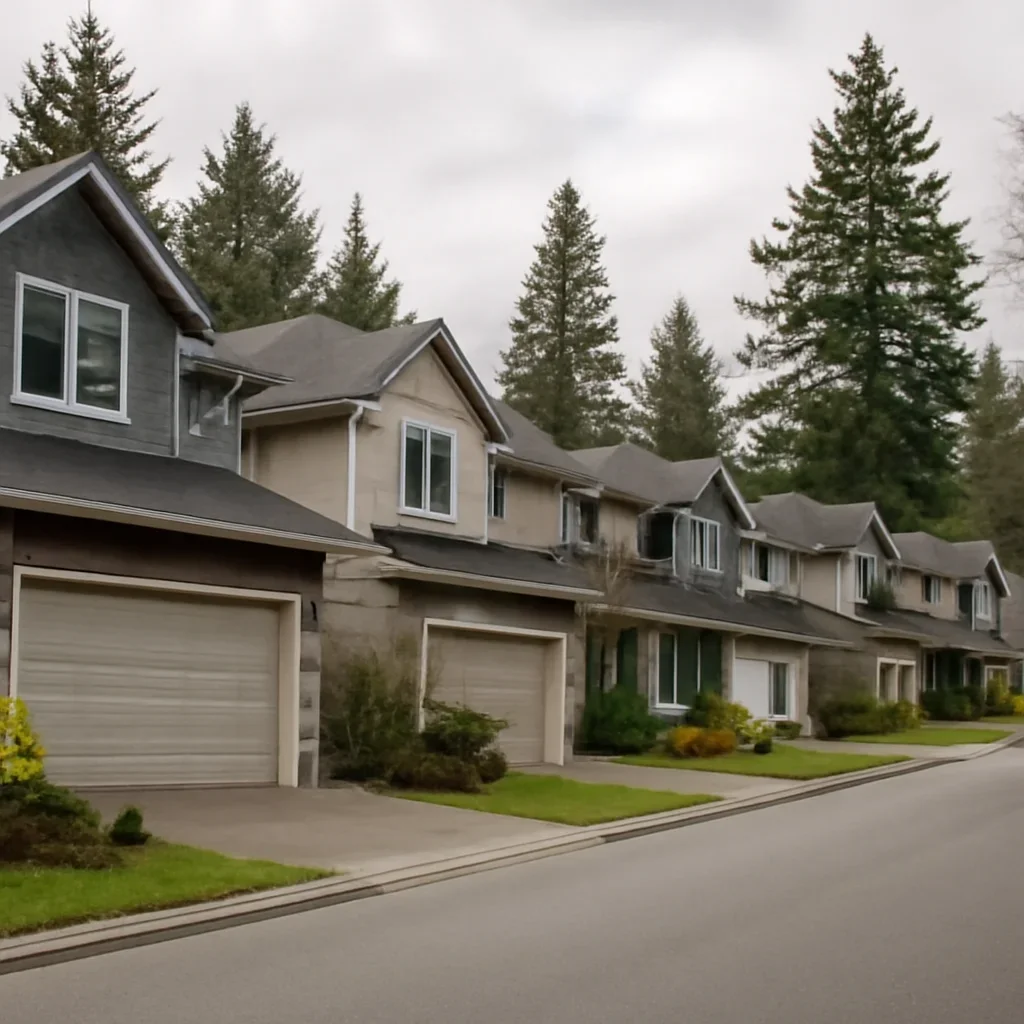
A garage door is a connected system. A responsible diagnosis should identify whether the symptom begins with the moving door, lifting hardware, opener, controls or safety equipment.
Check panels, reinforcement, hinges and attachment points for impact damage, cracking, separation or movement.
Review the lifting system for broken springs, loose cables, displaced drums, poor balance and uneven support.
Inspect the roller path, track spacing, brackets, bends, wear and areas where the door binds or scrapes.
Check the motor, rail, trolley, drive, controls, sensors, travel, force and automatic reversal behaviour.
A noisy opener may be reacting to a heavy door. A roller may leave the track because of a cable or balance problem. A door may reverse because of sensors, resistance or travel settings. Checking the connected components helps reduce repeat failures.
A focused repair is often appropriate when the door remains structurally serviceable. Wider replacement may be worth comparing when several concerns are present at the same time.
Panels and structural components are serviceable, and the issue is limited to specific hardware, alignment or controls.
Springs, cables, rollers, hinges, tracks, sensors or opener parts can be matched to the existing system.
The repair can return the door to balanced, controlled movement without leaving wider damage unresolved.
Its size, insulation, sealing, appearance and daily operation remain suitable after the repair.
Widespread dents, cracking, corrosion, separation or structural distortion may make individual repairs less practical.
Repeated problems across springs, cables, rollers, tracks, panels or the opener may justify a wider comparison.
Discontinued panels, tracks or hardware can make a dependable repair difficult to complete.
Poor sealing, noise, insulation, appearance or reliability may make a planned replacement more valuable.
You do not need to diagnose the component yourself. Share what you can observe without touching damaged hardware.
Use clear overview images taken from a safe standing position. Do not move the door or touch springs, cables and unstable parts.
A safe overview is more useful than a close photograph that requires standing beneath the door or moving damaged hardware.
The process should start with the symptom, identify the actual cause and finish by confirming balanced movement and safe operation.
Explain the door position, movement, sound, controls and whether access or property security is affected.
Review the panels, springs, cables, tracks, rollers, opener, controls and safety equipment.
Identify the failed components, related wear, suitable parts and whether replacement should also be compared.
Check balance, movement, closing, reversal, controls and opener performance before normal use resumes.
These pages help separate general door repair from opener problems, time-sensitive service, replacement planning and cost research.
These answers cover common symptoms, safe next steps and useful information to share before arranging service.
Possible causes include a broken spring, loose cable, poor door balance, damaged track, disconnected trolley or opener-drive problem. Stop repeated opener use when the door feels unusually heavy, uneven or unstable.
The safety sensors may be blocked, dirty, misaligned or affected by wiring trouble. Incorrect travel settings, track resistance, poor balance or an obstruction can produce a similar symptom.
A cable may be loose, broken or displaced, or the spring, drum, roller or track may no longer be supporting the door evenly. Stop operating a visibly crooked door.
Not necessarily. Noise may come from worn rollers, loose hardware, dry moving points, track alignment or opener vibration. Grinding, scraping, popping or sudden new sounds should be assessed before the problem becomes more disruptive.
Yes. A heavy, binding or poorly balanced door can make the motor hum, stop or reverse even when the opener is not the original cause. The door mechanics and opener should be checked together.
The issue is more urgent when the door is unstable, partly off track, trapping a vehicle, stuck open or unable to secure the garage. Keep the area clear and explain the current door position when requesting service.
A townhouse or strata visit may require a unit number, gate entry, visitor parking, shared-lane information or property-management coordination. Include those details with the service request.
Include the Willowbrook address, current door position, what happens during operation, unusual sounds, controls that still work, visible damage, access restrictions and whether the garage is secure.
Same-day timing depends on scheduling, the service location, property access, the nature of the problem and required parts. Clearly describing whether access, safety or security is affected helps the request receive the correct service path.
Share your Willowbrook address, current door position, unusual sounds or movement, controls that still work and whether a vehicle, normal access or garage security is affected. You do not need to identify the failed component yourself.