The garage door is stuck open
The property may be exposed to weather, theft or unauthorized access because the opening cannot be closed securely.
Is your garage door stuck open, trapping a vehicle, hanging unevenly or no longer securing the property? Urgent garage door problems need a clear description of the risk so the request can be assessed and prioritized correctly.
We help Willowbrook homeowners, strata residents, property managers and local businesses arrange service for unsafe, inaccessible or unsecured garage doors. The first step is identifying whether the problem involves a spring, cable, track, panel, sensor, opener or another part of the door system.
Explain whether the door is open, closed, off track or unstable. Response timing depends on current availability, location, access, safety conditions and required parts.
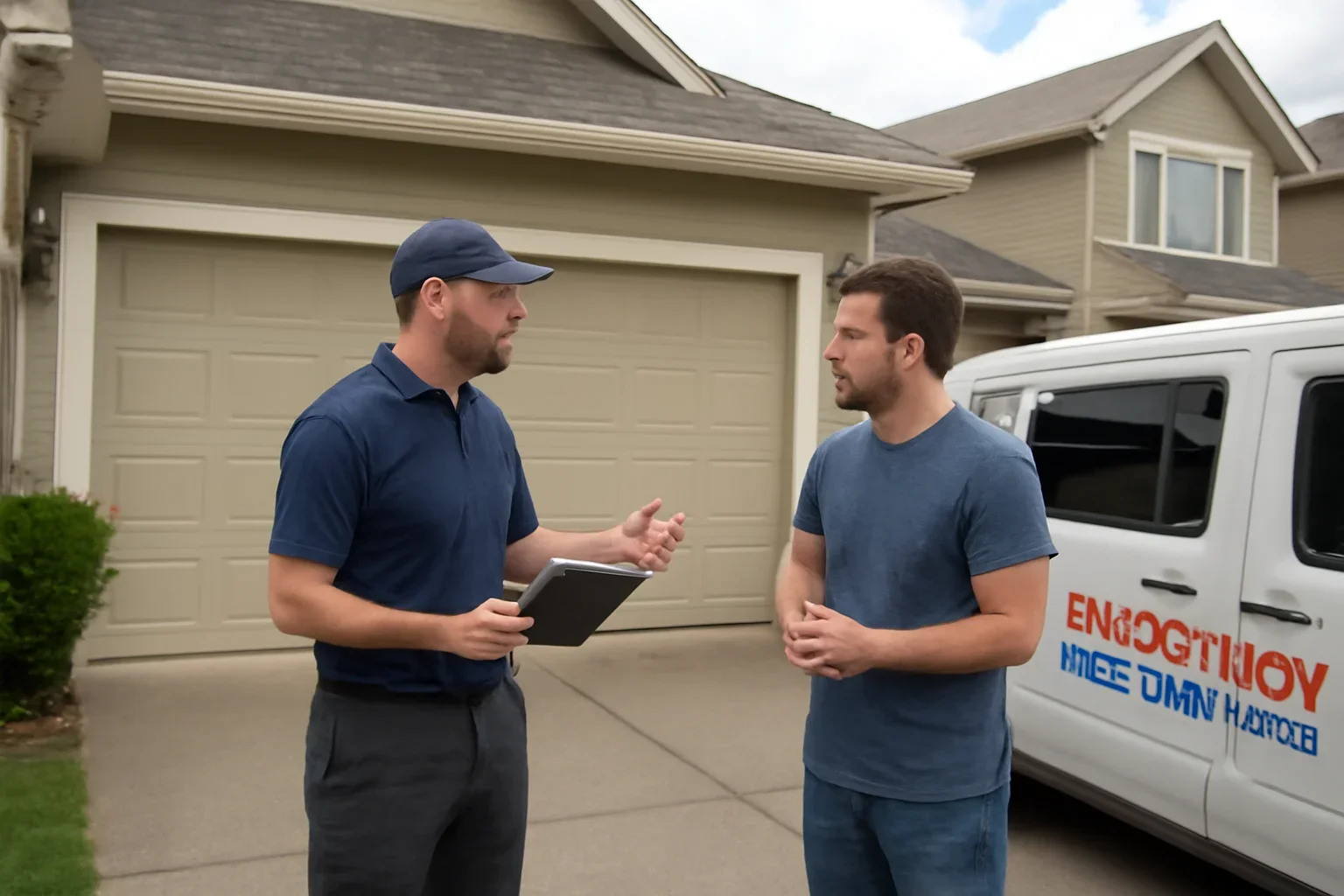
Stop using the opener when the door is crooked, partly off track, supported by a loose cable or making sudden movement.
A garage door problem is generally urgent when the door cannot secure the property, blocks essential access, traps a vehicle, hangs unevenly, has left its tracks or shows a broken spring or cable. A noisy but stable door may still need prompt repair, but it is usually less urgent than a door that could fall, shift or leave the property exposed.
The exact failed component may not be obvious. Describe what the garage door is doing and how the problem affects safety, access or property security.
The property may be exposed to weather, theft or unauthorized access because the opening cannot be closed securely.
The door may be stuck closed because of a failed spring, cable, opener, track or another mechanical problem.
A displaced roller, loose cable, bent track or uneven lifting system can leave the door at risk of shifting farther.
A loud sound followed by a heavy door, loose cable or failed movement may indicate spring or lifting-system damage.
A garage door is heavy, and damaged springs, cables, tracks or brackets can move unexpectedly. Repeated opener use may increase the damage or cause the door to shift.
Willowbrook sits within a busy part of Langley around major routes, shopping areas, apartments, townhouses, detached homes and commercial properties. A failed garage door can affect more than one household routine when it opens onto a shared drive aisle, underground parking area, service lane or loading space.
Properties around 200 Street, Highway 10, Fraser Highway and nearby residential streets can have very different access conditions. Emergency requests may involve a private attached garage, strata parking entrance, commercial overhead door or a garage facing a narrow shared lane.
For Willowbrook service calls, clear access information can be as important as the repair description. Gate entry, visitor parking, loading restrictions, underground clearance and property-management approval may affect how the appointment is arranged.
You do not need to identify the failed part. A clear description of the door position, visible condition and access problem is more useful.
Explain whether the door is fully open, fully closed, partway, crooked, hanging or visibly outside the track.
State whether a vehicle is trapped, the property is unsecured or normal residential or business access is blocked.
Mention loose cables, a spring gap, bent track, displaced roller, damaged panel or opener lights and sounds.
Include the address, unit number, parking instructions, gate entry and any strata or commercial access restrictions.
When it is safe, include one photo of the complete door and another showing the visible problem. Do not stand beneath the door, touch high-tension parts or move hardware to obtain a closer image.
Both situations may need prompt attention, but safety, security and blocked access usually determine which requests are most urgent.
The garage door is stuck open or damaged in a way that leaves the home, building, equipment or stored belongings exposed.
The door is crooked, hanging, partly off track or supported by a loose cable or visibly damaged component.
A required vehicle, business entrance, shared parking door or important household access point cannot be used.
The system is not operating correctly, but the opening is secure and nobody needs to move the door immediately.
The opener, sensors or hardware are unreliable, but the door is still stable and not creating an immediate access problem.
The area can remain clear and unused until a normal service appointment is available.
One visible failure can affect several connected components. Inspection should identify both the immediate problem and the reason the door became unsafe or unusable.
Check whether the panels, hinges, reinforcement and bottom section remain aligned and structurally serviceable.
Review the lifting system for a broken spring, loose cable, displaced drum or uneven support.
Inspect for bent tracks, loose brackets, displaced rollers and areas where the door is binding or leaving its normal path.
Check whether the motor, trolley, rail, travel settings or sensors contributed to the problem or were strained by it.
Some situations can be resolved during the first visit, while others require compatible parts or wider repair. The service scope should be explained after the door and connected hardware have been assessed.
One clear description is more useful than repeated opener cycles. Leave an unstable or obstructed door in its current position and keep the surrounding area clear.
The request should communicate the immediate risk, support accurate routing and lead to a repair decision based on the complete system.
Explain the door position, visible condition and whether safety, security or essential access is affected.
Provide the address, parking instructions, gate information and any strata or commercial access requirements.
Check the door, springs, cables, tracks, rollers, opener and safety controls before confirming the repair scope.
Test door balance, movement, closing, security and opener response before the system returns to normal use.
Urgent symptoms can involve mechanical, opener, safety or structural failures. These service pages provide the most relevant next steps.
These answers explain urgent situations, safe next steps and the information that helps when requesting emergency service.
It may be urgent when the open door leaves the home, business, vehicle, equipment or stored belongings unsecured. Explain whether the door can be closed at all and whether the opening is exposed to a shared lane, parking area or public access.
Stop operating the opener, keep people and vehicles away and do not push the door or rollers back into position. An off-track door may also involve a cable, track, roller, spring or impact problem.
Do not force a door that is crooked, unusually heavy, binding or supported by damaged hardware. Forcing it may worsen track, panel, cable or opener damage and could make the door unstable.
The door may have a broken spring, disconnected trolley, damaged cable, stripped drive component or another mechanical problem. Stop repeated testing and report what the opener sounds like and whether the door moved at all.
A loud bang can be caused by a broken spring or another component releasing suddenly. Look only from a safe position for a visible spring gap, loose cable or uneven door, and do not touch the lifting system.
Yes, but the request should include the unit number, gate entry, visitor parking, underground clearance and any property-management requirements. Explain whether the failed door serves one unit or a shared parking area.
Timing depends on current scheduling, technician availability, location, property access, safety conditions and the parts required. Clearly explaining the risk helps the request receive the correct priority.
Include the Willowbrook address, current door position, visible damage, whether the property is secure, whether access is blocked and any gate, parking, strata or commercial-entry instructions.
Provide the property address, current door position, visible symptoms and whether the issue affects safety, security, a trapped vehicle or required access. Include gate, parking, strata or commercial-entry instructions so the request can be assessed correctly.