01
Large dent or crease
A deep dent can affect the panel face, internal reinforcement, hinges, rollers, seals, and smooth movement.

Replace a dented, cracked, bent, rusted, or impact-damaged garage door section while protecting the door’s alignment, appearance, insulation, hardware, and normal operation.
A panel replacement should be planned around the entire door. Section compatibility, hinges, rollers, tracks, reinforcement, springs, cables, opener strain, and final balance may all affect whether a single-panel repair is practical.
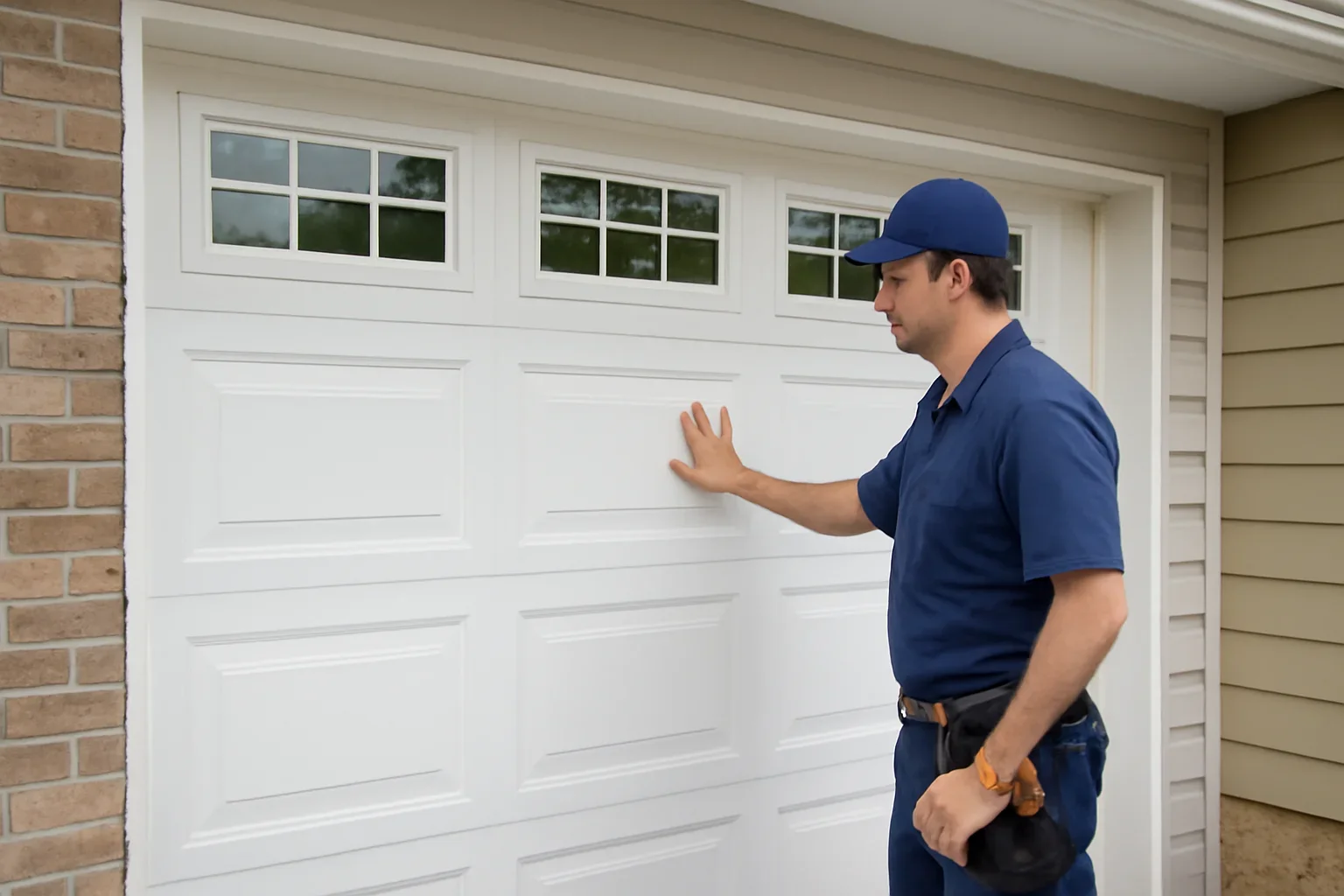
Panel replacement may be practical when damage is limited to one or a few sections and the remaining door system is still compatible and serviceable.
A deep dent can affect the panel face, internal reinforcement, hinges, rollers, seals, and smooth movement.
Cracks around hinges, struts, windows, edges, or panel joints can reduce structural support.
Bottom-section damage may affect the seal, cable fixtures, floor contact, alignment, and secure closing.
Impact can damage panels, tracks, rollers, hinges, brackets, cables, reinforcement, and the surrounding opening.
Corrosion, moisture damage, swelling, separation, or surface breakdown may weaken the section over time.
Layers may separate, buckle, or become exposed after impact, moisture, age, or repeated movement.
Damage around inserts, frames, glass, or panel cut-outs may affect appearance, sealing, and section strength.
A damaged panel can twist the door, bind rollers, strain hinges, disturb tracks, or affect opener operation.
Keep people, pets, and vehicles away if the door is crooked, off track, supported by a loose cable, cracked around a hinge, or visibly distorted near the spring and lifting system.
Do not push the panel back into shape, remove lower brackets, loosen hinges under load, or repeatedly operate the opener.
The visible section damage may have affected the tracks, rollers, hinges, reinforcement, seals, cables, springs, opener, and surrounding opening.
Dents, cracks, bends, separation, corrosion, damaged edges, hinge points, and reinforcement are reviewed.
Height, profile, material, thickness, insulation, colour, finish, window layout, and hinge locations must be compatible.
Impact or twisted movement may bend tracks, damage rollers, loosen brackets, or shift alignment.
Cracked hinges, loose fasteners, bent reinforcement, and damaged mounting points may need replacement.
Changes in panel weight or impact damage may affect balance, cables, drums, and opener load.
The repaired door should move squarely, seal correctly, remain balanced, and operate without excess opener strain.
A close visual and mechanical match depends on product availability, door age, model, finish, exposure, and whether the original section is still made.
Raised, recessed, flush, carriage-style, ribbed, full-view, and other profiles need compatible dimensions and joint design.
Panel height and joint shape must match the door layout so the sections connect and travel correctly.
Steel, aluminum, wood, composite, insulated, layered, and specialty sections can differ in weight and hardware needs.
A new factory-finished section may appear different beside panels that have faded, weathered, oxidized, or been repainted.
The replacement should be reviewed for thickness, construction, thermal performance, and compatibility with adjacent sections.
Glass type, frame style, insert pattern, privacy, weight, and available replacements can affect the match.
Hinges, rollers, handles, struts, reinforcement, opener brackets, and lower fixtures must mount correctly.
Older or discontinued doors may not have an exact replacement section, which can change the repair decision.
Sunlight, rain, oxidation, cleaning products, previous paint, and normal aging can change the appearance of existing sections.
Confirm the expected visual difference, finish options, repainting plan, and product availability before approving a single-panel replacement.
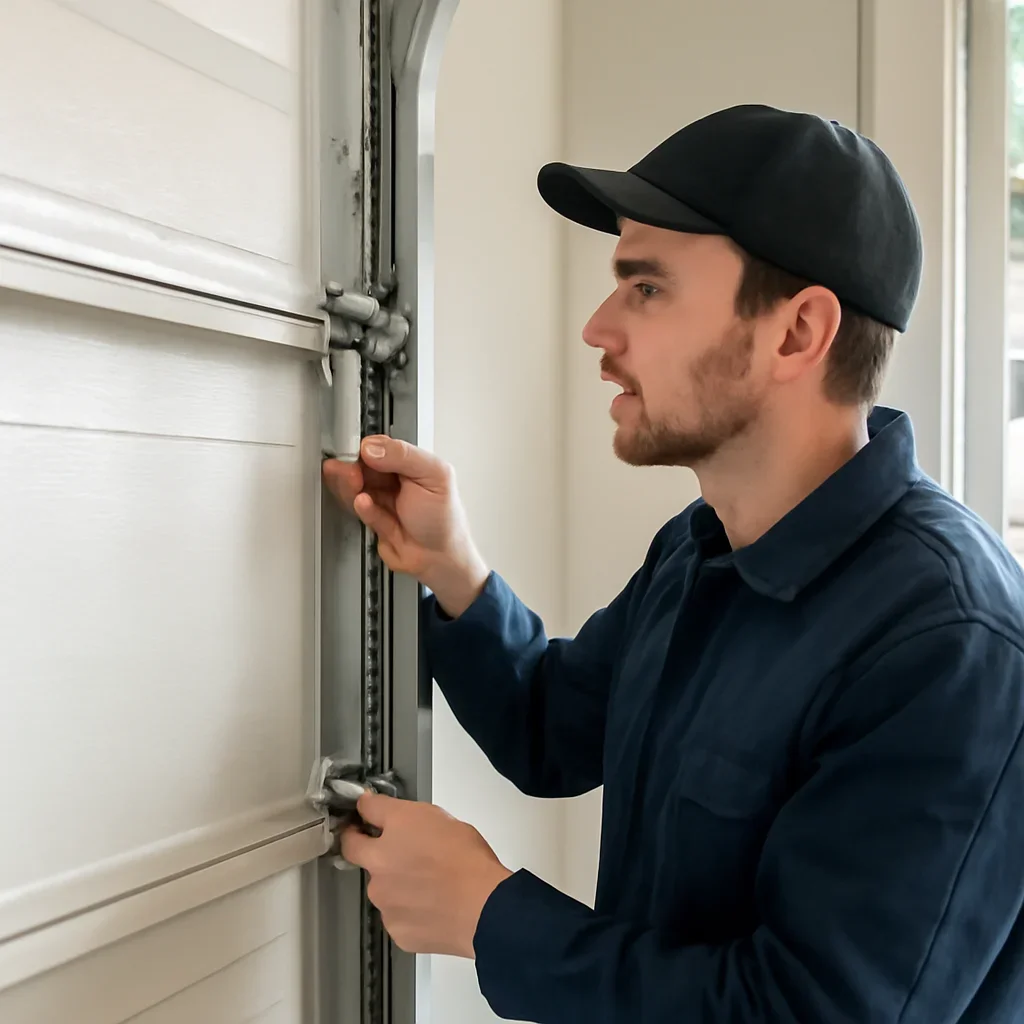
A door can appear to have cosmetic damage while connected components have shifted, bent, cracked, or lost alignment.
The process depends on section availability, compatibility, door stability, connected damage, hardware condition, and final alignment.
Panels, tracks, rollers, hinges, reinforcement, cables, springs, seals, opener parts, and the opening are reviewed.
Size, profile, material, insulation, colour, finish, windows, joints, and hardware locations are compared.
The damaged section and any unsuitable hinges, rollers, struts, seals, or related hardware are replaced as required.
Alignment, track movement, cable tracking, spring support, opener travel, force, sensors, sealing, and full cycles are checked.
A single-panel replacement is not always the best value when several sections are damaged or the remaining system is heavily worn.
Damage may be limited to one compatible section while the remaining panels, tracks, hardware, springs, seals, and opener are serviceable.
Multiple damaged panels can increase parts, hardware, alignment, colour-matching, insulation, and labour concerns.
Compare full replacement when sections are discontinued, structural damage is widespread, the door is heavily worn, or several components need work.
Review Garage Door ReplacementPanel material, insulation, windows, reinforcement, and construction affect total door weight. The spring and opener systems should be checked after replacement.
Material, insulation, windows, reinforcement, and size affect the total load carried by the spring system.
The door should not become excessively heavy, rise sharply, drift, slam, or place extra strain on the opener.
Cables should remain correctly seated and carry the door evenly on both sides.
Rollers should pass through the tracks without binding, scraping, jumping, or twisting the sections.
Travel and force should suit the repaired, properly balanced door rather than cover mechanical resistance.
The repaired section should close squarely and maintain suitable bottom, side, and top seal contact.
The final scope depends on the panel, availability, finish, hardware, connected damage, labour, access, and whether full-door replacement is more practical.
Section height, width, material, insulation, layering, profile, reinforcement, and windows affect the required product.
Current, discontinued, custom, specialty, or difficult-to-match sections can change parts and planning.
Hinges, rollers, struts, tracks, brackets, seals, cables, springs, and opener parts may expand the repair.
Colour matching, painting, windows, decorative details, weathering, and adjacent-panel condition may affect the final result.
Townhouses and newer homes may require style, colour, strata, shared-access, and compact-garage considerations.
Established homes may have older door models, faded finishes, discontinued sections, and worn hardware.
Attached garages may prioritize insulation, appearance, quiet operation, sealing, and reliable daily access.
Older or custom properties may use non-standard openings, panel styles, wood finishes, or specialty hardware.
Workshops, acreages, detached garages, and larger doors may use heavier panels and different reinforcement.
Townhouses, detached homes, older properties, custom garages, workshops, and commercial spaces may use different materials, finishes, door sizes, and hardware.
Use the same-day repair path when impact damage has left the door crooked, off track, unsecured, jammed, or unable to provide normal access.
Explore Same-Day RepairUse the main repair page when panel damage is combined with tracks, rollers, hinges, cables, springs, balance, sensors, or opener problems.
Explore Garage Door RepairKeep product, colour, model, installation, and warranty records together so future matching and service are easier.
Monitor balance, tracks, rollers, hinges, cables, springs, seals, opener operation, and new movement or noise.
Review Garage Door MaintenanceConfirm written coverage for the section, finish, windows, hardware, installation, and any registration or maintenance requirements.
Review Warranty GuidanceFor extensive damage or a discontinued system, compare a complete new door selected for the opening and property.
Review Garage Door InstallationConsider panel replacement when damage is limited to one or a few sections and the remaining panels, tracks, hardware, springs, cables, seals, and opener are still compatible and serviceable.
Sometimes. A suitable replacement must match the section height, profile, joints, material, thickness, insulation, hardware locations, and overall door system.
An exact visual match may not be possible because older panels can fade, weather, oxidize, or have previous paint. Confirm finish expectations before approval.
Yes. A deep dent or crease can affect hinges, reinforcement, rollers, tracks, alignment, seals, balance, and opener load.
Full replacement may be more practical when several sections are damaged, panels are discontinued, structural wear is widespread, or multiple door components also need repair.
It can. A change in panel material, insulation, windows, reinforcement, or weight may require the spring and opener systems to be checked.
Provide the property address, full-door photos, close-ups of the damage, door size, manufacturer or model labels, panel profile, windows, colour, and impact history.
Use the contact page when you need help comparing panel replacement, broader repair, or full garage door replacement.
Share the property location, full-door photos, close-ups of the damage, door size, model information, panel style, windows, colour, and preferred timing.