01
You forgot the current PIN
A new code may need to be set after ownership changes, tenant turnover, staff changes, or loss of the existing access information.

Book keypad programming when you need a new access code, have forgotten the current PIN, replaced the keypad, reset the opener, or can no longer rely on wireless entry.
The keypad, opener receiver, batteries, programming method, compatibility, lock mode, and door operation may all need to be checked before access is restored.
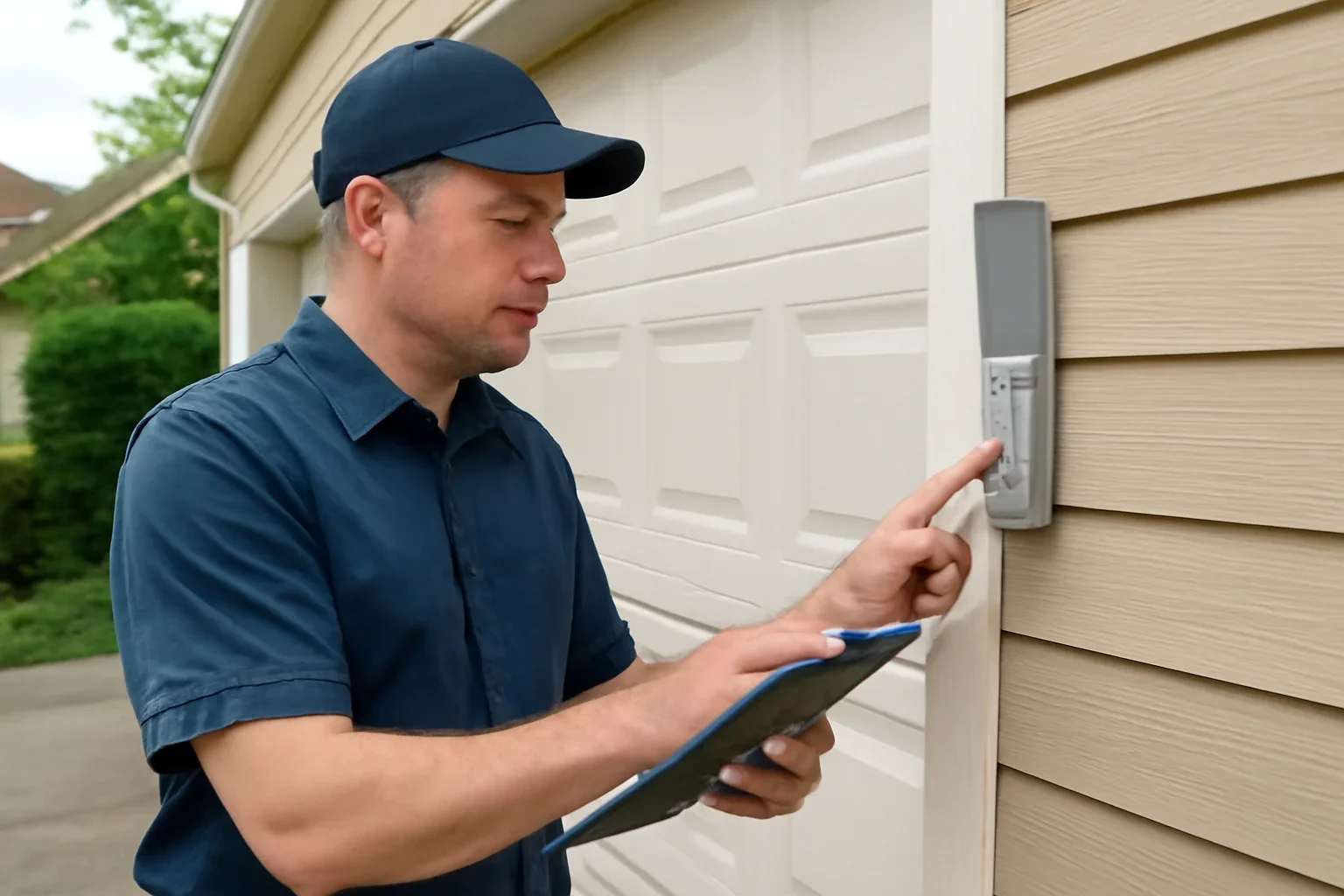
A keypad that does not work may need programming, but batteries, weather exposure, compatibility, receiver settings, or opener faults may also be involved.
A new code may need to be set after ownership changes, tenant turnover, staff changes, or loss of the existing access information.
A power, receiver, control-board, or programming reset may remove previously stored keypad access.
The keypad must match the opener system and follow the correct pairing method for that model.
Weak batteries, worn buttons, moisture, temperature, signal range, receiver issues, or programming loss may cause unreliable access.
The opener may be locked, disconnected, unable to move the door, or affected by a separate mechanical problem.
The keypad and opener may be incompatible, outside programming mode, or using a different wireless system.
Changing the code can help remove access previously given to tenants, workers, guests, or former household members.
A keypad can provide entry without carrying a remote, but backup access and opener compatibility should still be considered.
Do not place keypad PINs in public notes, online forms, visible labels, shared photos, or unsecured messages.
Use a code that is not obvious, change it when access should be removed, and avoid sharing permanent codes when temporary or separate access options are available.
The exact setup depends on the opener model, keypad type, wireless system, controls, and whether the garage door itself is operating correctly.
Buttons, housing, battery contacts, lighting, moisture exposure, mounting, and visible wear are checked.
The keypad must match the opener’s wireless system, model range, and supported programming method.
Learn mode, wall-control lock, receiver response, stored devices, and opener settings are reviewed.
A working keypad cannot correct a broken spring, cable, sensor, track, balance, or opener-drive problem.
Old access should be removed where needed, and the new code should be private and difficult to guess.
The keypad is tested from its installed location along with the wall control, remotes, sensors, and normal door movement.
Programming loss is only one possibility. The keypad, opener, receiver, power supply, controls, and door system may each affect the result.
A keypad may light briefly, respond inconsistently, or stop transmitting when the battery is weak.
An opener reset, control-board change, receiver issue, or deliberate memory clear may remove stored devices.
Different wireless systems and model generations may require a specific compatible keypad.
Lock or vacation mode may disable wireless controls while the interior wall button still operates.
Moisture, dirt, temperature changes, worn buttons, cracked housings, or corroded contacts can affect reliability.
The keypad may transmit correctly while the opener, sensors, spring system, or door prevents movement.
Review Opener RepairThe process depends on whether the existing keypad can be reused, needs reprogramming, or should be replaced with a compatible unit.
The opener and keypad models, wireless system, controls, and current operating condition are reviewed.
Batteries, buttons, mounting, housing, moisture exposure, receiver response, and lock settings are checked.
The compatible keypad is paired and a new private access code is set without displaying or storing it publicly.
The keypad, remotes, wall control, sensors, opener travel, and normal door operation are tested together.
A keypad can make everyday entry easier, but code management and backup access should be planned carefully.
Keypads, remotes, apps, wall controls, sensors, and the opener receiver are connected but may require different service paths.
For new remotes, lost devices, battery problems, pairing, compatibility, or opener-memory resets.
Review Remote ProgrammingFor receiver, wall-control, motor, rail, drive, travel, force, lighting, or control-board problems.
Review Opener RepairFor blinking sensor lights, closing failure, reversal, wiring damage, alignment, or bracket problems.
Review Sensor RepairFor older or incompatible systems where controls, features, reliability, or replacement-part availability no longer meet the need.
Review Opener ReplacementTownhouses and newer homes may need keypad, remote, app, quiet-opener, and shared-access planning.
Established homes may use older opener systems where keypad compatibility should be confirmed.
Attached garages may prioritize secure household access and dependable daily operation.
Older or customized properties may require compatibility checks for existing openers and controls.
Detached garages, workshops, acreages, and rural buildings may require weather-resistant placement and backup access.
Households, townhouses, rentals, workshops, rural garages, and commercial spaces may have different access and code-management needs.
The issue may involve the opener, sensors, springs, cables, tracks, balance, or door hardware rather than programming alone.
Explore Garage Door RepairUse the support page for questions about remotes, keypads, apps, sensors, wall controls, compatibility, and access planning.
Visit Garage Door SupportThe scope depends on whether the existing keypad can be programmed, needs batteries or repair, is incompatible, or should be replaced.
The keypad and opener may already be compatible and only require setup, code change, or memory review.
Cost may include a compatible unit, mounting, batteries, programming, code setup, and testing.
Receiver, wall-control, wiring, sensor, power, or opener faults can expand the service scope.
Review Pricing GuidanceBook programming when you need a new PIN, have forgotten the current code, replaced the keypad, reset the opener, changed occupants, or can no longer rely on keypad access.
No. Compatibility depends on the opener manufacturer, model, age, wireless system, supported keypad type, and programming method.
The keypad may have lost programming, be incompatible, have a weak battery, or be blocked by lock mode. The opener or door may also have a separate fault.
Changing the code is a practical way to remove unknown previous access. Lost remotes and other stored devices may also need to be reviewed.
Moisture, dirt, temperature changes, worn seals, damaged housings, and corroded battery contacts can affect reliability.
Only if the problem is limited to keypad access. Broken springs, cable trouble, sensor faults, opener damage, track resistance, and poor balance require separate repair.
Share the opener manufacturer and model, keypad type, current symptoms, battery history, other controls that still work, and safe photos of the equipment labels.
Use the contact page when you are unsure whether the issue involves programming, compatibility, the opener, or the garage door itself.
Share the property location, opener manufacturer and model, keypad type, current symptoms, other controls that still work, and preferred timing.