01
A roller is outside the track
One or more rollers may be beside, above, or completely outside the track channel.

Book off-track repair when rollers have left the tracks, the door is hanging crooked, one side is jammed, or the system has become unstable after impact, cable trouble, or hardware failure.
An off-track garage door should be treated as a whole-system problem. Tracks, rollers, hinges, cables, springs, brackets, panels, opener parts, and door balance may all need to be checked before the door is used again.
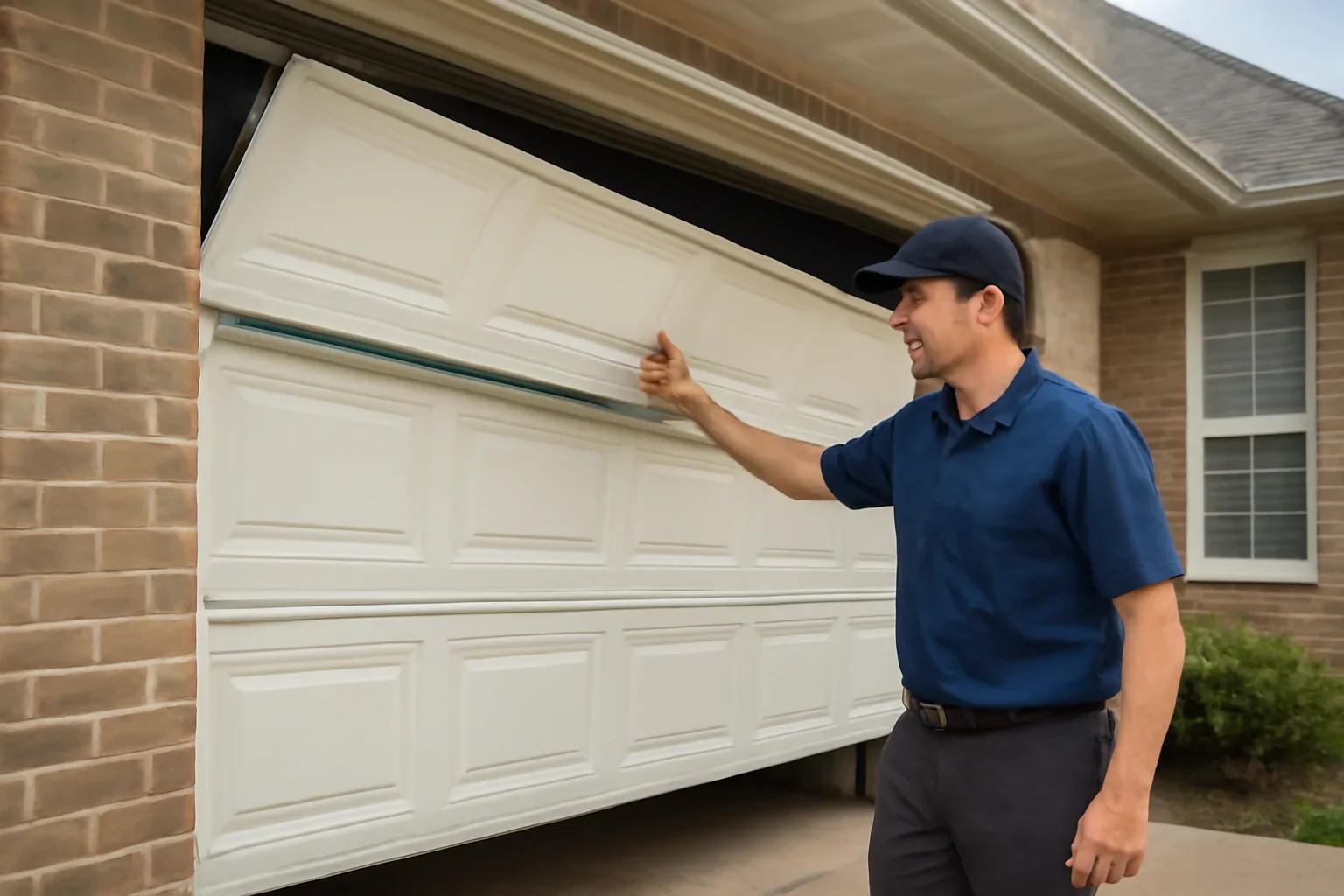
Some off-track conditions are obvious, while others begin with uneven movement, noise, or rollers that no longer sit correctly inside the track.
One or more rollers may be beside, above, or completely outside the track channel.
One side may sit lower or move differently because a roller, cable, drum, track, or spring is no longer supporting the door correctly.
A twisted door can bind in the opening and prevent the rollers from moving normally.
Impact, loose brackets, damaged fasteners, or forced movement can shift the track away from its correct position.
Uneven cable support can pull the door out of alignment and allow rollers to leave the track.
Sudden shaking may indicate track resistance, damaged rollers, loose hardware, panel movement, or poor balance.
The opener may not be able to move a crooked or jammed door and can be damaged by repeated attempts.
Vehicle contact, obstruction, cable failure, spring trouble, or loose hardware may cause sudden track loss.
Keep people, pets, and vehicles away from the opening. An unstable door can shift, drop, twist, or damage connected components without warning.
Do not push rollers back into the track, loosen track brackets, pull cables, disconnect high-tension parts, or repeatedly run the opener.
The visible roller or track problem may be the result of a cable, spring, impact, balance, panel, hardware, or opener issue.
Bends, gaps, separation, loose mounting, impact damage, alignment, and obstruction are reviewed.
Roller stems, wheels, bearings, hinges, brackets, wear, and correct seating are checked.
Loose, frayed, off-drum, or uneven cables may be the cause or result of the off-track condition.
Broken, weak, unsuitable, or uneven spring support can make the door heavy and unstable.
Impact, twisting, cracked hinges, bent sections, or loose reinforcement may prevent proper alignment.
The rail, trolley, drive, mounting, force, and travel are checked for strain or damage caused by the jammed door.
Off-track movement can develop gradually from wear or happen suddenly after impact, obstruction, cable failure, or a major balance problem.
Contact with the door, track, bracket, or panel can shift rollers and bend the movement system.
A loose, snapped, or off-drum cable can remove support from one side and twist the door.
Review Cable RepairPoor support can make the door heavy, uneven, and more likely to bind or leave the track.
Review Balance AdjustmentCracked wheels, bent stems, damaged bearings, or loose hinges can allow rollers to move incorrectly.
Track brackets, fasteners, joints, or the track channel may shift under wear, impact, or repeated strain.
A door closing onto an object can twist, damage a panel, disturb cable tension, and force rollers out of alignment.
The repair should restore stable alignment and correct the condition that caused the rollers or door to leave the tracks.
The door is kept from shifting while the tracks, rollers, cables, springs, panels, and hardware are assessed.
Bent tracks, damaged rollers, loose cables, spring failure, cracked hinges, panel damage, or opener strain are reviewed.
Suitable components are repaired, replaced, secured, or realigned based on the actual condition of the door.
Door travel, cable tracking, roller movement, balance, opener settings, controls, sensors, and final alignment are checked.
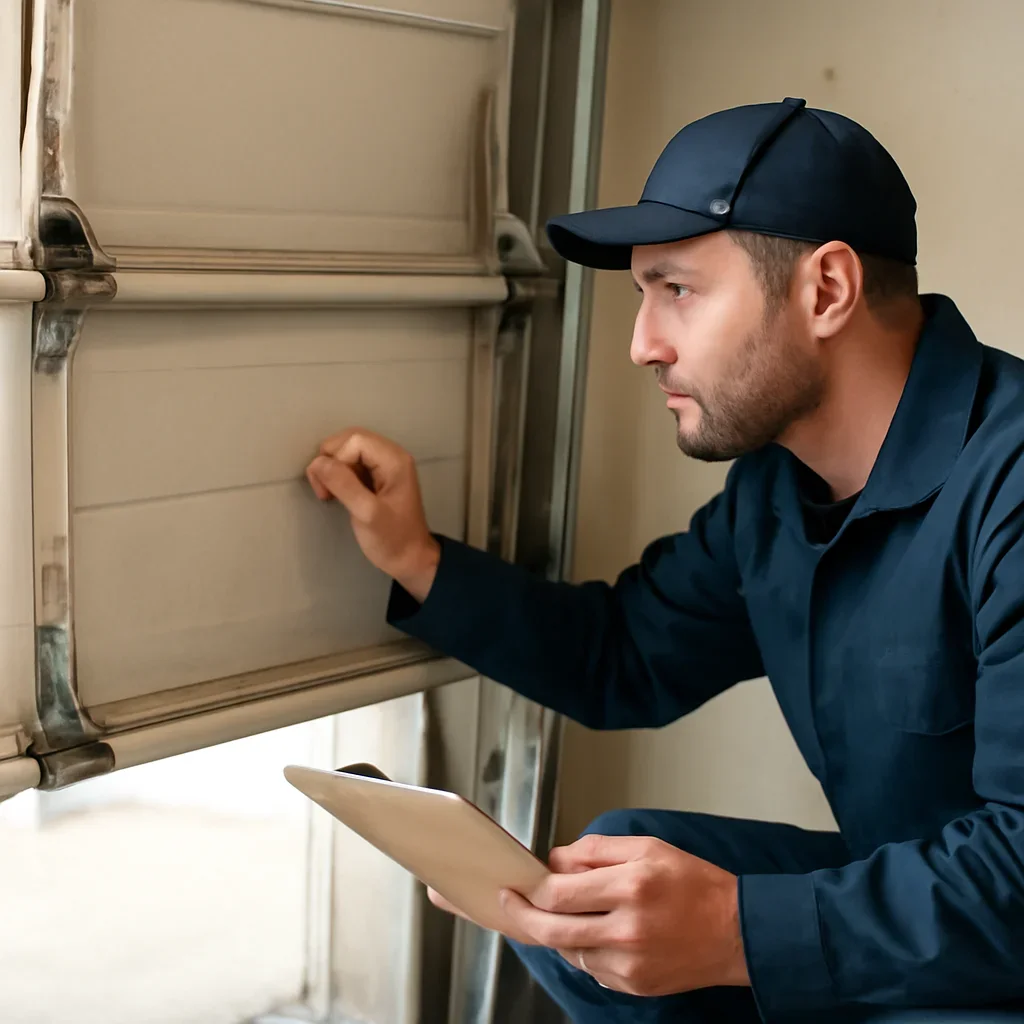
The opener is not designed to pull a jammed or twisted door back into alignment. Continued operation can spread damage through the system.
Putting rollers back into position is not a complete repair when tracks, panels, cables, springs, rollers, or brackets are damaged.
Realignment may be practical when the door and connected components remain serviceable and the cause can be corrected safely.
Bent tracks, broken rollers, loose brackets, damaged cables, failed springs, or cracked hinges may need replacement.
Replacement may be worth comparing after major impact, structural panel damage, repeated off-track events, or widespread wear.
Review Door ReplacementTownhouses and newer homes may involve compact garages, shared driveways, stored items, and limited repair access.
Established homes may have older rollers, tracks, cables, springs, and opener hardware.
Attached garages may place added importance on secure access, smooth operation, and reliable daily use.
Older or custom properties may have non-standard openings, tracks, framing, or replacement-part needs.
Workshops, acreages, detached garages, and larger doors may use heavier hardware and different track layouts.
Single doors, double doors, workshops, custom openings, strata garages, and commercial bays can use different tracks, rollers, springs, and hardware.
Use the same-day repair path when the door is jammed, unsecured, crooked, trapping a vehicle, or creating a time-sensitive access problem.
Explore Same-Day RepairUse the main repair page when the off-track condition is combined with opener failure, broken springs, damaged panels, or several worn parts.
Explore Garage Door RepairThe scope depends on the cause, damage, door size, parts, labour, access, urgency, and whether the opener or structure was affected.
Bent tracks, broken rollers, loose brackets, damaged fasteners, and alignment work can affect the repair.
Cables, springs, hinges, panels, drums, opener parts, and balance work may increase the final scope.
Review Repair Cost GuidanceRequest an estimate when impact damage, structural panel problems, repeated failure, or widespread wear is present.
Request a Free EstimateBook repair when rollers have left the tracks, the door is hanging crooked, one side is jammed, the track is bent, or the system appears unstable.
No. Continued use can increase instability and damage rollers, tracks, cables, springs, panels, hinges, brackets, or the opener.
Homeowner repair is not recommended because the door may be under uneven spring and cable tension. The cause should be identified before the system is moved.
Possible causes include impact, obstruction, cable failure, spring trouble, bent tracks, worn rollers, loose brackets, poor balance, or forced opener operation.
Yes. The opener may strain, stop, reverse, or suffer damage when trying to move a jammed, crooked, or heavy door.
Not always. The decision depends on bends, cracks, mounting damage, alignment, roller fit, and whether the track can support safe operation.
Share the property address, current door position, which side is affected, visible roller or track damage, loose cables, impact history, opener behaviour, and safe photos.
Use the contact page when you are unsure whether the problem involves tracks, rollers, cables, springs, panels, or the opener.
Share the property location, current door position, affected side, visible track or roller damage, cable condition, impact history, and preferred timing.