The door will not open or close
A broken spring, loose cable, jammed roller, opener fault, blocked sensor, or disconnected trolley can all stop movement. The exact door position helps narrow the cause.

A stuck, crooked, noisy, or unreliable garage door can point to more than one problem. Springs, cables, rollers, tracks, hinges, panels, sensors, and the opener all work as one system, so accurate garage door repair starts by identifying which part failed and what else has been affected.
For Langley homeowners, the practical goal is safe and dependable operation without replacing parts that are still serviceable. The repair scope depends on the door's position, balance, visible damage, hardware condition, opener response, and whether the system can be tested safely.
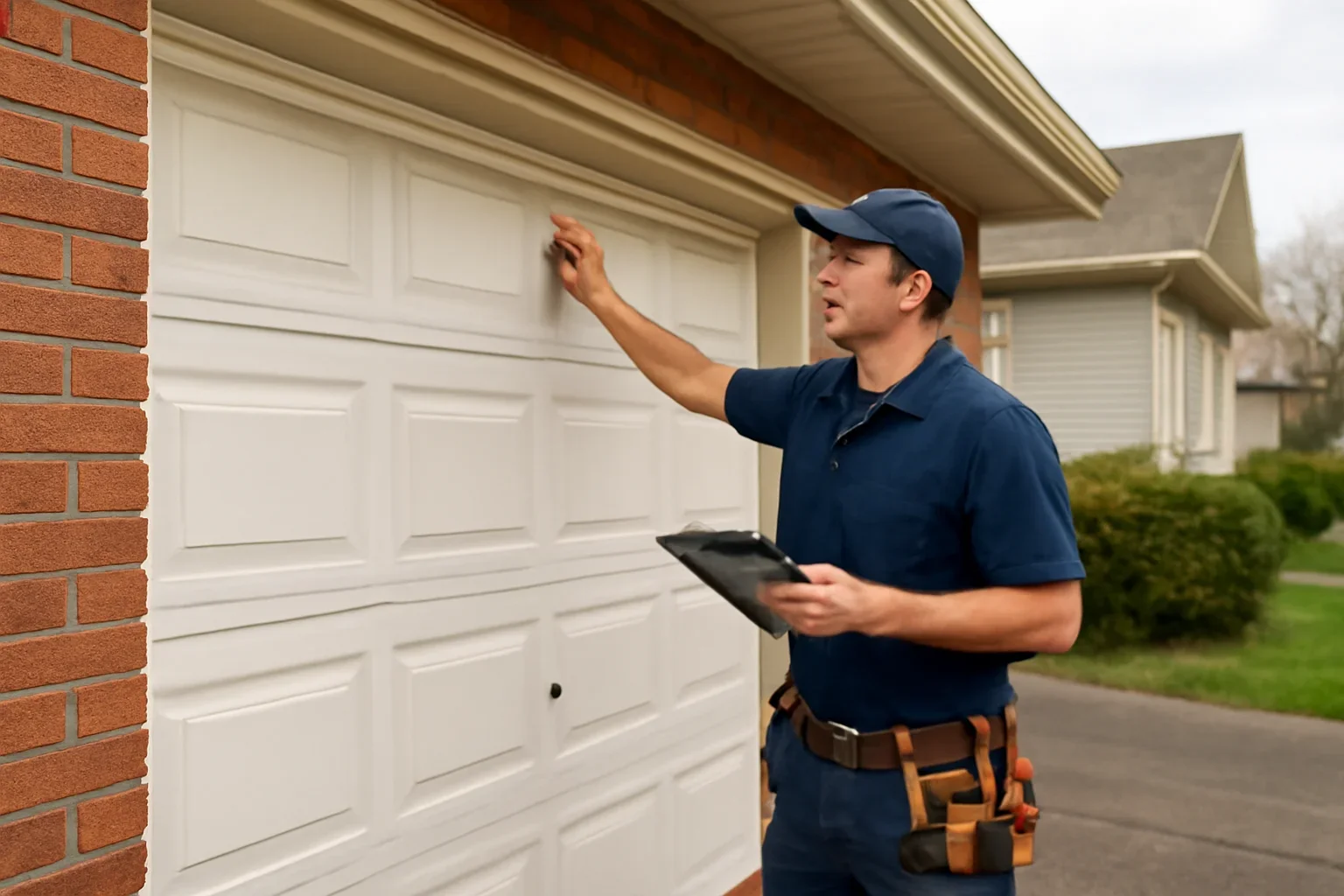
Small changes in movement, sound, or balance can reveal where the system is struggling. Booking before the door fails completely may also limit damage to connected parts.
A broken spring, loose cable, jammed roller, opener fault, blocked sensor, or disconnected trolley can all stop movement. The exact door position helps narrow the cause.
Uneven travel often points to cable, drum, spring, roller, or track trouble. Continued operation can pull the door farther out of alignment.
Grinding, scraping, popping, or sudden shaking may come from worn rollers, loose hardware, damaged tracks, hinge wear, poor balance, or opener strain.
The trolley, rail, gears, belt, chain, travel settings, or door balance may be involved. An opener should not be used to force a heavy or jammed door.
Sensor alignment, obstructions, travel limits, force settings, track resistance, or a binding section can interrupt normal closing and reversal behaviour.
Impact damage, rust, cracked hinges, bent track, loose brackets, and torn weather seals should be assessed in relation to door alignment and safe travel.
Leave the door unused if it is crooked, partly off track, hanging from one side, supported by a loose cable, or moving with a visibly broken spring. Keep people, pets, and vehicles away from the opening, and avoid repeatedly pressing the opener.
Do not pull cables, adjust springs, loosen bottom brackets, or force rollers back into the track. These parts can be under significant tension, and disturbing them may cause the door to move suddenly.
The same symptom can have several causes. A complete first check looks at the door's mechanical condition before assuming the opener or one visible part is responsible.
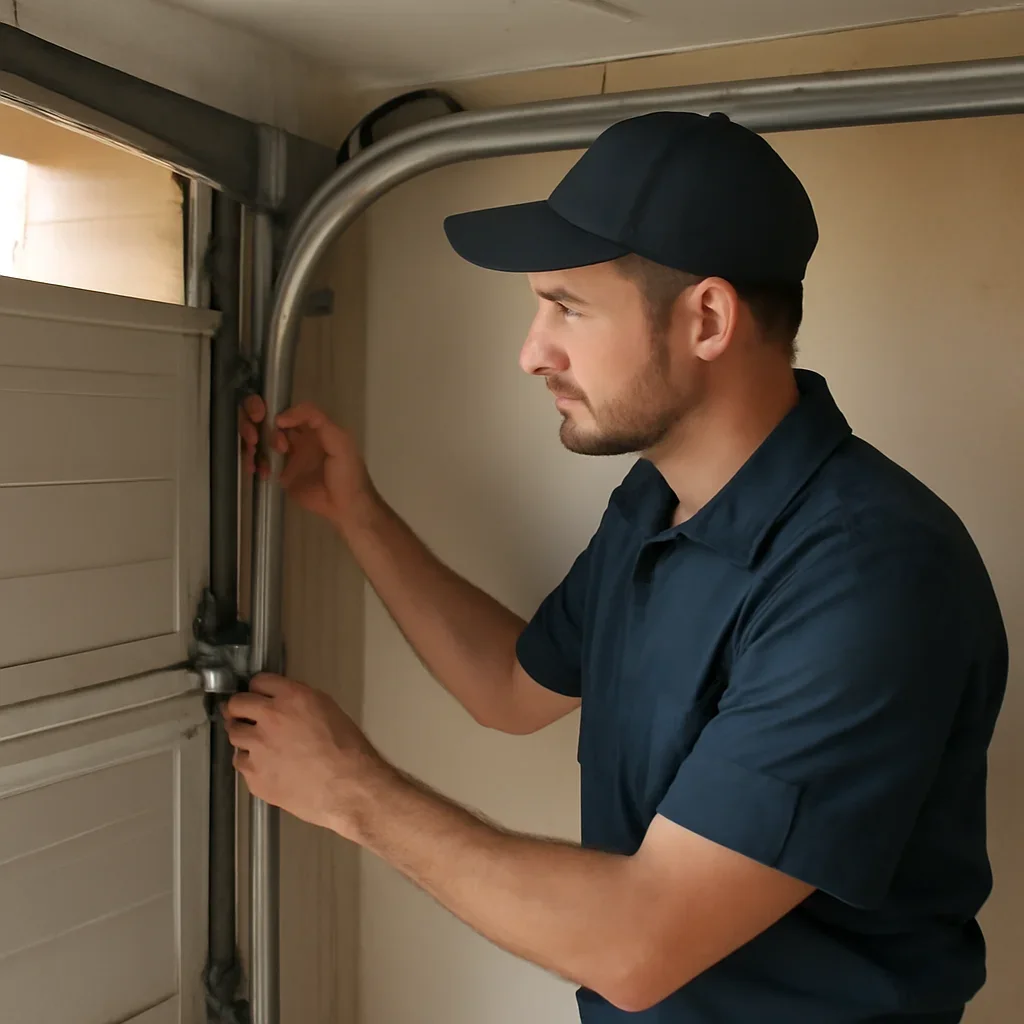
Age is only one factor. Daily cycles, door weight, previous impacts, moisture, hardware wear, and opener strain can combine to create a problem that appears sudden.
Springs counterbalance the door while cables transfer lifting force. Failure can make the door heavy, uneven, or unable to move.
Bent track, worn rollers, loose brackets, or debris can create scraping, shaking, resistance, and off-track movement.
Motor, rail, trolley, gear, drive, sensor, wall-control, remote, or setting problems can affect automatic operation.
Panel damage, poor reinforcement, loose hinges, floor contact, wrong spring balance, or earlier installation issues may affect the whole system.
The process should move from safety and diagnosis to an approved repair scope, then finish with balanced movement and functional testing.
The current position, sounds, visible damage, impact history, and what happened before the failure help identify likely causes.
Springs, cables, tracks, rollers, panels, and supports are reviewed so an unsafe door is not moved simply for testing.
The failed component, connected wear, required parts, and any repair-versus-replacement decision should be clear before approval.
After the approved work, the door should be checked for balance, smooth travel, secure hardware, opener response, sensors, and reversal behaviour.
A garage door is not a group of separate repairs. A weak spring can overload the opener. A damaged roller can pull on the track. A loose cable can leave the door crooked and place uneven force on hinges and panels.
When automatic movement is the main symptom, a focused garage door opener repair assessment may be the most relevant next step.
The decision depends on the condition of the whole door, not just the part that failed today.
Exact pricing depends on what failed, what was damaged as a result, and which parts are suitable for the specific door and opener.
Clear information can help identify whether the visit is likely to involve a spring, cable, track, opener, sensor, panel, or general diagnostic issue.
For a general cost overview before booking, review the garage door repair cost guide.
Property type, garage use, door age, and access can change the repair approach. The useful question is not only where the property is, but how the garage and door are built and used.
Rain, moisture, temperature changes, driveway slope, frequent cycling, and attached living spaces can also make smooth travel, sealing, noise, and safe automatic operation more important.
These pages explain common repair categories in more detail. The current symptom may still involve more than one component.
For a visible spring gap, sudden bang, heavy door, or door that lifts only a short distance.
Review spring repairFor loose, frayed, snapped, or off-drum cables and doors that hang unevenly.
Review cable repairFor rollers outside the track, bent track, a jammed section, or an unstable crooked door.
Review off-track repairFor dents, cracks, impact damage, rust, or a damaged section that affects alignment.
Review panel replacementFor a door that will not close, reverses unexpectedly, or shows sensor-light problems.
Review sensor repairFor a door that feels heavy, drifts, will not stay in position, or strains the opener.
Review balance serviceFor an unexpected failure that affects vehicle access, security, or normal use of the garage.
Review urgent serviceFor inspection, testing, lubrication, and identifying wear before it becomes a breakdown.
Review maintenanceHomeowners should not adjust high-tension parts, but regular observation can reveal changes before the door becomes unsafe or unusable.
Book an assessment when a sound or movement change repeats, the door becomes heavier, one side begins to lag, hardware looks loose, or the opener starts working harder than before.
Stop using the door rather than monitoring it when a spring is broken, a cable is loose, the door is crooked, a roller has left the track, or the door may fall or shift unexpectedly.
These answers explain common repair decisions, safety concerns, and the information that helps before an appointment.
Book garage door repair when the door becomes noisy, heavy, uneven, unreliable, stuck, slow, or visibly damaged. Stop using it and arrange an assessment promptly if it is crooked, off track, supported by a loose cable, or has a broken spring.
Not always. A moving door can still have worn cables, poor balance, damaged rollers, loose hinges, track resistance, or opener strain. If the door moves unevenly, makes harsh sounds, or has visible high-tension damage, leave it unused until it is inspected.
One-sided movement may be caused by a loose or broken cable, drum trouble, uneven spring force, a jammed roller, bent track, or damage near a bottom fixture. Continued operation can pull the door farther out of alignment.
Yes. The opener is designed to guide a properly balanced door, not lift the full door weight. A weak or broken spring can overload the motor, gears, trolley, rail, belt, or chain, so the door's manual balance should be checked when the opener appears strained.
Sometimes. A single part may be replaced when the rest of the system remains compatible and serviceable. The connected hardware should still be inspected because a failed spring, cable, roller, or impact can damage other parts or change door alignment.
Replacement may be worth comparing when several major parts are failing, sections are badly bent or rusted, compatible panels are unavailable, the door is unsuitable for the opening, or repair would leave an unreliable system with more near-term work expected.
Share the Langley location, current door position, door size, visible damage, recent impact, opener model, sounds, lights or error behaviour, and what happens when the wall control or remote is used. Photos of the full door and problem area are also useful.
You can use the contact page for a general question. For an active repair request, include the symptom, urgency, door position, property access details, and photos when you book service.
Describe whether the door is open, closed, crooked, noisy, heavy, reversing, off track, or not responding to the opener. Include your neighbourhood, door size, visible damage, recent impact, opener details, photos, and preferred timing so the likely service path is easier to assess.