The door will not open or close
The cause may involve the lifting system, tracks, rollers, opener, controls, sensors, power, or an obstruction in the door path.

Get practical help for a garage door that is noisy, stuck, heavy, uneven, damaged, off-track, or no longer operating reliably. The goal is to identify the actual cause before adjusting parts or replacing components that may not be responsible for the problem.
Fernridge properties can include attached garages, detached shops, longer driveways, larger openings, storage buildings, and semi-rural access. Door size, weather exposure, gravel and debris, equipment clearance, opener range, and how the building is used can all affect the repair plan.
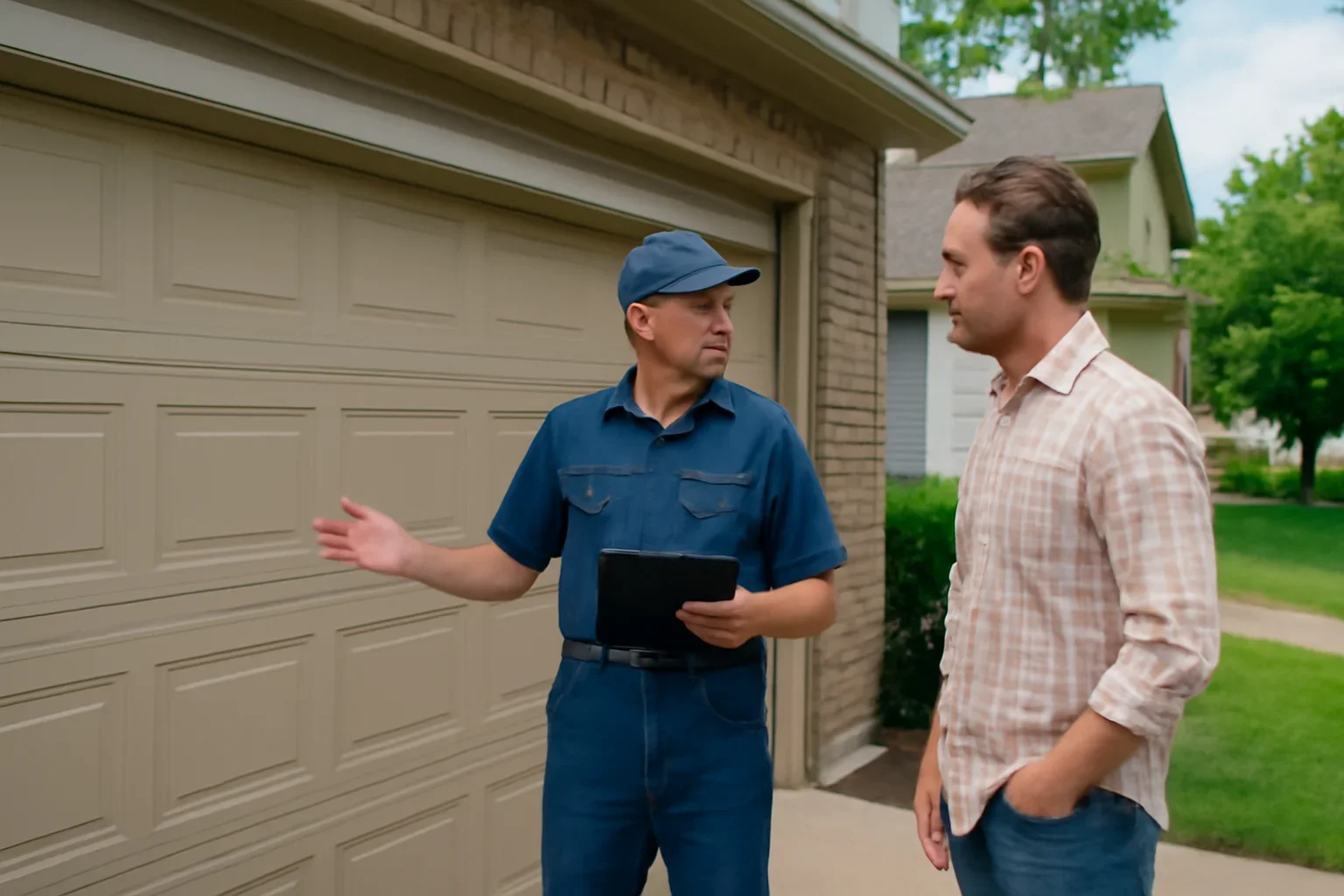
The way the door moves, sounds, sits in the opening, and responds to controls can help narrow the issue. Similar symptoms can still have different causes, so diagnosis should come before parts replacement.
The cause may involve the lifting system, tracks, rollers, opener, controls, sensors, power, or an obstruction in the door path.
A cable, spring, drum, roller, track, or panel problem can cause one side to move differently from the other.
A properly balanced door should not depend on the opener to carry all its weight. Sudden heaviness can point to a spring or lifting-system problem.
Grinding, scraping, popping, rattling, or jerky movement may come from worn rollers, loose hardware, track damage, poor alignment, or opener strain.
Sensor alignment, wiring, travel settings, force behaviour, an obstruction, or resistance in the door can create similar closing problems.
Impact damage, corrosion, loose fixtures, bent tracks, worn hinges, or weakened panels can affect alignment and safe operation.
Garage doors are heavy systems supported by springs, cables, drums, tracks, rollers, hinges, and brackets. A door that is crooked, partly open, off-track, or hanging unevenly may move without warning.
A garage door works as one connected system. Repairing the visible symptom without checking related parts can leave the original cause in place.
The exact work depends on which part has failed, whether nearby components were affected, and whether the door remains properly supported and aligned.
Broken, worn, mismatched, or poorly balanced spring systems can make the door heavy and place added stress on cables, hardware, and the opener.
Loose, damaged, displaced, or uneven cables can affect how the door lifts and whether both sides remain supported.
Bent tracks, loose brackets, worn rollers, debris, or poor alignment can create resistance, noise, shaking, and uneven travel.
Dents, cracks, impact damage, loose hinges, or weakened reinforcement can affect appearance, alignment, sealing, and safe movement.
Motor response, rail condition, trolley movement, controls, receivers, remotes, and travel settings may need separate diagnosis.
Dirty lenses, poor alignment, loose wiring, damaged brackets, direct light, or an obstruction can prevent reliable closing.
Worn bottom, side, or top seals can allow drafts, moisture, dirt, leaves, and pests into the garage.
Loose brackets, worn bearings, damaged fixtures, and repeated vibration can change how the entire system operates.
The aim is to identify the primary failure, check connected parts, and restore practical operation without treating every symptom as a separate problem.
The current door position, sound, movement, opener response, visible damage, and urgency help define what should be inspected first.
The door, lifting hardware, tracks, rollers, panels, opener, sensors, and controls are considered together.
The affected components, connected wear, access requirements, and any repair-versus-replacement considerations should be clear before work proceeds.
Door travel, balance, alignment, opener behaviour, controls, sensors, and reversal are checked after the repair.
A powered door can make a mechanical problem look electrical, while a control or sensor issue can make a healthy door appear stuck. The pattern of what still works provides useful clues.
Use garage door opener repair when the door itself moves properly but the powered system or controls remain unreliable.
The decision depends on the location of the damage, the age and condition of connected parts, door compatibility, safety, appearance, and the likelihood of recurring problems.
Review garage door installation when replacement planning is more appropriate than another isolated repair.
Fernridge garage doors may serve homes, detached shops, storage buildings, hobby spaces, and larger residential lots. Building type, driveway access, door size, weather exposure, and nearby equipment can affect diagnosis and service planning.
Tell us how the opening is used and what surrounds it. That context can help identify access limitations, likely wear points, and whether the repair involves a standard residential door or a more specialized setup.
Gate access, gravel, mud, parking position, and service-vehicle clearance may need to be considered.
Separate power, taller ceilings, wider doors, tools, equipment, and storage can change inspection access.
Door weight, spring configuration, track arrangement, reinforcement, and daily cycles can affect repair planning.
Damp air, wind-driven rain, dust, leaves, and debris can affect seals, sensors, tracks, rollers, and corrosion.
An older door paired with a newer opener, added insulation, or previous repairs may need a broader compatibility review.
Vehicles, trailers, shelves, ceiling storage, and shop equipment can limit safe access around the door.
A minor adjustment is different from a repair involving damaged lifting parts, multiple worn components, impact damage, a larger door, or difficult property access.
For broader budgeting information, review the garage door repair cost guide.
Regular observation can help catch small changes before they place added strain on the door, hardware, or opener.
A repair request may overlap with urgent access, opener diagnosis, installation planning, or broader Fernridge service information.
Review the main repair, opener, installation, and urgent service options for Fernridge properties.
Browse Fernridge servicesRead the main service overview for mechanical, hardware, panel, track, spring, cable, and door-movement problems.
View repair overviewUse this page when a stuck, open, uneven, damaged, or unsafe door needs prompt service planning.
Review urgent repairSend the symptom, door position, building type, access details, and clear photos before arranging service.
Send repair detailsThese answers cover urgent symptoms, door-versus-opener problems, detached garages, weather exposure, repair scope, and booking information.
Repair becomes more urgent when the door is stuck open, blocking a vehicle or shop, hanging unevenly, off-track, partly unsupported, unusually heavy, or no longer securing the opening. Keep people, vehicles, tools, trailers, and equipment away from an unstable door.
A small sound change should still be monitored, but severe grinding, scraping, popping, banging, or jerky movement can indicate resistance, loose hardware, track damage, worn rollers, opener strain, or a lifting-system problem. Stop using the door if it moves unevenly or appears unstable.
If the door is safe to disconnect and moves smoothly by hand, the issue may be more closely related to the opener or controls. If the door is heavy, crooked, binding, damaged, or difficult to move manually, the mechanical door system should be inspected first.
Yes. A broken spring, loose cable, damaged roller, bent track, weak panel, or binding door can place added stress on nearby hardware and the opener. Continuing to operate the system may increase the repair scope.
It can. Detached shops may have wider or taller doors, separate power, higher ceilings, more weather exposure, longer remote distances, equipment near the opening, and different access requirements than an attached residential garage.
Yes. Damp air, wind-driven rain, dust, leaves, gravel, and temperature changes can affect seals, sensors, tracks, rollers, corrosion, and door movement. The specific symptom should be diagnosed before choosing a repair.
Compare replacement when several major components are worn, multiple panels or structural areas are damaged, the door has recurring alignment problems, matching parts are difficult to source, or the existing system no longer suits the opening or property use.
Share your Fernridge location, gate and driveway details, building type, approximate door size, current door position, main symptom, visible damage, opener response, preferred timing, and clear photos of the full door, tracks, opener, and affected area when safe.
Send your location, building type, door position, main symptom, visible damage, opener response, gate or driveway details, and photos when safe. Keep the door unused if it is crooked, heavy, off-track, partly open, or unstable.