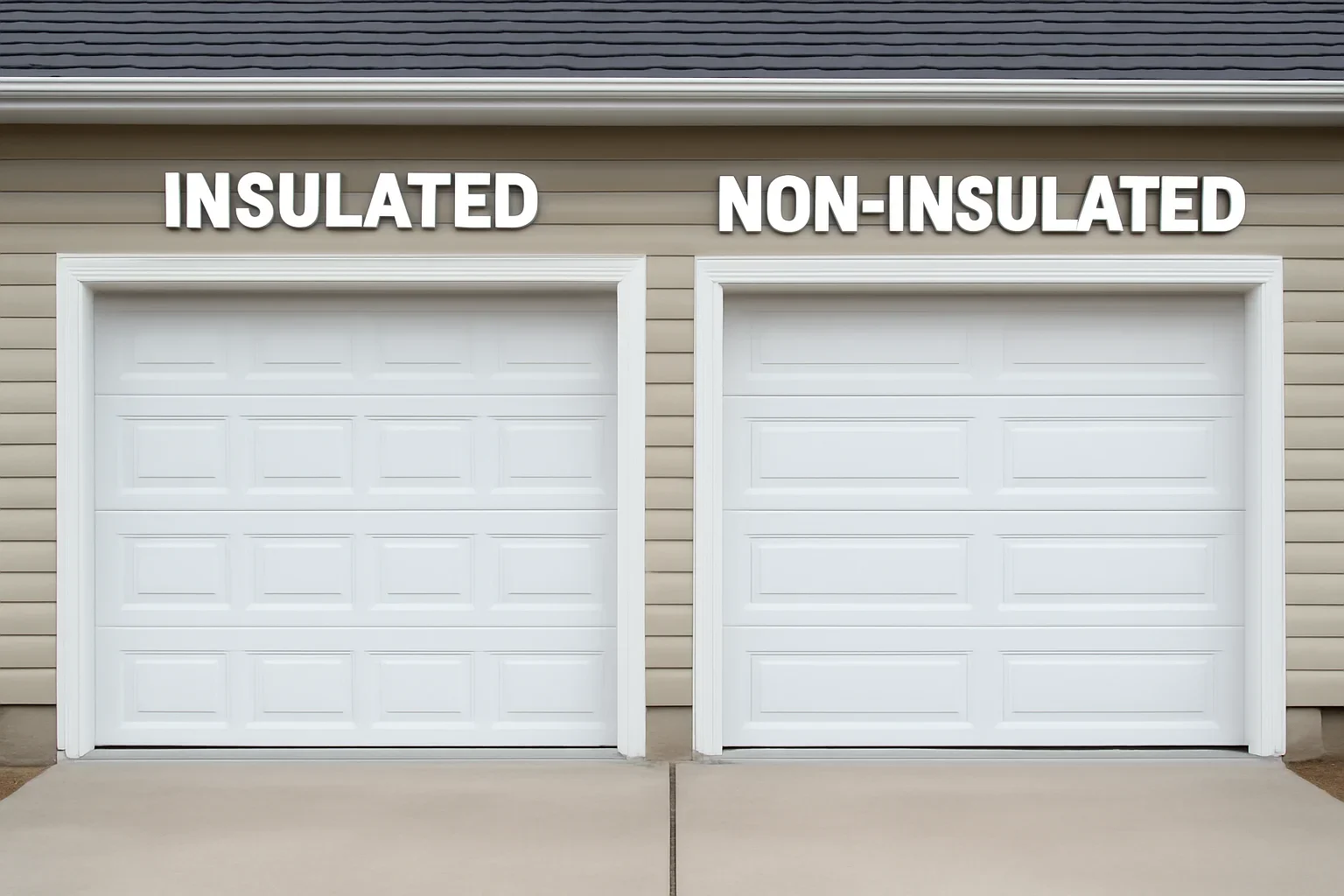
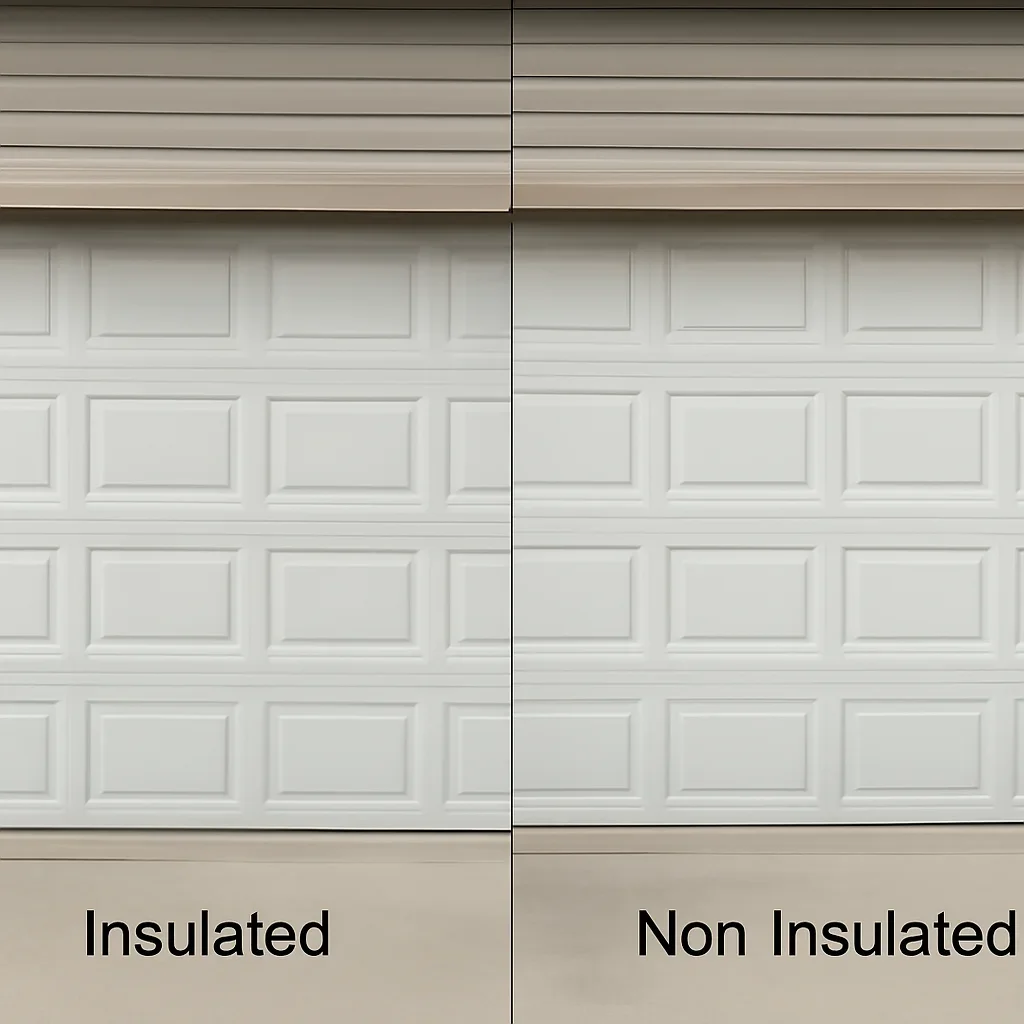
Insulated vs Non-Insulated Garage Doors in Langley
Langley garage door comparison guide
Insulated vs non-insulated garage doors
Compare temperature control, noise, panel strength, upfront cost and
everyday comfort before choosing a new garage door for your Langley
property.
An insulated garage door is usually the stronger fit for an
attached garage, a room above or beside the garage, a workshop, or a
space used frequently throughout the year. A non-insulated door may
remain practical for a detached, unheated garage where the main
priorities are basic access, security and a lower initial cost.
Direct answer
Choose insulation when comfort, quieter operation and a more rigid
door matter. Consider non-insulated construction when the garage
is detached, used mainly for parking or storage, and budget is the
main deciding factor.
A high R-value alone does not guarantee a comfortable garage.
Windows, section joints, bottom seals, perimeter weatherstripping,
walls and ceilings also affect the result.
A practical comparison for attached garages, detached buildings,
townhomes, workshops and residential properties across Langley.
Garage attached to the home?Insulation and perimeter sealing are usually worth comparing.
Detached storage garage?A non-insulated door may meet basic access and budget needs.
Bedroom or workspace nearby?Door rigidity and quieter operation may become more important.
Understand the basic difference
What separates an insulated door from a non-insulated door?
The difference is not limited to temperature. Door layering can also
affect rigidity, vibration, interior appearance, weight and project
cost.
Insulated construction
Two or more layers with an insulated core
Insulated doors usually place polystyrene or polyurethane between
steel layers or behind an exterior door skin.
Slows heat transfer through the door sections
Can reduce vibration and outside noise
Often creates a more rigid door section
Provides a more finished interior surface on many models
Usually costs more than a comparable single-layer door
Non-insulated construction
A simpler single-layer door
A non-insulated steel door commonly uses one exterior layer
without a separate thermal core or interior steel backing.
Lower initial product cost in many collections
Lighter and simpler construction
Allows outdoor temperatures to affect the garage more easily
May transmit more vibration and operating noise
Can suit detached garages with limited comfort requirements
Side-by-side comparison
Insulated vs non-insulated garage door differences
Use this table to compare the factors that are most likely to affect
daily use and long-term satisfaction.
Comparison point
Insulated garage door
Non-insulated garage door
Typical construction
Multiple layers with polystyrene, polyurethane or another
insulating core.
Commonly a single exterior steel layer without a separate
insulation core.
Temperature control
Provides greater resistance to heat transfer through the door.
Garage temperature follows outdoor conditions more closely.
Noise and vibration
Added layers can dampen vibration and create quieter door
movement.
Thinner construction may transfer more rattling and vibration.
Panel rigidity
Multi-layer construction often feels more solid and resistant
to flexing.
Single-layer sections may flex more and can feel less
substantial.
Interior appearance
Many models include an interior backing that creates a more
finished garage-facing surface.
Interior framing and the back of the exterior door skin may
remain visible.
Initial cost
Usually higher because of the added materials and construction.
Usually lower within a comparable door style and size.
Best general fit
Attached garages, workshops, frequently used spaces and homes
with rooms close to the garage.
Detached, unheated garages used mainly for parking or basic
storage.
Langley property reality
Which option fits different Langley garages?
Langley includes compact townhome garages, attached double garages,
older detached homes, rural acreages and separate workshop
buildings. The value of insulation changes with the way each space
connects to the property.
Townhomes and strata garages
An insulated, more rigid door may help where garages share walls
with living areas or sit below bedrooms. Exterior changes may
also require strata approval.
Attached detached-home garages
Insulation is easier to justify when the garage connects
directly to the home or is used as the main household entrance.
Rural garages and workshops
Insulation may be useful in an occupied workshop, while a simple
equipment-storage building may not need the same thermal
performance.
Older Langley garage openings
Track layout, headroom, framing, existing seals and opener
compatibility should be reviewed before choosing a heavier or
differently constructed replacement door.
Not all insulation is the same
Polystyrene vs polyurethane garage door insulation
Two doors described as insulated can provide different levels of
rigidity and thermal resistance depending on the core material,
thickness and complete section design.
Rigid-panel insulation
Polystyrene
Polystyrene is commonly supplied as rigid panels fitted within the
garage door sections. It can provide a practical middle ground
between single-layer construction and higher-performance
polyurethane doors.
Often positioned as a more budget-conscious upgrade
Improves resistance to heat transfer
Can reduce some door vibration
Performance depends on thickness and door construction
Foamed-in-place insulation
Polyurethane
Polyurethane is injected between door layers, where it expands and
bonds to the surrounding surfaces. This commonly produces greater
thermal resistance and section rigidity.
Commonly provides higher R-values
Can create a more solid-feeling panel
May reduce flexing and vibration
Usually sits at a higher product price point
i
Compare complete door specifications, not only the insulation name
Core thickness, steel layers, section joints, thermal breaks,
windows and weather seals can differ between product lines. Ask
for the specification of the actual door being quoted.
Understand the specification
What does garage door R-value mean?
R-value describes resistance to heat flow. A higher number generally
indicates greater thermal resistance through the tested door
section.
Useful for comparison
Compare similar products
R-value is most useful when comparing doors with similar sizes,
glazing and construction from clearly documented product lines.
Whole-opening performance
Seals still matter
Air entering around the bottom, sides or top can reduce comfort
even when the door sections have a strong insulation rating.
Garage construction
Walls and ceilings matter too
An insulated door cannot fully compensate for uninsulated walls,
open framing, air leakage or large gaps elsewhere in the garage.
Decide by daily use
When is an insulated garage door worth considering?
Insulation tends to provide the most noticeable value when the
garage affects living comfort or is used for more than occasional
vehicle parking.
01
Living space is nearby
A room above, beside or behind the garage can make temperature,
vibration and operating sound more important.
02
The garage is used as a workspace
Hobby areas, home gyms, workshops and project spaces benefit more
from moderated temperature swings and a more finished interior.
03
The garage is used throughout the day
Frequent opening cycles, household access and time spent inside
can make quieter and more rigid construction easier to appreciate.
04
The opening is wide
A more rigid multi-layer section may feel more substantial across
a double-width residential opening.
05
Exterior noise is noticeable
Insulation can dampen some sound, although windows, gaps and the
building construction still affect the final result.
06
Long-term ownership matters
A stronger construction may be easier to justify when the door is
part of a wider home improvement rather than a temporary solution.
A simpler door can still be appropriate
When can a non-insulated garage door make sense?
Non-insulated construction is not automatically a poor choice. It
can be practical when comfort and thermal performance are low
priorities.
Detached parking garage
The building is separate from the home and is used mainly to park
vehicles or store weather-tolerant items.
Limited project budget
The immediate goal is to replace an unsafe or damaged door while
keeping the initial project scope controlled.
Minimal time spent inside
The garage is not heated, cooled or used as a workshop, gym,
office or regular household living area.
Budget and project scope
Does an insulated garage door cost more?
Usually, but insulation is only one part of the estimate. Door size,
design and installation requirements can have an equal or greater
effect on the final project cost.
Door specification
Layers and insulation core
Multi-layer steel construction, insulation thickness and core
material influence the product price.
Design choices
Windows, finish and panel style
Decorative glass, wood-look finishes, custom colours and premium
designs can change the estimate independently of insulation.
Installation conditions
Tracks, springs and opener fit
The selected door must be matched with suitable hardware,
counterbalance components and opener reinforcement.
Compare the complete installed project
Review the door, tracks, springs, seals, removal, installation,
windows, finish and opener requirements together. Comparing only the
base door price can hide important differences between quotations.
Final decision checklist
Which garage door should you choose?
Work through the questions below before choosing solely by price or
the highest published insulation number.
Lean toward insulated
Choose an insulated door when
The garage is attached to the home.
There is living space above or beside the garage.
The garage is used as a workshop, gym or hobby space.
Quieter and more rigid operation is important.
The project is intended as a longer-term upgrade.
The rest of the garage can support the comfort goal.
Lean toward non-insulated
Choose a non-insulated door when
The garage is detached and unconditioned.
The space is used mainly for parking or basic storage.
Temperature control is not a meaningful priority.
The lowest suitable initial cost matters most.
The opening needs a straightforward functional replacement.
You accept greater temperature and sound transfer.
Useful next pages
Plan the complete garage door project
Use these related pages to compare door options, opener
compatibility, pricing and installation costs.
01
Garage door pricing
Review the factors that can change the cost of a residential door
and installation project.
Review the dedicated
insulated garage doors page
for additional information about construction, comfort and product
planning.
Direct comparison answers
Insulated garage door questions in Langley
These answers cover value, sound, R-value, detached garages and
replacement planning.
Is an insulated garage door worth it in Langley?
It is often worth comparing for an attached garage, a garage with
nearby living space, or a space used as a workshop or household
entrance. A detached storage garage may not receive the same
benefit.
Does an insulated garage door keep the garage warm?
It slows heat transfer through the door, but it does not heat the
garage. Comfort also depends on the walls, ceiling, windows,
weather seals, air leakage and whether the space has a heat source.
Are insulated garage doors quieter?
They can be quieter because added layers may reduce panel
vibration. Rollers, hinges, tracks, springs and the opener also
affect total operating noise.
Is polyurethane better than polystyrene?
Polyurethane commonly provides higher thermal resistance and a
more rigid section. Polystyrene can still be a practical
lower-cost insulation upgrade. Compare the specification of the
complete door.
Is a non-insulated door suitable for a detached garage?
It may be suitable when the building is unheated, used mainly for
parking or storage, and temperature control is not important.
Security, durability and wind exposure should still be reviewed.
Does a higher R-value always mean a better garage door?
Not automatically. A higher R-value indicates greater resistance
to heat flow, but door style, steel layers, seals, windows,
hardware and compatibility also affect overall value.
Will an insulated door work with my existing opener?
Possibly. The opener, rail, reinforcement, springs and door
balance should be checked against the dimensions, weight and
construction of the new door.
What should I provide when requesting an estimate?
Include your Langley location, garage type, opening size if known,
photos of the door and opening, how the garage is used, whether
living space is nearby and information about the existing opener.
Compare the right garage door for your Langley property
Share the garage location, opening size, property type, daily use
and comfort priorities. The recommendation can then compare
insulation, construction, design and complete installation needs.