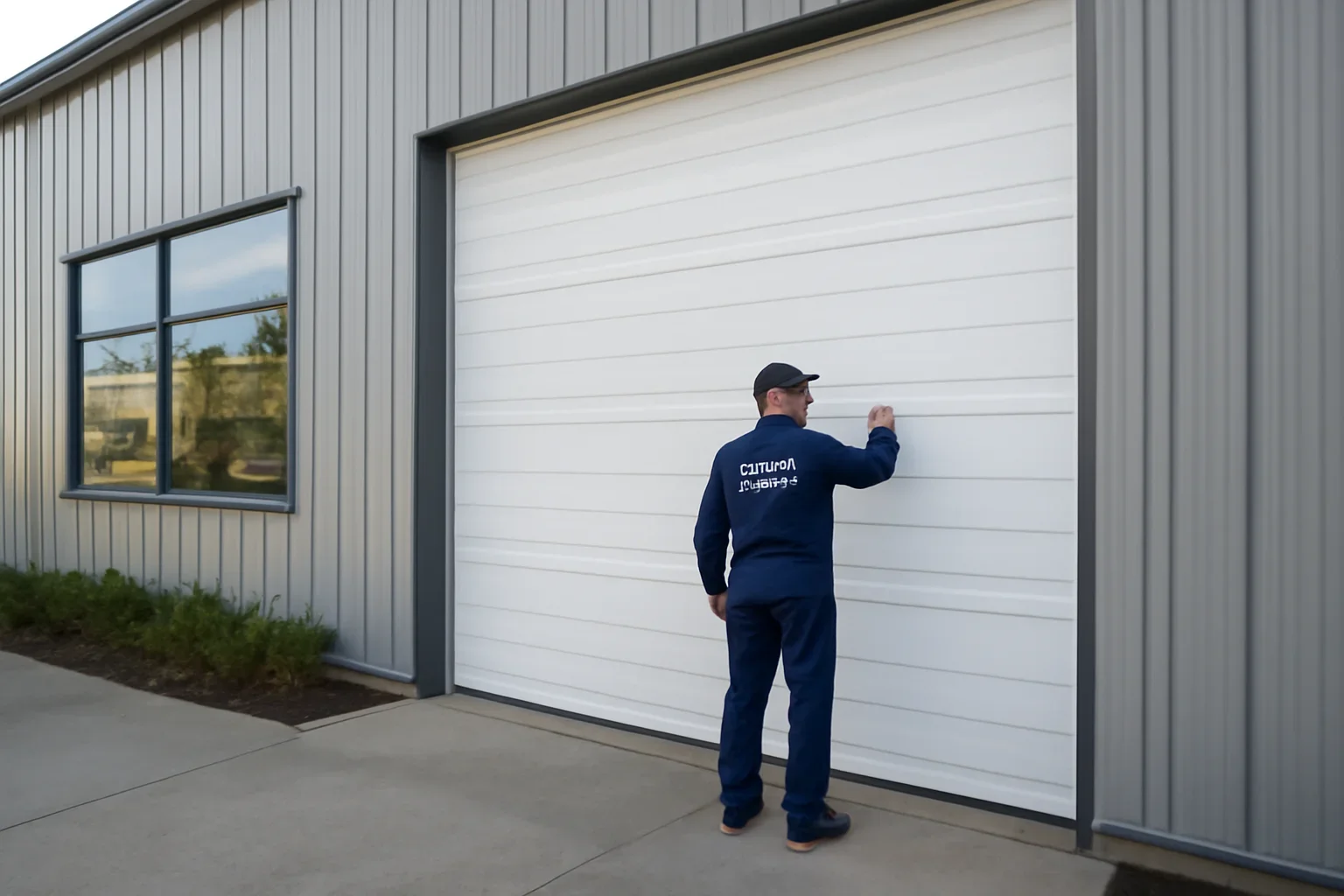
Priority door problem
Use this path when the door is creating an immediate security, access or operational concern.
Get practical repair, maintenance and replacement guidance for commercial overhead doors that support daily vehicle, shipping, storage and service-bay access.
Commercial door service should begin with the property’s operating reality: how often the door cycles, what passes through it, who controls access and what happens when the opening is unavailable.
Serving commercial, strata, agricultural and light-industrial properties throughout Langley.
The first step is identifying whether the opening requires priority attention, a focused repair or planned replacement work.
Use this path when the door is creating an immediate security, access or operational concern.
Repair may be appropriate when the door remains serviceable but one or more operating components have failed.
Replacement planning may involve reliability, insulation, opening size, security or changing operational needs.
Keep people, vehicles and equipment away when the door is hanging unevenly, off its tracks, supported by a damaged cable or spring, or moving unpredictably. For an unsafe or unsecured opening, review same-day garage door repair options .
Langley’s commercial and industrial properties range from small strata bays and auto-service shops to distribution buildings, agricultural facilities and larger warehouse operations.
A frequently used shipping door near the Langley Bypass has different maintenance and downtime priorities from a workshop door in Aldergrove or a low-cycle storage opening on a rural property.
The service approach should reflect the building, door traffic and consequences of losing access.
Door reliability can affect loading schedules, forklifts, delivery vehicles and movement between warehouse and yard areas.
Frequent vehicle movement makes smooth operation, clear visibility and predictable opening times especially important.
Service may require coordination among the tenant, owner, property manager and strata before work begins.
Rear service doors may need scheduling around customer hours, deliveries and shared access routes.
Larger equipment, exposed locations and wider openings can affect door construction, sealing and operating hardware.
Security, dependable vehicle access and consistent operation may matter more than decorative appearance.
One failed part can be a symptom of a wider balance, alignment, wear or operator problem.
Product choice should reflect available clearance, opening size, traffic, security, weather exposure and required operating speed.
Sectional doors travel along tracks and can offer windows, insulation and several panel constructions.
They may suit service bays, warehouses, storage buildings and mixed commercial uses.
Interlocking slats coil above the opening, reducing the amount of horizontal ceiling area required.
Guides, barrel space, security and operating frequency should be considered.
Aluminum-framed glazed sections can provide daylight and visibility for automotive or customer-facing service areas.
Privacy, impact exposure, glazing and insulation requirements should be reviewed.
Properties with frequent vehicle movement may need hardware and operators selected for heavier daily use.
Actual cycle count should be estimated rather than relying only on the building type.
Insulated sections may be useful where the opening separates conditioned work areas from outdoor temperatures.
Perimeter sealing, wall construction and how often the door remains open also affect performance.
Agricultural buildings, equipment shops and specialized facilities may require wider, taller or differently tracked doors.
Structural framing, headroom, side room and operator placement must be confirmed.
Maintenance frequency should reflect door type, cycle count, environment, manufacturer instructions and the operational cost of an unexpected failure.
These components can retain significant force. Staff can report visible damage, unusual noise and changes in movement, but tensioned-system repairs should be handled by trained personnel.

Replacement should be based on the door’s condition, operating demands and future property needs rather than age alone.
The primary structure remains serviceable and the failure is limited to replaceable springs, cables, rollers, hinges, controls, seals or operator components.
Repair may also be practical when parts remain available and the existing door still suits the opening and daily cycle demand.
Damage affects several sections or slats, corrosion is widespread, major components are failing together or compatible replacement parts are no longer available.
Replacement may also make sense when the current door no longer provides suitable clearance, insulation, visibility, speed or security.
The door may be only one part of an active site. Clear coordination reduces delays and helps protect staff, customers and equipment.
The process should provide a clear diagnosis, practical service scope and realistic next step for the property.
The door condition, current position, site use, access needs and downtime consequences are reviewed.
The door, hardware, counterbalance system, operator, controls and safety components are assessed.
The proposed work, required parts, scheduling considerations and longer-term recommendations are clarified.
Use these pages to compare doors, operators, pricing and installation requirements.
Direct answers about service priority, maintenance, door selection and preparing for a commercial visit.
Priority conditions include a door that is unstable, stuck open, unable to secure the building, trapping a vehicle or blocking an essential shipping, service or access route. Scheduling remains subject to actual service availability.
Commercial service requests can include warehouses, strata bays, automotive shops, storage buildings, agricultural facilities and other light-industrial properties. Provide the address, door type and current problem when requesting service.
There is no single interval for every door. Frequency should reflect manufacturer guidance, daily cycle count, environment, door condition and the operational consequences of unexpected downtime.
Often, yes. Springs, cables, rollers, hinges, tracks, seals, controls and operator components may be repairable when the main door structure remains suitable and compatible parts are available.
A sectional door uses connected horizontal sections that travel along tracks. A rolling steel door uses interlocking slats that coil around a barrel above the opening. Space, security, insulation and operating needs help determine the better fit.
It may be possible when the door is compatible, correctly balanced and in suitable condition. Door weight, track arrangement, available power, mounting space, controls and safety requirements must be assessed first.
No. Commercial door cables, springs and connected brackets can remain under significant tension. Keep the opening clear and arrange trained service rather than repositioning tensioned components.
Include the property address, unit, on-site contact, door size and type, current position, operator model, visible damage, operational impact and any building-access or contractor requirements.
Major factors include opening dimensions, door type, insulation, windows, tracks, springs, operator requirements, removal, structural preparation, electrical work and site access.
Send the property address, door size and type, current operating condition, on-site contact and a description of how the problem is affecting the business. Include safe photographs of the door and operator when available.