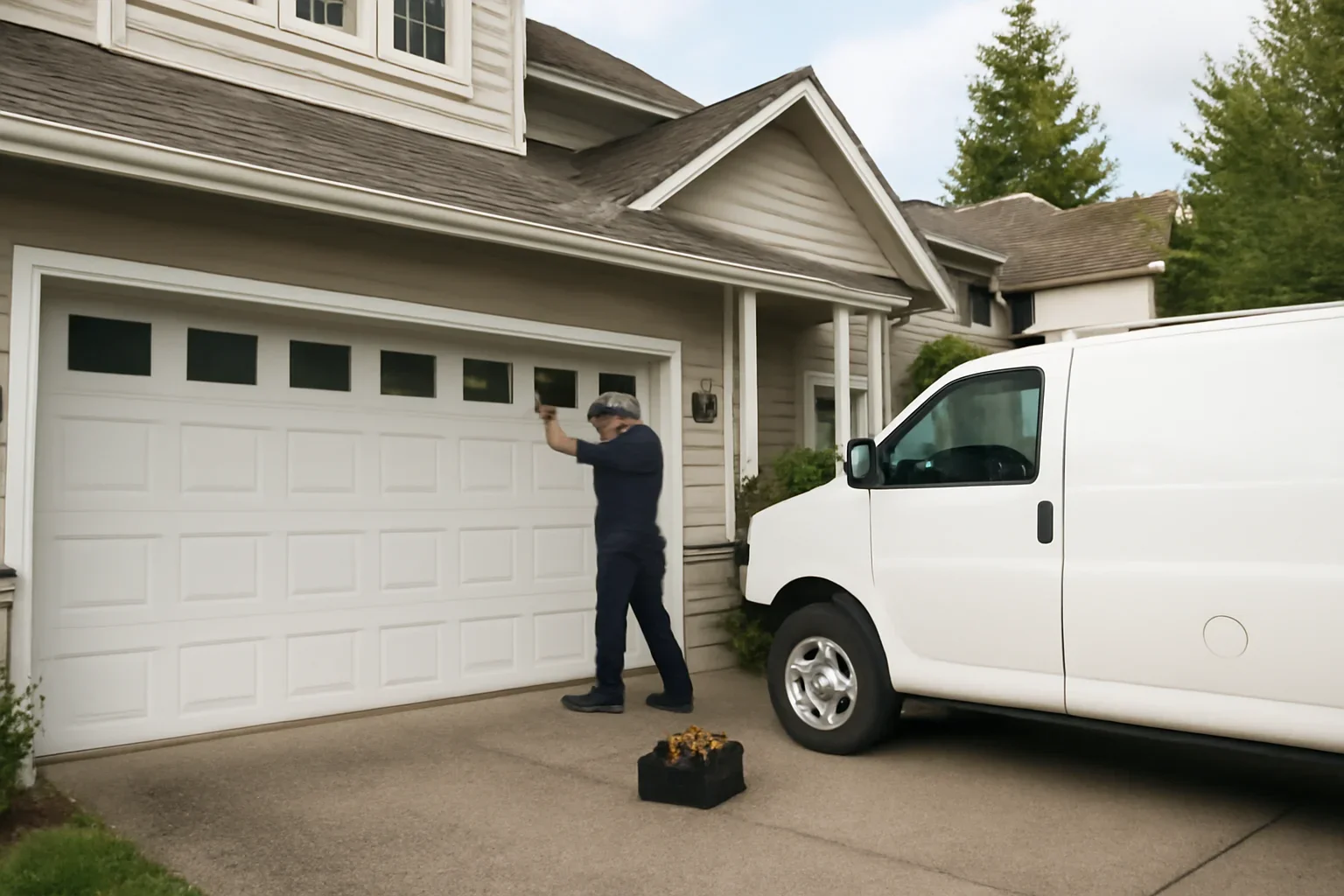
Garage door repair
For a door that is stuck, noisy, uneven, heavy, damaged or no longer moving consistently.
Get practical help with a garage door that is noisy, stuck, uneven, damaged, outdated or no longer reliable. Residential service can include diagnosis, repair, opener work, maintenance, installation and complete door replacement.
The right service depends on how the garage is built and used. A townhouse door used several times each day may have different access, noise and scheduling needs than a detached garage, older single-family home or rural workshop.
Serving homes, townhouses and residential properties throughout Langley City and the Township of Langley. Timing and scope depend on the symptom, door position, property access and required parts.
You do not need to identify the failed component. Describe the current door position, sound, movement and controls that still work.
Residential garage door services can include troubleshooting, spring and cable work, track and roller repair, panel assessment, opener repair, sensor service, preventive maintenance, new-door installation and full replacement. A complete assessment should check the moving door, lifting hardware, tracks, opener, controls and safety system before the final scope is approved.
Start with the outcome you need rather than guessing which component has failed. Connected parts can be assessed during the same visit.
For a door that is stuck, noisy, uneven, heavy, damaged or no longer moving consistently.
For new construction, renovations, detached garages and projects requiring a complete door system.
For an aging, damaged or poorly performing door that no longer fits the property’s reliability, comfort or appearance needs.
For opener repair, replacement, installation, remotes, keypads, safety sensors and connected-access planning.
The current symptom and door position help identify whether the likely issue involves the lifting system, track path, opener, controls or the door sections.
A spring, cable, door-balance, trolley, drive or opener problem may prevent normal movement.
Cable, drum, spring, roller or track trouble may leave the door crooked or supported unevenly.
Sensors, travel settings, an obstruction, track resistance or poor balance can interrupt closing.
Grinding, scraping, popping or shaking may point to rollers, hardware, tracks, balance or opener strain.
The rail, trolley, belt, chain, gears or door balance may need to be assessed together.
Impact can affect panels, hinges, rollers, tracks and reinforcement beyond the most visible dent.
Batteries, programming, compatibility, receiver response or opener settings may be involved.
Worn seals, floor gaps, panel alignment and door fit can affect weather protection.
Garage door springs and cables can remain under significant tension. A damaged door may also move unexpectedly or place extra strain on the opener and connected hardware.
Langley contains established single-family neighbourhoods, growing townhouse communities, strata properties, custom homes, acreages and detached workshops.
Access, noise, door size, daily cycling and replacement choices can vary significantly between these properties.
Compact garages may open onto shared lanes and sit directly below or beside living space. Unit details, visitor parking, strata access, opener noise and high daily use can all affect service planning.
Established homes may have mixed generations of doors, tracks, openers and accessories. Quiet movement, weather sealing and dependable household access can be especially noticeable.
Older doors, previous repairs, non-standard framing and driveway slope may affect parts compatibility, panel matching and replacement measurements.
Appearance, custom openings, wood finishes and older construction details may require closer coordination between performance, hardware and the home’s exterior design.
Detached garages, workshops and larger doors may involve longer driveways, heavier use, different ceiling layouts and limited network reach for smart controls.
The same visible problem can require a different repair or installation approach depending on the door, garage and household routine.
Single, double, insulated, wood, glass and custom doors can use different springs, tracks, reinforcement and handling.
A garage used as the main household entrance may experience more wear than a door opened only a few times each week.
Bedrooms and offices beside or above the garage can make noise, vibration, insulation and sealing higher priorities.
Shared lanes, short driveways, strata gates, parked vehicles and stored items can affect appointment access and working space.
The final decision should consider the complete door rather than only the component that failed today.
One spring, cable, roller, sensor, control or other serviceable component is responsible for the problem.
The door is not widely rusted, cracked, distorted or damaged across several panels.
Required hardware, controls or opener components can be matched to the existing system.
The work can return the door to balanced, controlled movement without leaving major connected damage unresolved.
Springs, cables, panels, tracks, hardware and the opener may all be nearing the end of practical service.
Multiple bent, cracked, rusted or separating sections may make targeted repairs less reliable.
Discontinued panels, hardware or controls can make dependable repair difficult.
Poor insulation, noise, sealing, appearance or reliability may make planned replacement more useful.
You do not need to diagnose the failed part. Clear property, symptom and access information can help identify the likely service path before the appointment.
Include the Langley neighbourhood and whether the property is a detached house, townhouse, strata unit, acreage or workshop.
Explain whether the door is open, closed, partway, crooked or visibly outside the track.
Mention grinding, scraping, popping, shaking, uneven movement, reversal or a door that feels unusually heavy.
Describe what happens when the wall control, remote or keypad is used and include the opener model when visible.
Mention a trapped vehicle, unsecured garage, blocked entrance, strata gate, visitor parking or shared-lane restriction.
Include the full door from inside and outside, visible damage, tracks and opener without standing beneath an unstable door.
The process should move from safety and diagnosis to an approved service scope, then finish with controlled movement and functional testing.
Share the symptom, door position, property access and whether the request is urgent or can be scheduled.
Review the door, tracks, hardware, lifting system, opener, controls and safety equipment.
Explain the failed components, related wear, compatible parts and whether repair or replacement should be compared.
Check balance, movement, closing, reversal, controls and opener response after the approved work.
These pages provide more focused guidance for opener problems, maintenance, urgent failures, pricing and local coverage.
These answers cover common service decisions, property access, safety and useful details to provide before booking.
Book service when the door becomes noisy, heavy, uneven, unreliable, slow, stuck or visibly damaged. Stop using it when it is crooked, off track, supported unevenly or has visible spring or cable damage.
Yes. A weak spring can overload the opener, a damaged roller can pull on the track, and a loose cable can affect panels, hinges and alignment. Connected parts should be checked together.
Townhouse and strata appointments may require a unit number, gate access, visitor parking, shared-lane information or coordination with property management. Include those details when booking.
Replacement may be worth comparing when several major components are worn, structural damage is widespread, compatible parts are unavailable or the existing door no longer meets the home’s insulation, reliability or appearance needs.
It may be possible when the opener is serviceable and suitable for the new door. Door size, weight, balance, track arrangement, safety controls and opener condition should be checked first.
Opener drive type, vibration, rollers, mounting, door balance, insulation and weather sealing can all affect sound and comfort in nearby living space.
No. Maintenance, upgrades, minor recurring noises and planned replacement can usually be scheduled. A visibly unstable door, trapped vehicle or unsecured opening may require faster attention.
Moisture can contribute to corrosion, swollen wood, worn seals, dirty tracks and electrical or sensor concerns. The material, drainage, weather stripping and exposure of the garage all matter.
Include the Langley address, property type, current door position, sounds, movement, visible damage, opener model, controls that still work and any access restrictions.
Appointment timing depends on the service location, current schedule, property access, nature of the problem and required parts. Clearly explain whether access or security is affected.

Share your neighbourhood, property type, current door position, unusual sounds or movement, opener response and whether access or security is affected. You do not need to identify the failed part before reaching out.