Scraping along one side
A roller may be rubbing against a bent track, a shifted bracket, or a section of track with incorrect spacing.

Bent, loose, obstructed, or poorly aligned tracks can make a garage door scrape, shake, bind, or leave its normal path. A proper track repair assessment should also check the rollers, hinges, brackets, cables, door balance, and opener load.
The tracks guide the rollers from the closed position through the curved sections and into the overhead area. Even a small bend or spacing change can create resistance, but a crooked or off-track door may be unstable and should remain unused until assessed.
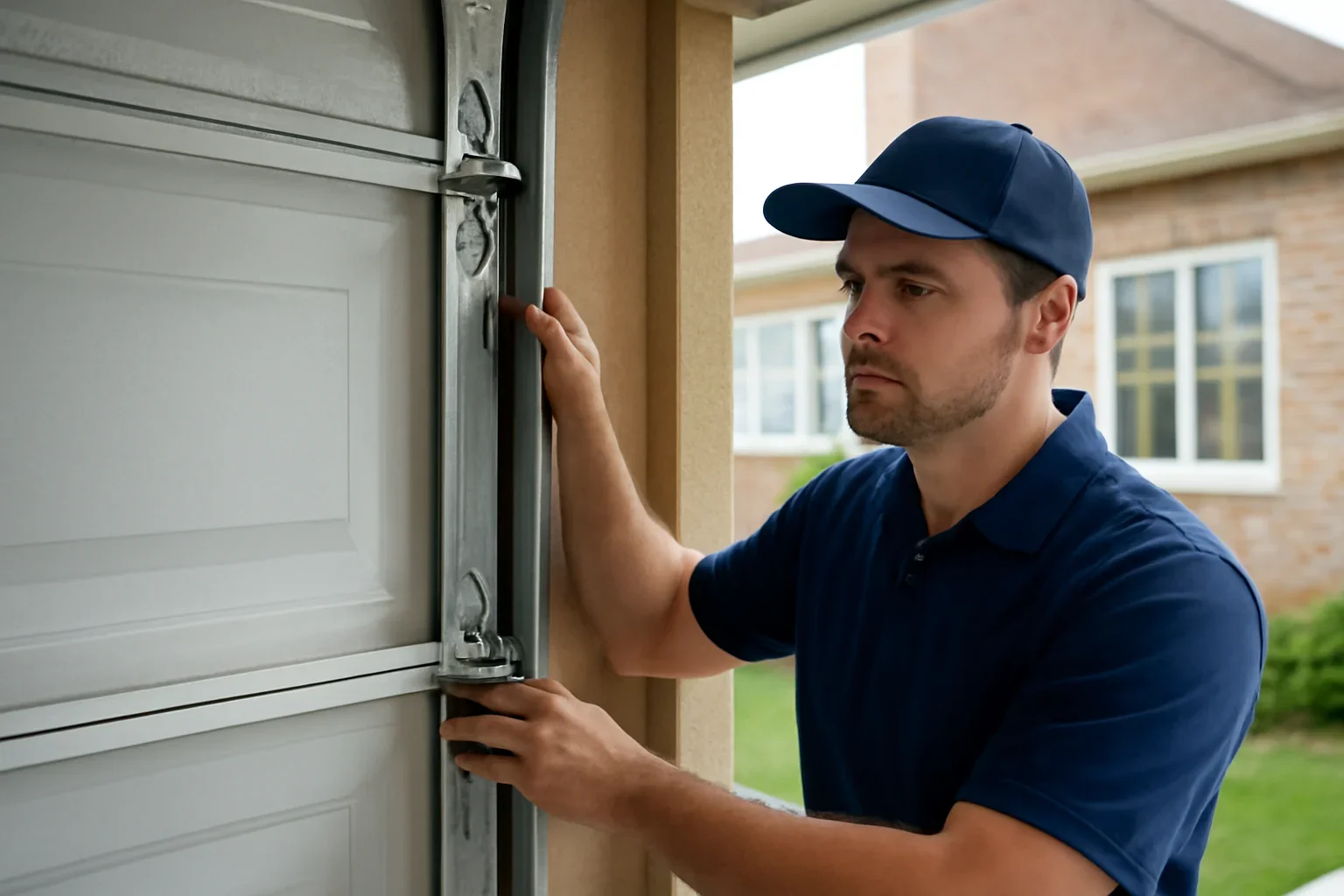
Track problems often show up as a repeated sound or movement issue at the same point in the door’s travel.
A roller may be rubbing against a bent track, a shifted bracket, or a section of track with incorrect spacing.
A dent, obstruction, loose fastener, damaged roller, or problem at the curved track can create a repeatable sticking point.
A displaced roller may leave part of the door unsupported. Stop using the door and keep the area clear.
Loose brackets, fasteners, wall attachment points, or overhead supports can allow the track to shift as the door travels.
Impact from a vehicle, stored item, ladder, or equipment can narrow the roller path or change track alignment.
Track resistance can make the opener slow down, stop, reverse, or sound louder even when the motor is not the original problem.
A door with displaced rollers, bent tracks, loose brackets, cable problems, or unsupported sections may move without warning. Repeated opener use can worsen the damage.

A track can look like the obvious problem while the real cause is a damaged roller, loose hinge, cable issue, uneven spring support, or impact-damaged panel.
The repair should address why the track moved or bent, not only the visible mark in the metal.
A bumper, trailer, bicycle, ladder, mower, or stored item can bend the lower track or shift a bracket.
Vibration and repeated door cycles may allow brackets or supports to loosen and change the roller path.
A rough roller can drag, wobble, or push sideways against the track and create noise or deformation.
A bent section or loose hinge changes roller position and may cause repeated rubbing at the same track area.
Uneven lifting force can pull one side higher than the other and place abnormal pressure on the tracks and rollers.
Small objects, packed debris, fasteners, or damaged weather material can interfere with roller movement.
Loose or poorly supported horizontal tracks may spread, vibrate, or sag under repeated door movement.
Track spacing or alignment changed without checking the complete door can cause binding, excess play, or roller escape.
The exact work depends on the damage location, door position, roller condition, support points, and whether the door is safely accessible.
The sound, sticking point, door angle, roller position, and opener behaviour help identify the affected track area.
If the door is crooked, partly open, or off-track, safe control of the door comes before adjustment or testing.
Rollers, hinges, panels, brackets, cables, springs, drums, and opener load should be checked for the cause of misalignment.
Minor adjustment may be enough in some cases. Creased, split, heavily bent, or weakened track may require replacement instead.
The roller path, bracket position, wall attachment, and overhead support should work together without pinching or excess movement.
The door should be observed through opening and closing to check smoothness, alignment, sound, and opener interaction.
The wear pattern and door position can show whether the track was damaged by impact, side loading, poor balance, or a failed guiding part.
Rollers travel inside the tracks, while hinges position the roller stems and let each section pivot. A worn roller or shifted hinge can create the appearance of a track-only issue.
Tracks guide the door but should not correct uneven lifting. A loose cable, drum problem, or poor spring balance can pull one side out of alignment.
A bent section, shifted jamb, or impact-damaged opening can move the rollers sideways and cause recurring contact with the track.
The opener can keep pulling against a binding track until the door stops, reverses, or moves farther out of alignment. Opener force should not be used to overcome mechanical resistance.
Minor movement, loose supports, or a limited bend may sometimes be corrected when the metal remains sound and the roller path can be restored safely.
Replacement may be more practical when the track is sharply creased, split, heavily twisted, repeatedly coming loose, badly rusted, or damaged across several attachment points.
If the door is off-track or several systems are affected, compare the track work with broader garage door repair. Severe panel or structural damage may also require a larger repair plan.
The final scope depends on the damage and connected parts found at the door. Photos help, but pricing should be confirmed after the track path and door stability are assessed.
A lower vertical-track dent differs from damage at the curve, flag bracket, overhead track, or ceiling support.
Loose supports or small alignment changes may be limited in scope. Creased or weakened sections may require new track components.
Single, double, insulated, custom, and workshop doors can use different track sizes, supports, and handling requirements.
Damaged rollers, bent stems, loose hinges, or shifted sections may need attention before smooth track travel can return.
A crooked door, loose cable, drum issue, or uneven lifting load can expand the work beyond track alignment.
A door stuck partly open, blocked by a vehicle, or installed in a high-ceiling garage may require a different service approach.
Garage layout, door weight, vehicle clearance, storage habits, moisture exposure, and overhead support design can all affect track condition and access.
Share the neighbourhood, door width, current position, visible bend location, recent impact, and whether the garage is attached, detached, strata-managed, or used as a workshop.
Compact garages, close vehicle parking, wall-mounted storage, and strata access rules can affect the lower track area and service planning.
Established attached garages may have older rollers, brackets, tracks, and openers that should be assessed together.
Older or custom garages may use less common track layouts, door sizes, framing, or ceiling clearances.
Larger doors, equipment movement, dust, moisture, detached structures, and high ceilings can change the type and cause of track damage.
A track problem may overlap with an off-track door, cable issue, poor balance, opener strain, or urgent general repair need.
Do not touch an unstable door or high-tension hardware. From a safe distance, note:
Routine garage door maintenance can identify loose brackets, rough rollers, worn hinges, balance changes, and opener strain before the track path is badly affected.
Keep bicycles, ladders, tools, storage bins, and vehicles clear of the vertical tracks. Do not use heavy grease inside the tracks or adjust track spacing without checking the complete door system.
These answers explain warning signs, safe use, repair decisions, and what information helps before an appointment.
Book track repair when the door scrapes, catches, shakes, moves unevenly, has a visibly bent or loose track, or has a roller rubbing against or outside the track. Stop using the door if it is crooked, partly unsupported, or unstable.
A small bend may still allow movement, but repeated use can worsen roller, hinge, cable, panel, and opener damage. Do not operate the door when rollers are outside the track, brackets are loose, the door is crooked, or the track is sharply bent.
Some limited bends or alignment changes may be repairable when the metal remains sound and the roller path can be restored safely. Creased, split, heavily twisted, or weakened track may be better replaced.
Common causes include vehicle impact, loose brackets, worn rollers, damaged hinges, bent panels, poor overhead support, cable or balance problems, and previous incorrect adjustment.
Yes. A binding track increases resistance and can make the opener strain, slow down, stop, or reverse. The opener should not be adjusted to force a mechanically restricted door to move.
A roller may leave the track because of impact damage, a bent or loose track, a damaged hinge or roller stem, panel misalignment, cable trouble, poor door balance, or an obstruction. Do not force it back before the cause is identified.
Share the Langley neighbourhood, door width, current door position, bend or damage location, whether a roller is outside the track, recent impact history, cable condition, opener behaviour, and clear photos when safe.
Use the contact page for questions about symptoms, property access, or whether track repair is the right service. Do not move an unstable door just to collect more details.
Send the neighbourhood, door width, current door position, damage location, roller position, cable condition, opener behaviour, recent impact history, and photos when safe. Keep the door unused if it is crooked, partly open, or off the track.