The door will not open or close
A broken spring, cable issue, jammed roller, damaged track, opener fault, or safety-control problem may stop normal movement.

An overhead garage door depends on its panels, hinges, rollers, tracks, springs, cables, and opener working together. When the door becomes noisy, crooked, stuck, heavy, or unreliable, the full system should be checked before one visible part is blamed.
This service is suited to sectional overhead doors used on Langley homes, attached garages, detached garages, and compatible light-duty workshop or small commercial-style openings. The repair scope depends on the door type, current position, damage, lifting system, track layout, and access.
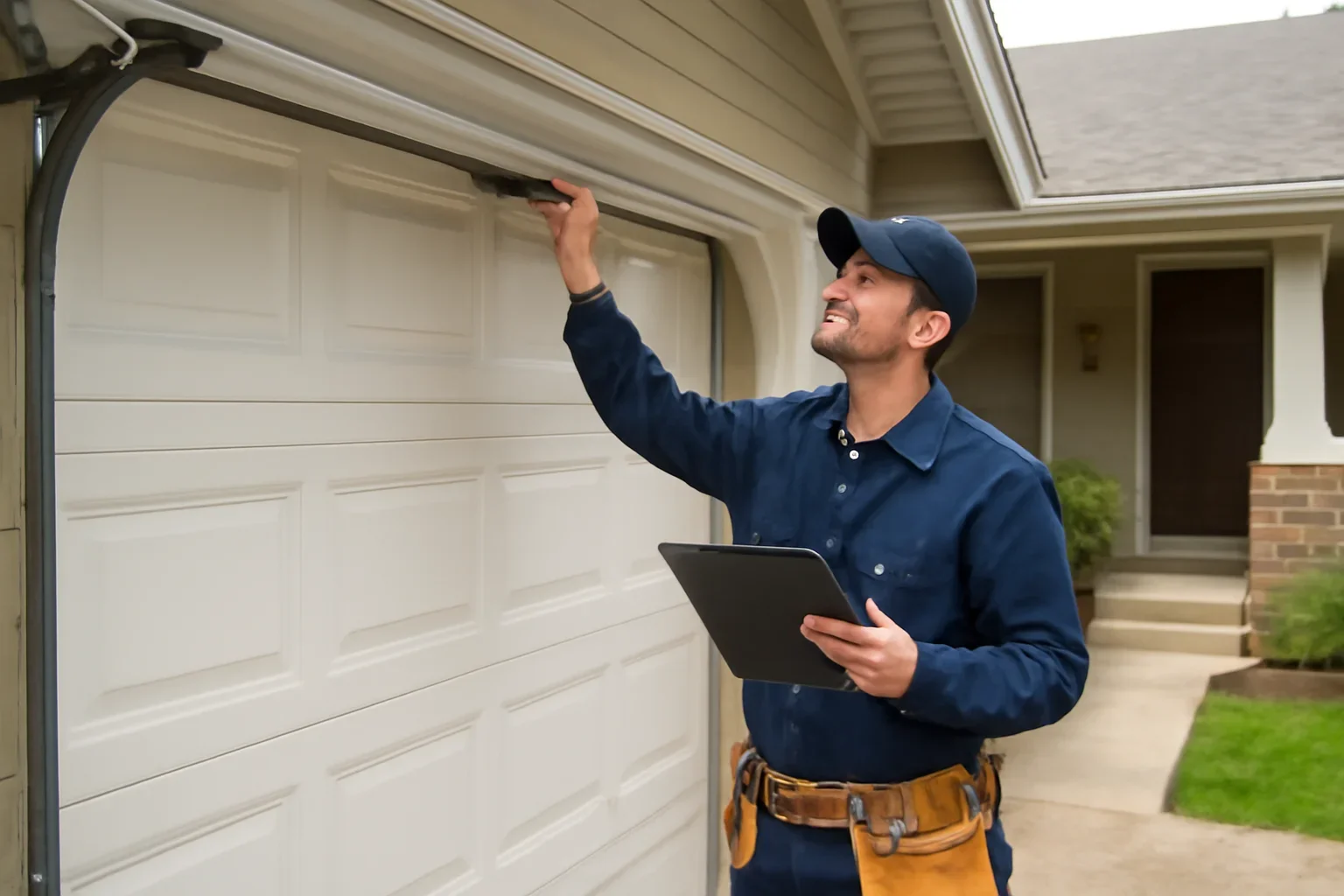
Changes in travel, sound, balance, and panel position can help narrow down which part of the overhead door system needs attention.
A broken spring, cable issue, jammed roller, damaged track, opener fault, or safety-control problem may stop normal movement.
Uneven lifting can involve cables, drums, springs, rollers, tracks, hinges, or a panel that has shifted out of alignment.
Repeated noise at one point can indicate roller wear, track contact, loose hardware, panel movement, or opener strain.
A heavy door often points to spring support or balance trouble. The opener should not be used to lift the full door weight.
Impact damage, loose hinges, cracked sections, or reinforcement problems can affect alignment and safe travel through the tracks.
The cause may be electrical, but resistance from an unbalanced or damaged door should be ruled out before opener settings are changed.
A crooked, partly open, off-track, or visibly unsupported door may move or fall without warning. High-tension spring, cable, drum, and bottom-fixture parts should not be adjusted by a homeowner.

Overhead doors are connected systems. A motor symptom can start with a heavy door, while a track symptom may be caused by a bent panel, worn roller, or uneven cable load.
The most useful diagnosis identifies the damaged part, the cause, and any connected wear that could affect the repair result.
Spring failure can leave the door heavy, difficult to lift, or impossible for the opener to move safely.
Frayed, displaced, or off-drum cables can create crooked travel and may leave part of the door unsupported.
Impact, loose brackets, worn rollers, and poor support can narrow or shift the roller path.
Rough bearings, bent stems, cracked wheels, and loose hinges can create vibration, scraping, or panel movement.
Dents, cracks, separation, rust, and reinforcement damage can change door alignment and operating weight.
Motor, trolley, rail, belt, chain, sensor, remote, keypad, or control issues may prevent reliable automatic operation.
A door that rises, drops, feels heavy, or changes effort through travel may need spring and lifting-system assessment.
Damaged bottom seals, shifted framing, floor changes, ice, debris, or stored items can interfere with closing and reversal.
The exact process depends on the door position, the safety risk, the failed system, and whether compatible parts or broader repairs are needed.
The door position, sounds, visible damage, manual feel, and opener behaviour help identify the most likely systems involved.
Crooked doors, loose cables, broken springs, displaced rollers, and unstable sections require a safety-first service plan.
The failed part should be checked with the panels, tracks, rollers, hinges, lifting system, balance, and opener.
The proposed work, compatible parts, additional damage, and repair-versus-replacement considerations should be confirmed before approval.
The scope may involve adjustment, hardware replacement, panel work, lifting components, track correction, or opener-related repair.
The door should be observed through full travel for alignment, balance, noise, stopping, reversal, and opener interaction.
Repair decisions are easier to understand when each component is viewed as part of the complete moving door.
Sectional door panels are connected by hinges so the door can bend through the curved tracks. Damage or looseness can change roller position, door weight, and section stability.
Rollers guide the sections through vertical, curved, and overhead tracks. Brackets and ceiling supports must hold the track path without pinching, spreading, or excessive movement.
The lifting system offsets door weight. Weak springs, loose cables, drum issues, or incorrect balance can make the door heavy, crooked, or unsafe to operate.
The opener should move a mechanically sound, balanced door. Sensors, controls, travel settings, and reversal behaviour do not replace the need to correct binding or lifting problems.
A limited repair may be practical when the door remains structurally sound and the problem is isolated to compatible hardware, adjustment, controls, seals, or one repairable section.
Replacement may be worth considering when several panels are damaged, the door is badly corroded or poorly insulated, compatible sections are unavailable, the opening is no longer well fitted, or multiple major systems need work.
Compare the condition with planned garage door replacement rather than continuing a series of unrelated repairs. A replacement estimate should account for door size, opening condition, track layout, ceiling clearance, insulation, windows, and opener compatibility.
The final scope depends on the failed system, door type, access, compatible parts, and whether connected damage must be corrected.
A sensor, remote, roller, hinge, spring, cable, track, panel, or opener repair involves different parts and safety considerations.
Single, double, insulated, reinforced, windowed, custom, workshop, and heavier doors may require different hardware and handling.
A closed door is different from one that is stuck open, crooked, off-track, or blocked by a vehicle or stored items.
Door age, panel profile, roller size, spring setup, track type, opener model, and existing hardware affect suitable options.
Impact, imbalance, loose cable, bent track, panel movement, and opener strain can expand the work beyond one part.
High ceilings, low headroom, rear-track restrictions, finished garages, workshop storage, and strata access can affect service planning.
Door age, daily use, opening size, ceiling layout, weather exposure, storage, vehicle clearance, and property rules can all affect the repair plan.
Before booking, share the neighbourhood, door width, current position, visible damage, opener behaviour, and whether the property is a house, townhouse, detached garage, acreage, or workshop.
Compact attached garages, close vehicle parking, daily cycling, finished ceilings, and strata access rules can affect diagnosis and service access.
Established overhead door systems may have older panels, springs, rollers, tracks, and openers that should be assessed together.
Attached double garages often use larger insulated doors where balance, paired springs, reinforcement, and opener load matter.
Older, custom, acreage, detached, workshop, and light-duty commercial-style openings may use larger sizes, unusual tracks, higher ceilings, or less common hardware.
Overhead door repair can involve several systems. A more specific service page may help when the visible problem is already known.
Do not touch unstable panels, loose cables, springs, drums, or bottom fixtures. From a safe distance, note:
Routine garage door maintenance can identify balance changes, cable wear, spring corrosion, rough rollers, loose hinges, track movement, seal damage, sensor issues, and opener strain.
Keep tracks and the doorway clear of stored items. Stop using the opener when the door becomes heavy or crooked, and avoid making high-tension adjustments as a temporary fix.
These answers explain when to stop using the door, what may be inspected, and when a focused repair or broader replacement may make sense.
Book repair when the door is stuck, heavy, noisy, crooked, shaking, off-track, visibly damaged, or unreliable with the opener. Stop using the door if it is partly unsupported, has loose cable, has a broken spring, or may fall.
Many residential overhead doors are sectional doors made from horizontal panels connected by hinges. The sections travel through vertical, curved, and overhead tracks. Other overhead door designs exist, so the door type should be confirmed before parts are selected.
Light noise may come from wear or loose hardware, but grinding, scraping, banging, shaking, or sudden changes should be assessed. Stop using the door if it is crooked, heavy, off-track, has loose cable, or has unstable panels.
Yes, an opener or control fault may be isolated. However, the door should also be checked for balance and smooth manual travel because a heavy, binding, or damaged door can make a working opener strain, stop, or reverse.
One section may sometimes be repaired or replaced when the remaining door is sound and a compatible panel is available. Panel profile, height, finish, insulation, windows, hinges, reinforcement, door weight, and spring balance all affect the decision.
Replacement may be worth comparing when several panels are damaged, the door is badly corroded or poorly fitted, compatible parts are unavailable, or springs, cables, tracks, panels, and the opener all need major work.
Share the Langley neighbourhood, property type, door width, current door position, visible damage, recent impact, sounds, loose cable or spring concerns, opener behaviour, ceiling access, and clear photos when safe.
Use the contact page for questions about symptoms, property access, door type, or whether overhead garage door repair is the right service. Do not move an unstable door just to collect more information.
Send the neighbourhood, property type, door width, current position, visible damage, sounds, cable or spring concerns, opener behaviour, impact history, access details, and photos when safe. Keep the door unused if it is crooked, heavy, partly open, or unstable.