Grinding or scraping sounds
A roller may be seized, worn flat, loose on its stem, or rubbing against a bent or poorly spaced track.

Noisy, rough, seized, cracked, or displaced rollers can make a garage door shake, scrape, bind, or leave its normal track path. Roller repair should also include the tracks, hinges, door balance, cables, and opener load because the wheel is only one part of the movement system.
Aldergrove homes, detached garages, acreages, and workshops may use different door sizes, track layouts, and roller hardware. The correct repair depends on the roller position, wheel and bearing condition, track alignment, hinge support, door weight, and whether another component caused the wear.
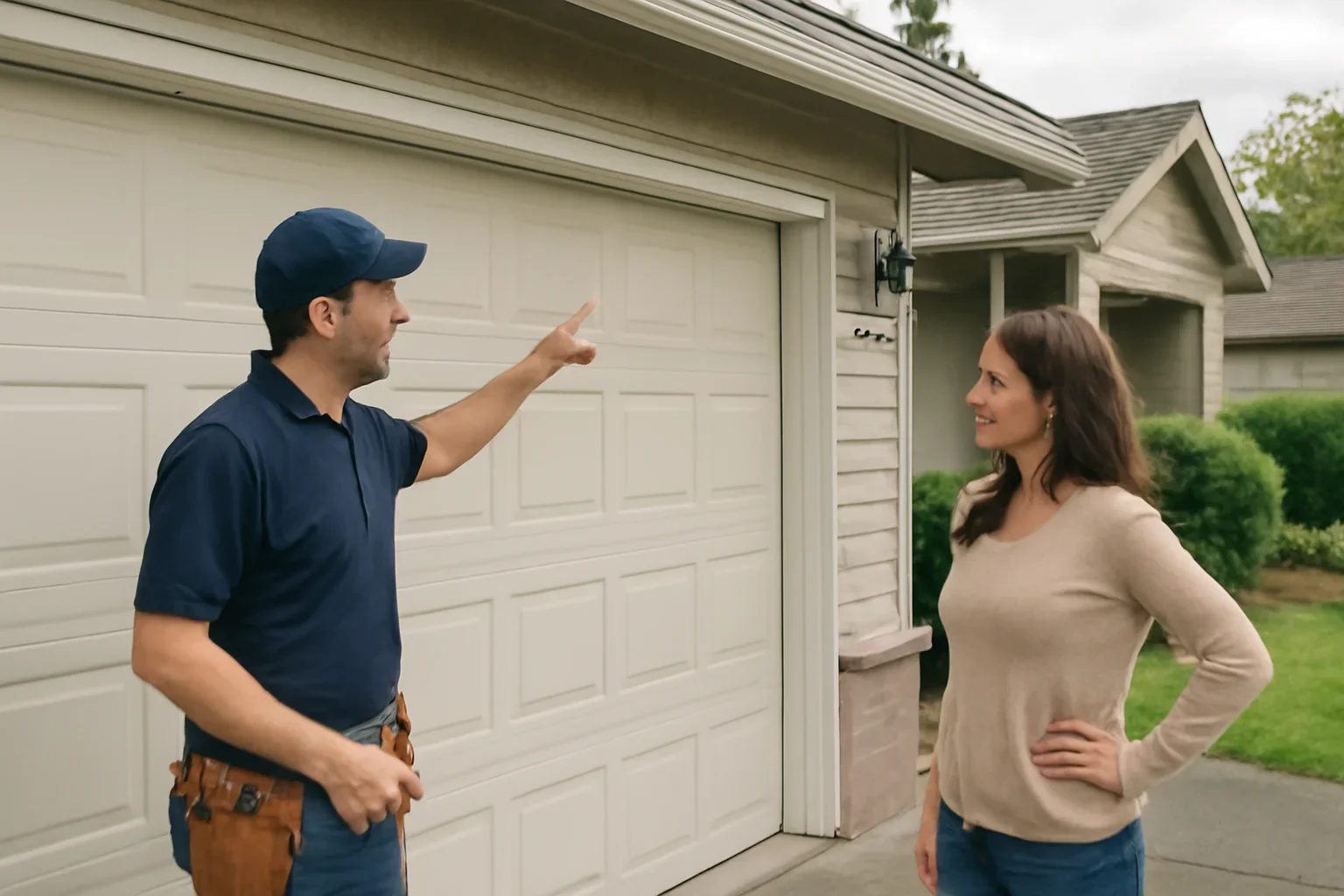
Roller wear often develops gradually. Changes in sound, vibration, and travel can appear before the door stops moving.
A roller may be seized, worn flat, loose on its stem, or rubbing against a bent or poorly spaced track.
Vibration can come from rough bearings, damaged wheels, bent stems, loose hinges, track movement, or poor balance.
A displaced roller may leave part of the door unsupported. Stop using the door until the cause and surrounding hardware are checked.
A damaged roller, tight track area, bent hinge, obstruction, or curved-track problem may create a repeatable sticking point.
Cracked wheels, missing bearing material, heavy corrosion, tilted stems, and excess side-to-side movement should be assessed.
Binding rollers increase resistance. The opener may slow down, stop, reverse, or sound louder even when the motor is not the original problem.
A door with displaced rollers, loose hinges, bent tracks, cable trouble, or a crooked section may be unstable. Repeated opener use can pull the door farther out of alignment.
Replacing a noisy wheel without checking the surrounding hardware can leave the real cause in place. Rollers should be assessed as part of the complete guiding and lifting system.
The useful repair decision identifies why the roller became noisy, damaged, tilted, or displaced.
Bearings and wheel surfaces wear as the door moves. Frequently used household and workshop doors may accumulate cycles quickly.
Debris and corrosion can reduce smooth movement, especially in detached garages and buildings exposed to damp air.
A bent track, loose bracket, or narrow section can push a roller sideways and accelerate wear on the wheel or stem.
Hinges hold the roller stems and allow sections to pivot. Wear or looseness can change the roller angle inside the track.
A car, trailer, mower, ladder, or stored item may bend a section, track, hinge, or roller stem.
Spring or cable problems can make one side carry more load, causing rollers to bind or travel unevenly.
Wheel diameter, stem length, track type, hinge position, and door weight need to work together.
An opener that keeps pulling a resistant door can hide manual-travel problems until roller, hinge, or track wear becomes more severe.
The exact work depends on the roller position, door condition, track alignment, hinge support, and whether another component caused the failure.
The sound, speed, vibration, door angle, and point of resistance help identify which roller or connected part needs attention.
A crooked, partly open, or off-track door requires a safety-first plan before roller or track work begins.
Hinges, tracks, brackets, panels, balance, cables, springs, and opener behaviour should be checked together.
Replacement selection depends on wheel diameter, stem length, track design, hinge position, door weight, and existing hardware.
The scope may involve one roller, several rollers, hinges, brackets, minor track work, or related alignment correction.
The door should be observed through opening and closing for alignment, smoothness, sound, balance, and opener interaction.
The wear pattern can show whether another part is pushing, pulling, or twisting the roller out of its normal path.
Tracks guide the rollers through vertical, curved, and overhead travel. Loose supports, dents, spreading, or incorrect spacing can create repeated rubbing or derailment.
Hinges position the roller stems and allow each section to pivot. A bent panel or loose hinge can change the roller angle even when the wheel is new.
Rollers guide the door but should not carry uneven lifting load. Weak spring support or cable problems can make rollers bind and increase track stress.
The opener moves the door but does not correct poor manual travel. Binding rollers can strain the motor, rail, trolley, belt, chain, or internal drive parts.
A single roller may be enough when damage is isolated and the remaining rollers move smoothly without similar wear. A broader replacement may be worth comparing when several rollers are noisy, loose, rusted, cracked, or from the same worn set.
Roller replacement alone may not be enough when tracks are badly bent, several hinges are failing, panels are unstable, cables are displaced, or the door is no longer square in the opening.
For multiple connected issues, compare the roller work with broader garage door repair. If a roller or the complete door has left the track, use the off-track repair service path.
The final scope depends on the roller location, the number of worn parts, the cause, and whether connected track, hinge, cable, or panel work is needed.
One upper roller differs from several worn rollers or a roller near a bottom fixture and cable connection.
Single, double, insulated, reinforced, oversized, and workshop doors may use different rollers and hardware.
Loose hinges, damaged brackets, bent tracks, and poor spacing may require additional work before smooth travel returns.
Normal wear may be limited in scope. Impact, imbalance, or an off-track event can involve several connected components.
Wheel diameter, stem length, track design, hinge position, door weight, and existing hardware affect suitable options.
A closed door differs from one that is crooked, partly open, off-track, or blocked by a vehicle or equipment.
Local context matters because door weight, daily cycles, track exposure, storage, moisture, dust, and equipment use can change how rollers wear.
Share whether the garage is attached, detached, acreage-based, rural, workshop-focused, or used for larger vehicles and equipment. Door width, ceiling height, current position, and recent impact also help frame the service plan.
Older rollers may share wear with aging hinges, tracks, springs, cables, and openers that should be checked together.
Moisture, temperature changes, dust, and less frequent inspection can contribute to bearing wear and corrosion.
Gravel, longer driveways, equipment use, larger doors, and less common hardware can affect roller wear and service access.
Heavier doors, repeated cycles, high tracks, trailers, tools, and equipment movement can place added load on rollers and hinges.
A roller problem may overlap with off-track movement, bent tracks, poor balance, cable trouble, opener strain, or a larger repair need.
Do not touch an unstable door, displaced roller, cable, spring, drum, or bottom fixture. From a safe position, note:
Routine garage door maintenance can identify rough bearings, loose hinges, track movement, balance changes, cable wear, and opener strain before travel becomes severe.
Keep tracks and the doorway clear of stored items and impact hazards. Do not apply heavy grease inside the tracks, and do not adjust springs, cables, bottom fixtures, or track spacing without suitable service knowledge.
These answers explain urgency, safe use, connected parts, repair decisions, and what helps before an appointment.
Roller repair is urgent when a roller has left the track, the door is crooked, a section appears unsupported, the door is stuck partly open, or the roller, hinge, or track damage makes the door unstable. Stop using the door and keep the area clear.
A mildly noisy roller may still move, but repeated use can worsen track, hinge, panel, and opener wear. Do not operate the door when a roller is outside the track, a hinge is pulling away, or the door is crooked or unstable.
One roller may be replaced when the damage is isolated and the remaining rollers are in suitable condition. When several rollers share similar age, noise, rust, cracking, or bearing play, replacing a broader set may be worth comparing.
Shaking can also come from loose hinges, bent tracks, incorrect spacing, panel damage, poor balance, cable problems, or opener strain. The complete travel system should be checked rather than assuming every vibration comes from one roller.
Yes. Worn or binding rollers increase resistance and can make the opener work harder. The motor, rail, trolley, belt, chain, or internal drive parts may show symptoms even when rough door travel is the underlying issue.
Possible causes include impact damage, a bent or loose track, a damaged hinge, a bent roller stem, cable or balance trouble, panel misalignment, or an obstruction. Do not force the roller back before the cause is identified.
Share the Aldergrove location, property type, door width, current position, the affected roller, sound or vibration location, visible track or hinge damage, recent impact, opener behaviour, access details, and clear photos when safe.
Use the contact page for questions about symptoms, access, urgency, or whether roller repair is the right service. Do not move an unstable door or touch a displaced roller just to gather more information.
Send the property type, door width, current position, affected roller, sound or vibration location, track and hinge condition, cable or balance concerns, opener behaviour, access details, and photos when safe. Keep the door unused if it is crooked, partly open, or unstable.