The door starts down and reverses
The beam may be blocked, the sensors may be misaligned, a bracket may be moving, or the opener may be detecting resistance from the tracks or door hardware.

Garage door safety sensors help prevent the door from closing when the photo-eye beam is blocked or the system cannot confirm a clear path. When the door reverses, refuses to close, closes only while the wall button is held, or shows unusual sensor lights, the cause may involve alignment, wiring, mounting, power, the opener logic, or mechanical resistance elsewhere in the door.
Garage door sensor repair in Aldergrove should confirm that both sensors are positioned correctly, receiving power, communicating with the opener, and responding during a full safety test. The tracks, door balance, travel settings, and closing path should also be checked so a mechanical problem is not mistaken for a sensor fault.
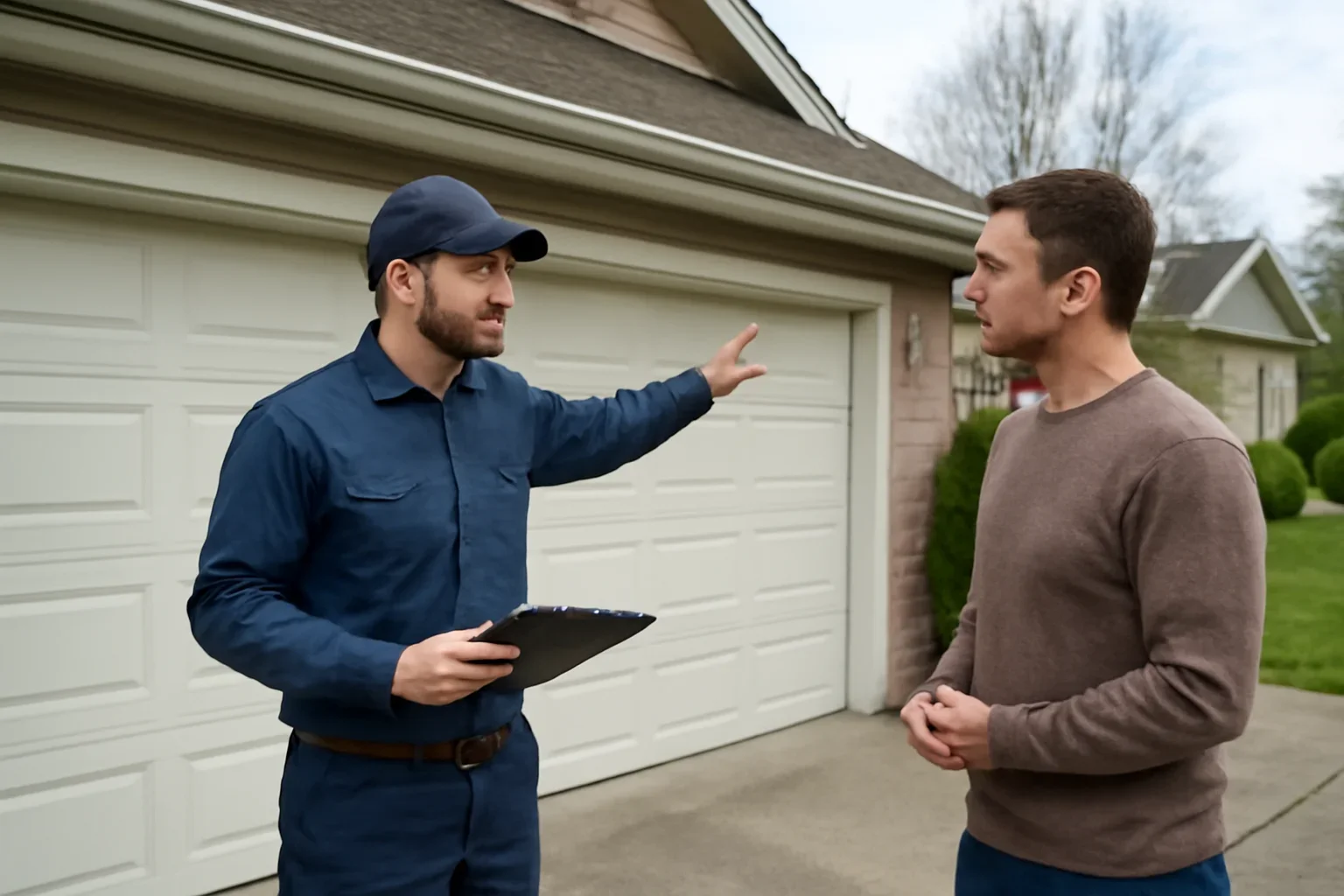
The safety sensors are part of the opener’s closing protection. Holding the wall control, moving sensors out of position, covering indicator lights, or changing force settings can hide the real cause without restoring safe operation.
Sensor symptoms usually appear during closing, but not every reversing door has a photo-eye failure. The pattern of lights, movement, and wall-control behaviour helps narrow the cause.
The beam may be blocked, the sensors may be misaligned, a bracket may be moving, or the opener may be detecting resistance from the tracks or door hardware.
If remote and keypad commands fail only during closing, the opener may be responding to a sensor circuit, wiring, or safety-input problem.
Some systems allow constant-pressure closing from the wall control when the sensor circuit is not satisfied. This is a symptom to diagnose, not a normal operating method.
An unlit, dim, or unstable indicator may point to power loss, damaged wire, loose connection, vibration, moisture, mounting movement, or alignment loss.
Strong low-angle light, reflections, dirty lenses, or sensor position may affect beam reception, but wiring and opener compatibility should still be checked.
If wiping the lenses only helps briefly, the cause may be a loose bracket, vibration, damaged cable, unstable connection, water exposure, or a failing sensor pair.
A useful assessment follows the full sensor circuit and also checks whether the door itself is creating resistance during closing.
The visible sensor is only one part of the system. Mounting, wiring, the opener, and the door’s mechanical condition can all produce similar symptoms.
A bumped bracket, vibration, track movement, or an uneven mounting surface can move one sensor out of the beam path.
Staples, rodents, tools, stored items, corrosion, door movement, or previous repairs can cut, pinch, loosen, or expose the sensor wire.
Dust, mud, condensation, spider webs, or direct sunlight may interrupt reception, especially when lenses or brackets are already marginal.
Binding tracks, worn rollers, poor balance, tight weather seals, incorrect travel, or control-board issues can make the door reverse even when the sensor beam is clear.
The service should confirm the cause, restore the sensor circuit, and verify the complete closing and reversal sequence.
The door position, remote and wall-control behaviour, indicator lights, recent impact, weather exposure, and when the problem occurs are documented.
Sensor position, brackets, beam reception, wiring condition, terminals, splices, and communication with the opener are checked.
Alignment, mounting, wiring, compatible sensor parts, opener connections, or related door resistance may be corrected based on the findings.
The door is tested through normal closing, beam interruption, reversal, wall control, remote operation, travel limits, and mechanical movement.
Similar closing symptoms can come from different parts of the system. The repair should follow the cause rather than the most visible symptom.
The condition of both sensors, brackets, wiring, opener compatibility, and repeat failure history guide the decision.
The sensors are compatible, undamaged, receiving power, and only need stable alignment, secure mounting, lens cleaning, or a corrected connection.
The sensor pair is functional, but a cut, corroded, loose, pinched, poorly spliced, or moisture-affected wire prevents reliable communication.
A sensor is physically damaged, moisture-affected, internally unreliable, incompatible, or unable to maintain correct operation after alignment and wiring are confirmed.
The final scope depends on whether the problem is alignment, mounting, wiring, the sensor pair, the opener, or mechanical door resistance.
For broader repair factors, review the garage door repair cost guide.
Aldergrove garages range from attached town-lot spaces to detached shops, barns, and acreage buildings. Lower track areas in working garages may collect more dust, mud, leaves, spider webs, moisture, and equipment traffic than a lightly used residential garage.
Detached garages can also have older wiring, unfinished walls, limited power, temperature swings, pest activity, or storage close to the sensor path. Workshops and rural buildings may use wider doors with a longer beam path and more opportunities for bins, tools, trailers, and equipment to interrupt or strike the sensors.
Share the building type, door width, floor conditions, recent weather or impact, and photos of both sensor locations and indicator lights.
These pages can help compare sensor repair with opener and mechanical door service.
If the door is stuck open and the garage cannot be secured, use the service booking page and explain that security or access is affected.
If the door is crooked, off track, heavy, scraping, or reversing because it binds, mechanical repair should be completed before sensor settings are treated as the solution.
These answers cover photo-eye symptoms, alignment, wiring, sunlight, opener interaction, replacement decisions, and booking details.
Book sensor repair when the door starts down and reverses, will not close by remote, closes only while the wall button is held, shows an off or flickering sensor light, or has visible alignment, bracket, wiring, or moisture damage near the photo eyes.
Constant-pressure closing can occur when the opener is not receiving a satisfied safety-sensor signal. The cause may be alignment, wiring, power, a damaged sensor, mounting movement, or an opener-control issue and should be diagnosed rather than bypassed.
Strong direct light or reflections may interfere with the receiving sensor in some conditions, especially when the lenses, brackets, or alignment are already marginal. Wiring, power, mounting, and opener compatibility should still be checked.
You can safely observe whether the lenses are dirty, blocked, or visibly bumped, but repeated failure, damaged wiring, loose brackets, unstable lights, or a door that still reverses should be inspected. Do not bypass the sensors or increase opener force.
Yes. Binding tracks, worn rollers, poor balance, tight weather seals, panel damage, incorrect travel settings, or opener-control problems can also cause reversing. The door’s mechanical movement should be checked with the sensor system.
It depends on the system and failure. Compatible sensors may be replaced as a pair when one is damaged, unreliable, moisture-affected, or no longer matched to the opener. Alignment or wiring repair may be enough when both sensors remain serviceable.
Share your Aldergrove address, building type, door behaviour, sensor-light colours, whether the issue changes with sunlight or weather, visible wire or bracket damage, opener details, clear photos of both sensors and lower tracks, and preferred timing.
Use the service booking page and explain that the door is stuck open or the opening cannot be secured. Avoid bypassing the sensors, forcing the door, or changing opener force settings while waiting for the problem to be assessed.
Include your address, building type, door-closing behaviour, both sensor-light colours, visible wire or bracket damage, sunlight or weather patterns, opener details, photos of both sensors and lower tracks, whether the garage can be secured, and preferred timing.