The door feels unusually heavy
Springs offset much of the door’s weight. A heavy door may indicate a broken spring, weak spring support, or poor balance.

A broken or weakened garage door spring can leave the door too heavy to lift, cause uneven movement, or make the opener strain. Spring systems hold significant stored tension, so the door should be assessed before anyone attempts to move or adjust high-tension parts.
Aldergrove homes, detached garages, acreages, and workshops may use torsion springs above the door or extension springs along the horizontal tracks. The correct repair depends on the spring system, door weight, cable condition, drum or pulley setup, balance, and connected hardware.
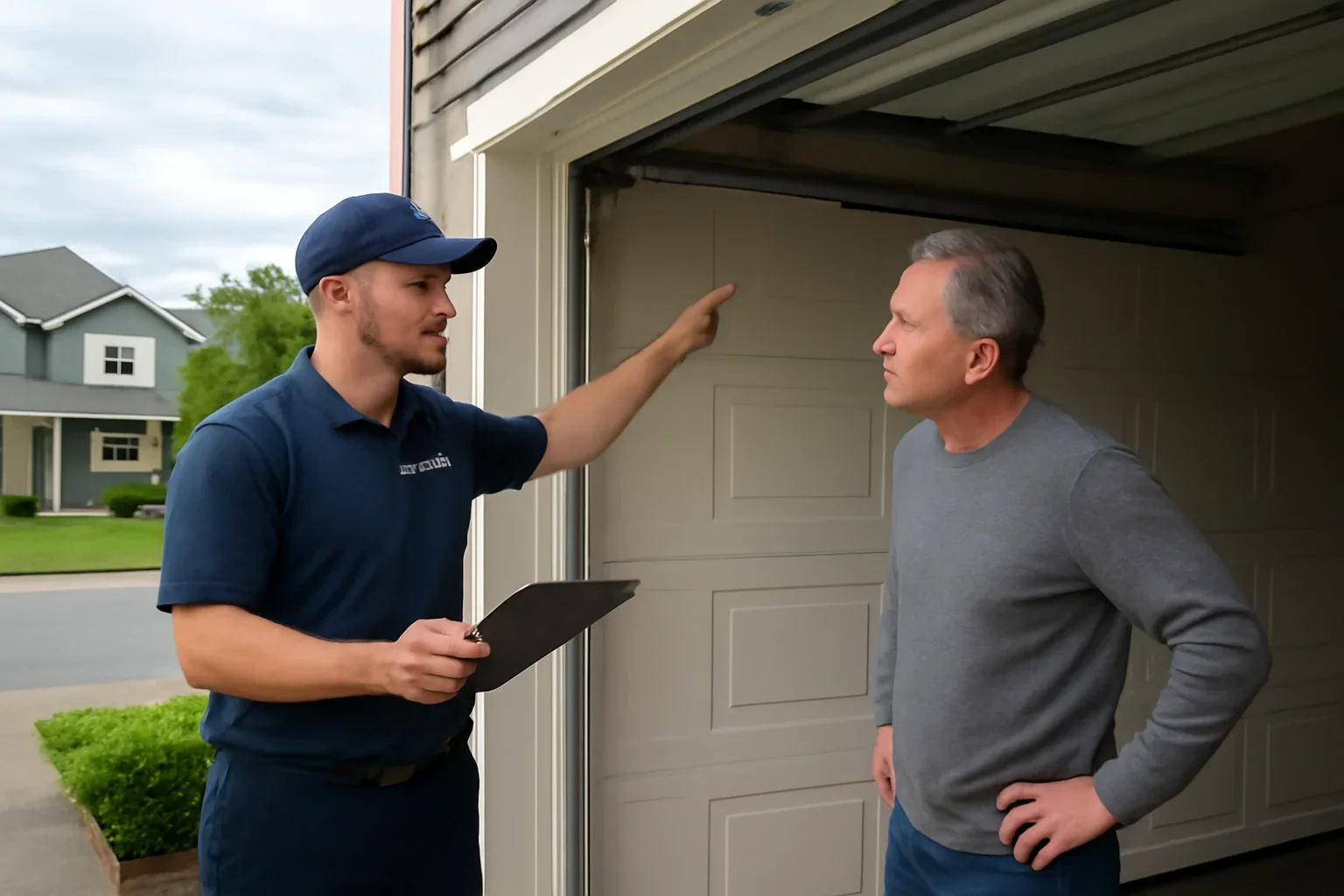
Spring problems can appear suddenly after a break or develop gradually as the spring loses lifting strength and balance.
Springs offset much of the door’s weight. A heavy door may indicate a broken spring, weak spring support, or poor balance.
The opener may stop, reverse, or strain because it is trying to lift more door weight than it should carry.
A separated coil above the door is a common sign that a torsion spring has broken and can no longer support normal lifting.
Uneven movement can involve a spring, cable, drum, shaft, pulley, track, or side-to-side balance issue.
A spring can release stored tension with a sudden noise. The door may remain closed afterward or become difficult to move.
When spring tension changes, lift cables may become loose, unwind, or pull unevenly. Do not touch or pull them.
Springs, lift cables, drums, winding hardware, shafts, pulleys, and bottom fixtures can store or transfer significant force. A door with a broken spring may also be much heavier than expected.
The spring must match the door and work correctly with the complete lifting system. Replacing one visible part without checking connected hardware can leave an imbalance or another safety concern.
Identifying the spring type helps explain the likely inspection points and why the parts should not be adjusted without suitable tools and service knowledge.
Torsion springs are commonly mounted on a shaft above the garage door. They apply torque through the shaft and drums so the lift cables raise the door from the bottom corners.
The inspection may include the spring or spring pair, winding hardware, centre support, shaft, drums, cables, end bearing plates, and door balance. A visible gap in a coil often indicates a broken torsion spring.
Extension springs are generally positioned along the horizontal tracks and stretch as the door closes. Pulleys, cables, brackets, and safety cables are important parts of this setup.
Uneven stretching, damaged pulleys, missing or damaged safety cables, and side-to-side imbalance should be assessed together. A stretched spring should not be handled or disconnected casually.
A spring may break after normal cycle wear, but door condition, balance, environment, and added weight can also affect its service life.
Each opening and closing cycle flexes or winds the spring. High-use household and workshop doors may accumulate cycles quickly.
Surface corrosion can weaken spring material over time, especially in detached garages exposed to damp air or temperature changes.
A spring that does not match the door’s weight and setup may leave the door too heavy, too light, or poorly balanced.
New insulation, reinforcement, windows, or replacement sections can change the weight the spring system must support.
Binding rollers, bent tracks, loose hinges, or impact damage can make the lifting system work harder.
A cable that is frayed, loose, displaced, or winding incorrectly can create uneven loading and spring-like symptoms.
Incorrect tension, mismatched parts, or unresolved balance problems may contribute to strain and early failure.
On a two-spring system, both springs may have experienced similar cycles even when only one has visibly broken.
The exact service depends on the spring system, door weight, cable position, hardware condition, and whether the door is safely accessible.
The first step is identifying whether the door uses torsion or extension springs and documenting the visible failure or balance symptom.
Door size, construction, added weight, travel resistance, and current position help determine the likely spring requirements.
Cables, drums, shaft, pulleys, bearings, bottom fixtures, tracks, and rollers should be checked for damage or uneven loading.
The recommended spring work and any related cable, bearing, pulley, or balance concern should be explained before approval.
After the agreed work, the door should be checked through its travel so it is not excessively heavy, light, or uneven.
The opener should be observed with the repaired door to confirm that previous spring strain has not left another operational concern.
The spring supports the lifting load, but cables, drums, tracks, rollers, panels, and the opener all influence how the door responds.
Torsion systems transfer lifting force through the shaft, cable drums, and cables. A loose or displaced cable can cause crooked travel, cable overlap, or a door that is difficult to control.
Visible cable damage may require separate garage door cable repair.
A correctly matched spring system should help the door remain manageable through its travel. A door that drops, rises on its own, or feels unusually heavy may need a broader garage door balance assessment.
Binding or damaged guiding hardware increases resistance. Spring repair should not be expected to correct a bent track, seized roller, loose hinge, or impact-damaged section.
An opener is designed to move a balanced door, not lift the full door weight. Repeated operation with a weak or broken spring can strain the motor, trolley, rail, belt, chain, or internal drive parts.
On a two-spring system, one spring may break while the other still appears intact. Whether one or both should be replaced depends on the spring setup, matching requirements, age, cycle history, condition, door balance, and the remaining spring’s suitability.
Spring repair may not solve major panel damage, badly bent tracks, worn hinges, repeated cable problems, or a door that is no longer square in the opening.
If the lifting system has several failing parts, compare the spring work with broader garage door repair. If the complete door is severely damaged or poorly fitted, planned replacement may also be worth discussing.
The final scope depends on the spring system and connected hardware found at the property. Exact pricing should be confirmed after the door weight, parts, and balance needs are assessed.
Torsion and extension systems use different parts. Single-spring, paired-spring, and custom setups can also change the work involved.
Single, double, insulated, reinforced, oversized, and workshop doors may require different spring specifications and handling.
The condition and compatibility of the remaining spring can affect whether one component or a broader spring set is considered.
Frayed cables, displaced drums, worn bearings, damaged pulleys, or loose hardware may expand the repair scope.
A door stuck open, crooked, blocked by a vehicle, or installed in a high-ceiling garage may require a different approach.
Impact damage, bent tracks, seized rollers, opener strain, and added door weight can affect the final recommendation.
Local context matters because door weight, daily use, moisture exposure, access, ceiling layout, and building type can change the spring service plan.
Share whether the garage is attached, detached, acreage-based, rural, workshop-focused, or used for larger vehicles and equipment. Door width, current position, spring location, and ceiling height also help frame the likely scope.
Older spring, cable, bearing, roller, track, and opener systems may share similar cycle wear.
Moisture, temperature changes, corrosion, storage, and less frequent inspection can affect springs and lifting hardware.
Larger doors, longer access routes, equipment use, high ceilings, and less common hardware may affect parts and scheduling.
Heavier doors, repeated cycles, added reinforcement, windows, and work equipment can place more demand on the spring system.
A spring problem may overlap with cable failure, poor balance, off-track movement, opener strain, or a broader repair need.
Do not touch or move high-tension parts. From a safe distance, note:
Routine garage door maintenance can identify balance changes, cable wear, rough rollers, loose hinges, corrosion, and opener strain before a small issue becomes more disruptive.
Do not add weight to the door without checking how it affects the spring setup. Avoid repeated opener use when the door becomes heavy, uneven, or slow.
These answers cover urgency, safe use, paired springs, opener strain, and what helps before an appointment.
Spring repair is urgent when the door is unusually heavy, lifts only a few inches, moves unevenly, has a visible spring gap, has loose cable after a loud bang, or is stuck open and no longer securing the garage. Stop using the door if it is crooked or unstable.
A broken spring can leave the door much heavier than expected. Avoid using the opener or manually lifting the door unless the situation has been assessed and a safe method is confirmed. A raised door may fall or become difficult to control.
On a two-spring system, replacing both may be worth comparing when they are a matched pair with similar age and cycle history. The decision depends on the spring setup, condition, compatibility, and the balance that can be achieved.
Torsion springs are commonly mounted on a shaft above the closed door. Extension springs usually run along the horizontal tracks on each side. Do not touch either system to identify it; a photo from a safe distance is more useful.
Yes. The opener is designed to move a balanced door, not lift the full door weight. Repeated operation with a broken or weak spring can strain the motor, rail, trolley, belt, chain, or internal drive parts.
A crooked door may involve a loose or displaced cable, cable drum problem, uneven spring support, track issue, or damaged lifting hardware. Stop using the door and keep clear because the door may be unstable.
Share the Aldergrove location, property type, door width, current position, whether the spring is above the door or beside the tracks, visible gaps or loose cable, recent sounds, opener behaviour, added door weight, access details, and clear photos when safe.
Use the contact page for questions about symptoms, access, urgency, or whether spring repair is the right service. Do not move an unstable door or touch the spring just to gather more information.
Send the property type, door width, current position, spring location, visible gap or damage, cable condition, opener behaviour, recent sounds, access details, and photos when safe. Keep the door unused if it is heavy, crooked, partly open, or unstable.