The door suddenly feels very heavy
A failed or weakened spring can leave the full door weight unsupported, making manual movement difficult and placing added load on the opener.

A broken, stretched, fatigued, or poorly matched spring can make a garage door heavy, uneven, difficult to open, or impossible for the opener to move safely. Spring repair should consider the door weight, spring system, cables, drums, bearings, tracks, and opener load together.
Fernridge properties may include attached garages, detached shops, taller openings, heavier insulated doors, and semi-rural access. Door size, building use, weather exposure, driveway conditions, equipment clearance, and service access can all influence the repair scope.
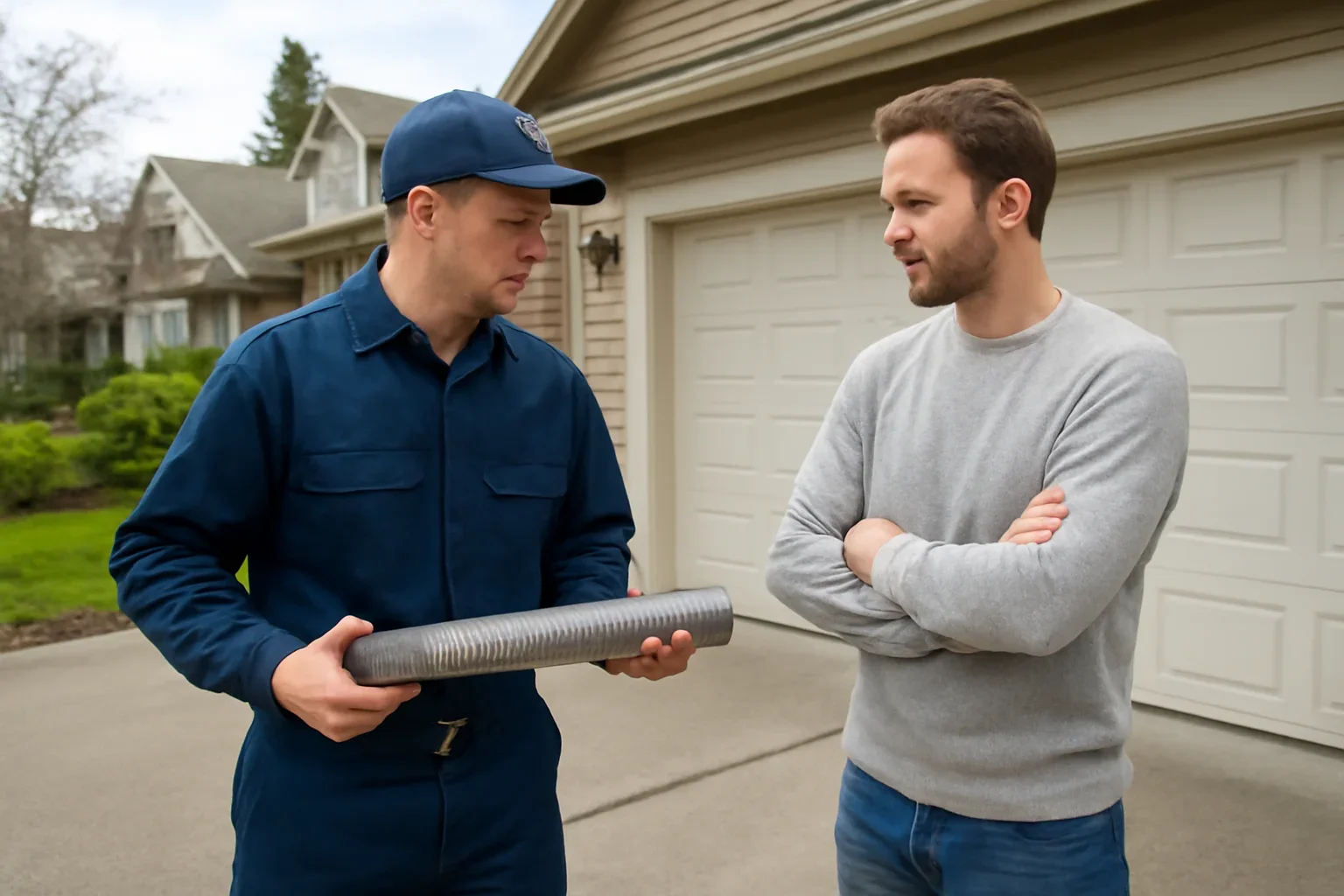
Spring problems often change the weight, position, sound, and movement of the door. Similar symptoms can also involve cables, drums, bearings, tracks, or opener components, so the lifting system should be checked as a whole.
A failed or weakened spring can leave the full door weight unsupported, making manual movement difficult and placing added load on the opener.
The opener may lift only a small amount, stop, reverse, or sound strained when the spring system no longer offsets the door weight.
A separated section in the spring above the door can indicate that the coil has broken and the system is no longer supporting the door correctly.
A spring, cable, drum, or shaft problem can cause one side to move differently, leaving the door crooked or placing rollers under uneven pressure.
A spring can release suddenly when it breaks. A loud sound should be followed by a visual check from a safe distance without operating the door.
A door that drops, will not remain supported, or feels unstable may have a serious balance or spring-system problem and should not be used.
Garage door springs, cables, drums, bottom brackets, and related lifting parts can hold or transfer substantial force. A broken spring can leave the door unusually heavy and may affect cables, rollers, tracks, panels, and the opener.
A spring does not work alone. The repair should consider the lifting system, door condition, hardware, track alignment, and opener so that related wear or damage is not missed.
The spring system should be identified before the repair scope is defined. Door size, track layout, available space, existing hardware, and how the system was designed all affect compatibility.
Torsion systems usually use one or more springs mounted on a shaft above the opening. The springs work with cables, drums, bearings, and brackets to balance the door.
Extension springs stretch as the door closes and work with pulleys, cables, brackets, and safety containment components. Wear in connected parts can affect how evenly the door lifts.
The aim is to restore the door’s balance and lifting support while checking the connected parts that may have been damaged or stressed by the failure.
The current door position, visible spring condition, door weight, opener response, cable position, and side-to-side alignment help define the first inspection steps.
Door size, construction, weight, track setup, spring arrangement, and existing hardware are reviewed for compatibility.
Cables, drums, pulleys, bearings, brackets, rollers, tracks, panels, and opener strain are checked for related damage or wear.
After repair, door balance, alignment, travel, cable position, opener behaviour, controls, sensors, and reversal are reviewed.
The decision depends on the system design, the age and condition of the remaining spring, the door weight, and whether the springs share the lifting load.
The correct decision should be based on the actual spring system and door requirements rather than a universal rule.
When the spring stops balancing the door, other parts may be exposed to unusual load, uneven movement, or sudden changes in tension.
Cables can loosen, shift, overlap, or come off the drums when the door becomes uneven or loses spring support.
Bearings, center supports, end plates, and the torsion shaft should be checked for wear, movement, or damage.
An uneven or heavy door can place extra side pressure on rollers and tracks, increasing noise, binding, or displacement.
A heavy door, sudden drop, or uneven lift can stress hinges, reinforcement, attachment points, and door sections.
The opener may strain, stop, reverse, damage its trolley, or place added load on the rail and mounting when asked to lift an unbalanced door.
Bottom fixtures connect to the lifting cables and should be treated as part of the loaded system rather than ordinary removable hardware.
Fernridge garage doors may serve attached homes, detached workshops, storage buildings, hobby spaces, and larger residential lots. Door size, building use, driveway access, weather exposure, and nearby equipment can all influence the service scope.
Share what the building is used for and how large the opening is. That context helps identify whether the door is a standard residential setup or a heavier, taller, more frequently used system.
Wider doors, taller ceilings, tools, vehicles, trailers, and equipment can change door weight and service access.
Gates, gravel, mud, parking arrangements, and access instructions may affect how the service visit is planned.
Insulated, oversized, reinforced, or custom doors require spring selection that matches the actual door weight and setup.
Moisture and temperature changes can contribute to corrosion and wear on springs, cables, bearings, and brackets.
Doors used repeatedly for vehicles, equipment, storage, or work areas may accumulate cycles faster than a lightly used garage door.
Ceiling storage, shelving, vehicles, trailers, and shop equipment can limit safe access around the spring and lifting system.
The final scope depends on the spring system, door weight, number of springs, connected hardware, access conditions, and whether the failure damaged other parts.
Spring repair should restore balanced movement and support the complete door system, not only close a visible gap in the spring.
A spring failure may overlap with a broader mechanical repair, urgent access issue, opener problem, or Fernridge service request.
Review the main repair, opener, installation, and urgent service options for Fernridge properties.
Browse Fernridge servicesUse this page when the spring issue also involves cables, drums, tracks, rollers, panels, hinges, or broader door movement.
View repair serviceUse this path when the door is stuck open, blocking access, hanging unevenly, or creating a safety or security concern.
Review urgent repairSend the door position, spring symptom, building type, access details, and clear photos before arranging service.
Send repair detailsThese answers cover broken-spring symptoms, urgency, opener strain, torsion and extension systems, paired springs, detached shops, cost factors, and booking details.
Spring repair becomes more urgent when the door is stuck open, blocking access, unusually heavy, crooked, partly unsupported, unable to secure the property, or causing the opener to strain. Keep the door unused and keep people, vehicles, tools, and equipment away.
Repeated opener use is not recommended because the motor is not intended to replace the lifting support provided by the springs. The opener may strain, stop, reverse, damage its trolley or rail, or move the door unevenly.
Torsion springs are commonly mounted on a shaft above the door and work with drums and cables. Extension springs usually stretch along the horizontal tracks and work with pulleys, cables, and side hardware. Each system requires compatible parts and a different repair approach.
It depends on the system design, the age and condition of the remaining spring, whether both springs share the lifting load, and whether matched performance is needed. The correct decision should be based on the actual door and spring setup.
Yes. A spring failure can change cable tension, door balance, roller pressure, track alignment, and opener load. Cables may loosen or shift, and other lifting or support parts may be stressed if the door continues to move.
They can. Detached shops may have wider, taller, heavier, or more frequently used doors, separate heating conditions, tools and equipment near the opening, longer driveways, and different service access than an attached residential garage.
Spring-system type, number of springs, door weight and size, spring compatibility, cable and drum condition, bearing or bracket wear, opener strain, access conditions, and any related track, roller, panel, or hinge damage can affect the final scope.
Share your Fernridge location, gate and driveway details, building type, approximate door size, current door position, whether a loud bang occurred, visible spring or cable concerns, opener response, preferred timing, and clear photos when safe.
Send your location, building type, door position, spring symptoms, cable condition, opener response, gate or driveway details, and clear photos when safe. Keep the door unused if it is heavy, crooked, unstable, partly open, or no longer supported correctly.