The door hangs crooked
One side may rise, drop, or sit differently when a cable is loose, displaced, damaged, or no longer winding correctly on the drum.
Frayed, snapped, loose, slipped, or uneven garage door cables can leave a door crooked, heavy, stuck, or partly unsupported. Cable repair should also check the springs, drums, pulleys, bottom brackets, tracks, rollers, panels, and opener load so the visible cable problem is not treated alone.
Fort Langley homes often place a premium on curb appeal, careful exterior detailing, and doors that suit heritage-inspired or custom architecture. Established garages, detached buildings, older hardware, limited rear access, and mixed-age door systems can all affect the repair scope.
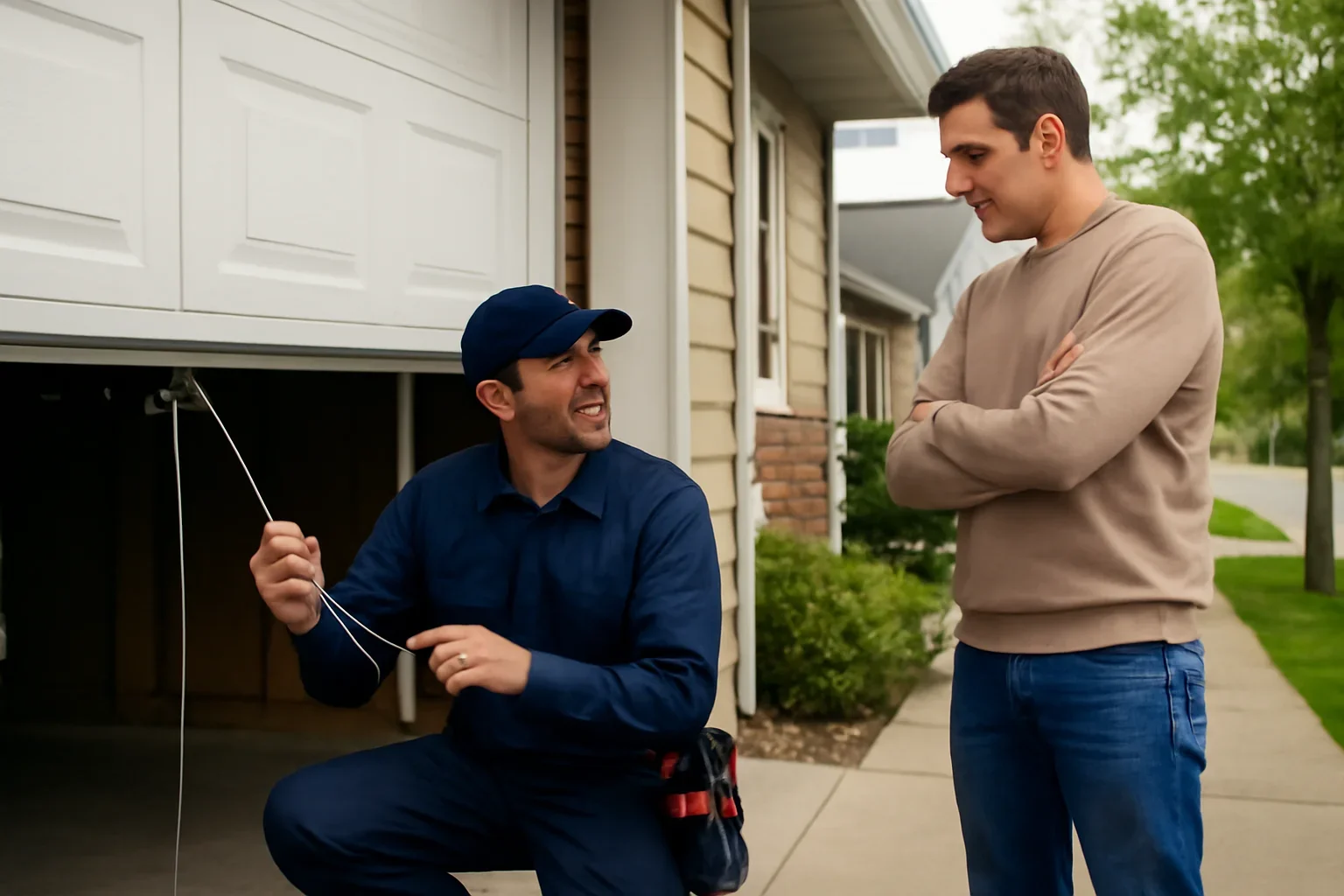
Cable problems often affect how evenly the door is supported. The same symptoms can also involve springs, drums, pulleys, tracks, rollers, or panel damage, so the full lifting system should be inspected.
One side may rise, drop, or sit differently when a cable is loose, displaced, damaged, or no longer winding correctly on the drum.
Visible broken strands, rust, kinks, flattening, or separation can indicate that the cable has lost strength or is rubbing against another component.
A displaced cable may be linked to a spring failure, uneven door movement, track damage, impact, slack, or incorrect drum winding.
A cable problem can leave one side supported differently, causing the door to bind in the tracks or stop at an angle.
A loss of cable support can change the door’s movement quickly and may affect rollers, tracks, panels, springs, and nearby hardware.
The opener may slow down, stop, reverse, or sound louder when the door is uneven, binding, or no longer supported correctly.
Garage door cables work with springs, drums, pulleys, and bottom brackets to lift and support a heavy door. A cable failure can leave the door unstable and can transfer uneven load to the remaining cable and other hardware.
A cable does not fail in isolation. The repair should identify why the cable frayed, snapped, loosened, overlapped, or came off the drum before the system is returned to service.

The cable’s appearance and position can help narrow the problem, but the door should remain unused until the connected lifting and support parts are checked.
Broken strands can develop from age, corrosion, rubbing, poor drum alignment, damaged hardware, or repeated uneven movement.
A broken cable can leave one side unsupported and may cause the door to tilt, bind, drop, or place extra load on the remaining cable.
A cable can lose its correct drum position after slack, uneven movement, a spring problem, impact, track movement, or incorrect winding.
A cable that is loose, crossed, or winding unevenly can change door alignment and should not be corrected by operating the opener repeatedly.
The goal is to restore even lifting support while checking the spring system, drums, brackets, tracks, rollers, panels, and opener for the condition that caused the cable problem.
The current door position, cable appearance, side-to-side alignment, spring condition, opener response, and visible damage help define the first inspection steps.
Cables, drums, pulleys, springs, bearings, bottom brackets, tracks, rollers, hinges, panels, and opener strain are reviewed together.
Cable compatibility, connected wear, door size, access conditions, and any spring, track, roller, bracket, or panel concerns are identified.
After repair, cable tracking, door balance, alignment, travel, opener behaviour, controls, sensors, and reversal are checked.
The correct approach depends on the system design, age and condition of the remaining cable, the cause of failure, and whether both sides share similar wear.
The decision should be based on the actual cable condition and lifting system rather than a universal rule.
A cable problem can be caused by or create additional wear in the spring, drum, bracket, roller, track, panel, or opener system.
A broken, weakened, mismatched, or poorly balanced spring can change cable tension and how evenly the door lifts.
Worn grooves, misalignment, corrosion, damaged pulleys, or poor winding can contribute to fraying, overlap, or displacement.
Bottom fixtures connect to the lifting cables and should be treated as part of the loaded system rather than ordinary removable hardware.
Bent tracks, displaced rollers, loose brackets, or poor alignment can make the door bind and pull unevenly on the cables.
Impact damage, weakened reinforcement, loose hinges, or a distorted section can change door alignment and cable loading.
The opener may strain, stop, reverse, or damage its rail and trolley when asked to move a crooked or poorly supported door.
Fort Langley garage doors may serve established homes, heritage-inspired residences, detached garages, carriage houses, renovated buildings, and custom properties. Door age, access, exterior detailing, moisture exposure, and previous modifications can all affect the repair scope.
Share the building type and how the opening is used. That context helps identify whether the cable issue is part of a standard residential repair or a broader alignment, hardware, opener, or replacement concern.
Established garages may include mixed-age springs, cables, tracks, openers, panels, or previous repair work.
Carriage houses and detached garages may have separate access, power, ceiling, storage, and working-clearance conditions.
Rear lanes, gates, fencing, landscaping, parked vehicles, and tight driveways can affect service planning.
Moisture and temperature changes can contribute to corrosion on cables, drums, brackets, springs, and fasteners.
Panel and trim damage may matter more when the garage door is a visible part of a detailed home exterior.
Added insulation, updated openers, replaced panels, or changed framing can affect door weight and cable-system compatibility.
The final scope depends on the cable system, door size, connected hardware, access conditions, and whether the failure caused or resulted from damage elsewhere.
Cable repair should restore even support and reliable travel across the complete garage door system.
A cable failure may overlap with a broader mechanical repair, urgent access issue, Fort Langley service request, or question that needs photos before booking.
Review the main repair, opener, installation, and urgent service options for Fort Langley properties.
Browse Fort Langley servicesUse this page when the cable issue also involves springs, drums, tracks, rollers, hinges, panels, or broader door movement.
View repair serviceUse this path when the door is stuck open, hanging unevenly, blocking access, or creating an immediate safety or security concern.
Review urgent repairSend the door position, cable symptom, property type, access details, and clear photos before arranging service.
Send repair detailsThese answers cover cable symptoms, urgency, opener use, paired cables, spring and drum problems, local property factors, repair cost, and booking details.
Cable repair becomes more urgent when the door is crooked, partly open, stuck, off-track, blocking access, unable to secure the property, or supported unevenly. Keep the door unused and keep people, vehicles, tools, and stored items away.
No repeated opener use is recommended. A broken or displaced cable can leave the door uneven and may cause binding, track damage, roller displacement, panel stress, or added load on the opener and remaining cable.
A cable may leave the drum because of slack, a spring failure, uneven door movement, impact, track damage, incorrect winding, a displaced roller, or a door that was operated while crooked or obstructed.
It depends on the system design, the cause of failure, and the age and condition of the remaining cable. A paired comparison may make sense when both cables share similar corrosion, fraying, wear, exposure, and lifting cycles.
Yes. A spring failure can change cable tension and door balance, allowing cables to loosen, overlap, shift, or come off the drums. Springs, cables, drums, bearings, and door alignment should be considered together.
Yes. Continued operation can increase uneven loading, track pressure, roller wear, panel stress, and opener strain. A damaged cable can also fail completely and leave the door partly unsupported.
They can. Older or renovated garages may have mixed-age springs, cables, drums, tracks, openers, added insulation, changed framing, or previous repairs. The complete lifting system should be checked for compatibility and wear.
Share your Fort Langley location, lane or driveway details, building type, approximate door size, current door position, cable condition, visible spring or drum concerns, opener response, preferred timing, and clear photos when safe.
Send your location, property type, door position, cable symptoms, spring or drum concerns, opener response, lane or driveway details, and clear photos when safe. Keep the door unused if it is crooked, partly open, unstable, or supported unevenly.