The door hangs at an angle
One side may sit higher or lower when rollers leave the track, a cable loses support, a track shifts, or the door twists after impact.

A garage door that has come out of its tracks may hang crooked, jam partway, scrape against the opening, or become unstable. Off-track repair should identify why the door shifted before rollers are realigned or damaged parts are replaced.
Fort Langley properties can include established homes, detached garages, carriage houses, rear-lane access, custom doors, and older hardware. Door style, panel condition, limited working clearance, impact damage, moisture exposure, and mixed-age components can all affect the repair plan.
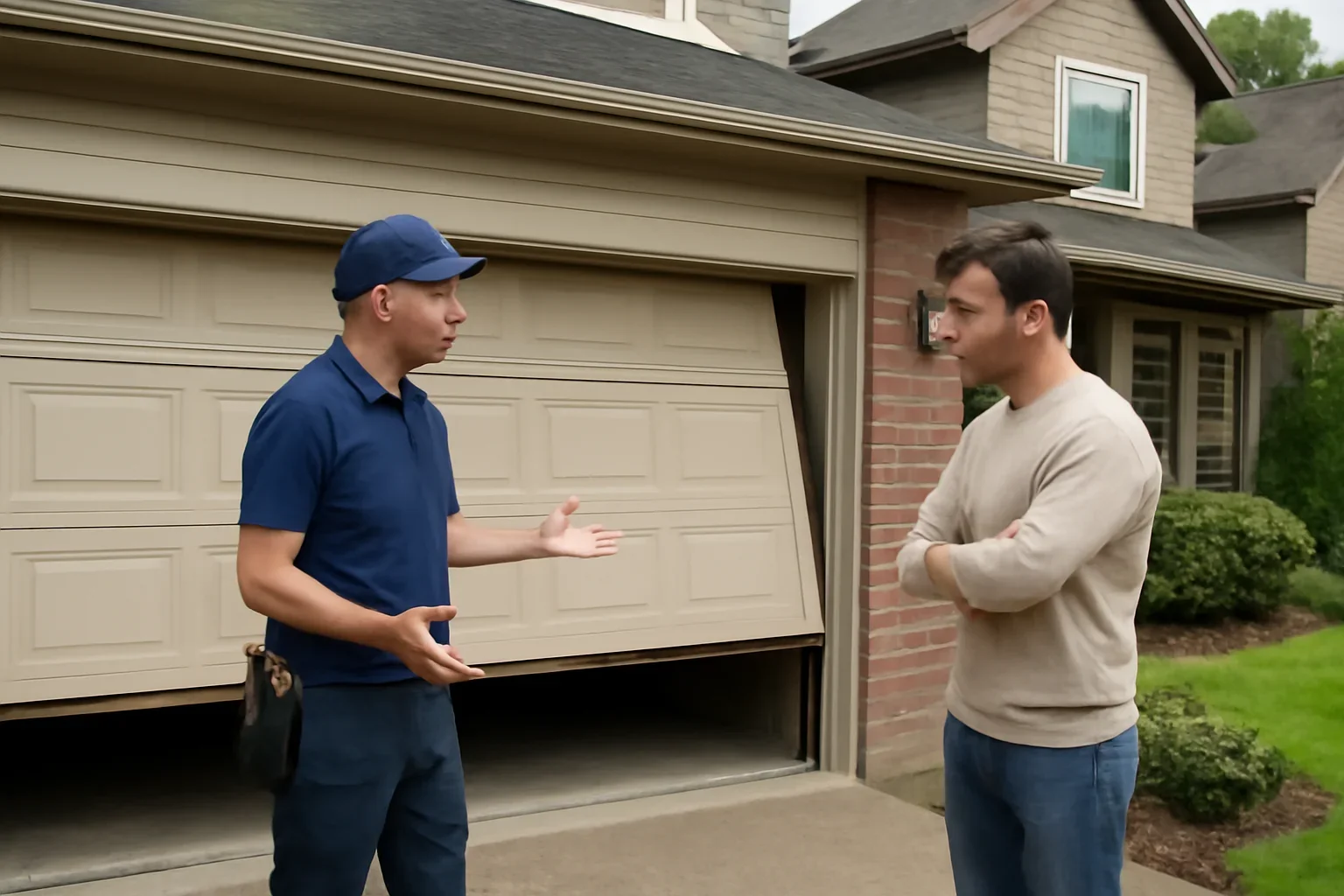
An off-track condition can range from one displaced roller to a severely crooked door with cable, panel, hinge, or track damage. The door should not be forced through another cycle.
One side may sit higher or lower when rollers leave the track, a cable loses support, a track shifts, or the door twists after impact.
A displaced roller may be related to track damage, loose hinges, impact, cable trouble, door misalignment, or excessive movement in the opening.
The door may bind when one side moves differently, a roller jams, a track bends, a cable slips, or a damaged panel changes the travel path.
Dents, loose brackets, shifted mounting points, impact damage, or repeated strain can prevent rollers from following the track correctly.
Rollers may be dragging against damaged track, loose hinges, a distorted panel, or hardware that has moved out of alignment.
The opener may slow down, reverse, or pull the door at an angle when the tracks and rollers are no longer guiding the door correctly.
An off-track door may be partly unsupported and can shift without warning. Operating the opener or forcing the door can increase track damage, pull cables out of position, twist panels, displace more rollers, or damage the opener.
Realigning a roller without correcting the cause can allow the door to leave the tracks again. The tracks, rollers, cables, springs, hinges, panels, brackets, and opener should be reviewed together.
The displaced roller is often the visible result of another failure. The repair should address the original cause rather than only returning the roller to the track.
A vehicle, bicycle, trailer, storage item, or equipment impact can bend tracks, damage panels, loosen hinges, or push rollers out of position.
Uneven cable support can make one side rise or fall differently, placing rollers and tracks under abnormal pressure.
Dents, loose brackets, poor spacing, corrosion, structural movement, or previous adjustments can change the roller path.
A seized bearing, cracked wheel, bent stem, loose hinge, or excessive play can allow a roller to bind or leave the track.
Panel damage, weak reinforcement, hinge failure, cable imbalance, or track movement can pull the door out of square.
Tools, shelving, bicycles, debris, or stored items can stop one side of the door while the other side continues moving.
Repeated opener use while the door binds can increase twisting, pull hardware loose, and worsen an alignment problem.
Tracks, hinges, rollers, cables, or opener settings that were not matched correctly can contribute to repeated off-track movement.
The aim is to stabilize the door, identify why it left the tracks, repair damaged or displaced parts, and confirm smooth, balanced movement before powered operation resumes.
The door position, support, tilt, damaged areas, cable condition, rollers, tracks, and working clearance are reviewed before movement.
Impact, track damage, cable failure, roller wear, loose hinges, panel distortion, obstruction, or opener strain are checked.
The required tracks, rollers, hinges, brackets, cables, panels, or fasteners are corrected or replaced before the travel path is restored.
Door balance, alignment, roller travel, cable position, track spacing, opener behaviour, controls, sensors, and reversal are checked.
The repair depends on how the door left the track and whether the tracks, rollers, hinges, cables, panels, or opener were damaged.
Use garage door repair when the off-track condition involves broader mechanical or structural damage.
An off-track door can transfer uneven load across the lifting, guidance, panel, and opener systems.
Roller stems can bend, wheels can crack, bearings can seize, and hinges can loosen or tear away from the door sections.
Tracks may bend, twist, dent, separate, or shift when the door binds or receives an impact.
Cables may lose tension, overlap, come off drums, or support the two sides unevenly when the door becomes crooked.
A spring failure or imbalance can contribute to the off-track condition and make the door too heavy or uneven to realign safely.
Door sections can crease, crack, twist, separate, or lose reinforcement after impact or severe binding.
The opener rail, trolley, arm, motor, and mounting can be strained when the system tries to move a jammed or crooked door.
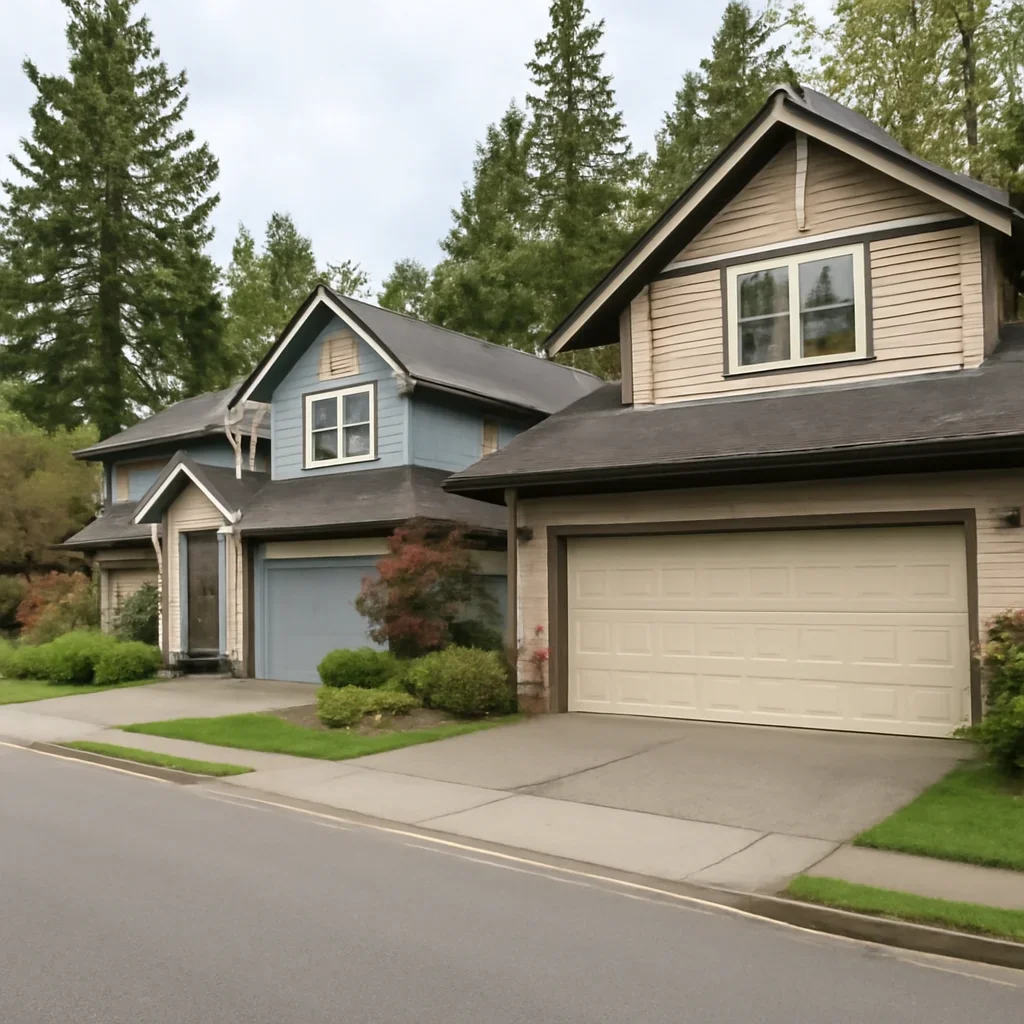
Fort Langley garage doors may serve established homes, heritage-inspired properties, detached garages, carriage houses, renovated buildings, and custom homes. Door age, access, exterior detailing, previous modifications, and nearby landscaping can all affect the repair.
Share how the building is accessed and whether an impact or obstruction occurred. That context helps identify working-clearance limits, likely damage patterns, and whether appearance should be considered alongside safe operation.
Narrow lanes, gates, fences, parked vehicles, and limited turnaround space can affect service access.
Carriage houses and detached buildings may have different framing, tracks, door sizes, storage, and ceiling layouts.
Established garages may include mixed-age rollers, hinges, tracks, cables, springs, openers, and previous repairs.
Panel and trim damage may affect curb appeal more strongly on heritage-inspired or carefully designed homes.
Bicycles, shelving, garden tools, mature landscaping, and exterior items can create obstructions or restrict working space.
Damp conditions can contribute to corrosion, stiff rollers, loose fasteners, seal wear, and track contamination.
The final scope depends on how far the door shifted, what caused the problem, which parts were damaged, and whether the door remains stable and serviceable.
Off-track repair should restore safe guidance and balanced travel across the complete door system.
An off-track condition may overlap with a broader repair, urgent access issue, Fort Langley service request, or question that requires photos before booking.
Review the main repair, opener, installation, and urgent service options for Fort Langley properties.
Browse Fort Langley servicesUse this page when the off-track issue also involves cables, springs, tracks, rollers, hinges, panels, or opener strain.
View repair serviceUse this path when the door is stuck open, hanging unevenly, blocking access, or creating an immediate safety or security concern.
Review urgent repairSend the door position, off-track symptoms, property type, access details, and clear photos before arranging service.
Send repair detailsThese answers cover urgency, opener use, roller displacement, cable problems, impact damage, local property factors, repair scope, and booking details.
Off-track repair becomes more urgent when the door is crooked, partly open, hanging, unstable, blocking access, unable to secure the property, or supported unevenly. Keep the door unused and keep people, vehicles, tools, and stored items away.
No repeated opener use is recommended. The opener can pull the door farther out of alignment, damage tracks, displace more rollers, strain cables, twist panels, or damage the rail, trolley, arm, and mounting.
An off-track roller may be connected to a loaded cable, spring, damaged hinge, bent track, twisted panel, or unstable door. The door should remain unused until the complete system is stabilized and inspected.
Common causes include vehicle or object impact, a loose or broken cable, bent track, worn roller, loose hinge, panel distortion, obstruction, spring imbalance, or repeated powered operation while the door was binding.
Yes. A loose, broken, crossed, or displaced cable can cause one side of the door to move differently, placing abnormal pressure on rollers, tracks, hinges, and panels. Cables, drums, springs, and door alignment should be checked together.
Possibly. The repair depends on the condition of the tracks, rollers, hinges, panels, reinforcement, cables, springs, and opener. Severe panel or structural damage may require a repair-versus-replacement comparison.
They can. Older or renovated garages may have non-standard openings, mixed-age tracks and rollers, previous repairs, added insulation, older framing, or limited access. The complete system should be checked for alignment and compatibility.
Share your Fort Langley location, lane or driveway details, building type, approximate door size, current door position, which side is displaced, visible track, roller, cable, hinge, or panel damage, opener response, preferred timing, and clear photos when safe.
Send your location, property type, current door position, displaced side, visible track, roller, cable, hinge, or panel damage, opener response, lane or driveway details, and clear photos when safe. Keep the door unused if it is crooked, partly open, unstable, or off-track.