The door reverses immediately
The door starts to close but quickly returns upward even when the opening appears clear.

Get practical help with garage door safety sensors that are misaligned, damaged, obstructed or preventing the door from closing normally.
A door that starts to close and then reverses may have a sensor alignment, mounting, wiring or obstruction issue. Because similar symptoms can also come from opener settings or mechanical resistance, the complete system should be checked before a part is replaced.
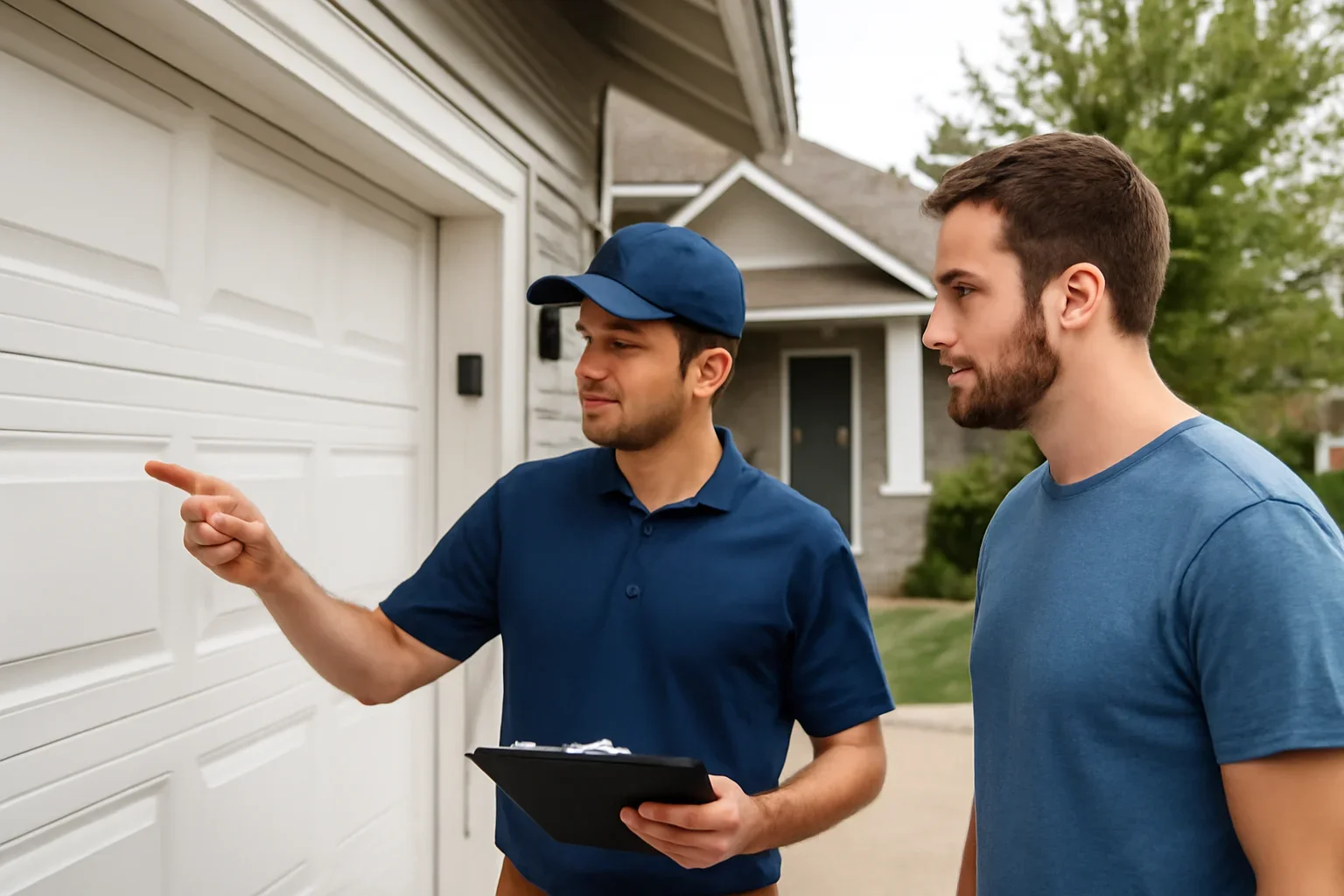
Request service when the door starts downward and then returns to the open position.
Review general repair when the issue could involve the opener, tracks, balance or another door component.
Check timely service options when the door will not close and the property cannot be secured normally.
Sensor problems often affect the closing cycle. The exact behaviour of the door, opener lights and sensor indicator lights can help narrow down whether the issue involves alignment, power, wiring or another part of the system.
The door starts to close but quickly returns upward even when the opening appears clear.
The opener responds to the control, but the closing cycle stops because the safety system is not confirming a clear path.
An unlit or inconsistent indicator may point to alignment, mounting, wiring or power problems.
Intermittent operation can be linked to loose mounting, debris, moisture, wiring or direct light affecting the sensor path.
Describe what happens when you press the wall control or remote, whether the door reverses and what the sensor indicator lights are doing. You do not need to diagnose the exact fault yourself.
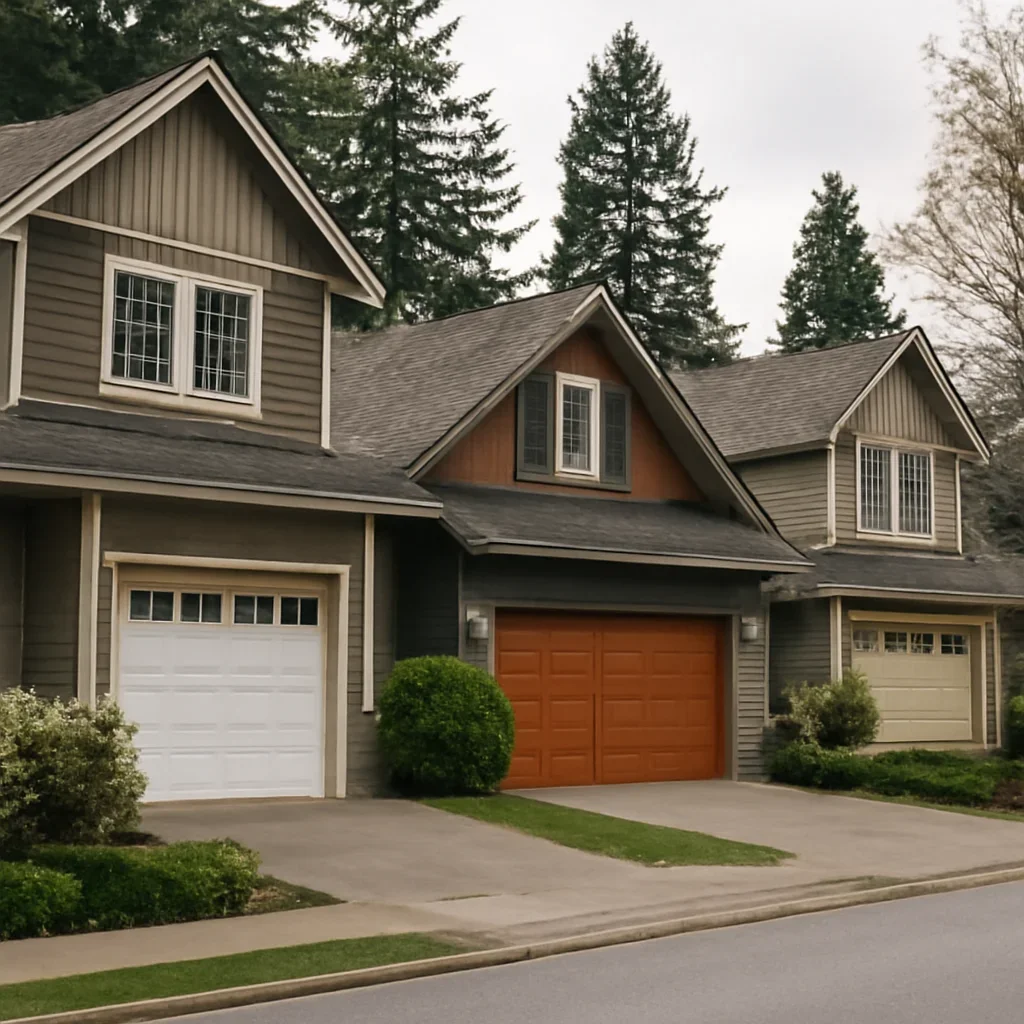
Fort Langley includes established homes near the village area, newer residential properties and homes in surrounding Township areas. Garage layouts, driveway exposure and opener equipment can vary considerably between properties.
Sensors are installed close to floor level, where they can be affected by stored items, dust, moisture, accidental contact or movement of the mounting brackets. A useful inspection should consider the sensor pair, wiring and opener rather than treating every reversing problem as an automatic sensor replacement.
Sensor repair normally involves interior operating equipment near the bottom of the tracks. If broader visible exterior changes are being considered, requirements should be confirmed for the individual Fort Langley property.
Replacing a sensor without identifying the cause can leave an alignment, mounting or wiring issue unresolved. The complete safety-reversing system should be checked during diagnosis.
Both sensors should face one another across the opening without being twisted, tilted or displaced from their brackets.
Dust, debris, stored objects and other obstructions can prevent the sensors from maintaining a clear path.
Loose brackets, damaged low-voltage wiring or poor connections can cause intermittent or complete sensor failure.
The opener diagnostics and mechanical movement of the door should also be considered before the sensors are blamed.
The urgency depends on whether the garage can still be closed and secured safely. Same-day service availability may vary by schedule, location and the nature of the issue.
A standard appointment may be appropriate when the problem is intermittent and the garage can still be secured without forcing or bypassing the safety system.
Timely service may be worth requesting when the door cannot complete its closing cycle and the garage cannot be secured.
Garage door safety sensors are designed to help prevent the door from closing when the sensor path is interrupted. Do not disable, cover or permanently bypass them to keep using a malfunctioning opener. Arrange proper diagnosis and repair instead.
A few clear observations can help explain the issue without requiring you to disconnect or alter the opener system.
Explain whether the door starts closing, reverses immediately, stops partway or does not begin moving downward.
Note whether each sensor light is steady, flashing or completely off without touching or rewiring the equipment.
Include photos of both sensors, their brackets and the nearby track area from a safe position.
Include your Fort Langley location, what happens during closing, the status of the sensor lights and whether the garage can currently be secured.
These answers cover common sensor symptoms, repair decisions and the information that helps before requesting service.
Common signs include a door that reverses while closing, an opener that will not complete the downward cycle or a sensor indicator light that is off or flashing. Wiring, mounting and other opener issues can create similar symptoms.
The safety sensor path may be interrupted, the sensors may be misaligned or the opener may be detecting another problem. Mechanical resistance in the door should also be ruled out.
Direct light can contribute to intermittent sensor symptoms on some systems. Alignment, mounting, lens condition and wiring should still be checked before assuming light is the only cause.
Dust or debris on the lenses may interrupt the sensor path. However, repeated problems can also involve loose brackets, alignment, wiring or the sensors themselves.
It becomes more urgent when the door cannot close and the garage cannot be secured. Same-day availability depends on scheduling, location and the nature of the fault.
That depends on the opener model, sensor compatibility and the cause of the problem. The sensor pair, wiring and opener should be identified before replacement parts are selected.
The sensors are part of the opener's safety system and should not be disabled or permanently bypassed. A sensor fault should be diagnosed and repaired properly.
Include your Fort Langley location, what the door does during closing, the status of both sensor lights, any visible wiring or bracket damage and photos taken from a safe position.
Share what happens when the door closes, whether either sensor light is flashing or off and whether the garage can currently be secured. These details help direct your request to the right repair path.