Dented or buckled panels
A lower or centre section may be pushed inward after contact with a vehicle, trailer, tool or stored equipment. The panel shape and hinge points should be checked before the door is operated again.
Review panel replacement
Get practical help for a dented, cracked, rusted, buckled or impact-damaged garage door section without assuming the entire door must be replaced.
Panel damage can be cosmetic, structural or connected to hinges, rollers, tracks and door alignment. The right next step depends on the location and depth of the damage, the condition of the remaining sections, and whether a compatible replacement panel is available.
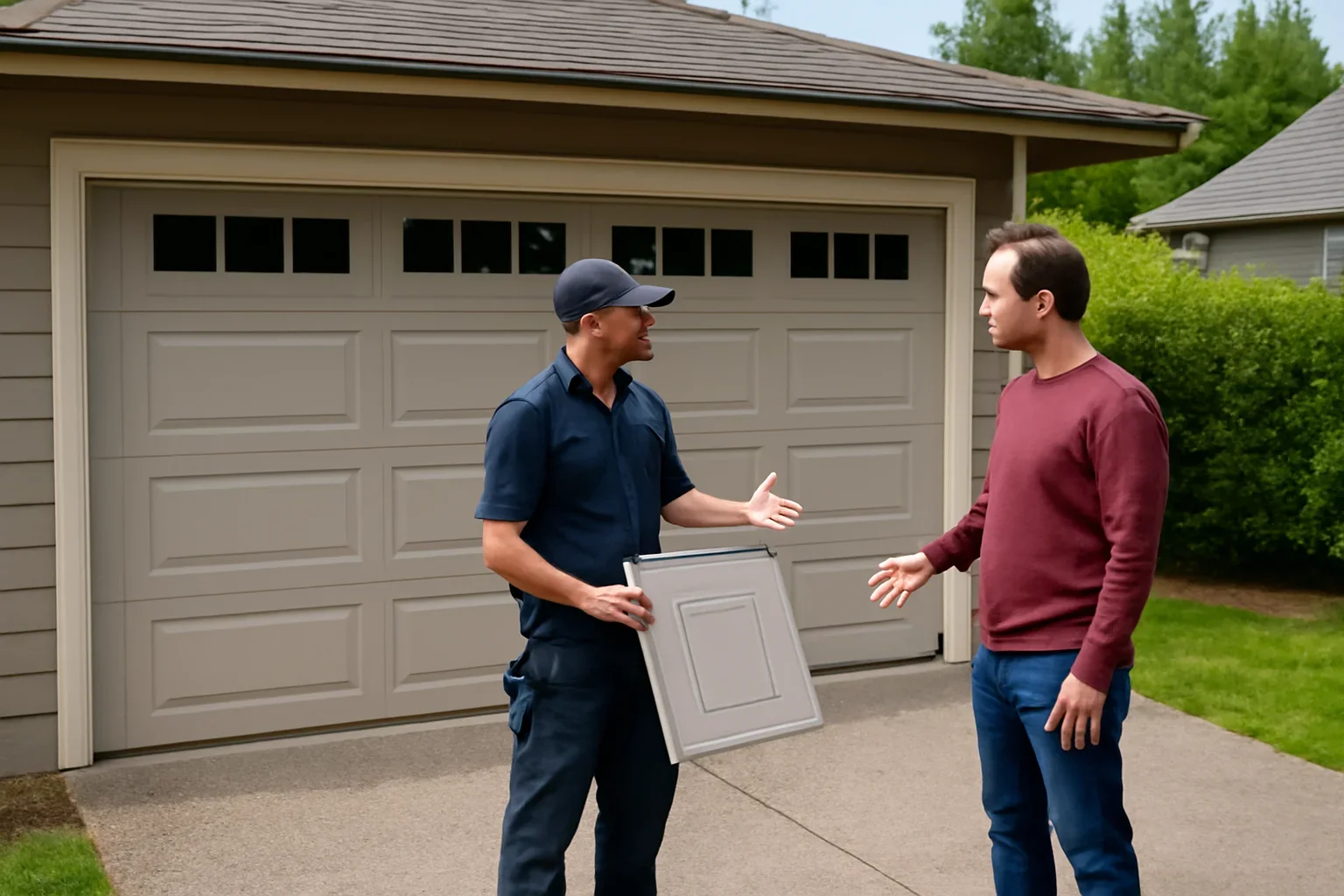
Start with a panel assessment when a dent, crack, buckle or impact is limited to one part of an otherwise serviceable door.
Compare a complete door replacement when damage, rust, separation or wear affects multiple sections.
Check same-day availability when the door is crooked, stuck, partly open or no longer securing the opening.
The visible section is only one part of the decision. A panel assessment should also check alignment, hinges, rollers, reinforcement, tracks and the condition of the sections above and below the damage.
A lower or centre section may be pushed inward after contact with a vehicle, trailer, tool or stored equipment. The panel shape and hinge points should be checked before the door is operated again.
Review panel replacementCorrosion, cracked skins, delamination or separation around panel edges can weaken the section and affect sealing, appearance or reliable travel.
Review garage door repairA bent section can pull on hinges, rollers and tracks, creating rubbing, uneven gaps, jerky travel or added strain on the opener.
Check connected door damageThe manufacturer, model, width, height, profile, insulation, finish, window layout and production age can determine whether a suitable panel is available.
Ask about panel compatibilityInclude one photo of the complete door, close views of the damaged section, the interior side, hinges and rollers near the damage, plus any manufacturer label or model information you can find safely.
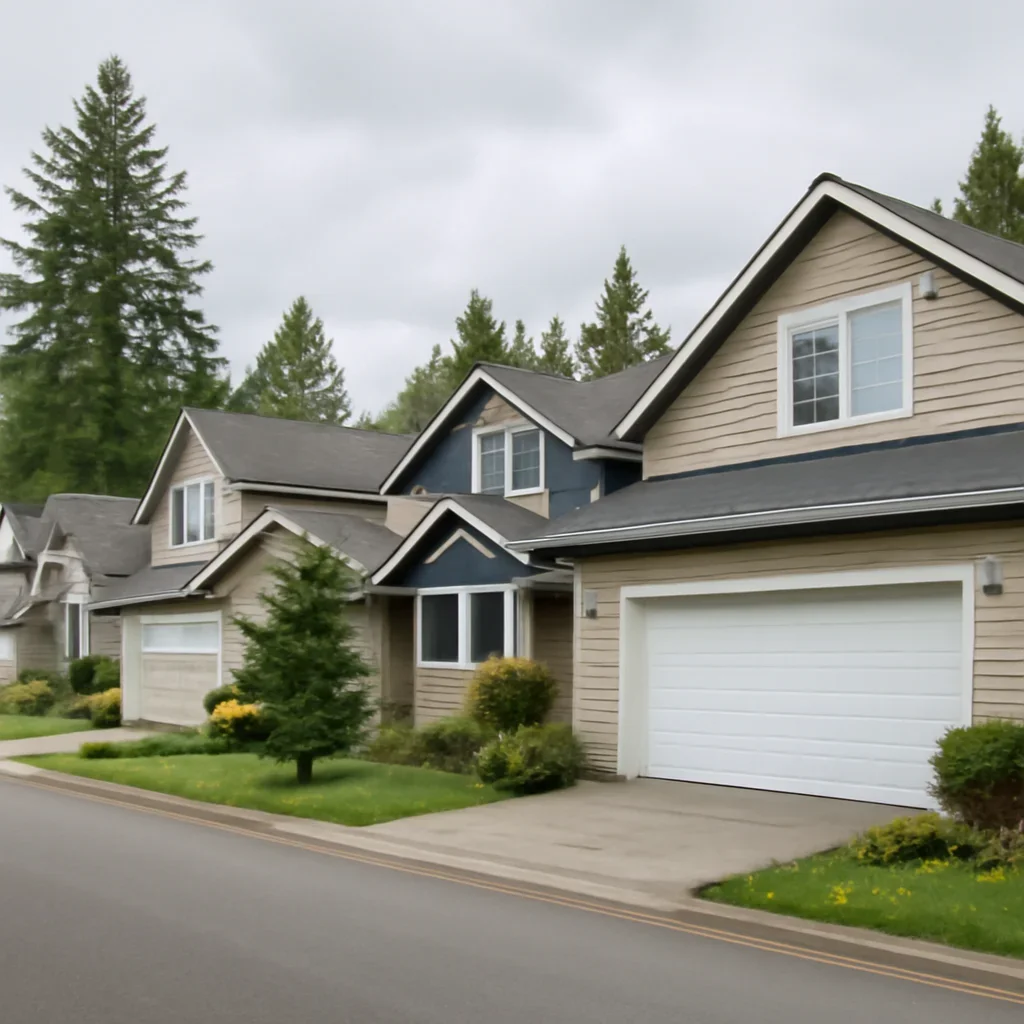
Glen Valley is a rural part of the Township of Langley where a service address may involve a house, detached garage, acreage building or working shop. Door openings can vary in size, age and daily use, and access may involve a longer driveway or gate.
A damaged panel on a frequently used workshop door may need to be judged differently from a shallow cosmetic dent on a residential door. Door size, reinforcement, insulation, moisture exposure, previous repairs and the availability of matching sections can all change the practical option.
Share the service address, gate instructions, building location, door width, number of damaged sections, current door position and whether a vehicle, trailer or equipment is blocking the work area.
A shallow dent may mainly affect appearance. Damage becomes more important when it changes how the sections connect, seal or travel through the tracks.
Flexing, folding or popping can indicate that the panel skin, reinforcement or hinge area no longer holds its intended shape.
Uneven joints can affect sealing and may show that the damaged section or connected hinges are pulling the door out of alignment.
Panel distortion can alter roller position and place additional force on hinges, brackets, tracks and the opener.
Uneven movement may involve panel damage together with track, cable, spring, roller or hinge problems.
Keep people, pets and vehicles away from an unstable opening. Do not remove hinges, loosen bottom brackets, pull cables or attempt to separate a panel while the door remains assembled. Springs and cables can remain under significant tension even when the visible damage is limited to one section.
The assessment should establish whether a compatible section can restore the door safely or whether wider damage makes a complete replacement more reasonable.
Confirm the door size, section position, impact history, manufacturer information, visible deformation and whether the door can be tested safely.
Review hinges, reinforcement, rollers, tracks, cables, springs, seals and opener behaviour for damage or strain caused by the affected panel.
Explain panel availability, appearance differences, required hardware, alignment work and whether panel or complete door replacement is practical.
A section replacement may be practical when the damage is isolated and a compatible panel can be fitted without leaving the wider door unreliable.
A full replacement may offer better value when several sections are damaged, compatible panels are unavailable or the existing door has wider condition and performance concerns.
An accurate estimate depends on identifying the door and checking whether the impact affected more than the visible face of the panel.
A top, intermediate or bottom section can use different reinforcement, fixtures, seals, windows and lifting connections.
Manufacturer, model, profile, production age and current inventory affect whether a matching replacement can be obtained.
Bent hinges, damaged rollers, track movement, torn seals or opener strain can add work beyond replacing the section itself.
Age, fading, texture and colour batches can make a new panel look different even when the profile and construction are compatible.
Send the door dimensions, full-door photos, close-ups of the damage and any model label. The first review can then focus on realistic options rather than assuming one repair path.
Clear photos and basic door information can reduce uncertainty around compatibility, access and the likely extent of connected repairs.
Take straight-on exterior and interior photos that show every section, window layout, handle, hinge line and the position of the damage.
Share the manufacturer, model or serial label when safely visible, plus approximate width, height, panel count, colour and insulation type.
Mention recent impact, new noise, uneven movement, gaps, rubbing, whether the opener was used afterward and if the door is open or closed.
These answers explain when one panel may be replaceable, why compatibility matters and when a complete door comparison becomes more useful.
Sometimes. A single section may be replaced when the remaining door is serviceable, connected hardware has not suffered major damage and a compatible panel is available for the door's size, profile and construction.
No. A shallow cosmetic dent may not affect operation. Replacement becomes more relevant when the section is buckled, cracked, separating, sharply creased or changing how the door hinges, seals or moves.
Garage door sections vary by manufacturer, model, dimensions, profile, insulation, reinforcement, hinge placement, finish and production year. An older door may also have fading that makes a new section look different.
Yes. A distorted section can change roller position, pull on hinges, rub against tracks and increase resistance. That resistance may make the opener strain, stop or reverse.
A complete replacement may be worth comparing when multiple panels are damaged, the door has widespread rust or separation, matching sections are unavailable or the existing door has several other reliability concerns.
It can be. The bottom section may include the floor seal and lifting-system fixtures. Do not loosen bottom brackets or nearby cables, because these components can be connected to parts under significant tension.
Share the service address, access instructions, door position, approximate size, number of damaged sections, impact history, visible alignment issues, identifying labels and photos of the full door and damaged area.
No. Same-day assessment or stabilization depends on scheduling and access, while panel replacement also depends on identifying and sourcing a compatible section. Explain any security or access concern when booking.
Tell us where the panel is damaged, whether the door still moves evenly and if the opening is secure. Include full-door photos, close views, manufacturer details and Glen Valley access instructions.