Bent, pinched or dented track
A vehicle, trailer, stored object or tool can narrow the roller path and cause scraping, hesitation or a roller to climb out of position.
Review off-track repair
Get practical help when a garage door track is bent, loose, misaligned, obstructed or no longer guiding the rollers smoothly.
Track symptoms can also involve worn rollers, loose brackets, damaged hinges, poor balance, cable trouble or impact damage. A useful assessment checks the complete travel path before deciding whether the track needs alignment, repair, replacement or a wider garage door repair.
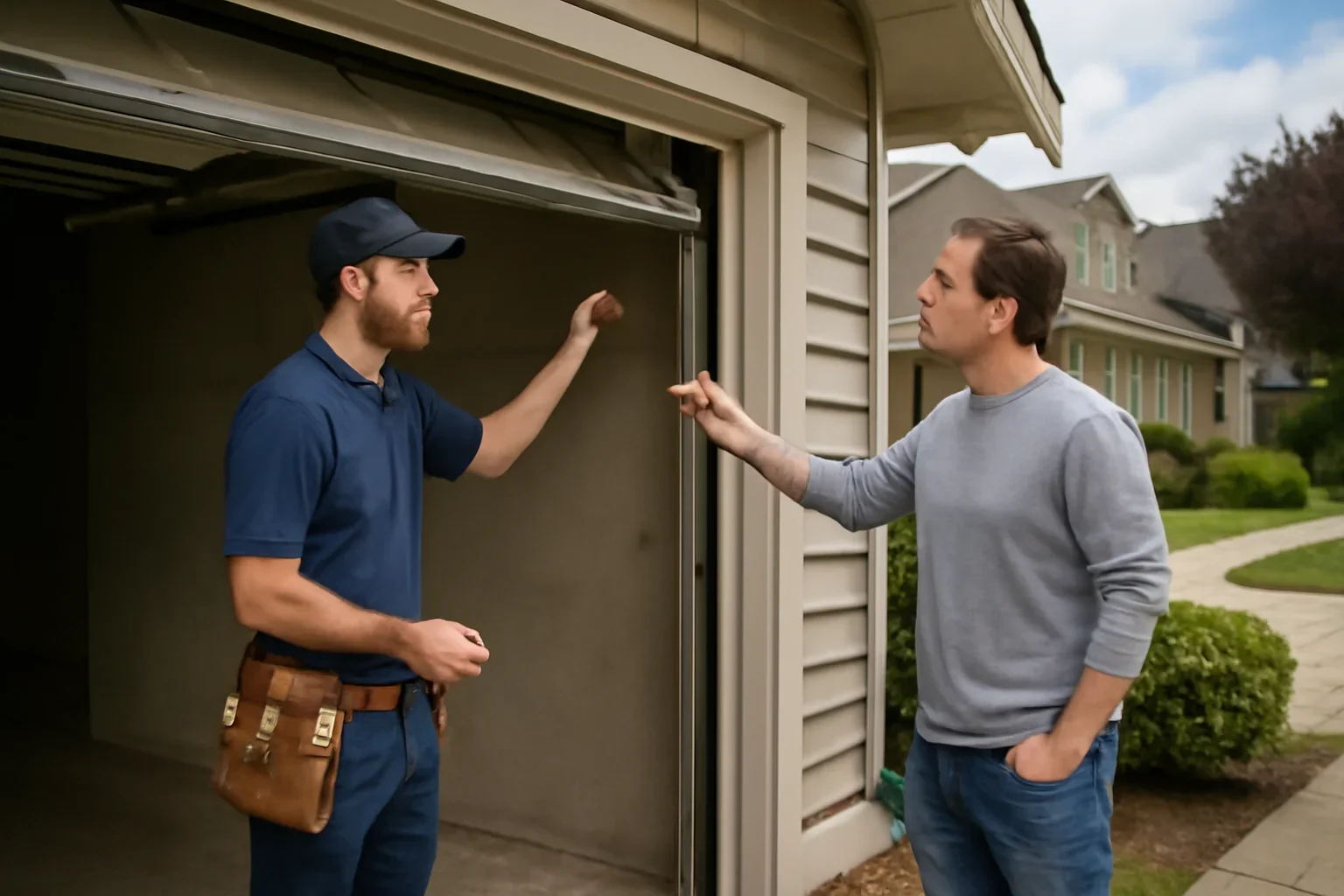
A narrow track point, bent section, loose bracket, worn roller or panel alignment problem may be creating resistance.
Impact, loose fasteners or movement at a mounting point can change the path the rollers need to follow.
Leave the door unused and request prompt assessment when the door is crooked, hanging or no longer supported correctly.
Track trouble often appears as noise, rough movement or changing alignment. The point where the door starts rubbing or hesitating can help identify whether the issue is in the vertical track, curve, horizontal track or another connected component.
A vehicle, trailer, stored object or tool can narrow the roller path and cause scraping, hesitation or a roller to climb out of position.
Review off-track repairLoose fasteners, damaged mounting points or shifted supports can change track spacing and allow the door to wobble or rub during travel.
Review complete door repairWorn rollers, damaged bearings, hinge movement, track contact or poor section alignment may create a repeating sound at the same point.
Book a track assessmentCable, drum, spring, roller or panel trouble can pull the door out of its intended path and make the track appear to be the only problem.
Review connected damageDescribe which side makes noise, where the door hesitates, whether the track looks bent or loose and if any roller is tilted or outside the track. Safe photos of both sides can help explain the setup.

Glen Valley is within the Township of Langley's rural area, where homes on acreages, farms and working properties are common. A service address may involve an attached garage, detached workshop, storage building or larger equipment opening.
Wider or heavier doors can place different demands on tracks, brackets and rollers. Gravel, mud, moisture, stored tools and equipment movement may also affect the lower track area. Longer driveways, gates and separate buildings are useful to mention before the appointment.
Share the full service address, gate instructions, which building contains the door, approximate opening size, current door position and whether a vehicle, trailer, shelving or equipment limits access beside the tracks.
Stop operating the system when the rollers are no longer fully supported, the door is crooked or the track has moved enough to make another cycle unsafe.
An unsupported roller can allow a section to shift and may indicate track, hinge, cable or impact damage.
Uneven support may involve cables, drums, springs or rollers and can pull the door farther out of alignment.
A loose bracket or damaged mounting point can change track spacing and leave the roller path unstable.
Stop before the opener or door force bends additional track, damages panels or pulls connected hardware out of position.
Keep people, pets and vehicles away from an unstable opening. Do not loosen track brackets, bottom fixtures, cables or spring components. Avoid repeatedly pressing the opener or trying to lift a crooked door alone.
The assessment should identify why the track moved or became damaged, not only reshape or tighten the first visible problem.
Review recent impact, sounds, resistance, visible track damage and whether the door can be approached or tested safely.
Check tracks, rollers, hinges, brackets, panels, cables, drums, springs, balance and opener effort for connected damage or uneven load.
Complete the approved track or wider repair, then check spacing, roller travel, balance, hardware security and automatic operation.
A garage door uses several connected track sections and supports. The location of the damage can change the repair scope and the parts that must be checked around it.
Lower track sections can be affected by impact, stored items, loose brackets, debris or movement near the floor.
The curve guides the door from vertical to horizontal travel. Incorrect spacing or damage here can cause rubbing, hesitation or roller movement.
Ceiling supports, back-hang hardware and track level affect how the open door is supported overhead.
Loose fasteners, damaged framing or moved brackets can change the roller path even when the track itself is not sharply bent.
A focused repair may be practical when the damage is limited and the door, rollers, lifting system and mounting points remain suitable for dependable use.
A wider repair may be necessary when the track damage was caused by impact, a cable or spring failure, panel distortion, worn rollers or an unstable door.
The final scope depends on the type and location of the damage, the door's position and whether other components were affected before or after the track moved.
Vertical, curved and horizontal track sections use different supports and may require different access and repair steps.
Larger, insulated or workshop doors place different loads on tracks, brackets, rollers and overhead supports.
A door stuck open, closed, crooked or partly off track may need to be stabilized before the main repair begins.
Impact or uneven movement may also affect rollers, hinges, panels, cables, drums, springs and opener components.
The scope depends on alignment, damaged sections, supports, access, suitable parts and connected repairs. Use the cost guide for planning, then request service for the actual door.
Simple observation can help describe the issue, but track alignment and supports should not be changed while the door remains assembled.
From a safe position, note where rubbing, shaking, clicking or hesitation begins and whether the problem repeats at the same height.
Check whether a bracket appears loose, a track section has separated or the spacing changes noticeably from one side to the other.
Remove loose objects and visible floor debris without loosening track fasteners or placing hands near moving rollers and hinges.
Track surfaces generally need to remain clean rather than coated. Lubricant cannot correct a bent track, damaged roller, loose bracket or misaligned door and may collect dirt. Follow the door manufacturer's maintenance guidance.
Maintenance may help identify loose supports, roller wear, changing noise and alignment concerns before the door becomes unstable or unusable.
Clear details can help identify urgency, property access and whether the likely repair involves a track section, rollers, brackets or wider damage.
State whether the door is open, closed, partly open, crooked, jammed or blocking a vehicle, trailer, equipment or essential access.
Mention vehicle or equipment impact, a loud sound, recent cable trouble, increasing scraping or whether the issue appeared suddenly.
Include full views of both tracks and the door from a safe distance, plus the Glen Valley address, gate instructions and building location.
Do not stand beneath a hanging door, climb beside unstable track or touch loose rollers, cables and brackets. A wider photo from a safe position is more useful than a risky close-up.
These answers explain common track symptoms, connected components, safety concerns and what information helps before booking.
Signs can include visible dents or pinched areas, scraping at the same height, rollers that hesitate or tilt, changing track spacing and a door that no longer travels squarely.
Sometimes. The answer depends on the location and severity of the damage, the condition of the supports and whether the rollers, hinges, panels or lifting system were also affected.
Stop using the door, keep the opening clear and do not force the roller back into position. An off-track roller may involve track damage, impact, loose brackets, cable trouble or an unstable door.
Yes. Bracket movement can change track spacing and allow rollers or door sections to rub, wobble or move unevenly. The mounting point should also be checked for damage.
It can. Uneven lifting force can pull the door crooked, place unusual load on rollers and brackets and contribute to off-track movement or track damage.
Yes. Binding or misaligned track can make the opener work harder, affect travel and reversal behaviour and add strain to the rail, trolley, belt, chain, gear or motor.
Track surfaces generally need to remain clean rather than coated. Follow the manufacturer guidance for approved lubrication points. Lubrication will not repair bent track, loose supports or damaged rollers.
Door size, weight, track layout, ceiling clearance, roller type, support spacing and operating frequency can affect the correct track and mounting system.
Share the service address, gate and building instructions, current door position, visible track or roller damage, recent impact, sounds, opener behaviour, approximate door size, safe photos and preferred timing.
No. Availability depends on scheduling, travel conditions, safe access, diagnosis and suitable parts. Clearly state when the door is off track, unstable, trapping a vehicle or leaving the building unsecured.
Tell us whether the track is bent, loose, rubbing or no longer holding a roller correctly. Include the door position, recent impact, safe photos and Glen Valley access details.