Flattened, split or missing bottom seal
The flexible material may harden, tear, pull out of the retainer or stop conforming to the floor after repeated use and weather exposure.
Review weather-stripping guidance
Improve worn or damaged sealing around a garage door when drafts, daylight, moisture, wind-blown debris or visible gaps appear at the bottom, sides or top.
A replacement seal should fit the door, retainer and opening correctly. Uneven floors, poor door alignment, damaged panels, loose tracks or drainage problems can create similar symptoms, so the full opening should be reviewed before assuming new weather stripping will solve every gap.

A flattened bottom seal, damaged retainer, uneven floor or poor closing contact may be leaving a visible gap.
Worn seals may contribute, but grading, drainage, wind direction and floor condition should also be considered.
Loose, brittle or missing perimeter weather stripping can leave gaps around the closed door and may need replacement or adjustment.
Seal wear is often visible, but the location and shape of the gap matter. A uniform gap may need a different solution from one that appears only at a corner or on one side of the opening.
The flexible material may harden, tear, pull out of the retainer or stop conforming to the floor after repeated use and weather exposure.
Review weather-stripping guidanceCracked vinyl, loose stop moulding, missing fasteners or poor contact with the door face can allow light, air and debris around the opening.
Review garage door maintenanceA sloped or uneven floor, crooked door, cable or balance issue, track alignment or panel distortion may prevent an otherwise suitable seal from contacting the opening evenly.
Review connected door problemsA worn seal can contribute, but surface water, drainage, driveway slope, standing moisture and wind-driven rain may require attention beyond the door.
Book a sealing assessmentSend photos of the closed door from inside and outside, including the full bottom edge and both corners. Mention whether the gap changes after the door opens and closes or appears only during rain and wind.
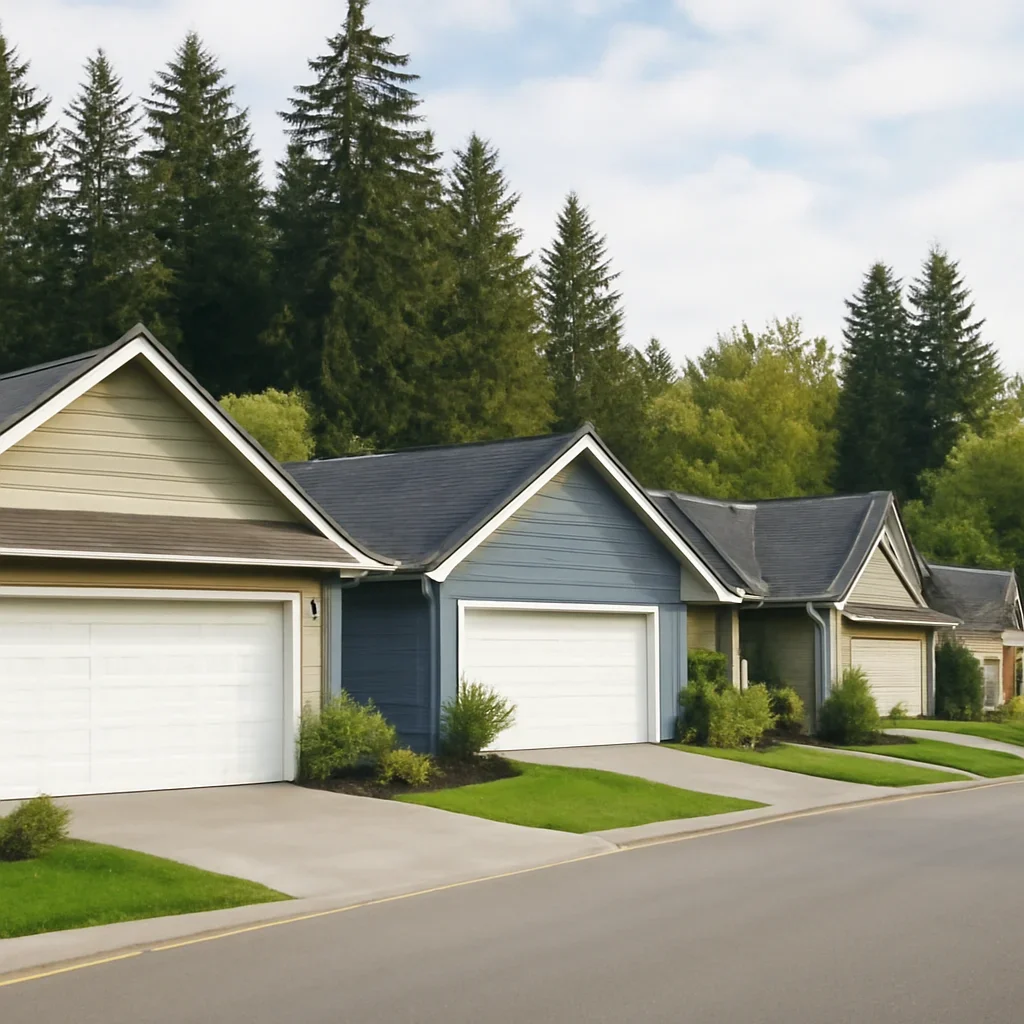
Glen Valley properties may include attached garages, detached workshops, storage buildings and larger openings reached by longer or gravel driveways. Exposure to wind, rain, dust, leaves, mud and outdoor equipment use can make the condition of the lower and perimeter seals more noticeable.
An attached garage may place more emphasis on drafts and comfort near living spaces. A detached shop or storage building may prioritize debris, moisture and reliable closing contact. The useful solution depends on the door, floor, opening and how the building is used.
Share the full service address, gate instructions, building location, approximate door width, the location of each gap and whether water approaches the opening from the driveway or collects at the threshold.
Garage door weather sealing uses more than one component. Each seal has a different job and must contact the closed door or floor without interfering with normal movement.
Flexible material along the lower door edge helps follow minor floor variation and reduce gaps where the door meets the threshold.
The metal or vinyl channel holds the bottom seal. A bent, corroded or incompatible retainer can prevent new material from fitting correctly.
Perimeter material along both jambs should meet the closed door face without being so tight that it drags or folds during movement.
The top seal closes the gap above the upper section and should remain aligned with the door when it reaches the fully closed position.
The assessment should confirm where the gap originates and whether seal replacement alone can create useful contact without hiding a door, floor or drainage problem.
Review light, air and water paths along the bottom, corners, sides and top, including whether the gap is uniform or limited to one area.
Assess seal material, retainer condition, floor contact, door alignment, panel condition, track position and closing travel.
Confirm a suitable profile and scope, complete the approved work, then check closing contact, movement and visible gaps without forcing the door.
A focused seal replacement may be practical when the door closes squarely and worn or damaged material is the main reason for the gap.
Additional work may be needed when the gap is caused by door movement, damaged sections, an unsuitable retainer, floor condition or water approaching the opening from outside.
Good contact can reduce open gaps, but weather stripping is one part of the building opening. It should not be presented as a guaranteed fix for every comfort, drainage or pest problem.
Replacing damaged material can reduce obvious air paths around the door, especially when the sections and opening remain aligned.
Seals can reduce entry through contact gaps but cannot redirect standing water, repair drainage or correct exterior grading.
Better perimeter contact may reduce leaves, dust and wind-blown material, though frequent door use still opens the building to outside conditions.
Closing visible gaps may help limit easy entry points, but a weather seal does not make a garage fully pest-proof or address gaps elsewhere in the building.
Bottom fixtures may connect to lifting cables under significant tension. Do not remove, loosen or reposition them. Leave the door unused if it is crooked, off track, supported unevenly or unable to close safely.
The correct material depends on the existing door, retainer, opening and contact conditions. Similar-looking seals are not always interchangeable.
Single, double and wider workshop doors require the correct continuous length and careful fitting across the complete opening.
Bottom retainers use different channels and attachment arrangements. The replacement material must suit the existing profile or approved new retainer.
Cracks, high points, slope and uneven contact can change which seal shape is useful and whether another threshold or building issue needs attention.
A seal should not be used to hide a crooked door, incorrect closing travel or mechanical resistance that needs repair.
Scope can change with door width, seal type, retainer condition, access and connected repairs. Use the cost guide for planning, then request an estimate for the actual opening.
Perimeter seals address gaps around the opening. Door insulation concerns heat transfer through the sections themselves. One improvement does not automatically provide the benefit of the other.
Seal service may be the more relevant starting point when light, air, debris or moisture enters around the edges of a door that is otherwise serviceable and closes squarely.
If the sections are thin, damaged, poorly fitting or no longer suitable for an attached garage or workspace, sealing may be only one part of a broader insulation or replacement decision.
Simple visual checks can help describe the problem without removing seals, adjusting the door or working near high-tension hardware.
With the door closed and the area safely accessible, note whether light appears across the bottom, at one corner or along the sides and top.
Look for cracks, flattened rubber, loose perimeter strips, missing pieces, pulled edges or a retainer that appears bent or corroded.
Note whether water is blowing through a gap, flowing toward the opening, pooling outside or appearing from another wall or floor location.
Seasonal inspection can include visible weather-seal condition, door alignment, closing contact, moisture, drainage and connected hardware wear.
Clear photos and property details can help identify whether the likely visit involves seal material, a retainer, door alignment or a wider opening issue.
Include full interior and exterior views, the complete bottom edge, both corners and any visible gaps along the sides and top.
Mention drafts, light, water, debris or pests, plus whether the issue is constant, seasonal or mainly noticed during wind and rain.
Include the Glen Valley address, gate instructions, building location, approximate door width, floor condition and whether equipment limits access.
For an active gap, draft or moisture concern, booking with clear photos and measurements provides the most useful starting information.
These answers explain common seal symptoms, realistic outcomes, compatibility and the information that helps before booking.
Common signs include visible splits, hardened or flattened material, sections pulling out of the retainer and a continuous gap under a door that otherwise closes squarely.
A corner gap may involve an uneven floor, crooked door, cable or balance problem, track alignment, panel distortion or a seal that no longer follows the threshold. The cause should be checked before simply using thicker material.
Not necessarily. A suitable seal can reduce entry through contact gaps, but it cannot correct standing water, poor drainage, exterior grading, a damaged floor or water entering from another part of the building.
Closing visible door gaps may reduce easy entry points, but a garage door seal does not make the entire building pest-proof. Other openings and building conditions may also need attention.
No. Seal profiles and retainers vary. Door width, channel design, material shape, floor contact and the condition of the existing retainer affect compatibility.
Yes, when the surrounding door and opening remain serviceable. The new material should contact the closed door correctly without creating excessive drag or interfering with movement.
No. Weather seals address gaps around the opening. Insulation affects heat transfer through the door sections. Both can influence comfort, but they solve different parts of the problem.
Bottom-seal work may be close to cable-connected bottom fixtures. Do not loosen bottom brackets, cables, springs or other tension components. Arrange service when the retainer or access makes the work unclear.
Share the service address, gate and building instructions, approximate door width, location of the gaps, seal condition, floor or drainage concerns, safe photos and preferred timing.
Usually it is planned service rather than an emergency. Use the same-day repair path when the door itself cannot close, is unstable, blocks access or leaves the building unsecured. Availability is not guaranteed.
Tell us where light, air, water or debris enters, which seal appears worn and whether the door closes evenly. Include the approximate door width, safe photos and Glen Valley access details.