One side hangs lower
A cable, drum, roller or track problem may leave one side unsupported and pull the door farther out of alignment.

Request service when a roller has left the track, the door hangs crooked, a track is bent or the door has become jammed and unsafe to operate.
An off-track door should be stabilized before anyone attempts to move it. The repair should also identify why the roller left the track and whether cables, brackets, hinges, panels or the spring system were affected.
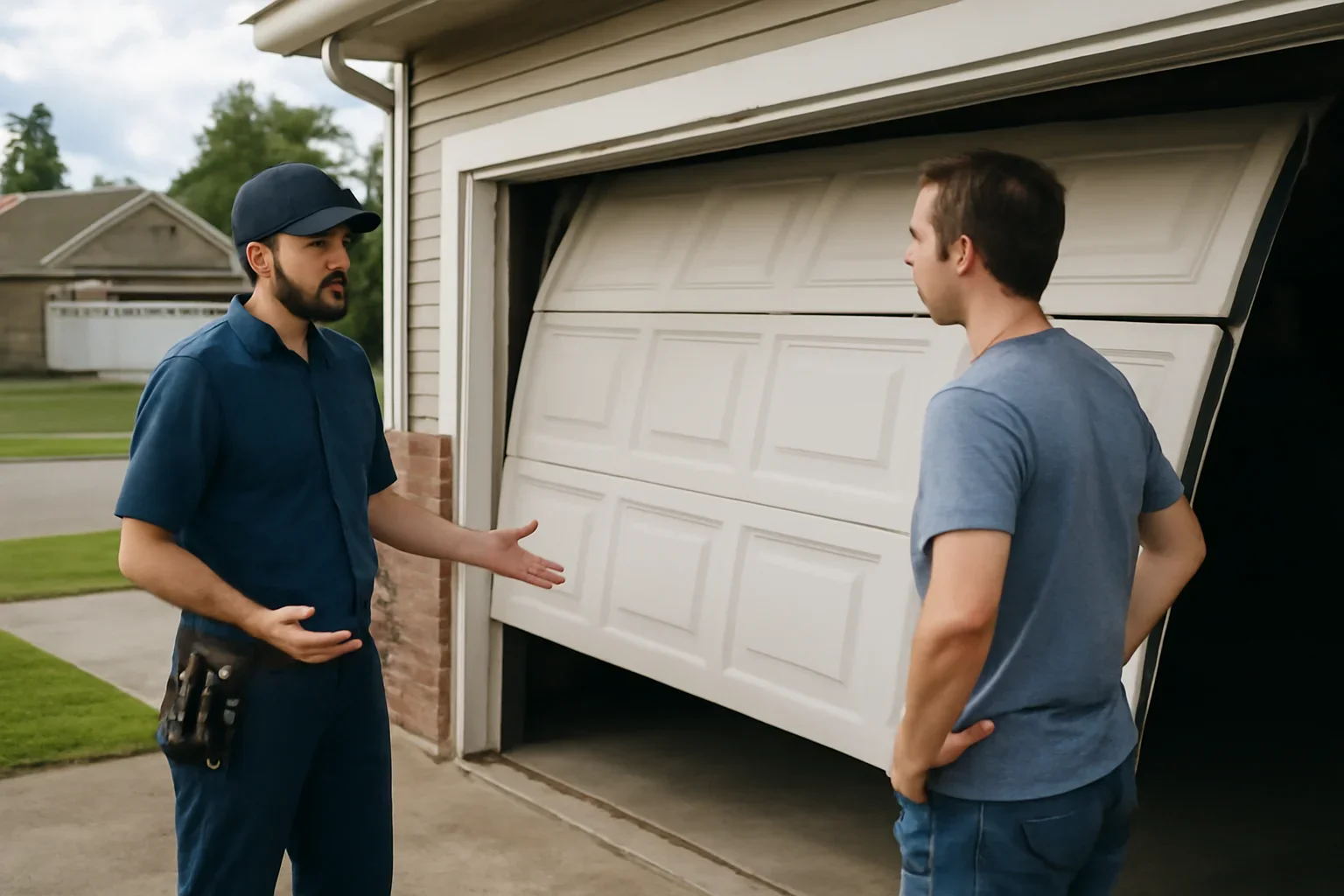
Leave the door in position, keep the opening clear and request an assessment before trying to move it.
Check current same-day availability when a vehicle is trapped or the garage cannot be closed and secured.
Describe the door position, visible damage and what happened before the roller or door moved out of alignment.
Stop using the door when its weight is no longer supported evenly or a roller, track, cable or bracket appears out of position. Continued operation can turn an alignment problem into wider damage.
A cable, drum, roller or track problem may leave one side unsupported and pull the door farther out of alignment.
The roller may be visible beside the track, trapped near a bend or no longer guiding the door through its normal path.
Impact, loose brackets or repeated resistance can change the track position and prevent the rollers from travelling safely.
Scraping, sudden stopping and severe shaking may indicate track, roller, hinge, cable or panel damage.
Tell us whether the door is open, closed or partly open, which side is lower, whether any rollers are outside the tracks and whether a recent impact or loud sound occurred.
Do not pull cables, loosen track brackets, adjust springs or repeatedly operate the opener. An off-track door can shift suddenly because its weight is no longer supported evenly.
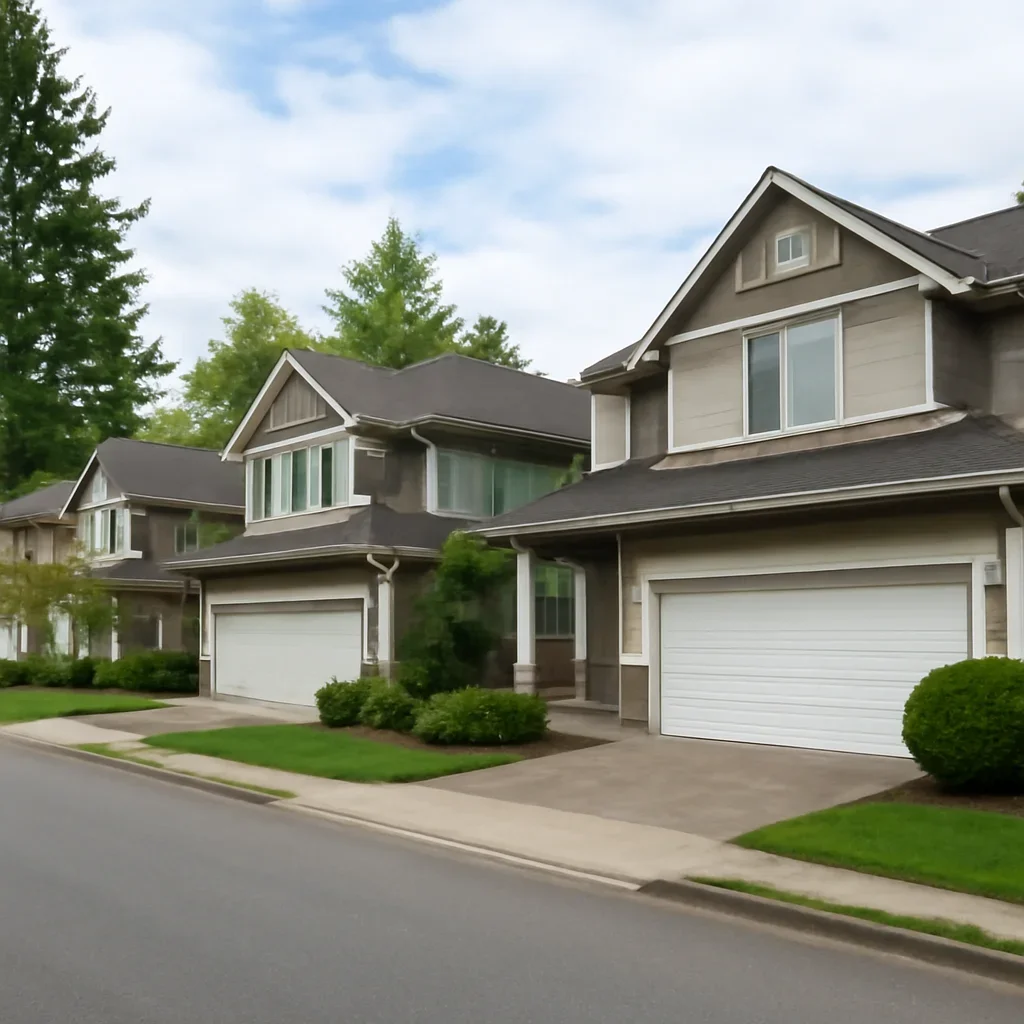
Langley City properties can include detached homes, compact townhouses, strata garages, rear-access garages and mixed-use buildings. Driveway space, parked vehicles and overhead storage can affect how an unstable door is reached and supported.
Mention whether a vehicle is trapped, whether the garage is the household's main entrance and whether strata, parking or building access instructions apply.
Langley City and the Township of Langley are separate municipalities. Include the full address or postal code so service coverage and access can be reviewed correctly.
A responsible repair should identify what allowed the door to move out of alignment. Simply returning a roller to the track may not correct the condition that caused the failure.
Vehicle impact, loose brackets, damaged mounting points or previous adjustments can change the path the rollers follow.
A seized, cracked, loose or worn roller may bind, tilt or leave the track instead of travelling smoothly.
Uneven cable tension, drum trouble or poor spring support can pull one side of the door differently from the other.
A bent section, loose hinge or impact can change the shape of the door and push rollers out of their intended position.
The opener is intended to guide a properly balanced and aligned door. Using it against track resistance can add strain to the trolley, rail, drive system, hinges, panels and remaining rollers.
The repair scope depends on the door position, how far it moved out of alignment and whether surrounding components were bent, pulled or overloaded.
Check for dents, bends, separation, loose fasteners, damaged mounting surfaces and incorrect spacing.
Review roller stems, bearings, wear, hinge condition and whether any hardware shifted or cracked during the failure.
Confirm that both cables remain seated, correctly routed and supporting the door evenly on each side.
Determine whether poor spring support or unequal tension contributed to the crooked or off-track movement.
Inspect panels, reinforcement and section alignment for impact, twisting or damage caused while the door was jammed.
Review the rail, trolley, drive, release mechanism, travel and force settings after the door moves correctly by itself.
Safety and stabilization come before normal testing. The door should not be cycled until its position and supporting hardware have been reviewed.
Identify whether the door is open, closed, partly open, twisted or supported unevenly, and confirm whether the area is clear.
The door should be supported before damaged rollers, tracks, cables, brackets or hinges are repositioned or removed.
Bent, loose, worn or failed components should be corrected rather than returning the door to the same unsafe setup.
Track spacing, roller travel, cable position, door balance and opener operation should be checked after the approved repair.
A targeted repair may be appropriate when the main door structure remains sound and the damage is limited to compatible hardware, track alignment or another repairable component.
Review the main garage door repair service when several mechanical symptoms are present.
Replacement may deserve consideration when the door has widespread structural damage or the current system cannot be restored to reliable alignment and operation.
Review garage door replacement when the damage extends beyond a practical component repair.
You do not need to approach or touch the unstable hardware. Safe photos and a clear description can help identify the likely scope before the service visit is arranged.
State whether the door is open, closed, partly open, crooked or hanging, and whether one side is visibly lower.
Mention rollers outside the track, bent track, loose brackets, hanging cables, damaged panels or a visible spring problem.
Include the Langley City address, whether a vehicle is trapped and whether an impact, loud bang or sudden jam occurred.
A full view of the door, both track areas and visible damage can be useful. Do not stand beneath the door, climb beside it or touch any loose cable, roller or bracket.
An off-track door may involve cables, poor balance or wider structural damage. These pages provide additional guidance for connected symptoms.
Review general repair when several parts, sounds or movement problems are involved.
View repair serviceReview cable service when a cable is loose, frayed, snapped or no longer seated correctly on the drum.
Review cable repairReview balance service when the door feels heavy, moves unevenly or places excessive strain on the opener.
Review balance serviceReview the factors that may change repair scope, including parts, secondary damage, access and door condition.
View cost factorsThese answers explain safety, likely causes, connected damage and the information that helps before arranging service.
One or more rollers may have left the track, the track may be bent or separated, or the door may have moved far enough out of alignment that it can no longer travel safely.
Stop using the door. Continued movement can pull additional rollers out, bend the track, damage cables and hinges or twist the door sections.
Do not force the roller back or loosen the track while the door is unsupported. The door may be under uneven spring and cable tension and can shift unexpectedly.
Possible causes include vehicle impact, bent tracks, loose brackets, worn rollers, damaged hinges, cable trouble, poor balance, a jammed section or continued operation after the door began binding.
Yes. The opener may experience excessive resistance when trying to move a crooked or jammed door. This can strain the rail, trolley, motor, gears, belt or chain.
It becomes more urgent when the door is unstable, cannot secure the opening, traps a vehicle or may shift unexpectedly. Same-day availability depends on scheduling, location, parts and repair complexity.
Not always. The decision depends on whether the track is bent, cracked, separated, badly worn or still suitable for safe alignment. Loose or slightly shifted hardware may require a different repair than severe impact damage.
Yes. Uneven cable support or poor spring balance may contribute to crooked movement. The connected lifting system should be reviewed before normal operation resumes.
It may be repairable when the panels remain structurally sound and the affected rollers, tracks, brackets or related hardware can be restored. Extensive section or structural damage may require a replacement comparison.
Include the Langley City address, current door position, which side is lower, visible roller or track damage, any loose cable, recent impact, opener behaviour and whether access is blocked.
Send the service address, current door position, visible track or roller damage, whether a vehicle is trapped and any safe photos you already have. This information helps determine the urgency and likely repair path.