Grinding, rattling or scraping
A worn bearing, damaged roller surface, loose hinge or track contact may create noise that becomes more noticeable during opening and closing.

Get help when your garage door rollers are noisy, worn, seized, damaged or no longer travelling smoothly through the tracks.
Roller trouble can cause scraping, shaking, uneven movement and extra strain on the hinges, tracks and garage door opener. A proper assessment should identify whether the problem is limited to one roller or connected to wider alignment, hardware or door-balance issues.
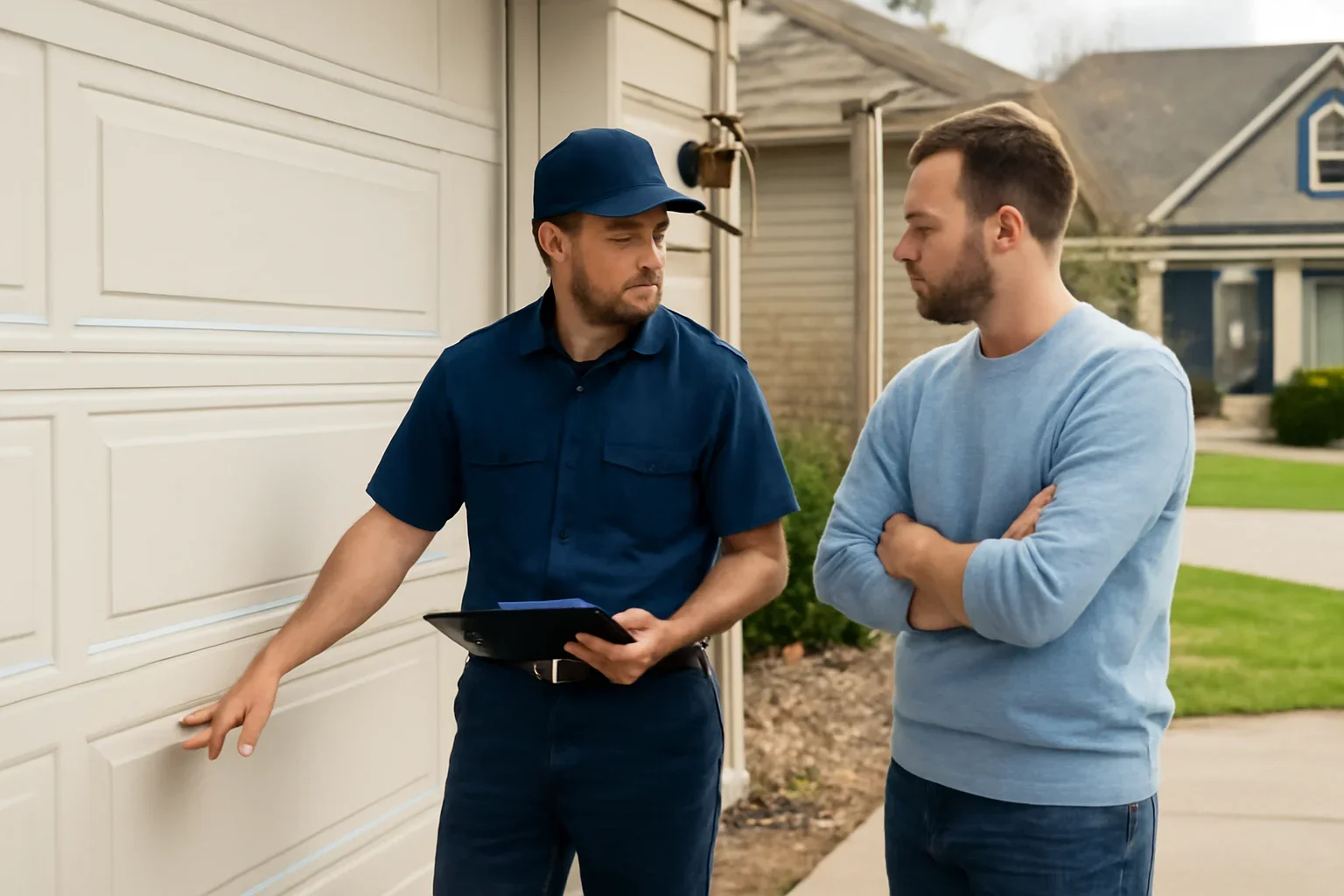
Scraping, rattling, grinding or vibration can indicate worn rollers, track resistance or loose connected hardware.
Stop operating the door if a roller has left the track or one side is hanging lower than the other.
Roller or track resistance can make the opener sound strained, hesitate, stop or reverse during travel.
Garage door rollers guide each section through the vertical and horizontal tracks. Changes in sound, speed or alignment can indicate roller wear, track resistance or a problem affecting another part of the lifting system.
A worn bearing, damaged roller surface, loose hinge or track contact may create noise that becomes more noticeable during opening and closing.
A roller that binds, wobbles or stops turning freely can interrupt smooth movement and place extra stress on the hinges and opener.
Visible wear, a bent stem, missing material or excessive movement inside the hinge can indicate that a roller needs closer inspection.
A roller outside the track can leave the door crooked or unstable. Do not force it back into position or continue using the opener.
Review urgent serviceDescribe when the sound occurs, whether the door shakes, and whether one side moves differently. Photos of the rollers, tracks and full door can help narrow down the likely service path.

Roller repair is not based only on the sound the door makes. The door size, track layout, garage access, available workspace and condition of the connected hardware all affect what can be inspected and repaired safely.
In attached garages, roller vibration and track noise may be noticeable inside nearby rooms. Townhome and strata properties may also have compact driveways, shared access, visitor-parking limits or scheduling requirements that should be mentioned before the appointment.
Mention underground or rear-lane access, visitor parking requirements, gate instructions, ceiling storage, parked vehicles and any strata scheduling rules when booking.
Replacing a noisy roller without checking why it wore unevenly may leave the original cause unresolved. The rollers should be assessed together with the tracks, hinges, door alignment and lifting system.
Roller wheels, bearings, stems and movement through each part of the track should be checked for wear, damage and binding.
Bent sections, loose brackets, incorrect spacing, debris and impact damage can cause new rollers to bind or wear prematurely.
Loose hinges, worn mounting points and damaged brackets can allow a roller to tilt or move incorrectly during door travel.
A heavy or poorly balanced door can place additional load on the rollers, tracks and automatic opener.
Stop using the door if it is crooked, partly off track, hanging from one side or moving unpredictably. Do not loosen track brackets, bottom fixtures, cables or spring components. Garage door lifting hardware can remain under significant tension even when the door is not moving.
The process should begin with safe inspection, continue with a clear diagnosis and finish with testing of the complete door movement.
Note where the noise occurs, whether the door shakes, and whether the problem is present during opening, closing or both directions.
The rollers, tracks, hinges, brackets, door sections, springs, cables and opener response should be considered before confirming the cause.
After the approved work, the door should travel smoothly without binding, excessive vibration or unnecessary opener strain.
A focused roller repair may be appropriate when the door remains stable and the problem is limited to worn or damaged rollers and serviceable connected hardware.
A wider repair may be needed when roller wear is connected to track damage, impact, poor alignment, loose hardware or an unbalanced door.
Roller symptoms can overlap with track, opener, balance and general door-repair problems. These pages provide the most relevant next steps.
Start here when the rollers are only one part of a noisy, crooked, heavy, stuck or unreliable door.
View garage door repairReview urgent service when the door is off track, unstable, blocking access or unable to secure the garage.
Check same-day serviceLearn how door position, parts, connected damage, access and repair complexity can affect the final scope.
Review repair cost guidanceSend the Langley City address or neighbourhood, current door position, visible roller or track damage, opener behaviour and clear photos of the problem area.
These answers explain common roller symptoms, safety concerns and the information that helps before an appointment.
Common signs include grinding, scraping, rattling, shaking, uneven travel, visible roller damage or a roller that no longer turns smoothly. Similar symptoms can also come from tracks, hinges, door balance or the opener, so the connected system should be checked.
They can contribute to opener strain when the rollers bind or create resistance in the tracks. The opener may hesitate, sound louder, stop, reverse or work harder than normal when the door is not moving freely.
That depends on their condition, age, type and compatibility. One visibly damaged roller may be the main problem, but the remaining rollers should be checked for similar wear so the repair decision is based on the complete set.
Yes, especially when the door is crooked, hanging unevenly or unstable. Stop operating the door, keep the opening clear and avoid forcing the roller back into place. The track, hinges, cables and door alignment may also need inspection.
Lubrication may reduce friction on suitable moving components, but it cannot correct a cracked wheel, damaged bearing, bent stem, loose mounting point or track-alignment problem. The cause of the noise should be identified before assuming lubrication is enough.
Share the Langley City address, whether the door is open or closed, where the sound occurs, whether the door shakes or hangs unevenly, and what happens when the opener is used. Photos of the full door, rollers and tracks are also helpful.
No. Same-day availability depends on scheduling, property access, door condition, safety, required parts and the time of the request. Provide clear details when booking so availability and the likely service path can be reviewed.
Tell us whether the door is noisy, shaking, crooked, off track or straining the opener. Include the current door position, visible damage, access instructions and photos so the request can be reviewed efficiently.