The door immediately reverses
The opener may detect a blocked or interrupted sensor signal, although travel settings, floor contact and mechanical resistance can create similar symptoms.

Get help when your garage door will not close, reverses unexpectedly, shows blinking sensor lights or has damaged, loose or misaligned safety sensors.
Sensor symptoms can involve dirty lenses, blocked sightlines, moved brackets, wiring damage or an opener-control problem. The sensors, opener settings and mechanical condition of the door should be considered together before the cause is confirmed.
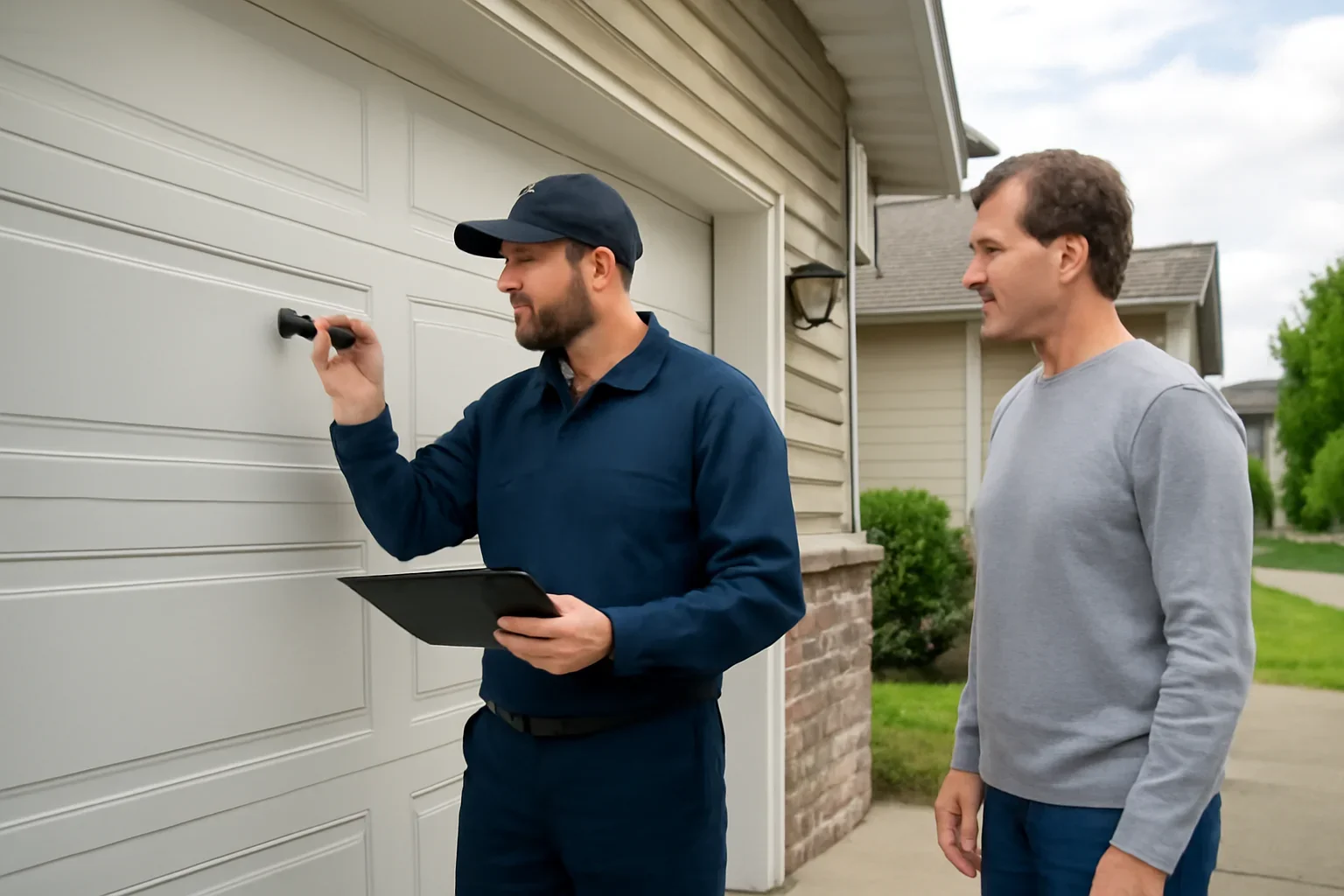
A blocked sightline, sensor alignment problem or other closing resistance may cause the door to return upward.
Review the sensor guide for common causes involving alignment, cleanliness, brackets, wiring and opener response.
Check service availability when the door remains open or cannot close normally enough to secure the property.
Safety sensors are mounted near the lower sides of the garage-door opening and communicate with the opener during closing. Changes in their lights or response can help identify where service should begin.
The opener may detect a blocked or interrupted sensor signal, although travel settings, floor contact and mechanical resistance can create similar symptoms.
A changed light may indicate alignment, wiring, power, bracket or sensor-component trouble depending on the opener system.
A loose bracket, unstable connection, vibration, moisture or a partially interrupted sightline may cause inconsistent operation.
Storage bins, bicycles, tools, vehicles and normal garage activity can move a low-mounted sensor or damage its bracket and wiring.
Review sensor repairNote which sensor lights are on, off or blinking, whether the door closes from the wall control, and whether it reverses at the same point. Clear photos of both sensors and the opener model are useful.
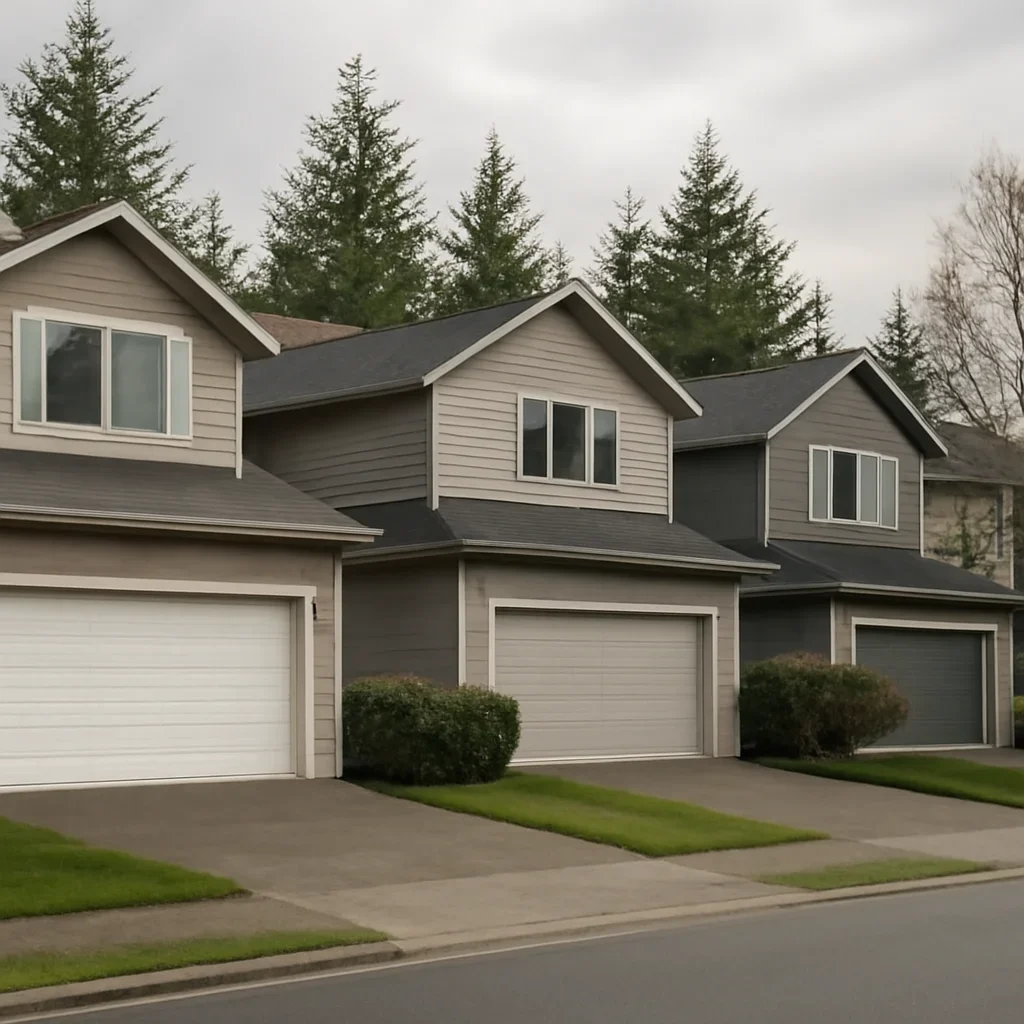
Langley City properties can include attached garages, detached homes, townhouses, strata developments and garages reached from compact driveways or rear lanes. Safety sensors sit close to floor level, where normal storage and household activity can affect their position or sightline.
Wet footwear, driveway moisture, leaves, road grit and garage-floor debris may also collect near low-mounted sensors. These conditions do not automatically mean a sensor has failed, but they are useful context when describing an intermittent closing problem.
Mention tight parking, objects stored near the tracks, recent cleaning or construction, moisture near the opening and any gate, visitor-parking or strata access instructions.
A sensor problem should be separated from opener settings, door resistance and other mechanical causes before parts are replaced.
Both sensors should have a clear path across the opening without dirt, objects or door hardware interrupting the signal.
Sensors and mounting brackets should remain stable and correctly positioned rather than tilted, loose or affected by vibration.
Visible wiring, connection points and the route back to the opener should be checked for looseness, damage or interrupted power.
Travel, force, reversal response, track resistance and door balance should be considered when sensor alignment alone does not explain the problem.
Do not tape, hold or permanently alter controls to make a closing door ignore a sensor problem. Keep people, pets and belongings clear of the opening and arrange service if normal safety reversal cannot be confirmed.
The same closing symptom can result from a simple obstruction, a damaged component or an issue elsewhere in the opener and door system.
Dust, debris, stored objects or part of a vehicle can interrupt the line between the two sensors.
A bumped sensor or loose bracket can change alignment enough to cause blinking lights or unreliable closing.
Loose, damaged or interrupted wiring can prevent one or both sensors from communicating correctly with the opener.
Incorrect travel, track resistance, poor door balance or opener control trouble can also cause stopping and reversal.
Review opener repairLight colours, flashing patterns and normal operating behaviour can differ by manufacturer and model. Providing the opener brand, model and visible light pattern helps narrow down the appropriate service path.
The process should reproduce the closing problem, separate sensor faults from other causes and confirm safe reversal after the approved repair.
Confirm whether the door reverses, stops, closes intermittently or responds differently to the wall control, remote or keypad.
The lenses, brackets, wiring, indicator lights, opener settings and mechanical door movement are reviewed together.
After the approved work, closing travel, sensor response and automatic reversal should be tested through complete operating cycles.
A focused sensor service may be appropriate when the door remains mechanically stable and the closing problem is isolated to the sensor system.
Additional service may be needed when reversal is connected to opener controls, travel settings, track resistance or an unstable garage door.
Sensor symptoms can overlap with opener, control, alignment and mechanical door problems. These pages provide the most relevant next steps.
Review common alignment, lens, wiring, bracket and safety-response issues before describing the problem.
Read the sensor guideStart here when sensor lights, wall controls, remotes, travel or opener reversal are part of the same problem.
View opener repairReview general repair when the door is also crooked, binding, unusually heavy, noisy or unable to move smoothly.
View garage door repairLearn how diagnosis, wiring, sensors, opener components, door condition and access can affect the service scope.
Review repair cost factorsShare your Langley City address, opener brand, sensor-light behaviour, controls that still work and whether the door remains open or reverses during closing.
These answers explain common sensor symptoms, safety concerns and the details that help before arranging service.
Common possibilities include sensor obstruction, misalignment, wiring trouble, incorrect travel settings, floor contact, track resistance or poor door balance. The closing system should be checked before assuming the sensors are the only cause.
A blinking light may indicate alignment, wiring, connection, bracket or component trouble. The exact meaning can vary by opener manufacturer and model.
Dirt, debris or moisture on or around the lenses can contribute to an interrupted signal. If cleaning the surrounding area does not restore consistent operation, alignment, wiring and opener response may need inspection.
Realignment may be enough when the sensors, brackets and wiring remain serviceable. Replacement may be considered when a sensor, bracket, connection or related component is damaged or unreliable.
The safety system should not be permanently bypassed or disabled. Keep the opening clear and arrange service when the door cannot complete a normal closing and reversal test.
Yes. Travel settings, force settings, control-board faults, wiring, track resistance and door-balance problems can cause stopping or reversal that resembles a sensor fault.
Share the Langley City address, opener brand and model, which sensor lights are on or blinking, which controls still work and what the door does during closing. Photos of both sensors are also useful.
No. Same-day availability depends on scheduling, property access, the nature of the fault, required parts and the time of the request. Mention whether the open door is creating an immediate access or security concern.
Tell us whether the door reverses, remains open or shows blinking sensor lights. Include the opener brand, controls that still work, visible wiring or bracket damage and property-access instructions so the request can be reviewed efficiently.