A gap appears in the spring
A separated torsion spring or visibly damaged extension spring indicates that the lifting system requires professional attention.

Get help when a broken, worn or failing garage door spring leaves the door unusually heavy, uneven, stuck or difficult for the opener to move.
Springs support much of the door’s lifting load. A spring problem can therefore affect the cables, drums, rollers, tracks and automatic opener as well as the spring itself. The complete lifting system should be assessed before the door is operated again.
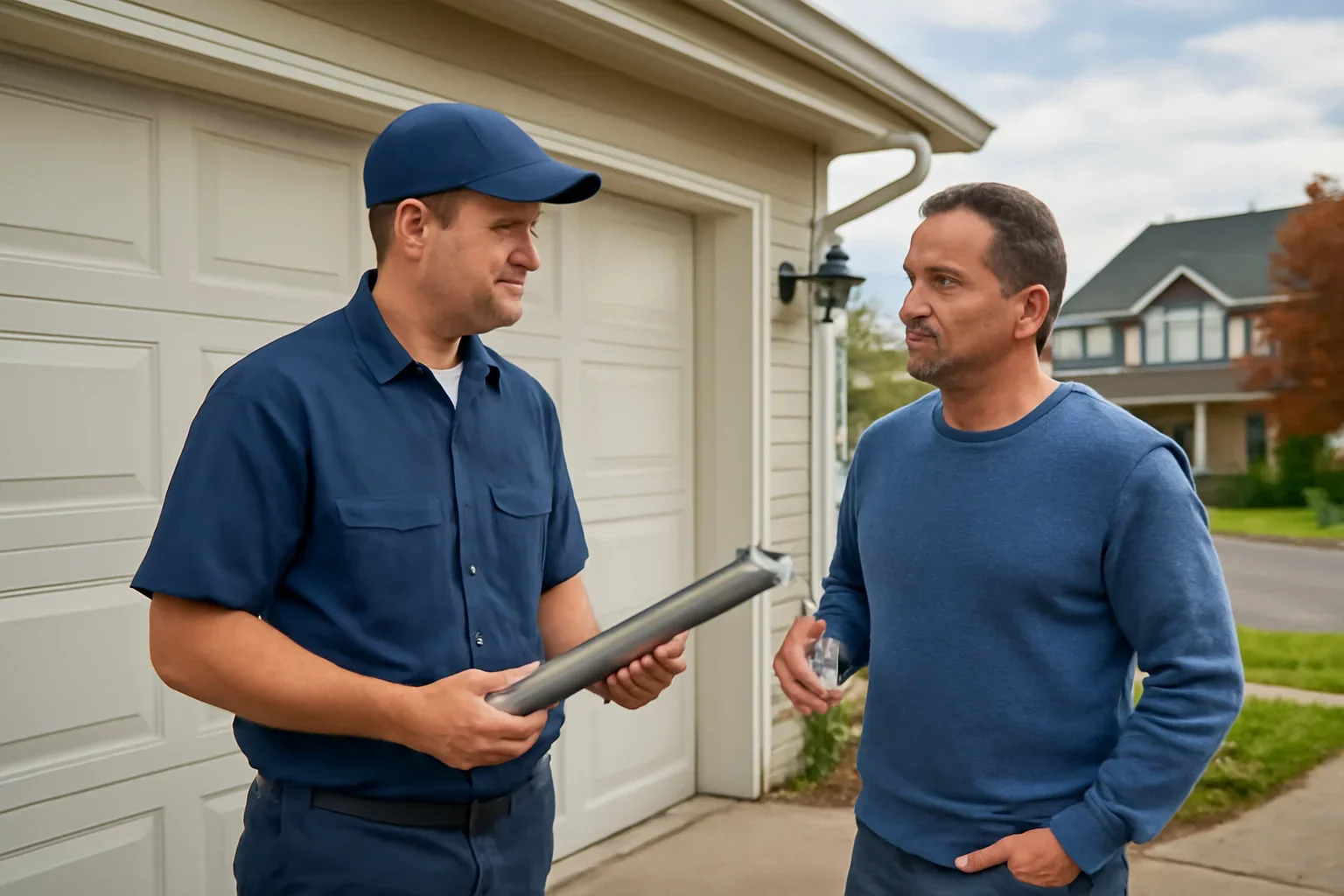
A door that becomes difficult to lift or moves only a short distance may no longer have proper spring assistance.
Stop operating the door when a spring has separated, a cable is loose or the door is hanging unevenly.
The opener may hum, stop or reverse because the door has become too heavy or unbalanced for normal operation.
Spring trouble can appear suddenly or develop through changes in door weight, movement and balance. These warning signs can help identify when the lifting system should no longer be used.
A separated torsion spring or visibly damaged extension spring indicates that the lifting system requires professional attention.
A door that suddenly feels much heavier may have lost part or all of the assistance normally provided by the spring system.
Uneven lifting may involve a spring, cable, drum or balance problem and can place additional stress on the tracks and rollers.
An opener is not designed to replace the lifting assistance of a failed spring and may stop, reverse or sound unusually strained.
Review opener problemsDescribe whether the door is open or closed, whether you heard a sudden bang, whether the door feels heavy and whether any cable appears loose. Include photos only when they can be taken safely from a distance.
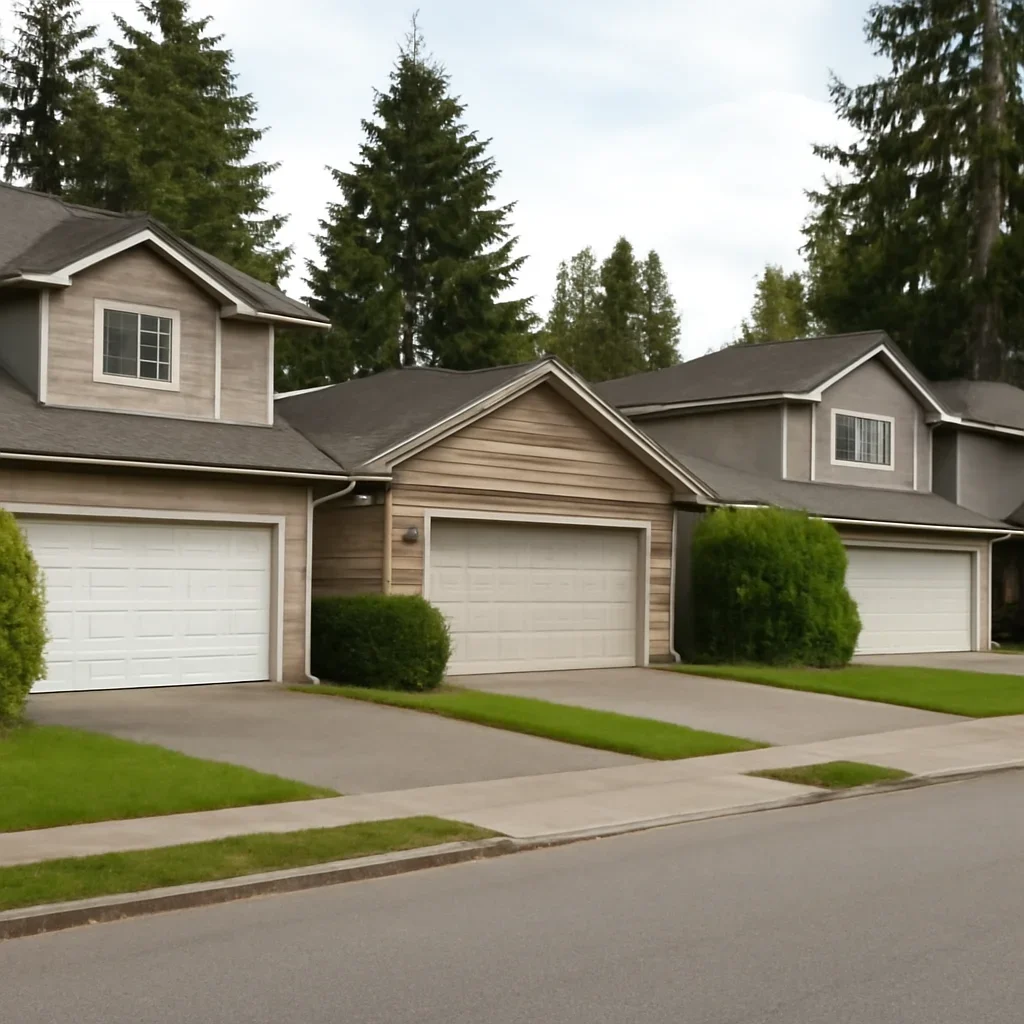
Langley City includes detached homes, attached garages, townhouses, strata properties and garages reached from compact driveways or rear lanes. A spring failure can be especially disruptive when the garage is the household’s regular entrance or when a vehicle is trapped inside.
Service planning may also depend on whether the door is open, closed or partly raised, whether there is safe space around the opening and whether property-management or strata access arrangements apply.
Mention whether the garage is the main household entrance, whether a vehicle is inside, whether the door is blocking access and whether gate, visitor-parking or strata instructions apply.
Springs are part of a connected lifting system. The visible spring should not be considered in isolation when the door is heavy, uneven or unable to move normally.
Torsion springs are generally mounted above the door opening and work with a shaft, drums and cables to help lift the door.
Extension springs are typically positioned along the horizontal tracks and stretch as the door moves through its operating cycle.
Cables and drums help transfer spring force to the lower part of the door and should be checked for wear, position and equal movement.
Brackets, bearings, shafts and supporting hardware help keep the spring system aligned and securely positioned.
Springs, cables, drums and bottom fixtures can remain under significant tension. Do not loosen fasteners, pull cables, attempt to reconnect a spring or use the opener to force a heavy door. Keep people, pets and vehicles clear of an unstable door.
A responsible spring-service decision should consider the door’s weight, movement and connected hardware before replacement parts are selected or the door is returned to use.
The spring configuration, visible condition and suitability for the door should be identified before deciding on the repair scope.
Loose, displaced or damaged cables can affect how evenly the door lifts and may indicate a wider problem in the lifting system.
Binding rollers, damaged hinges or track resistance can add load and create symptoms that overlap with spring trouble.
The opener should be checked for signs of strain or related damage after operating a door with reduced spring assistance.
View opener repairSpring service commonly involves replacing the failed component with a suitable part and then checking the connected lifting system. The correct scope depends on the door, spring configuration and condition of related hardware.
The process should begin with the current door position, continue with a complete lifting-system inspection and finish with controlled testing of the repaired door.
Confirm whether the door is open, closed or partly raised, when the problem began and whether a spring or cable is visibly damaged.
The springs, cables, drums, bearings, brackets, rollers, tracks, door sections and opener response should be considered together.
After the approved work, the door should be checked for controlled, even movement before normal automatic operation resumes.
Spring replacement may be the primary service when the door and connected lifting hardware remain serviceable and the failure is limited to the spring system.
Additional repair may be appropriate when the spring failure is accompanied by cable damage, uneven movement, impact or repeated problems elsewhere in the system.
Spring symptoms can overlap with cable, track, roller, opener and structural door problems. These pages provide the most relevant service paths.
Start here when a spring problem is connected to uneven movement, damaged cables, off-track rollers or other door hardware.
View garage door repairReview availability when the door is blocking access, cannot secure the garage or is hanging in an unstable position.
Check same-day serviceReview opener service when the motor runs, strains, stops or reverses after the door becomes unusually heavy.
View opener repairLearn how the spring configuration, related damage, required parts and property access can affect the service scope.
Review repair cost factorsShare the Langley City address, current door position, whether a vehicle is trapped inside and what happened before the door stopped working.
These answers explain common spring symptoms, safety concerns and the information that helps before arranging service.
Possible signs include a visible gap in a torsion spring, a damaged extension spring, a sudden loud bang, an unusually heavy door or an opener that can no longer raise the door normally.
Do not force the door or use the opener to repeatedly attempt lifting it. A door without proper spring assistance may be extremely heavy, unstable or capable of moving unexpectedly.
Repeatedly operating a door with reduced spring assistance can place additional load on the opener. The motor, rail and drive system may need to be checked if the opener has been straining.
That depends on the spring configuration, condition, compatibility and service history. When a system uses a matched pair, the condition of both springs should be considered before deciding on the repair scope.
Uneven movement may involve a cable, drum, spring, roller, track or balance issue. Stop using the door if one side is lower or any cable appears loose or displaced.
That depends on the condition and suitability of the existing system. A broken, damaged or unsuitable spring generally requires replacement rather than adjustment. Spring work should not be attempted without appropriate training and equipment.
Share the Langley City address, whether the door is open or closed, whether you heard a loud noise, whether a vehicle is trapped inside and whether any spring or cable damage is visible.
No. Same-day availability depends on scheduling, property access, door position, safety, required parts and the time of the request. Clearly describe any security or access concern when booking.
Tell us whether the door is open, closed, unusually heavy or hanging unevenly. Include visible spring or cable concerns, whether a vehicle is trapped inside and any property-access instructions so the request can be reviewed efficiently.