Bends, dents or pinched sections
An impact or damaged section can narrow the path and prevent a roller from moving smoothly through the track.

Get help with bent, loose, obstructed or misaligned garage door tracks that cause scraping, shaking, uneven travel or a door that cannot open and close normally.
Garage door tracks guide the rollers through every operating cycle. When the track path changes, the visible problem may also involve the rollers, hinges, mounting brackets, door balance or opener. A proper inspection should identify the cause before the door is forced or adjusted.

New scraping, rubbing, vibration or jerky movement may indicate track resistance, loose brackets or damaged rollers.
Stop operating the door if it is crooked, unstable or partly supported outside the normal track path.
Track resistance can make the opener hesitate, reverse, stop early or sound strained during door movement.
A track problem can begin as a small movement change and become more disruptive if the door continues cycling. These symptoms can help identify when the track path and connected hardware should be checked.
An impact or damaged section can narrow the path and prevent a roller from moving smoothly through the track.
Loose mounting points can allow the track to shift, vibrate or move away from the position required for consistent roller travel.
Resistance at one point in the travel path may cause the door to slow, shake, stop or place extra load on the opener.
A displaced roller can leave the door crooked or unstable. Do not force the roller back into position or continue using the opener.
Review urgent serviceSend photos of the complete door, both vertical tracks, the curved sections and the area where the noise or resistance occurs. Mention whether the door is open, closed, uneven or stuck partway.
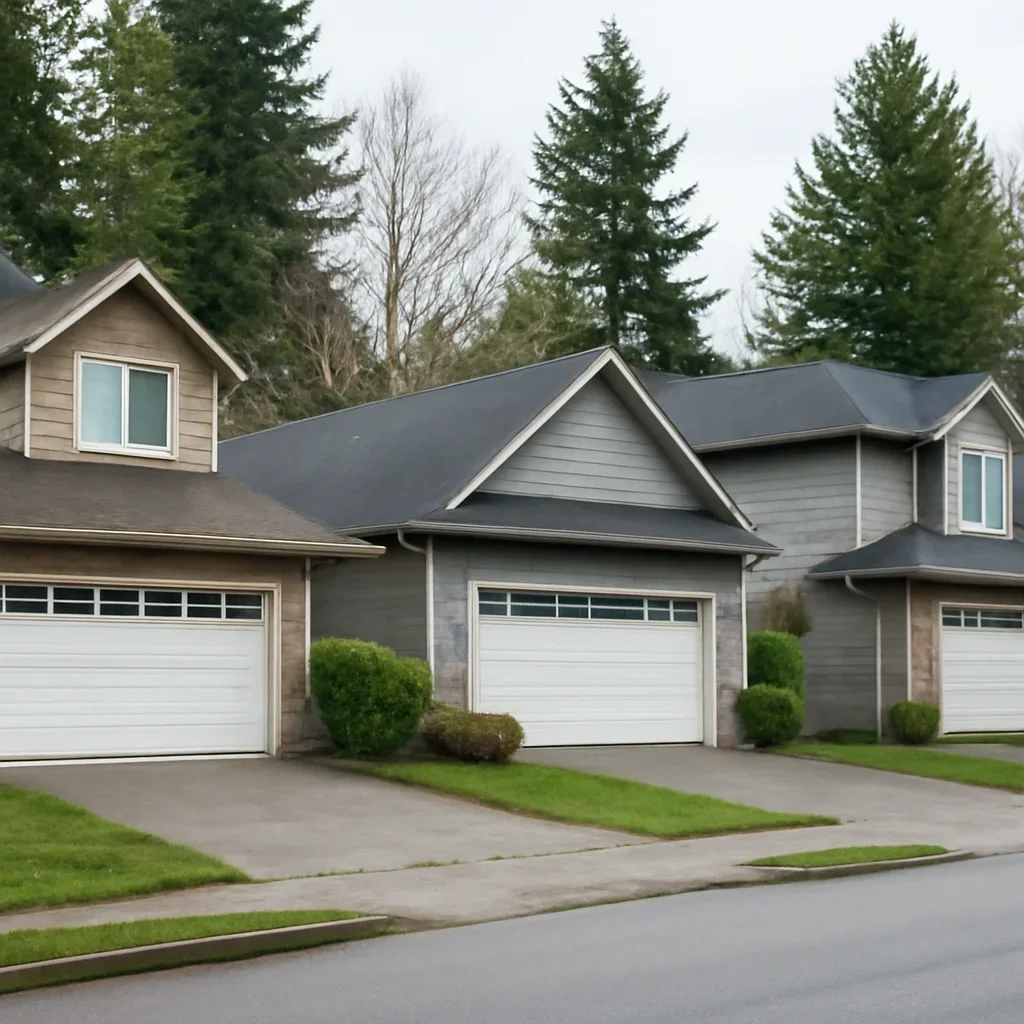
Langley City includes detached homes, attached garages, townhouses, strata developments, apartment garages and mixed-use properties. Track service may require clear access to the full door opening, wall brackets, ceiling supports and the space beside parked vehicles or stored items.
Compact driveways, rear-lane garages, underground parking and shared townhouse access can also affect arrival instructions and workspace. Providing these details before service helps clarify how the property can be accessed and inspected.
Mention visitor-parking restrictions, gate or building access, ceiling storage, vehicles inside the garage and any strata or property-management requirements that may affect the appointment.
The tracks do not move the garage door by themselves. Roller condition, mounting hardware, door alignment and the lifting system can all affect how the door travels through the track path.
The tracks beside the opening should remain securely mounted, correctly spaced and free from damage that interferes with the rollers.
The transition above the opening and overhead sections should guide the rollers smoothly without abrupt resistance or visible separation.
Worn rollers, bent stems, loose hinges or damaged mounting points can imitate a track problem or contribute to repeated misalignment.
Wall brackets, flag brackets and overhead supports help maintain the track position and should be checked for looseness, movement or damage.
Keep people, pets and vehicles away from a door that is crooked, hanging unevenly, partly outside the tracks or moving unpredictably. Do not loosen tracks, bottom brackets, springs or cables. These parts may be connected to a lifting system that remains under significant tension.
A visible bend may be only part of the issue. Understanding what changed can help determine whether adjustment, track repair or a broader garage door repair is appropriate.
A track may be bent or pushed out of position after contact with a vehicle, ladder, storage item or other object inside the garage.
Repeated door cycles and vibration may allow mounting hardware to loosen, changing the track spacing or alignment.
A roller that binds, tilts or stops turning freely may place sideways pressure on the track and create noise or uneven travel.
Cable, spring, hinge, panel or balance problems can pull the door unevenly and cause a roller to travel incorrectly through the track.
Review complete door repairThe spacing and position should be considered through the vertical, curved and horizontal sections while the door, rollers and mounting supports are assessed as one connected system.
The process should begin with the current door position and visible symptoms before any repair or alignment decision is made.
Note whether the door is open, closed, crooked or stuck, where the resistance occurs and whether a roller is visibly outside the track.
The tracks, rollers, hinges, brackets, door sections, cables, springs and opener response should be considered before confirming the cause.
After the approved work, the complete travel path should be checked for smooth movement, stable alignment and unnecessary opener resistance.
A targeted repair may be appropriate when the track and mounting points remain serviceable and the problem can be corrected without ignoring damage elsewhere in the system.
Additional work may need to be considered when track trouble is connected to impact damage, an unstable door, damaged rollers or problems within the lifting system.
Track symptoms can overlap with roller, opener, balance and structural door problems. These pages provide the most relevant service paths.
Start here when track movement is part of a stuck, crooked, heavy, noisy or unreliable garage door.
View garage door repairReview availability when the door is unstable, off track, blocking access or unable to secure the garage.
Check same-day serviceReview opener service when the motor stops, reverses or strains while the door moves through the track path.
View opener repairLearn how door position, damage, parts, access and connected repair needs can affect the service scope.
Review repair cost factorsShare your Langley City address, the current door position, where the track appears damaged and whether the opener still responds. Include clear photos when they can be taken safely.
These answers explain common track symptoms, repair decisions and what to provide before arranging service.
Possible signs include a visible dent or curve, scraping at one point, a roller that binds, an uneven gap between the track and door, or movement that becomes rough in the same place during each cycle.
Stop using the door if a roller is outside the track or the door is crooked, hanging unevenly or unstable. Operating the opener may increase damage or cause uncontrolled movement.
That depends on the location, severity and condition of the track, brackets and mounting points. Limited damage may be repairable, while a severely deformed or weakened section may need replacement.
Repeated movement may be connected to loose supports, damaged rollers, impact, incorrect spacing, unstable mounting points or an unevenly moving door. The cause should be identified before the track is repeatedly repositioned.
Yes. Resistance or binding in the track path may contribute to stopping or reversal. Sensors, opener settings, door balance and other mechanical problems can create similar symptoms, so the complete system should be considered.
Not automatically. The decision depends on the condition, compatibility and alignment of both sides, as well as the rollers, brackets and door. The complete track path should be inspected before determining the repair scope.
Share the Langley City address, whether the door is open or closed, where it binds or scrapes, whether it sits unevenly and whether any roller has left the track. Photos of the full door and track area are also helpful.
No. Same-day availability depends on scheduling, property access, door stability, required parts and the time of the request. Clearly describe any access or security concern when booking.
Tell us whether the track is bent, loose, scraping or holding a displaced roller. Include the current door position, visible damage, opener behaviour, property-access details and photos so the request can be reviewed efficiently.