Cracks, splits or missing sections
Torn or brittle material can leave direct openings along the bottom, sides or top of the garage door.

Replace cracked, flattened, loose or missing garage door seals that allow drafts, rainwater, leaves, dirt or pests to enter around the opening.
A visible gap does not always mean the seal is the only issue. The bottom seal, side weather stripping, top seal, floor condition and door alignment should be considered together before selecting the appropriate replacement.
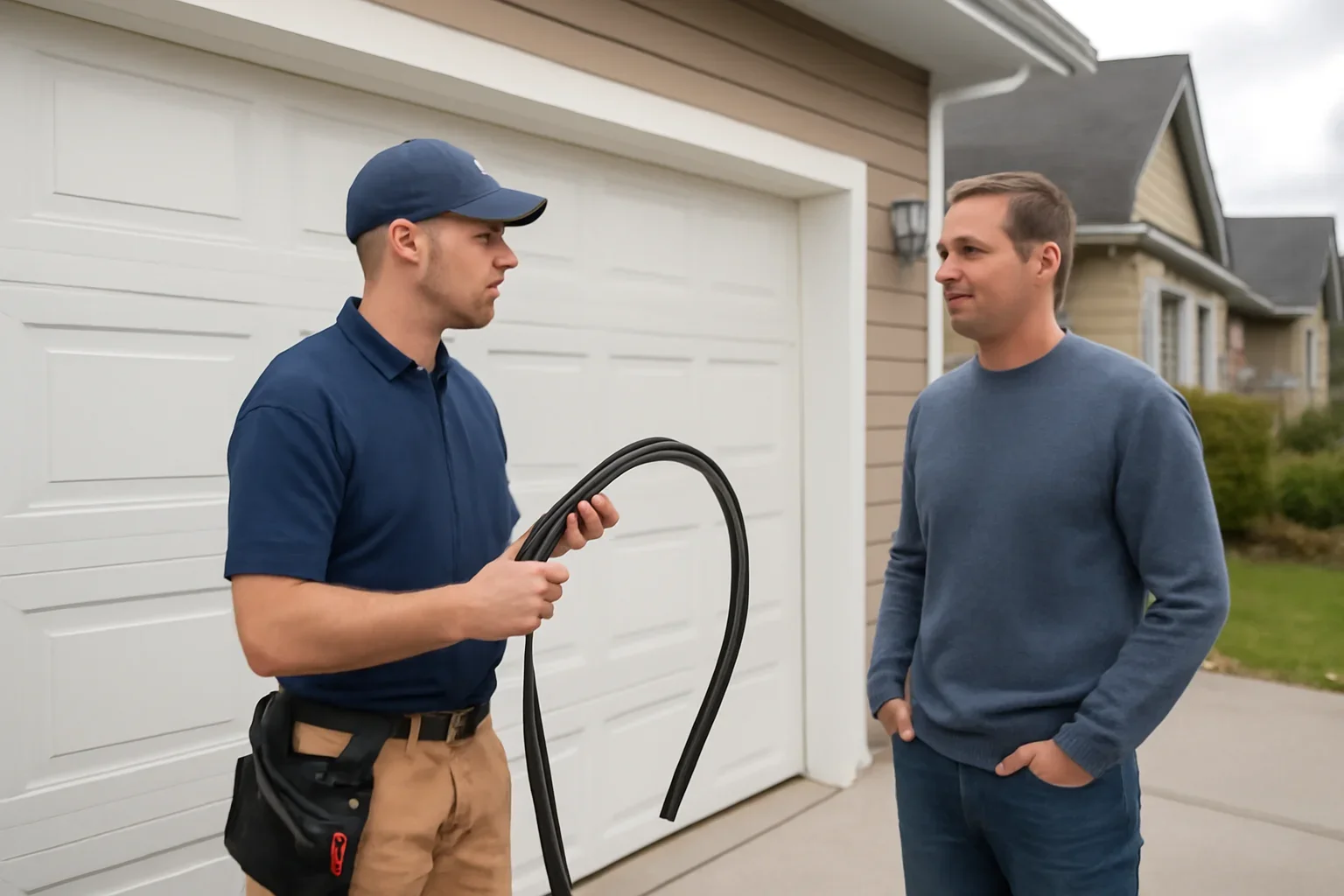
Daylight along the bottom or sides can indicate a worn seal, an uneven floor or a door-alignment issue.
Check which edge of the opening is affected and whether the seal still makes consistent contact when the door closes.
A new seal may not solve the problem if the door, tracks or lifting system are preventing even contact with the opening.
Weather seals gradually lose flexibility and shape. Replacement may be appropriate when a seal no longer closes the gap consistently or cannot remain secured to the door or frame.
Torn or brittle material can leave direct openings along the bottom, sides or top of the garage door.
A compressed seal may no longer expand enough to follow minor changes in the garage floor or driveway edge.
A loose seal, damaged retainer or incorrect seal profile can cause the material to shift, sag or detach during normal door movement.
A localized gap may involve the floor, door position, frame or track alignment rather than uniform seal wear.
Review garage door repairSend a photo from inside the closed garage during daylight, along with close views of the bottom corners, side seals and the area where moisture or debris enters.
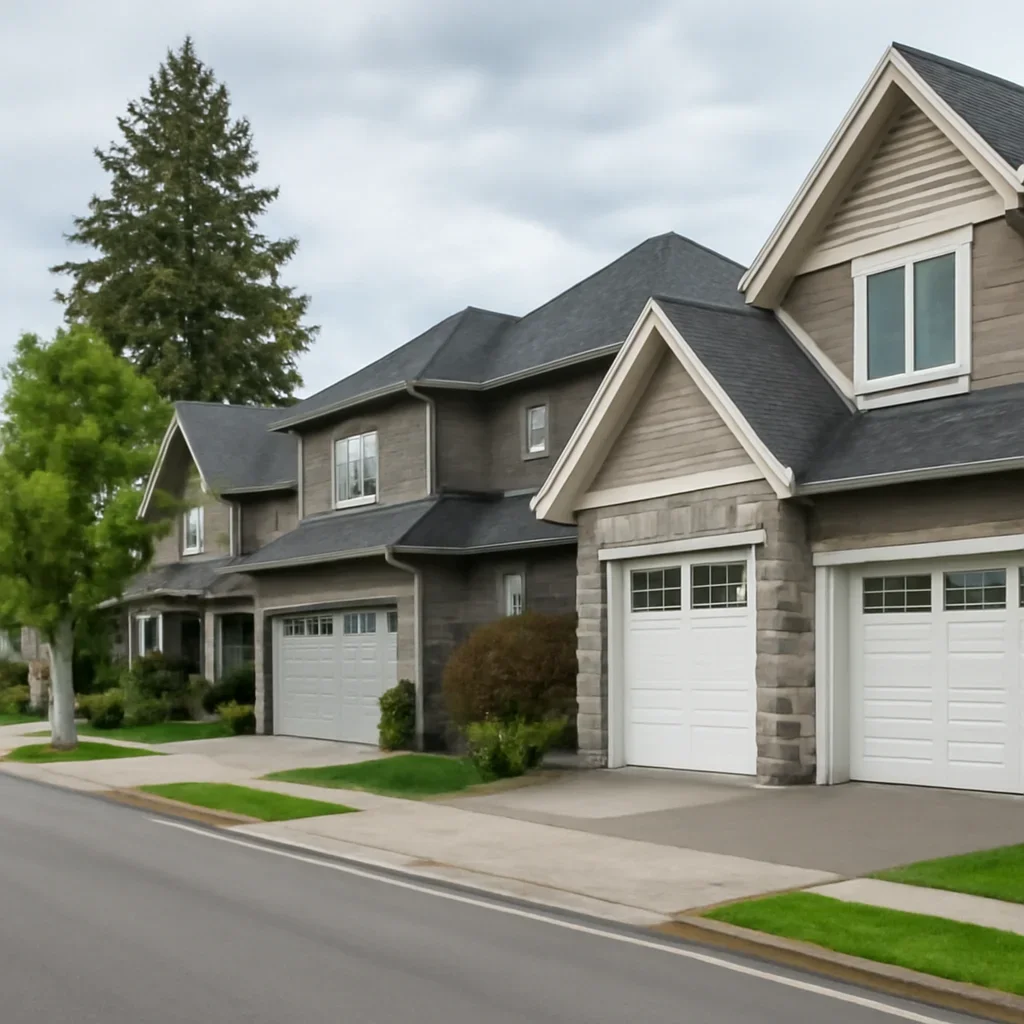
Langley City properties can include detached homes, attached garages, townhomes, strata developments and garages reached from compact driveways or rear lanes. The condition of the opening and the way water travels across the driveway should be considered before assuming a thicker bottom seal will solve every gap.
Attached garages may also be used as storage, workshops or regular household entrances. In these spaces, drafts, moisture, dirt and pest entry may become noticeable sooner because the garage is used more frequently.
Share whether water approaches from the driveway, where daylight is visible, whether the gap changes across the opening and whether the door sits evenly when fully closed.
Weather sealing usually involves more than one possible contact point. Identifying the location of the gap helps determine whether the material, retainer, frame or door position requires attention.
The flexible material along the lower edge helps close the space between the door and garage floor when the door is fully closed.
The channel or holder attached to the lower door section must remain secure and compatible with the replacement seal profile.
Flexible seals along the vertical frame help close the space between the door edges and the finished opening.
The upper seal helps close the gap where the top door section meets the frame when the door reaches its closed position.
Seal size and profile should suit the door, retainer and actual gap. Oversized material can fold, drag or interfere with consistent closing, while an undersized seal may leave sections of the opening exposed.
A weather seal works only when the garage door reaches the correct closed position and makes reasonably even contact around the opening.
The material should be checked for cracks, flattening, shrinkage, hardened sections, loose edges and missing pieces.
A damaged bottom channel or loose side and top weather stripping may prevent new material from staying correctly positioned.
Uneven concrete, low spots, cracks or changes in driveway grade can create gaps that vary across the width of the opening.
The door should reach a consistent closed position without sitting noticeably higher on one side or placing unnecessary pressure on the seal.
Springs, cables and bottom fixtures are part of the lifting system and can remain under significant tension. Do not loosen or adjust these components to make the door sit lower. A closing or alignment problem should be assessed separately from normal weather-seal replacement.
The process should identify the source of the gap, confirm compatible material and test how the door closes after the approved work.
Review where light, moisture, dirt or pests are entering and whether the problem affects the bottom, sides, top or more than one area.
Assess the existing seal, retainer, frame, floor condition and door position before selecting replacement material.
After the approved replacement, check for consistent contact while confirming that the door still opens, closes and reverses normally.
A focused seal replacement may be appropriate when the door closes evenly and the main problem is deteriorated or missing weather stripping.
Additional work may need to be considered when the gap is caused by alignment, structural damage or an uneven closing position rather than seal wear alone.
Weather-seal symptoms can overlap with door alignment, closing and replacement concerns. These pages provide the most relevant next steps.
Review the purpose of garage door seals and when a simple adjustment or professional service may make more sense.
Read the weather-stripping guideStart here when the door closes unevenly, binds, stops early or has visible damage beyond the weather seal.
View garage door repairCompare replacement when damaged sections, recurring problems or poor sealing affect the usefulness of the complete door.
Review replacement optionsLearn how access, parts, door condition and additional repair needs can affect the final service scope.
Review repair cost factorsShare the Langley City address, location of the gap, age or visible condition of the seal and photos taken from both sides of the closed door.
These answers explain common seal problems, replacement decisions and the information that helps before an appointment.
Replacement may be appropriate when the material is cracked, torn, flattened, hardened, shrinking, pulling away from its holder or leaving visible gaps when the door is fully closed.
The remaining gap may be connected to an uneven garage floor, an incorrect seal profile, a damaged retainer or a door that does not sit level. The position and shape of the gap should be checked before installing another seal.
Weather seals can help reduce water entering through normal gaps around a properly closing door. They cannot correct drainage problems, standing water, a driveway that directs runoff toward the garage or major irregularities in the concrete.
Properly fitted bottom, side and top seals can reduce air movement through gaps around the opening. Results also depend on the door condition, panel construction, frame and overall fit.
That depends on the seal type and where the damage is located. Continuous bottom and perimeter seals generally perform best when they provide consistent contact across the relevant edge rather than leaving joined or mismatched sections.
A suitable seal may accommodate minor variation, but increasing the seal size is not a universal solution. Large or irregular gaps may require closer review of the floor, threshold, door position and available seal profiles.
Share the Langley City address, where the gap appears, whether water, drafts or pests are entering, and whether the door closes evenly. Photos of the full closed door, bottom corners, side seals and floor gap are helpful.
Normal seal wear is usually a planned maintenance issue. More urgent service may be appropriate if the door cannot close, cannot secure the opening or has a separate mechanical problem. Same-day availability depends on scheduling, access and the required work.
Tell us where the gap appears, what is entering the garage and whether the door sits evenly when closed. Include clear photos of the bottom, sides, top and floor so the request can be reviewed efficiently.