The door will not stay closed
If the door starts closing and then returns upward, the sensors, opener settings, track resistance, or an obstruction may be involved.
View opener repair
Get local help when your garage door will not close, reverses before reaching the floor, has blinking sensor lights, or keeps acting like something is blocking the opening.
Garage door sensors are part of the opener safety system. In Murrayville homes, sensor issues can be caused by alignment, dust, moisture, driveway debris, wiring, loose brackets, opener settings, or a door that is binding for another reason. A proper service visit should confirm whether the problem is the sensors themselves or another part of the garage door system.
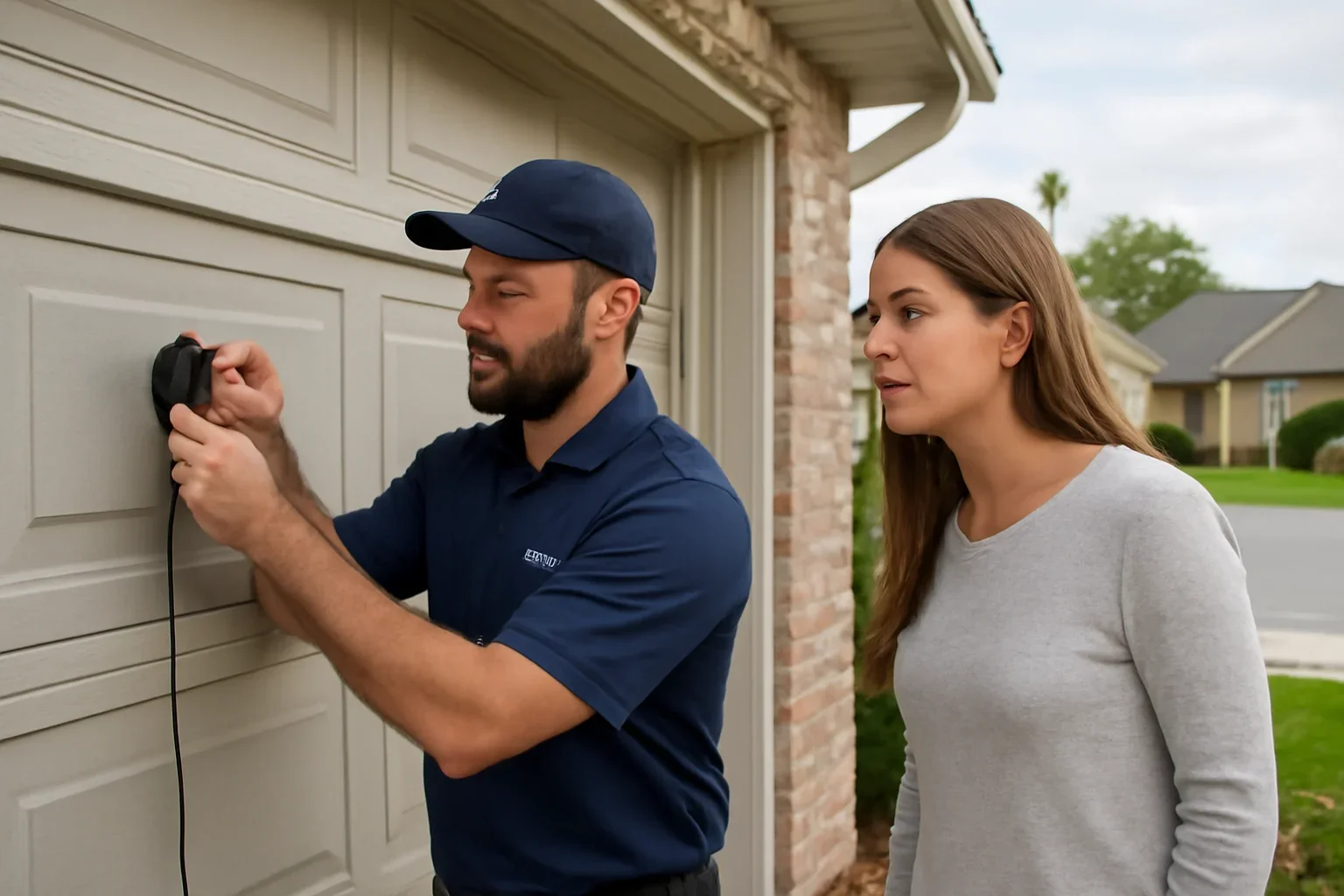
Start with opener repair when the safety system, travel settings, force settings, or sensors may be involved.
Review the sensor guide for alignment, cleanliness, wiring, and when the issue should move from troubleshooting to service.
Book service if the door will not close reliably, the issue keeps returning, or the opener cannot finish the closing cycle.
A sensor issue can look like an opener failure, a closing problem, or a door alignment problem. These common situations help explain what to mention before booking.
If the door starts closing and then returns upward, the sensors, opener settings, track resistance, or an obstruction may be involved.
View opener repairBlinking, dim, or missing lights can point to alignment, wiring, power, bracket movement, or sensor damage.
Read sensor guidanceA door that rubs, shakes, or stops before closing may need garage door repair, even if the opener reports a sensor-style problem.
View garage door repairIf the door will not close and the garage is exposed, mention the urgency clearly when booking your service request.
Check same-day repairDescribe what happens when the door tries to close, whether the sensor lights are solid or blinking, and whether anything changed around the garage opening.
Many Murrayville homes rely on the garage for daily parking, storage, family entry, tools, bikes, and outdoor equipment. Sensor problems often happen near the floor, where boxes, leaves, mud, toys, tools, hoses, or small impacts can interfere with the sensor path.
Moisture, dust, driveway debris, loose sensor brackets, and repeated bumps around the garage opening can also affect alignment. In attached garages, a door that will not close properly can quickly become a security and convenience issue, especially when the garage connects directly to the home.
Sensor problems may start as an occasional closing issue, then become more frequent. If the door will not close reliably, it is better to correct the cause before the garage becomes difficult to secure.
A consistent reversal usually means the opener is detecting a safety issue, resistance, misalignment, or an obstruction.
A blinking or missing sensor light can help narrow down alignment, wiring, power, or sensor damage.
Intermittent sensor problems can be caused by loose brackets, vibration, debris, moisture, wiring, or opener logic issues.
If the garage cannot be secured, provide the address area, door position, and urgency when booking service.
Do not bypass, tape, disable, or ignore garage door safety sensors. If the door reverses, stops, or behaves unpredictably, the cause should be checked instead of forcing the opener to close.
A responsible recommendation should confirm whether the sensor system is the real cause or whether the opener, tracks, rollers, balance, or door movement is creating the problem.
Mention whether the door reverses immediately, reaches the floor then opens, stops halfway, or only fails at certain times.
Sensor alignment, lens condition, wiring, mounting brackets, power, and opener response should be reviewed together.
If the door is heavy, crooked, binding, or noisy, the issue may require broader garage door repair rather than only sensor adjustment.
Sensor repair may be appropriate when the door reverses while closing, the sensor lights are blinking, or the opener behaves as though something is blocking the path.
A door that is binding, heavy, uneven, or noisy can trigger opener safety behavior even when the sensors appear to be part of the problem.
These answers help you understand what may be happening and what details are useful when arranging garage door sensor repair.
It is more urgent when the door will not close, the garage cannot be secured, or the opener keeps reversing even after the opening is clear. If the issue affects security or access, mention that when booking.
The opener may be detecting a blocked or misaligned sensor, wiring issue, travel setting problem, resistance in the door, or another safety-related concern.
Yes. Dirt, spider webs, moisture, driveway debris, and objects near the floor can interfere with sensor alignment or the sensor path.
Include your Murrayville location, whether the sensor lights are solid or blinking, what the door does when closing, and whether the issue is constant or intermittent.
Yes. Travel settings, force settings, opener logic, wiring, track resistance, or a heavy door can create symptoms that look similar to a sensor issue.
Choose opener repair when the issue appears tied to sensors, remotes, controls, motor response, or reversal behavior. Choose general repair when the door is heavy, crooked, noisy, stuck, or visibly damaged.
Tell us what happens when the door tries to close, whether the sensor lights are blinking or solid, and whether the garage is currently secure. A clear description helps route the request toward sensor repair, opener service, same-day support, or broader garage door repair.