The door immediately reverses
The door starts moving down, stops and returns to the open position even though nothing obvious is under it.

Is your garage door starting to close and then reversing, showing a blinking sensor light, or refusing to close unless you hold the wall button? The safety sensors may be dirty, misaligned, damaged or affected by a wiring or opener problem.
We help Walnut Grove homeowners identify the actual cause before deciding whether the sensors need cleaning, realignment, wiring repair, bracket adjustment or replacement. The goal is to restore dependable closing and confirm that the garage door safety-reversal system works correctly.
Serving detached homes, townhouses and residential garage-door systems throughout Walnut Grove and nearby Langley communities.
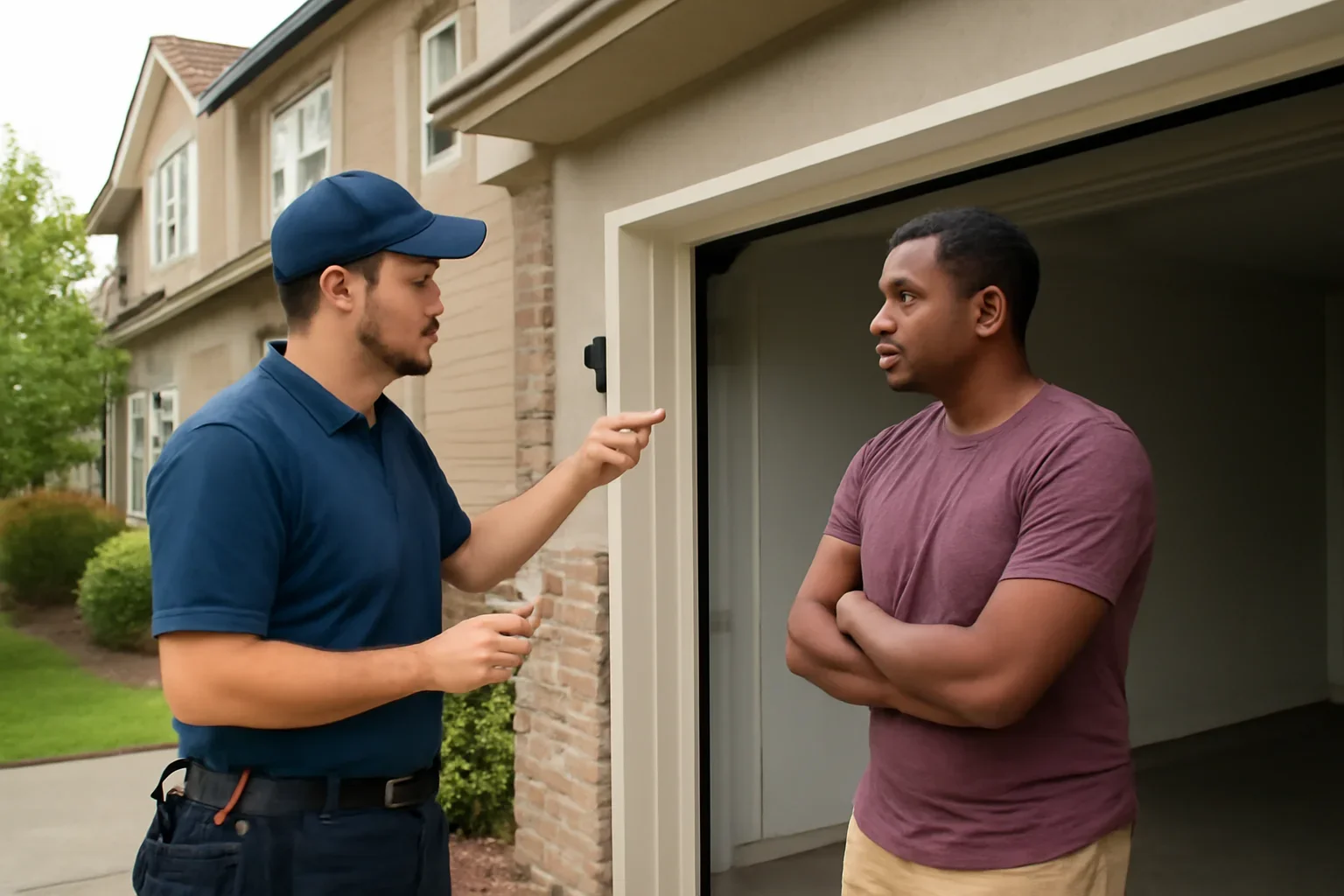
You do not need to identify the failed part before requesting service. Describe what happens when you try to close the door.
When a garage door opens normally but will not close, the opener may be detecting a blocked or interrupted safety-sensor beam. Misaligned photo eyes, dirty lenses, loose wiring, damaged brackets, direct light or an object near the floor can cause the door to reverse. A travel-setting, track or door-balance problem can sometimes create a similar symptom.
A sensor issue often appears during closing, but similar symptoms can also come from the opener, door movement or travel settings. Looking at the full operating cycle helps avoid replacing the wrong part.
The door starts moving down, stops and returns to the open position even though nothing obvious is under it.
A flashing, dim or unlit indicator can point to alignment, power, wiring or sensor failure, depending on the opener system.
Some openers allow the door to close only while the wall button is continuously pressed when the safety circuit is interrupted.
Loose brackets, vibration, moisture, debris, wiring connections or changing sunlight may create an inconsistent sensor signal.
Walnut Grove includes established detached-home streets as well as townhouse communities with attached garages. In homes where the garage is the main family entrance, the door may cycle several times each day for commuting, school routines, errands and recreational activities.
Garage door photo-eye sensors are installed close to floor level. That location makes them vulnerable to accidental contact from bicycles, sports equipment, storage bins, recycling containers, tools and routine garage cleaning.
Wet weather can also bring moisture, leaves, dust and driveway debris into the garage entrance. These conditions do not always damage the sensors, but they can dirty the lenses, affect a loose connection or make an existing alignment problem more noticeable.
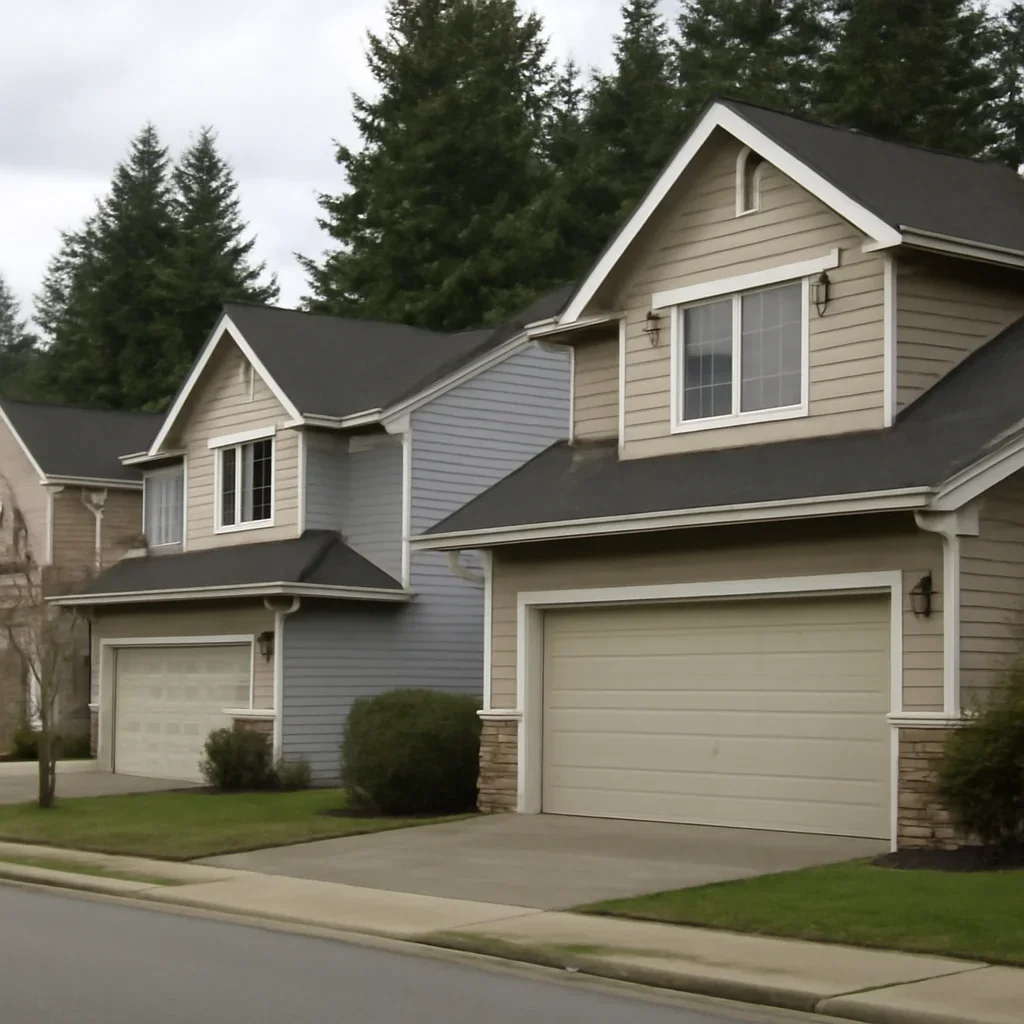
A proper assessment should confirm whether the sensor is the source of the problem and whether another part of the opener or door is contributing to the closing failure.
The lenses, mounting brackets, indicator lights, sensor height and alignment across the garage opening should be reviewed for visible obstruction or damage.
Connections, exposed wiring, low-voltage power and opener diagnostic signals can help separate an alignment issue from a sensor, wiring or control-board problem.
After adjustment or repair, the door should complete a closing cycle and respond correctly when the safety beam is interrupted.
A garage door may reverse because of track resistance, a binding panel, incorrect travel settings, opener force settings or poor door balance. Replacing the sensors without checking these possibilities may leave the original problem unresolved. For wider mechanical concerns, review our garage door repair service or garage door opener repair service.
The lenses are dirty, a bracket has shifted, the sensors have moved slightly out of alignment or a serviceable connection has become loose.
A sensor housing is cracked, water-damaged, internally failed, unable to hold a signal or no longer compatible with the existing opener and wiring setup.
Both sensors appear powered and aligned, but the opener still reports a fault, reverses unpredictably or has other control, motor or travel-setting problems.
You do not need to inspect wiring or dismantle the opener. A few simple observations can make the service request clearer.
The service process should begin with the symptom and end with a verified safety test, rather than assuming every closing problem requires new sensors.
Explain whether the door reverses, stops, flashes the opener light or closes only while holding the wall button.
Review the sensor lenses, brackets, wiring, indicator lights and the opener’s response before selecting a repair.
Realign, secure, repair or replace the affected components based on the condition and compatibility of the system.
Test normal closing and confirm that interrupting the sensor beam causes the garage door to reverse as intended.
Sensor symptoms can overlap with opener, closing and mechanical problems. These pages can help you choose the most relevant next step.
These answers cover the symptoms homeowners commonly notice when a safety sensor, opener or closing system is not working correctly.
The opener may be receiving an interrupted safety-sensor signal, or it may be detecting resistance while the door moves. Check for an obvious object near the doorway without touching wiring or moving parts. If the path is clear and the problem continues, sensor alignment, wiring, travel settings and door movement should be assessed.
A blinking light often indicates that the sensors are not aligned or that the receiving sensor does not have a stable signal. The meaning can vary by opener brand, so the lenses, brackets, wiring and opener diagnostic pattern should be considered together.
Moisture, dirt and debris can sometimes affect a dirty lens, loose connection or damaged sensor housing. The sensor should not be assumed to need replacement until its physical condition, alignment, wiring and indicator lights have been checked.
Strong light reaching the receiving photo eye can sometimes interrupt the sensor signal, particularly when alignment is already marginal. Repeated problems at the same time of day should be mentioned when arranging service.
No. The sensors are part of the garage door opener’s safety system. Bypassing, disconnecting or defeating them can allow the door to close without detecting an obstruction. The cause should be diagnosed and repaired instead.
Sensor-light behaviour, wall-button operation and the opener’s diagnostic signals provide useful clues, but they may not identify the complete cause. The opener, wiring, travel settings and garage door movement may all need to be checked.
Same-day availability depends on scheduling, the service address and the nature of the problem. When the garage is unsecured, a vehicle is trapped or the door cannot be used safely, explain the urgency through the same-day repair page or when submitting your booking request.
Include your Walnut Grove location, what happens when the door closes, whether either sensor light is blinking or off, the opener brand and whether the garage is currently secure. Photos of the sensors can also help explain the situation.
Tell us where you are in Walnut Grove, what the door does during closing and what you see on the sensor lights. You do not need to diagnose the component yourself. These details help direct the request to sensor, opener or general garage door repair.