The door rises crooked
One side may move ahead of the other, leave a different-sized gap or appear lower when the door stops.

Is your garage door scraping, shaking, binding or sitting unevenly? A bent, loose or misaligned track can prevent the rollers from moving smoothly and may cause the door to stop, tilt or come out of position.
We help Walnut Grove homeowners identify whether the problem is limited to the track or involves connected parts such as rollers, brackets, cables, springs or the garage door opener. The repair decision should be based on the condition of the complete door, not only the first damaged part you can see.
Serving residential garage-door systems throughout Walnut Grove and surrounding Langley communities. Appointment timing depends on location, scheduling, parts and the condition of the door.
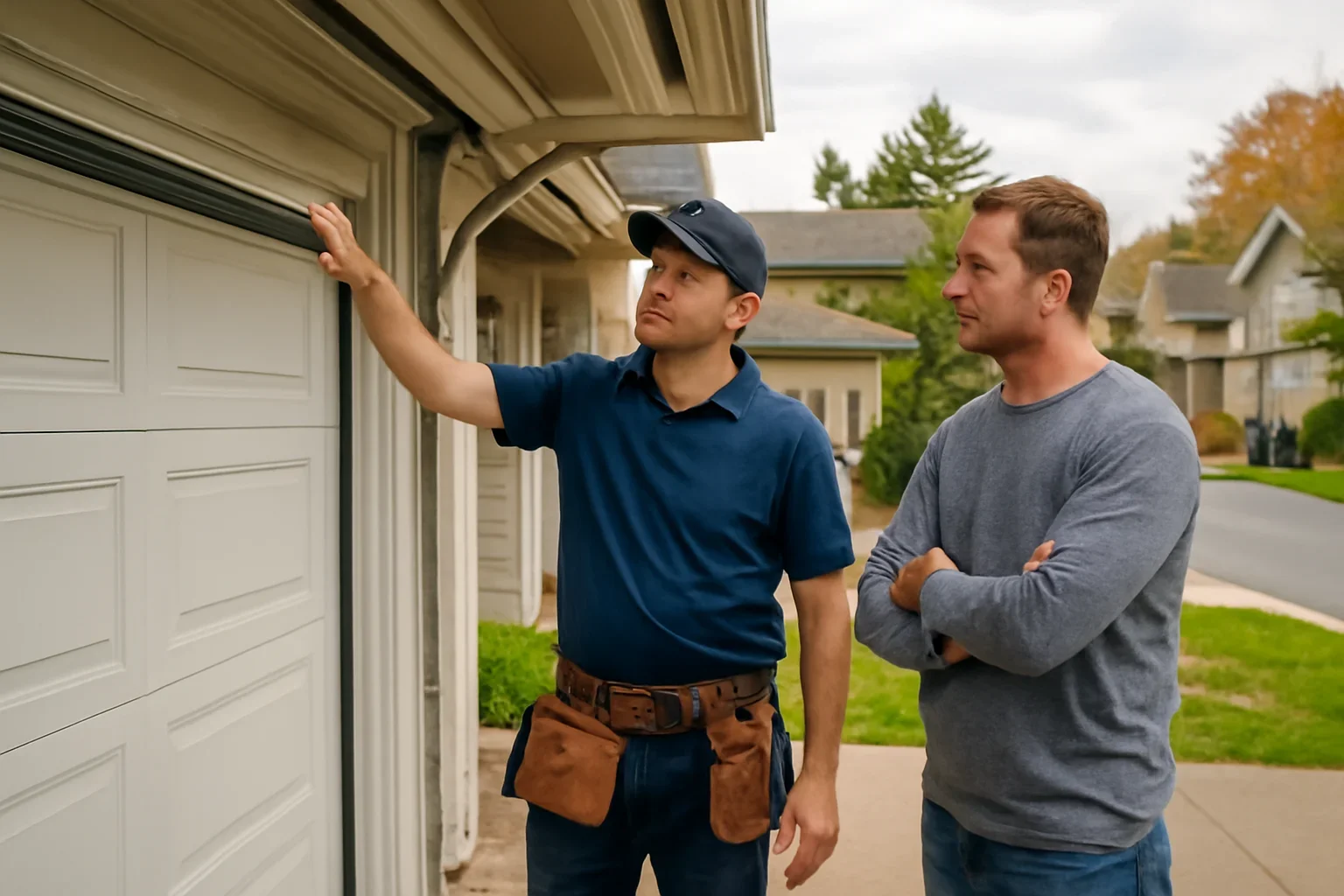
Repeated use can pull rollers farther out of position or increase strain on cables, brackets, panels and the opener.
A small bend or minor alignment problem may sometimes be corrected when the track remains structurally sound. Replacement may be the safer option when the metal is sharply creased, cracked, badly twisted, separating at a joint or no longer able to guide the rollers correctly. The rollers, brackets, cables, springs and door balance should also be checked because track damage is often a symptom of another problem.
Track problems usually affect the way the door moves. The location of the noise, resistance or visible gap can help narrow down whether the track itself is damaged or another component is pushing the door out of alignment.
One side may move ahead of the other, leave a different-sized gap or appear lower when the door stops.
Grinding, scraping or repeated clicking can occur when a track is bent, loose or no longer positioned correctly around the rollers.
A dent, twist, separated joint or loose mounting bracket can interrupt the roller path and restrict normal door movement.
A displaced roller may be connected to track damage, a cable problem, impact, worn hardware or an unbalanced door.
The door is heavy, and its cables and springs operate under substantial tension. Moving or loosening track brackets without understanding the complete system can allow the door or hardware to shift unexpectedly.
Walnut Grove is an established residential area in northwest Langley, with detached homes, townhouse communities and local activity around Walnut Grove Drive, the community centre, shopping areas and routes leading toward the Golden Ears Bridge.
Many attached garages are used as a regular household entrance. Frequent opening and closing can make developing roller, bracket or alignment problems noticeable through new sounds, shaking or uneven movement.
Rain, damp conditions and driveway debris can also expose existing corrosion, loose fasteners or restricted roller movement. Weather may contribute to the symptom, but the track should not automatically be blamed without checking the rest of the door system.

The visible bend may not be the original cause. A useful assessment should review the track path and the parts that control the door’s weight, position and movement.
Check the vertical and horizontal tracks for bends, twists, damaged joints, incorrect spacing and areas where the rollers bind.
Review wall, jamb and ceiling supports for movement, loose fasteners, damaged mounting points or sections pulling away.
Inspect the roller condition and consider whether cable position, spring balance or uneven lifting caused the door to leave its path.
Determine whether the opener is pushing against resistance or masking a mechanical problem that should be corrected first.
A loose or damaged cable, worn roller, impact, poor balance, damaged bracket or forced opener cycle can move a roller out of position. Simply placing the roller back into the track without finding the cause may allow the problem to return. Broader mechanical concerns can be reviewed through the garage door repair service.
A small bend, loose bracket, shifted track position or minor joint problem may be repairable when the metal remains strong and the correct roller path can be restored.
Targeted repair may make sense when the connected hardware is in usable condition and the door has not suffered wider structural damage.
The track should be secured and aligned only after resolving the cable, roller, balance, impact or mounting issue that caused the problem.
A severe deformation may no longer hold its shape or guide the roller consistently through the opening cycle.
Replacement may be appropriate when the track cannot be mounted securely or the damaged area affects the strength of the assembly.
Repeated track movement, several damaged sections or extensive wear may justify comparing a larger repair with longer-term replacement options.
You do not need to touch the damaged area or name the failed part. A few observations can help clarify the urgency and likely service scope.
Photos may help show the door position and visible damage before an appointment, but do not stand beneath an unstable door or move parts to obtain a better angle.
Keep the door and hardware in their current position. Clear, safely taken overview photos are more useful than close images that require touching or moving unstable components.
The process begins with the symptom, checks the connected components and ends with testing the door through a controlled operating cycle.
Explain the door position, visible damage, sounds, movement and whether access or property security is affected.
Review the tracks, rollers, brackets, cables, springs, door balance and opener response before choosing the repair.
Adjust, secure, repair or replace the affected components based on their condition and compatibility with the existing door.
Check roller travel, track clearance, balance and opener operation before returning the system to normal use.
Track symptoms can overlap with roller, cable, spring, opener and general door-movement problems. These pages provide the most relevant next steps.
These answers explain common track symptoms, safety concerns and the information that helps when arranging an assessment.
A door may come off its track because of impact, a worn or damaged roller, a loose track, an uneven cable, poor spring balance or forced operation while the door is binding. The cause should be identified before the roller is returned to position.
Continuing to use the opener can push or pull the door through resistance and increase damage to the track, rollers, brackets, panels or opener. Stop operating the door when it scrapes, tilts, binds or appears unstable.
Yes. One vertical or horizontal section may be bent or loose, but both sides should still be checked. Uneven cable tension, door balance or movement on the opposite side may have contributed to the visible damage.
No. Scraping can involve track alignment, but rattling, squeaking, grinding or popping may also come from rollers, hinges, loose hardware, springs, cables or the opener. The location and timing of the sound help narrow down the cause.
Minor deformation may sometimes be corrected when the track remains structurally sound. A sharply creased, cracked, severely twisted or repeatedly damaged section may need replacement to provide a consistent roller path.
Not necessarily. A localized track, roller or bracket problem may be repairable. Wider replacement may be worth comparing when several parts are damaged, the door is structurally affected or recurring problems make a targeted repair less practical.
The situation is more urgent when the door is hanging unevenly, partly off track, blocking a vehicle, stuck open, unable to secure the garage or at risk of falling or shifting. Keep the area clear and explain the exact condition when requesting service.
Include your Walnut Grove address, whether the door is open or closed, where the track appears damaged, any unusual sound or movement, whether the opener responds and whether access or security is affected. Safely taken photos may also help.
Tell us where the property is located, whether the door is open or closed, what the track or rollers are doing and whether a vehicle, access or home security is affected. You do not need to move the door or identify the failed part yourself.