You heard a loud bang
A spring can release suddenly and create a sharp sound even when nobody is operating the garage door.

Did you hear a loud bang from the garage, or is the door suddenly too heavy to open? A broken or weakened spring can leave the garage door stuck, uneven, difficult to lift or unable to move safely.
We help Willoughby homeowners arrange an assessment for broken torsion springs, extension-spring problems and doors that have lost proper spring support. The complete lifting system should be checked before the correct spring size, repair scope and related hardware needs are confirmed.
Serving detached homes, row homes and townhouse garages throughout Willoughby. Appointment timing depends on the property, door condition, access, required parts and current scheduling.
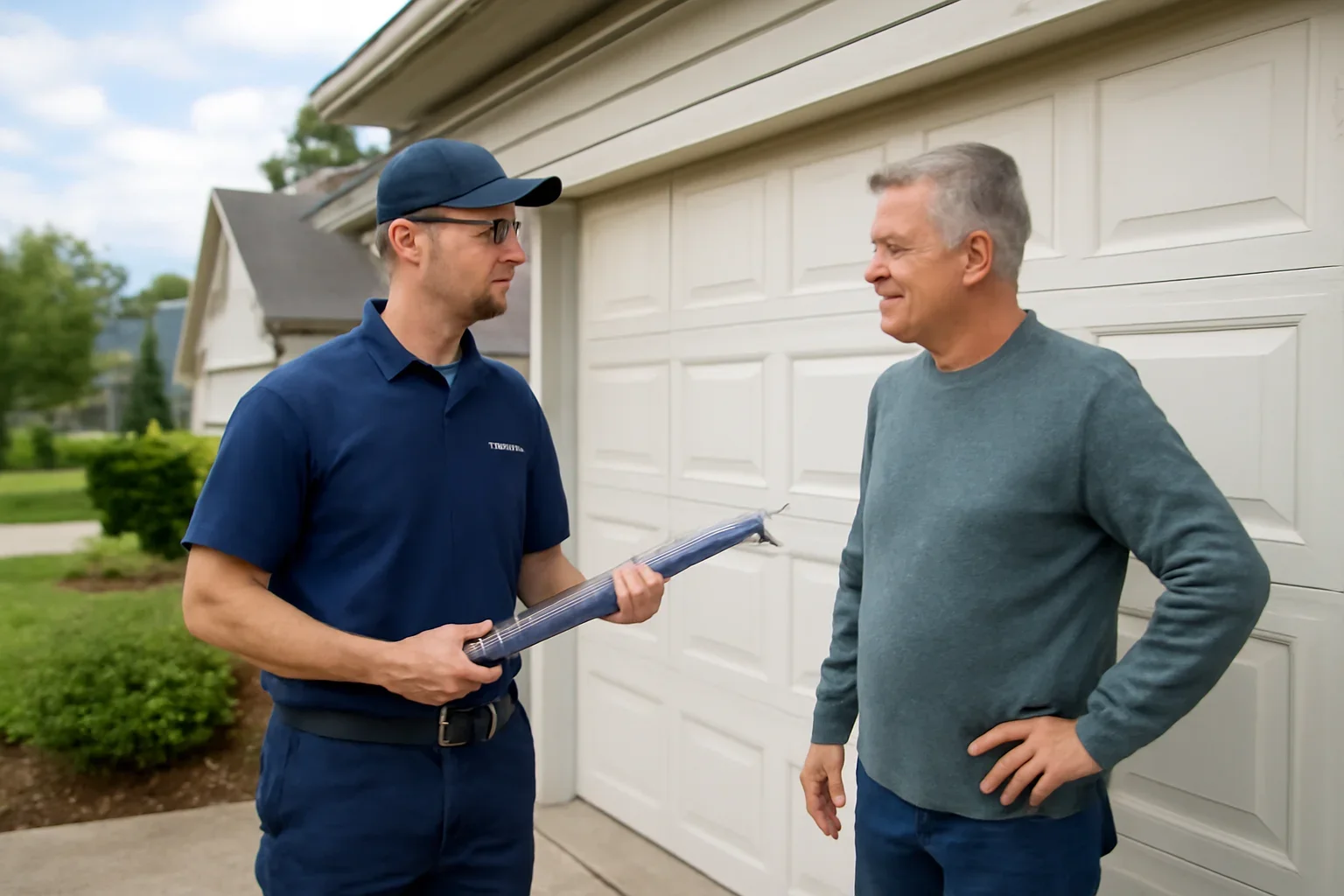
An opener is designed to move a properly balanced door. Repeated attempts to lift a door with failed spring support can strain the motor, rail, trolley, cables and other hardware.
The door loses much of the support that helps counterbalance its weight. It may stay closed, lift only a few inches, become uneven or feel much heavier than normal. The opener may hum, stop or reverse because it is trying to move a door that is no longer properly balanced. Stop operating the system and have the springs, cables, drums, tracks and door balance assessed.
Spring problems often appear as a change in door weight, movement or balance. Some of the same symptoms can also involve cables, drums, tracks or opener components, so the complete system should be checked.
A spring can release suddenly and create a sharp sound even when nobody is operating the garage door.
The opener may begin lifting and then stop because the door has become too heavy or uneven for normal operation.
A separated section in a torsion spring above the door can be a visible sign that the spring has broken.
Loss of spring support can make the door difficult to move and may place uneven load on cables, rollers and tracks.
A spring may appear motionless while still holding substantial stored force. Nearby cables, drums, brackets and shafts may also move unexpectedly when the system is damaged or unbalanced.
Willoughby is a growing part of northwest Langley with newer detached homes, row homes, townhouses and mixed-density neighbourhoods around the 200 Street corridor, Yorkson, Latimer, Routley, Smith and Gordon. Many properties use attached garages as a main daily entrance.
Regular commuting, school routines, deliveries and family schedules can create frequent opening cycles. A spring can eventually weaken or fail even when the door and opener still look relatively new from the outside.
Local garage doors also vary considerably. A single townhouse door, insulated double-width door, door with windows or upgraded exterior section can have a different weight and spring requirement. The replacement spring should be selected for the actual door rather than chosen only by appearance.
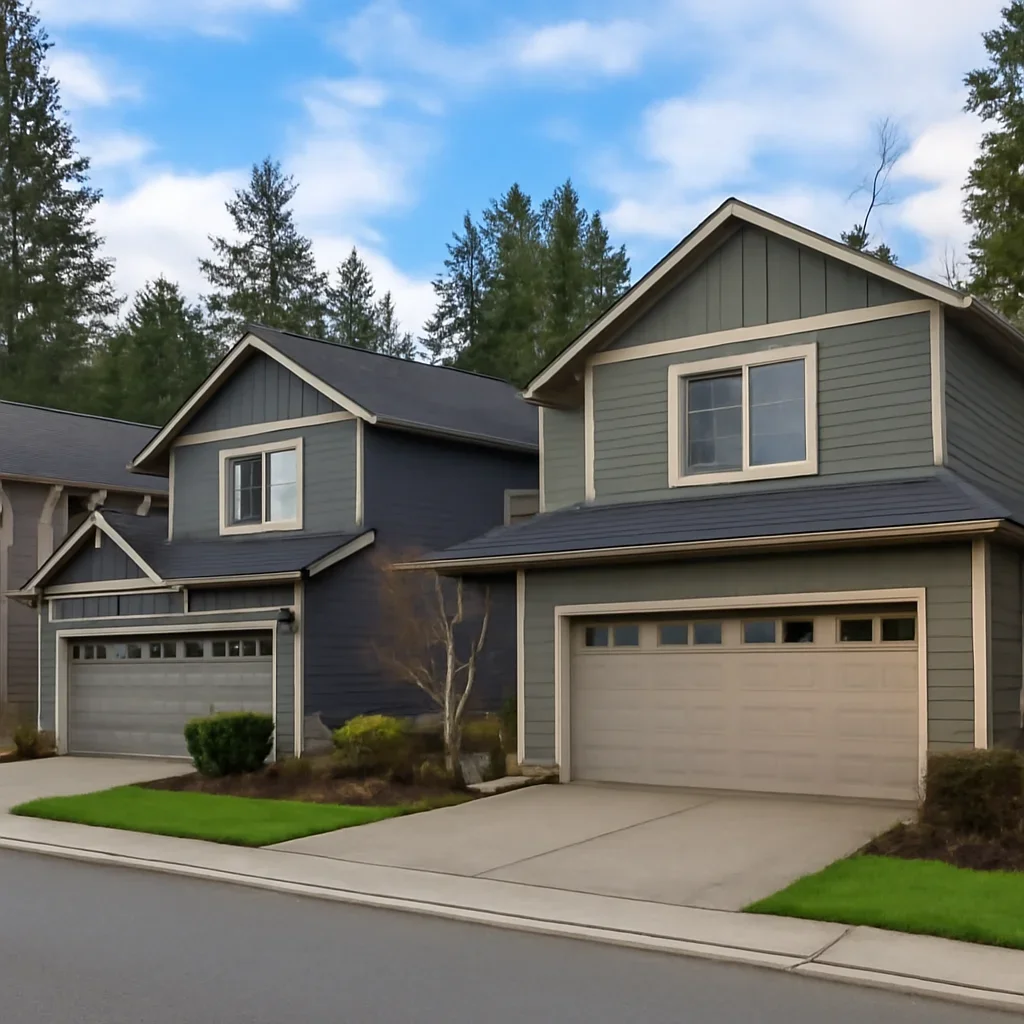
The correct service approach depends on how the door was designed, its current weight and the condition of the connected lifting parts.
Torsion springs are normally mounted on a shaft above the garage door. Depending on the door, the system may use one spring or multiple springs working with drums and lifting cables.
Extension springs are generally positioned beside the horizontal tracks. Their condition, attachment points and safety-related hardware should be considered as part of the assessment.
A slipped cable, damaged drum, restricted track, disconnected trolley or opener problem can create similar symptoms. Diagnosis should confirm the cause before parts are selected.
Spring selection should match the door’s actual weight, height, track arrangement and hardware configuration. An incorrectly matched spring can leave the door poorly balanced and affect both manual movement and opener operation.
A useful assessment looks beyond the broken coil. It checks whether related wear, damage or poor balance contributed to the failure or could affect the completed repair.
Identify the existing spring arrangement, visible break, corrosion, wear and suitability for the door.
Confirm how much support the door requires and whether it moves evenly without relying on excessive opener force.
Check lifting cables, drums, shafts and attachment points for displacement, wear or damage connected to the spring failure.
Review door travel, track resistance, roller condition and whether the opener was strained while the door was heavy or uneven.
The motor may hum, stop, reverse or run without lifting the door when spring support is lost. The door should be assessed before assuming the opener is the only failed component. Related motor or control problems can be reviewed through garage door opener repair .
The visible break is only one part of the decision. Door weight, spring arrangement, matching parts and connected damage determine what work is appropriate.
The spring has failed, but the cables, drums, tracks, rollers, panels and opener remain in serviceable condition.
Door weight, height, spring arrangement and hardware information support selection of an appropriate replacement.
The door has not dropped, twisted, left its tracks or suffered wider damage during the failure.
The completed repair allows the door to move evenly without relying on excessive force from the opener.
Cable and drum position may need correction before the door can be balanced and tested safely.
Tracks, rollers, brackets and hinges may have been affected if the door tilted, dropped or was forced after the failure.
The rail, trolley, drive system or motor may need assessment when repeated operation occurred without proper spring support.
Wider service may be worth comparing when springs, cables, rollers and other hardware are deteriorating together.
Not every garage door has two springs. When a two-spring system has one broken spring, both should be inspected for age, wear, compatibility and remaining condition.
The springs were installed together, have similar use and wear, and the remaining spring is approaching the same stage of service life.
The other spring was replaced more recently or has a different documented condition. The final choice should maintain the correct balance for the complete door.
A useful estimate depends on the actual door and spring system rather than a single generic price.
You do not need to touch the spring or identify its exact size. Share only what you can observe safely.
Overview photos can help explain the door position and spring setup. Do not stand beneath the door or move damaged components to obtain a closer image.
Do not move the door, disconnect cables, remove brackets or touch the spring to take a photo. A safe overview is more useful than a close image that requires entering the door’s movement path.
The process should identify the actual failure, check the connected lifting components and finish by confirming controlled door movement.
Share the door position, sounds, visible spring condition and whether access or security is affected.
Review the springs, cables, drums, tracks, rollers, balance and opener response before confirming the repair.
Match the spring solution to the door’s weight, dimensions, hardware arrangement and existing condition.
Check even movement, cable position, track travel and opener operation before the door returns to regular use.
Spring symptoms can overlap with cable, track, balance and opener problems. These pages provide relevant next steps.
These answers explain common spring symptoms, repair decisions and the information that helps when arranging service.
Common signs include a loud bang, a visible gap in a torsion spring, a door that lifts only a few inches, unusually heavy movement or an opener that runs without lifting the door normally. Cables, drums and other parts can create similar symptoms, so the complete system should be assessed.
Do not repeatedly operate the opener when spring support has failed. The door may be too heavy or unbalanced, which can strain the motor, rail, trolley, cables, rollers and tracks.
A door with a broken spring may be extremely heavy or unstable. Do not attempt to lift or release it when the door is uneven, partly open, supported by a loose cable or otherwise unsafe. Arrange service and explain whether a vehicle is trapped.
Springs wear through repeated operating cycles. Corrosion, an incorrectly matched spring, poor door balance, damaged hardware or unusual load can also contribute. The surrounding system should be checked rather than assuming age is the only cause.
Not every door uses two springs. On a two-spring system, both should be inspected for age, wear and compatibility. Replacing both may be worth considering when they were installed together and have similar use, but the decision should preserve correct door balance.
It can. The opener may strain, stop, reverse or damage drive components when it repeatedly tries to lift a door without proper spring support.
Yes. A newer installation can still develop a spring problem due to operating cycles, door weight, incorrect matching, hardware issues or another part affecting balance. The installation date alone does not identify the cause.
The situation is more urgent when the door is partly open, unstable, trapping a vehicle, blocking normal access or preventing the garage from being secured. Keep the area clear and describe the exact condition when requesting service.
Townhouse service may require visitor parking, gate entry, garage clearance or coordination with strata or property management. Include those details when submitting the booking request.
Include your Willoughby address, the current door position, what happened before the failure, any visible spring or cable issue, whether the opener responds and whether access or security is affected. Safe overview photos can also help.
Tell us where the property is located, whether the door is open or closed, what happened when the problem started and whether a vehicle, normal access or garage security is affected. You do not need to touch the spring or identify its exact size yourself.