Daylight shows beneath the door
Light along the bottom may indicate a flattened seal, an uneven floor, a damaged retainer or a door that is not closing level.

Replace cracked, flattened or missing garage door seals that allow drafts, moisture, leaves, road dust and unwanted gaps around the opening.
Weather sealing should be matched to the actual door, bottom retainer, concrete floor and perimeter trim. A new seal can improve contact around the opening, but it cannot correct a crooked door, damaged panel, uneven closing position or drainage problem by itself.
Tell us whether the gap is along the bottom, sides, top or corners, and whether you see daylight, water, debris or a loose section of weather stripping.
Prefer to speak with someone? Call +1 (844) 822-2211.
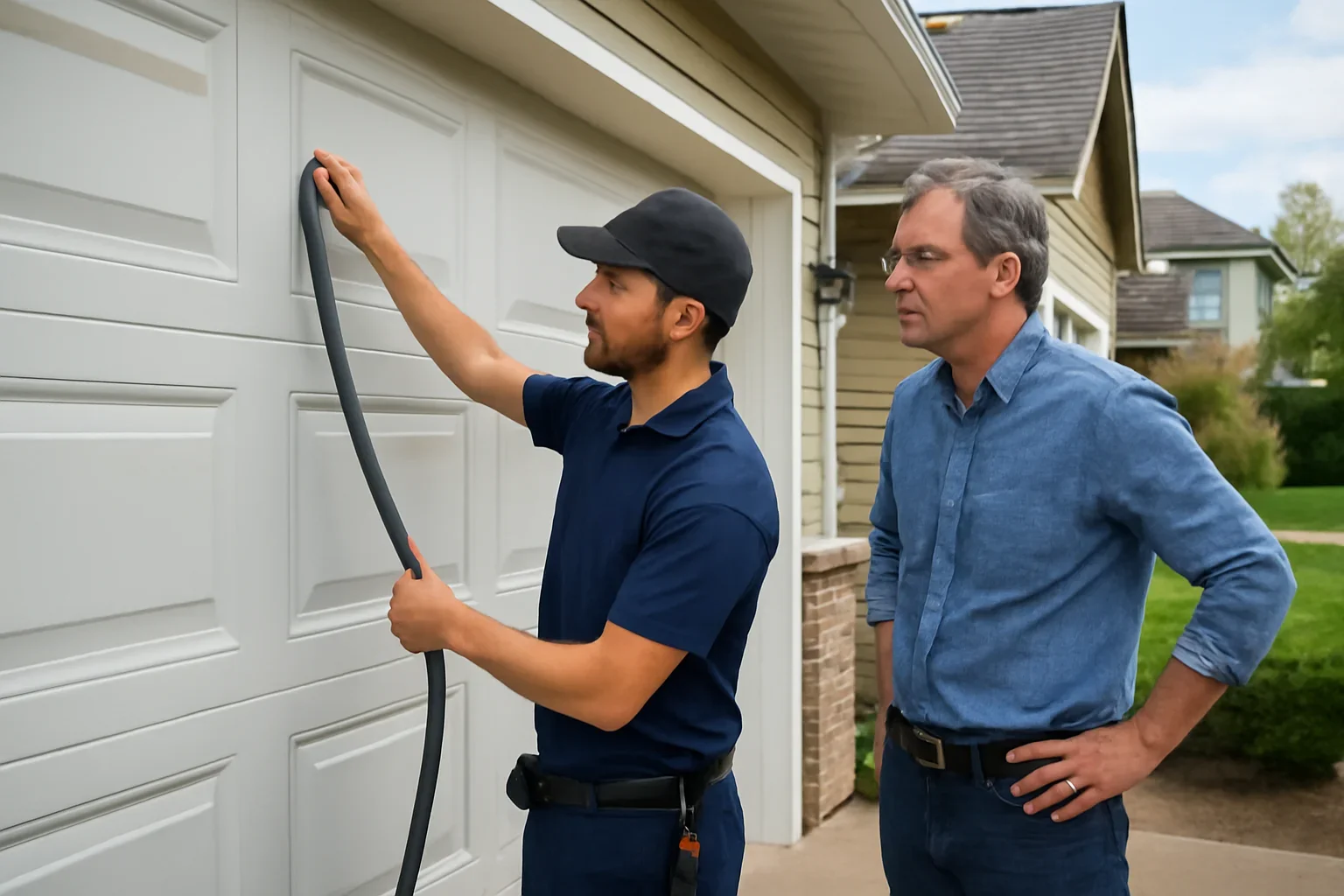
A garage door weather seal should be replaced when it is split, brittle, flattened, pulling away from the door or no longer making consistent contact with the floor or frame.
Replacement may also make sense when daylight, wind-blown debris, insects or moisture are entering through visible perimeter gaps. The door position and floor condition should be checked first because a new seal will not correct structural or alignment issues.
Willoughby includes growing residential neighbourhoods, detached houses, townhome communities and strata properties. Garage layouts can range from full driveways and wider double doors to compact garages reached from shared lanes.
On a townhome or strata property, the exterior perimeter trim may need to remain consistent with nearby units. On a detached home, the bottom seal may need to span a wider opening and follow minor changes in the concrete floor.
Garages beside or below occupied rooms may also make drafts, noise and moisture control more noticeable. The seal should therefore be considered with the door alignment, perimeter trim and opening condition rather than as an isolated strip of rubber or vinyl.
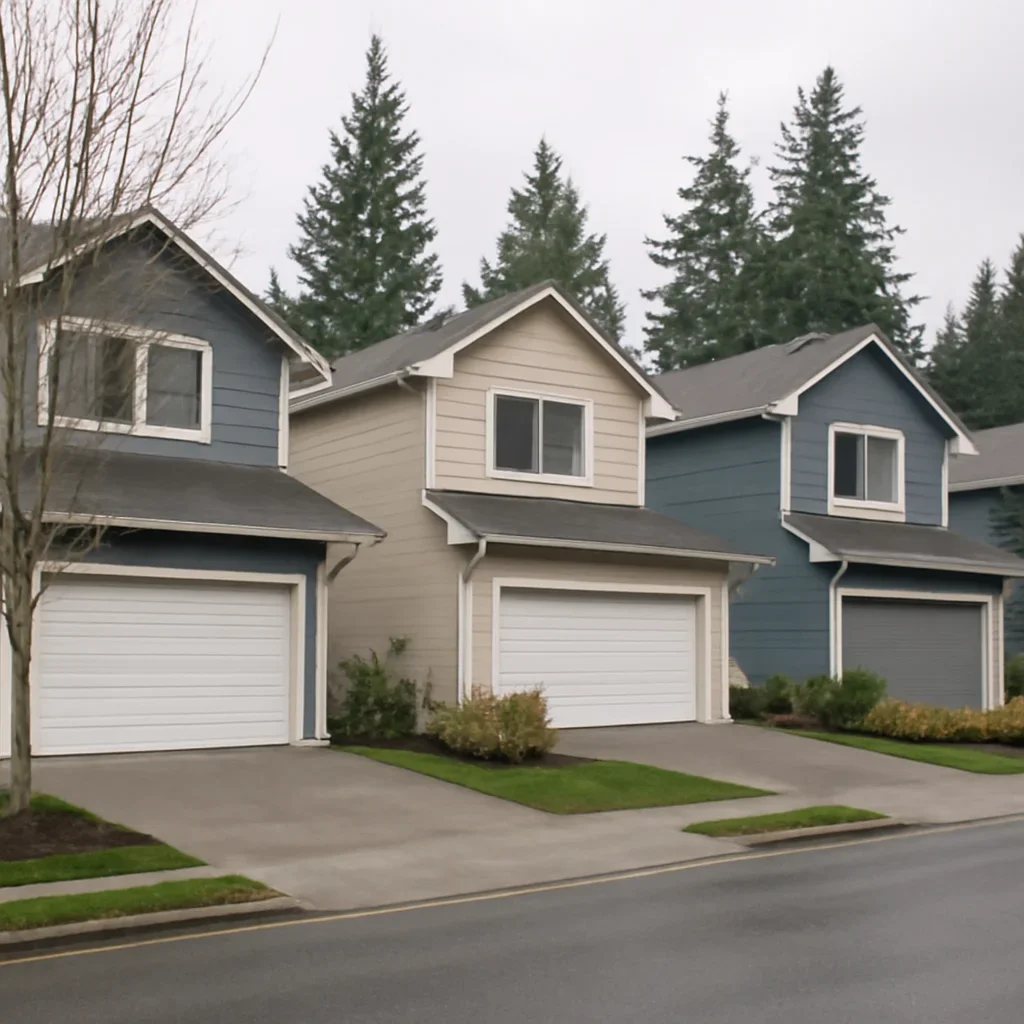
Look at the seal while the door is fully closed. The location and shape of the gap can help determine whether the seal is worn or a broader door issue is involved.
Light along the bottom may indicate a flattened seal, an uneven floor, a damaged retainer or a door that is not closing level.
Age, movement and exposure can cause the material to split, harden or lose the flexibility needed to maintain contact.
A loose side, top or bottom section may point to damaged seal material, loose fasteners, worn trim or retainer problems.
A worn seal may contribute, but floor slope, drainage, wind direction and gaps at the corners should also be considered.
Debris entering at the bottom or corners can indicate inconsistent contact between the door, weather seal and concrete.
A corner gap may involve floor variation, door balance, cable position, track alignment or panel condition rather than only the seal.
The visible gap should be assessed before assuming that thicker weather stripping will solve it.
Weather sealing is made up of several components. Replacing the correct one is more useful than adding material where it does not fit.
The flexible material attached to the lower edge of the door helps follow the floor and close the main bottom gap.
The metal or formed channel that holds the seal may need cleaning, repair or replacement when it is bent, corroded or incompatible.
Flexible perimeter trim contacts the exterior face of the closed door and helps reduce gaps along the jambs and header.
A floor-mounted threshold may suit some openings, but floor slope, drainage and vehicle clearance should be reviewed before it is used.
Concrete floors are not always perfectly level, and some openings have larger changes from one side to the other. A thicker seal may help within a reasonable range, but oversized material can fold, drag or interfere with closing.
Significant gaps may require a review of door alignment, closing position, retainer style, floor condition or drainage before the most suitable next step can be selected.
You do not need to identify the exact seal profile. A few clear details can help determine whether measurements or an assessment are required.
Include the service address, postal code and any strata, gate, visitor-parking or shared-lane instructions.
State whether it is along the bottom, one corner, both sides, the top or several parts of the opening.
Mention daylight, air movement, water, leaves, fine debris or evidence of insects near the opening.
Describe whether it is split, hard, flattened, torn, loose or missing from part of the door.
Explain whether the door reaches the floor evenly or leaves one side higher than the other.
Include a full exterior view, a close photo of the gap and an interior view of the bottom edge when safely accessible.
The goal is to match the seal correctly and confirm that the door can close without creating avoidable resistance or leaving a larger unresolved issue.
Review the location of visible gaps, corner contact, door position, perimeter trim and floor condition.
Confirm the door width, existing retainer, seal profile and whether supporting trim or hardware is reusable.
Remove damaged material and install the suitable bottom, side, top or threshold component for the opening.
Confirm that the door closes properly and that the replacement seal contacts the intended surfaces without excessive folding or drag.
The final scope depends on the type and length of seal, the bottom retainer, door width, floor condition, perimeter trim and whether a separate door problem is creating the gap.
Two doors with similar visible gaps may need different work if one has a worn seal and the other closes unevenly because of alignment, track or balance concerns.
Photos may help with an initial review, but measurements or an inspection may still be needed before the scope is confirmed.
A worn weather seal is usually planned maintenance rather than an emergency. The situation changes when the door is hanging unevenly, off its tracks, stuck open, supported by a loose cable or preventing the garage from being secured.
Keep people, pets and vehicles away from an unstable door and review same-day garage door repair rather than treating the problem as seal replacement alone.
Compare local service coverage, general repair, replacement and practical weather-stripping guidance.
These answers explain what weather stripping can improve, what it cannot correct and what information helps before service.
Common replaceable components include the flexible bottom seal, its retainer, side and top perimeter weather stripping, and some floor-mounted threshold seals. The correct option depends on the door, opening and floor condition.
Look for cracking, hardening, flattening, torn sections, missing material or visible gaps while the door is closed. Daylight and debris near the bottom edge can also indicate poor contact.
Not always. A seal may reduce water entering through a normal bottom gap, but it cannot correct water flowing toward the garage, major floor irregularities, damaged concrete or a door that does not close evenly.
Closing visible perimeter gaps may reduce common entry points for insects and small pests. It does not replace broader pest control when openings exist elsewhere in the garage.
One-corner gaps can be caused by a sloped or uneven floor, a door that is not level, a damaged retainer, panel movement or hardware and alignment concerns. A thicker seal is not always the correct solution.
Not necessarily. A secure and compatible retainer may be reused. Replacement may be needed when it is bent, damaged, corroded, separating from the door or unable to hold the correct seal.
Approval may be needed when visible exterior trim, colour or moulding is being changed. Review the applicable strata rules and mention property-access requirements when arranging the service.
Seal wear is usually planned maintenance. Priority service may be more appropriate when the door cannot close, is unstable, is stuck open or leaves the property unsecured for reasons beyond the seal.
Send a full exterior view with the door closed, a close view of the worn seal or visible gap, and an interior view of the bottom edge when it can be photographed safely.
Include the property address, location of the gap, condition of the current seal, how the door closes and what is entering the garage. Attach clear photos when they can be taken safely.
Measurements or an assessment may be needed before the seal type and final scope are confirmed.