The door hangs crooked
When one lift cable loses tension or breaks, one side of the door may rise or fall differently from the other.
- One bottom corner sits higher
- The door binds inside one track
- The opening is uneven when closed

Get professional help for a snapped, frayed, loose or off-drum garage door cable before the door becomes more uneven or unstable.
Lift cables work with the spring system to support and guide the weight of the door. When one cable fails, the door may become crooked, jam inside the tracks or stop opening altogether. The cable, drum, springs, bottom brackets and door balance should be assessed as one connected system.
Serving residential properties in Willowbrook and the surrounding Langley area.
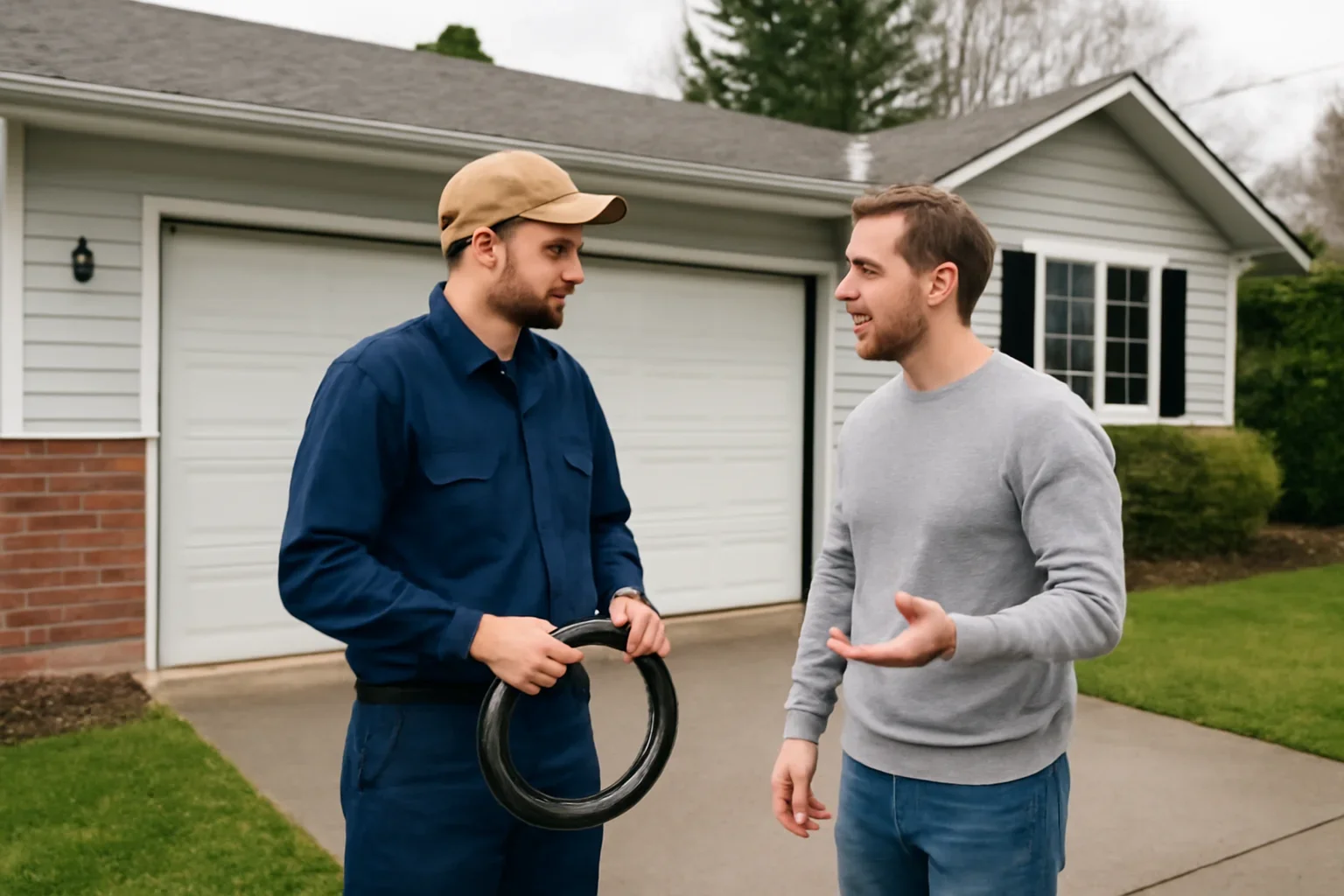
Cable problems often change the way the door sits or moves. Some signs are visible near the lower corners, while others appear around the cable drums above the door.
When one lift cable loses tension or breaks, one side of the door may rise or fall differently from the other.
Broken wire strands, rust, kinks or slack cable near the bottom bracket can indicate developing failure.
A snapped or displaced cable may make the door feel unusually heavy or prevent it from travelling evenly.
Stop operating the door when it is hanging unevenly, a cable has snapped, the cable is off the drum, the door is stuck between positions or the garage cannot be secured. Keep people and vehicles away from the opening and request help through the same-day garage door repair page .

Willowbrook sits immediately north of Langley City and includes a mix of residential, multifamily, commercial and business properties. Residential areas around Langley Meadows, 64 Avenue and the northern part of the community can have different garage layouts and service-access conditions.
Some homes have front-facing double garages, while townhome and multifamily properties may use compact drive aisles, shared access roads or managed parking areas. Providing access instructions can help avoid delays when arranging a visit.
A cable can fail from wear, but it can also come off its drum when another part causes the door to lose tension or move unevenly.
Cable replacement should restore even lifting while correcting the condition that caused the cable to fray, loosen or leave the drum.
The door position, cable condition, spring system and affected side are assessed before tensioned components are handled.
Cable drums, springs, shafts, bottom fixtures, rollers and tracks are reviewed for wear, damage or misalignment.
Compatible cable components are installed and the door is checked for level, balanced and consistent travel.
A frayed or snapped lift cable is generally replaced rather than patched or spliced. The remaining cable and spring system should also be evaluated before the door returns to regular use.
The cable is the main failed component, the drums and attachment points remain serviceable and the spring system is compatible and correctly balanced.
The matching cable should still be inspected because both sides have often completed a similar number of operating cycles.
A spring has broken, a drum is damaged, a track is bent, a roller has left its path or the door is no longer level.
Replacing only the visible cable without correcting the underlying condition may allow the problem to return.
Treat the door as an unstable system until the cable, springs and related hardware have been inspected.
Repeated opener use may pull the door farther out of level, damage the track or add strain to the remaining cable and hardware.
Do not stand beneath the door or allow children, pets or vehicles near an uneven or partly supported garage door.
The bottom cable fixture may remain connected to spring tension. Do not adjust, remove or reposition it as a homeowner repair.
A clear description and safe photos can help determine the likely repair scope and whether the door requires urgent attention.
Use these pages based on whether the issue involves one cable, the wider garage door system or an unsafe door that needs prompt attention.
Direct answers about snapped cables, off-drum cables, crooked doors, safety and replacement decisions.
Common signs include a cable hanging beside the track, visible fraying, one side of the door sitting lower, a cable no longer wrapped around its drum or a door that became crooked after a sudden snapping sound.
Do not continue operating the door. The remaining cable may be carrying uneven load, and the door may bind, leave its track or move unpredictably.
Possible causes include loss of spring tension, an obstructed door, uneven movement, incorrect cable tension, a damaged drum or the door being manually moved while tension was inconsistent.
A frayed lift cable should normally be replaced rather than patched. Broken wire strands reduce cable strength and can lead to complete failure.
It depends on the age, condition and compatibility of both cables. Because matching cables usually complete similar operating cycles, the second cable should be inspected for wear before the repair decision is made.
Yes. A broken or unbalanced spring can change cable tension, make the door unusually heavy and allow a cable to loosen or leave its drum.
It is urgent when the door is hanging crooked, stuck between positions, unable to close, blocking a vehicle or no longer securing the garage.
Garage door lift cables, drums and bottom fixtures are connected to a high-tension counterbalance system. Do not loosen, rewind or reconnect these components without professional training and suitable equipment.
Send a full view of the door, both lower corners, the affected cable and the cable drum when it can be photographed safely. Do not move the door or touch loose components to get a closer image.
Tell us where you are in Willowbrook, whether the door is open or closed and what you can see near the cable. Include safe photos and access instructions when available.