The door rises crooked
One side may move ahead of the other or leave a different-sized gap along the floor.

Is your garage door scraping, shaking, moving unevenly or getting stuck at the same point? A bent, loose or misaligned track can stop the rollers from following a smooth path and may leave the door crooked, jammed or partly off track.
We help Willowbrook property owners arrange an assessment for damaged tracks, displaced rollers, loose brackets and alignment problems. Because track damage can be caused by cables, springs, impact or poor door balance, the connected lifting system should be checked before the repair scope is confirmed.
Serving houses, townhouses and residential properties throughout Willowbrook. Timing depends on the address, urgency, access, scheduling and required parts.
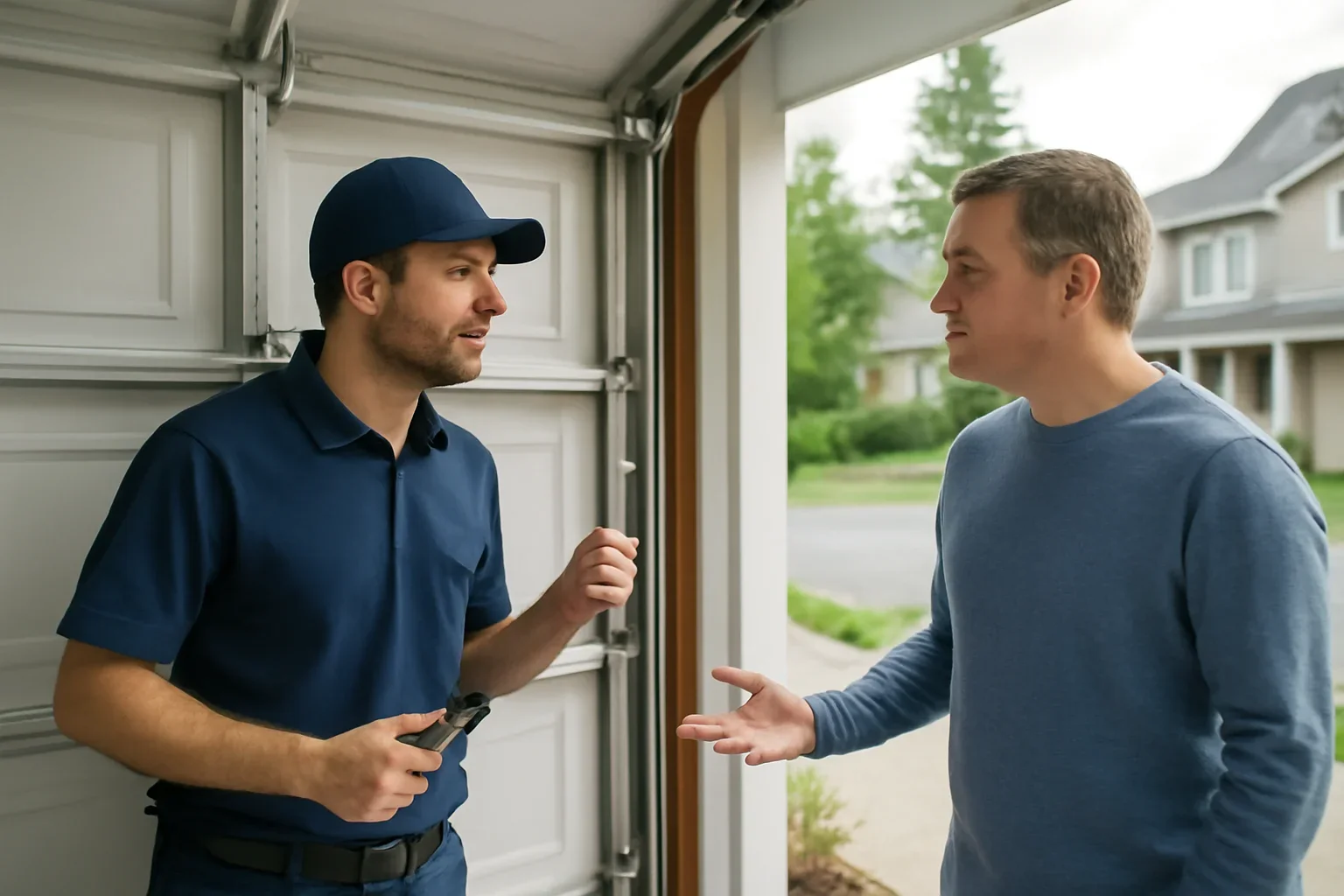
Repeated opener use can pull a roller farther out of position or increase damage to the track, cables, brackets and door sections.
Minor bends or alignment problems may sometimes be corrected when the track remains structurally sound and can guide the rollers consistently. Replacement may be safer when the metal is sharply creased, cracked, twisted, separating at a joint or unable to stay securely mounted. The rollers, cables, springs and door balance should also be checked before deciding.
Track problems usually change the way the door moves. Note where the noise, resistance, shaking or visible gap appears during the opening or closing cycle.
One side may move ahead of the other or leave a different-sized gap along the floor.
A roller may be pressing against the track edge because of a bend, loose bracket, spacing problem or worn hardware.
A damaged section or separated joint can interrupt the roller path and prevent smooth movement.
A displaced roller may be connected to impact, cable trouble, spring imbalance or a loose track assembly.
The door is heavy, while springs and cables may remain under substantial tension. Moving track brackets or forcing the door can allow the system to shift unexpectedly.
Willowbrook includes Langley Meadows, multifamily properties, townhouses, lower-density homes and busy commercial areas. A service request may involve a private attached garage, a rear-lane townhouse door or a strata-managed parking area.
Properties around 196 Street, 200 Street, 64 Avenue, Fraser Highway and Langley Bypass can have different driveway, lane and parking arrangements. Clear access information helps avoid delays when a garage faces a shared drive aisle or controlled entry.
Frequent daily use can make developing track and roller problems more noticeable. A door used for commuting, school routines and household access may begin scraping, shaking or binding before the track shows severe visible damage.
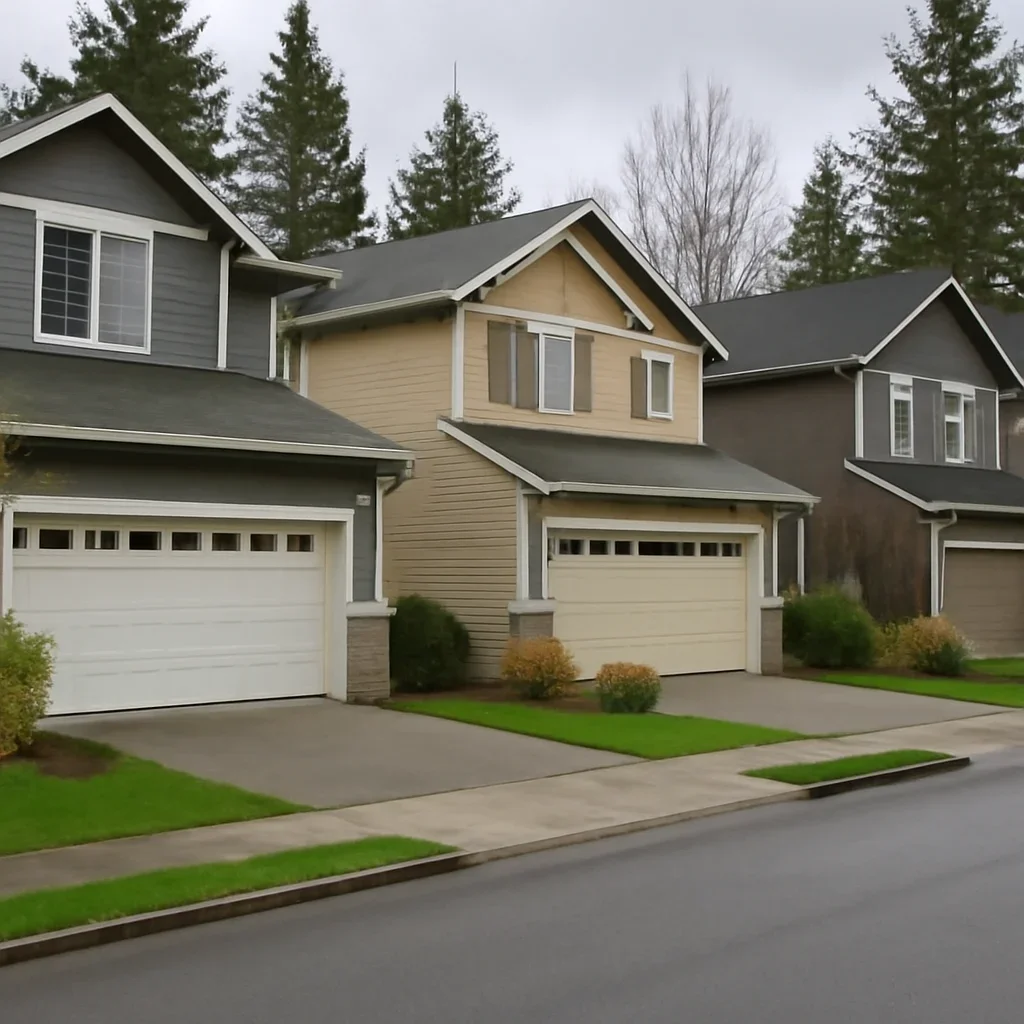
The visible bend may be the result of another failure. The track and the components controlling the door’s weight, alignment and movement should be reviewed together.
Check the vertical and overhead tracks for bends, twists, separated joints and incorrect spacing around the rollers.
Review jamb, wall and ceiling supports for loose fasteners, movement, damaged brackets or weak mounting areas.
Inspect roller wear and determine whether a cable, drum, spring or balance problem pushed the door out of position.
Check whether the opener has been forcing the door through resistance or masking a mechanical problem.
Impact, a damaged roller, a slipped cable, poor spring balance or repeated opener use can move the door out of its normal path. Simply placing a roller back into position without correcting the cause may allow the problem to return. Wider concerns can be assessed through garage door repair.
The right option depends on the strength of the track, how securely it can be mounted and whether connected parts are also damaged.
The metal remains structurally sound and can be restored to a consistent roller path without weakening the section.
The track is serviceable, but its spacing or mounting position needs to be corrected and secured.
Rollers, cables, springs, panels and mounting points do not show wider damage that would undermine the repair.
The impact, balance, roller or cable problem that moved the track can be resolved at the same time.
A deep fold or severe twist may prevent the track from keeping a stable shape around the rollers.
Replacement may be appropriate when the section cannot connect or mount securely.
Recurring alignment problems may indicate weakened metal, mounting damage or a wider door-system concern.
Wider damage may require comparison with more extensive garage door repair.
You do not need to touch the track or identify the failed part. Share what you can observe safely.
Use overview images taken from a safe standing position. Do not move the door or loosen hardware to obtain a closer photograph.
Do not stand beneath the door or move tracks, rollers, cables or brackets for a photograph. A safe overview is enough to begin explaining the problem.
The process should identify why the door left its normal path and finish by confirming smooth, balanced movement.
Explain the door position, noise, movement, visible damage and whether normal access is affected.
Review the tracks, rollers, brackets, cables, springs, balance, panels and opener response.
Determine whether the track can be adjusted, repaired or replaced and identify any connected work.
Check roller travel, track clearance, door balance and opener operation before normal use resumes.
Track symptoms can overlap with cable, spring, roller, opener and general door-movement problems.
These answers cover common track symptoms, repair decisions and safe steps to take before arranging service.
Possible causes include impact, a damaged roller, a loose track, an uneven cable, poor spring balance or repeated operation while the door was binding. The cause should be identified before the roller is returned to position.
Stop using the opener when the door scrapes, tilts or meets resistance. Continued operation can worsen damage to the tracks, rollers, brackets, panels and opener.
Minor deformation may sometimes be corrected when the track remains structurally sound. A sharply creased, cracked, twisted or repeatedly damaged section may need replacement.
The track may be bent, loose or incorrectly spaced, or the roller may be worn or displaced. Cable tension, spring balance and door alignment can also push one side out of position.
No. Scraping may involve the track, but rattling, squeaking, grinding and popping can also come from rollers, hinges, springs, cables, loose hardware or the opener.
Not necessarily. A localized track, bracket or roller problem may be repairable. Wider replacement may be worth comparing when the door is structurally damaged or several components have failed.
It is more urgent when the door is hanging unevenly, partly off track, blocking a vehicle, stuck open or unable to secure the garage. Keep the area clear and explain the exact door position.
A townhouse or strata appointment may require the unit number, gate entry, visitor parking, shared-lane information or property-management coordination. Include those details when booking.
Include the Willowbrook address, current door position, where the door binds or scrapes, visible track or roller damage, whether the opener responds and whether access or security is affected.
Tell us where the property is located, whether the door is open or closed, where it scrapes or binds and whether a roller, track or bracket looks displaced. Include any gate, unit, parking or shared-lane instructions that affect access.