An older door needs a full upgrade
Widespread panel damage, corrosion, poor sealing, repeated hardware failures, or outdated construction may make a complete installation more practical than continued repair.

A new garage door should fit the opening, suit the home, move quietly, and work safely with the planned hardware and opener. Garage door installation in Brookswood may involve replacing an older door, completing a renovation, improving insulation, or installing a new system for a detached garage.
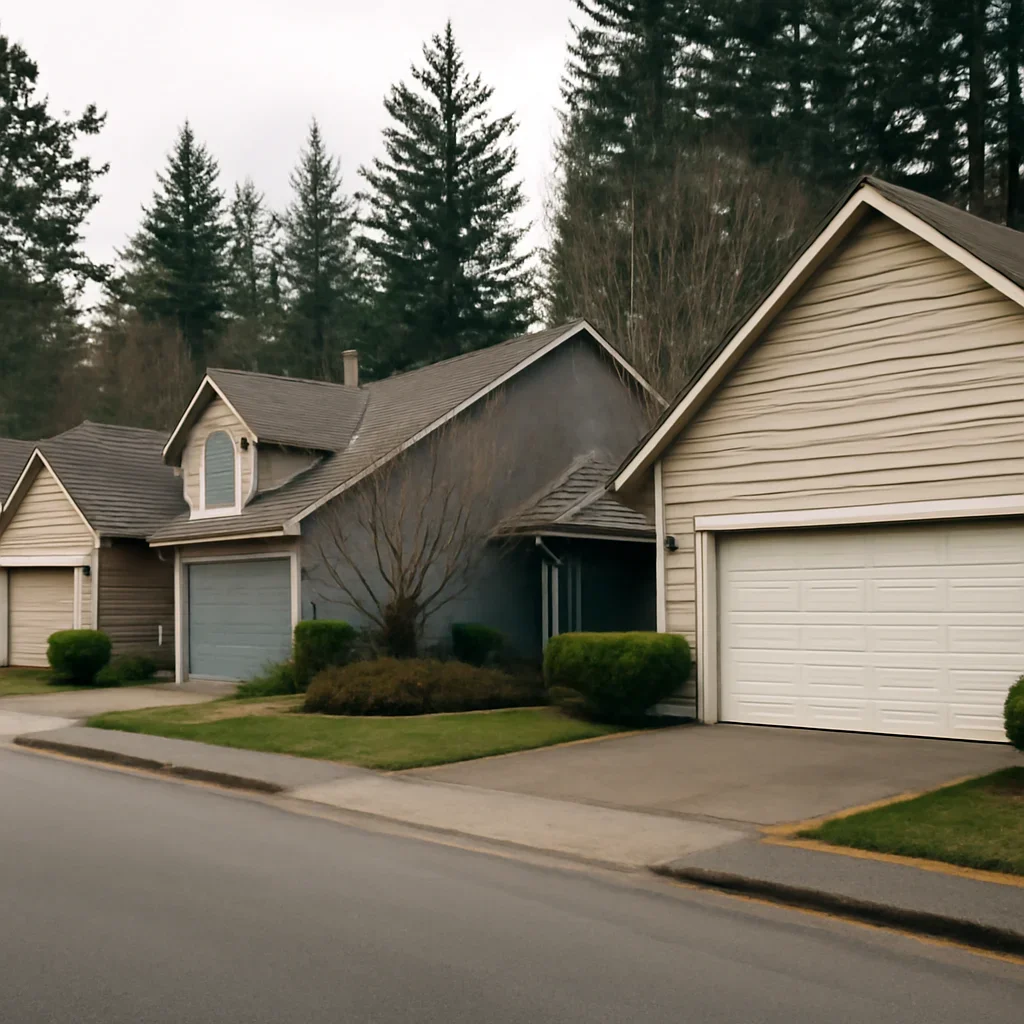
Brookswood has many mature detached homes, larger driveways, attached garages, and established exterior styles. Accurate measurements, framing condition, headroom, door weight, track layout, weather sealing, opener compatibility, windows, and curb appeal should all be reviewed before the door is ordered.

Door width and height are only the starting point. Older Brookswood garages may have previous framing changes, uneven floors, low beams, storage racks, lighting, or openings that are not perfectly square.
A complete installation may support a new build, renovation, property update, or replacement of a door that no longer fits the home or daily use.
Widespread panel damage, corrosion, poor sealing, repeated hardware failures, or outdated construction may make a complete installation more practical than continued repair.
A new panel style, finish, window pattern, or colour can be planned with updated siding, trim, roofing, landscaping, or driveway improvements.
Door construction, rollers, hinges, balance, opener type, and mounting can all affect noise and vibration near bedrooms or living spaces.
A better-insulated door and consistent perimeter sealing may help an attached garage, hobby space, workshop, or room located beside or above the garage.
Detached buildings may need door, track, opener, power, keypad, lighting, and manual-access planning when there is no interior entrance.
Vehicle height, roof racks, open tailgates, bicycles, trailers, and storage can affect the opening, track, and opener layout selected for the project.
A useful site review confirms the opening, structure, selected door, hardware, opener plan, and the way the garage is used every day.
Each choice affects door weight, hardware, comfort, maintenance, noise, appearance, and the final installation scope.
Single, double, tall, wide, and custom openings need matching sections, reinforcement, tracks, springs, cable drums, and ceiling support.
Door construction can affect temperature control, rigidity, sound, weight, weather sealing, and the spring and opener setup required.
Window placement, privacy, daylight, panel profile, colour, and finish should suit the home while remaining practical for door weight and maintenance.
Balanced springs, aligned tracks, suitable rollers, secure hardware, and a compatible opener all contribute to smoother and quieter operation.
The exact sequence depends on whether the opening is new, an old system is being removed, or framing and ceiling conditions require preparation.
The opening, framing, clearances, floor, access, selected door, hardware, windows, insulation, and opener plan are reviewed before approval.
Old components may be removed, and framing, fastener points, floor contact, weather sealing, or access issues may need correction.
Sections, tracks, rollers, hinges, springs, cables, supports, reinforcement, and seals are installed and adjusted for stable manual travel.
Balance, alignment, fasteners, seals, opener travel, force, sensors, reversal, wall controls, remotes, keypad, and manual release are tested as applicable.
Noise can travel through framing and shared walls. A quiet result depends on the whole door system rather than one product label.
A properly balanced door that follows correctly spaced tracks creates less strain, shaking, and opener effort during each cycle.
Suitable rollers, secure hinges, tight supports, and correctly fitted hardware can reduce rattling, vibration, and metal movement.
The opener, rail, drive system, ceiling supports, and attachment to the door should suit the garage layout and nearby living space.
The opener should guide a balanced door. It should not be expected to correct a poorly fitted, heavy, binding, or damaged system.
The spring system should support the door weight so the opener moves the door without excessive force.
Beams, lights, storage racks, attic access, low ceilings, and vehicle clearance can change the opener layout and support points.
The opener arm area may need suitable reinforcement so repeated trolley force does not flex or damage the upper panel.
Compare the project with garage door opener installation before finalizing the ceiling, power, control, and access plan.
The decision should account for door condition, fit, insulation, repeated repairs, appearance, and how well the current system supports daily use.
For an existing door, compare garage door repair and garage door replacement before approving a complete installation.
The complete estimate depends on the selected door and the preparation required around the opening.
A site-specific estimate should confirm what is included before the door is ordered or installation begins.
Many Brookswood homes have established garages, older framing, mature landscaping, larger driveways, and exterior styles that homeowners want to preserve. Openings may have previous alterations, uneven floors, dated trim, or ceiling storage that affects track and opener clearance.
Attached garages may place more value on quiet operation, insulation, and a door style that fits the home. Detached garages may require a separate plan for power, keypad access, lighting, weather sealing, and manual entry if the opener cannot operate.
Share driveway conditions, vehicle locations, opening measurements, ceiling height, current door details, preferred style, and photos from inside and outside.
These pages can help with planning, comparing, and preparing for the installation.
Existing garage door hardware may remain under high tension even when the door is damaged or partly disassembled. Removal should be included in the approved installation scope.
Use the service booking page when the current door is stuck, off track, hanging unevenly, unable to secure the opening, or creating an immediate access problem.
Use the estimate request when you are comparing new installation, full replacement, insulation, style, windows, quiet operation, and opener work as one project.
These answers cover measurements, mature-home framing, insulation, quiet operation, openers, detached garages, replacement decisions, and estimate preparation.
The finished opening width and height, side room, headroom, garage depth, ceiling obstructions, floor condition, framing, exterior trim, and vehicle clearance should be reviewed. Measurements should be taken at several points because older openings may not be perfectly level or square.
It depends on compatibility and condition, but a new door may have a different weight, section design, track requirement, or spring specification. Existing tracks, springs, cables, supports, and hardware should not be assumed suitable without inspection.
Quiet operation depends on proper balance, aligned tracks, suitable rollers, secure hinges and supports, door construction, opener type, and correct mounting. One component alone does not control all garage-door noise.
Insulation may be useful for an attached garage, hobby space, workshop, or room beside or above the garage. The final choice depends on use, budget, door size, construction, and the condition of the surrounding walls, ceiling, floor, and seals.
It may be planned as part of the same project when power, ceiling clearance, door reinforcement, rail length, controls, sensors, and opener capacity are suitable for the new door.
It can. A detached garage may require separate planning for power, wall controls, keypad access, lighting, weather sealing, manual entry, remote range, and how the building can be entered if power or the opener fails.
Share your Brookswood address, garage type, opening measurements, ceiling height, photos inside and outside, current door condition, quiet-operation and insulation priorities, window and style preferences, opener needs, driveway access, and preferred timing.
Request an estimate when the project is planned and you want to compare the condition of the existing door with a full new system. Book service instead when the current door is unsafe, stuck, off track, or unable to secure the opening.
Include your address, garage type, opening width and height, ceiling clearance, photos, current door condition, quiet-operation and insulation priorities, window and style preferences, opener plans, driveway access, and preferred timing.