The door is stuck open
An open door may leave vehicles, bicycles, storage, finished interiors, or the home exposed and may also be unstable.
A garage door that is stuck open, blocking a vehicle, hanging unevenly, off-track, unusually heavy, or unable to secure the opening may need urgent assessment. Emergency service is intended for practical access, safety, and security problems that should not be left until a routine appointment.
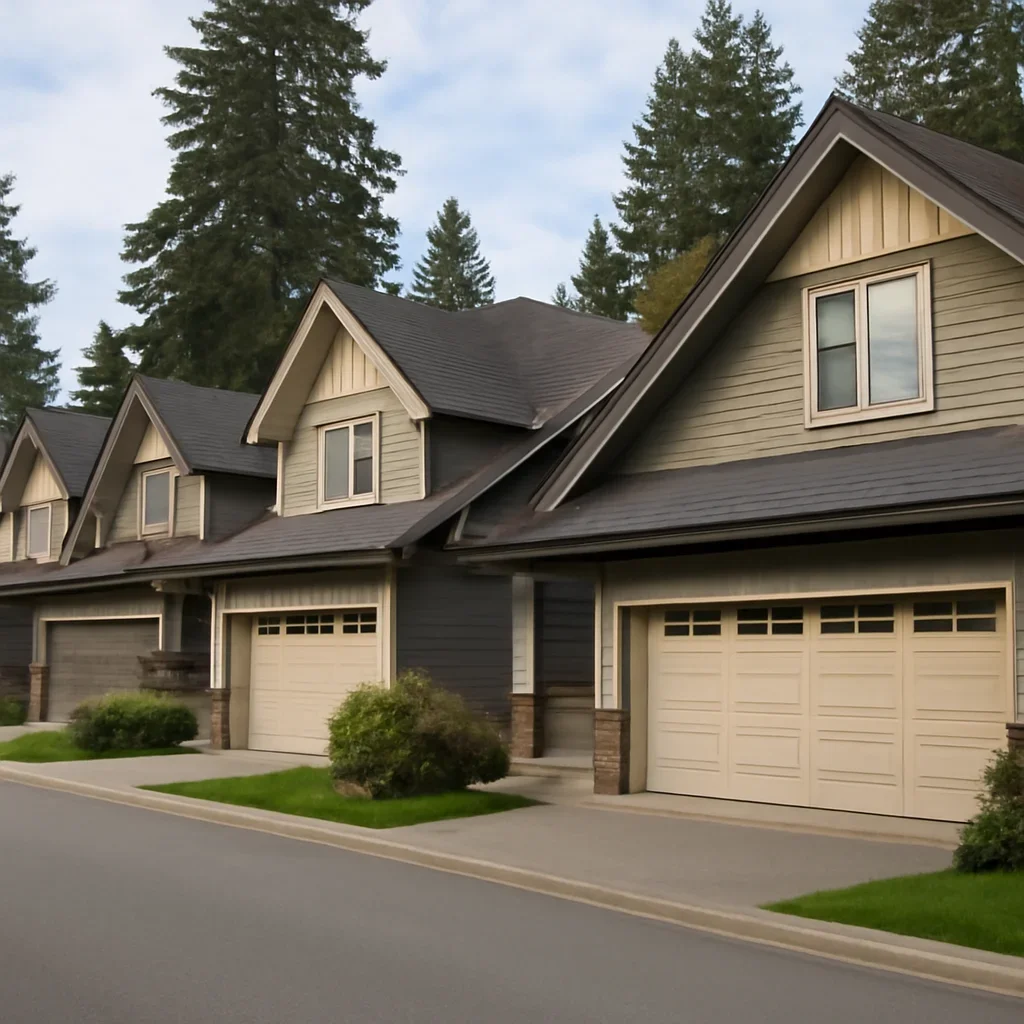
Fort Langley homes often feature established garages, carriage-style doors, decorative windows, finished interiors, and exterior details chosen to suit heritage-inspired architecture. Door position, safety, panel style, opener type, access, parts needs, schedule, and the type of failure all affect whether the issue can be assessed or repaired urgently.
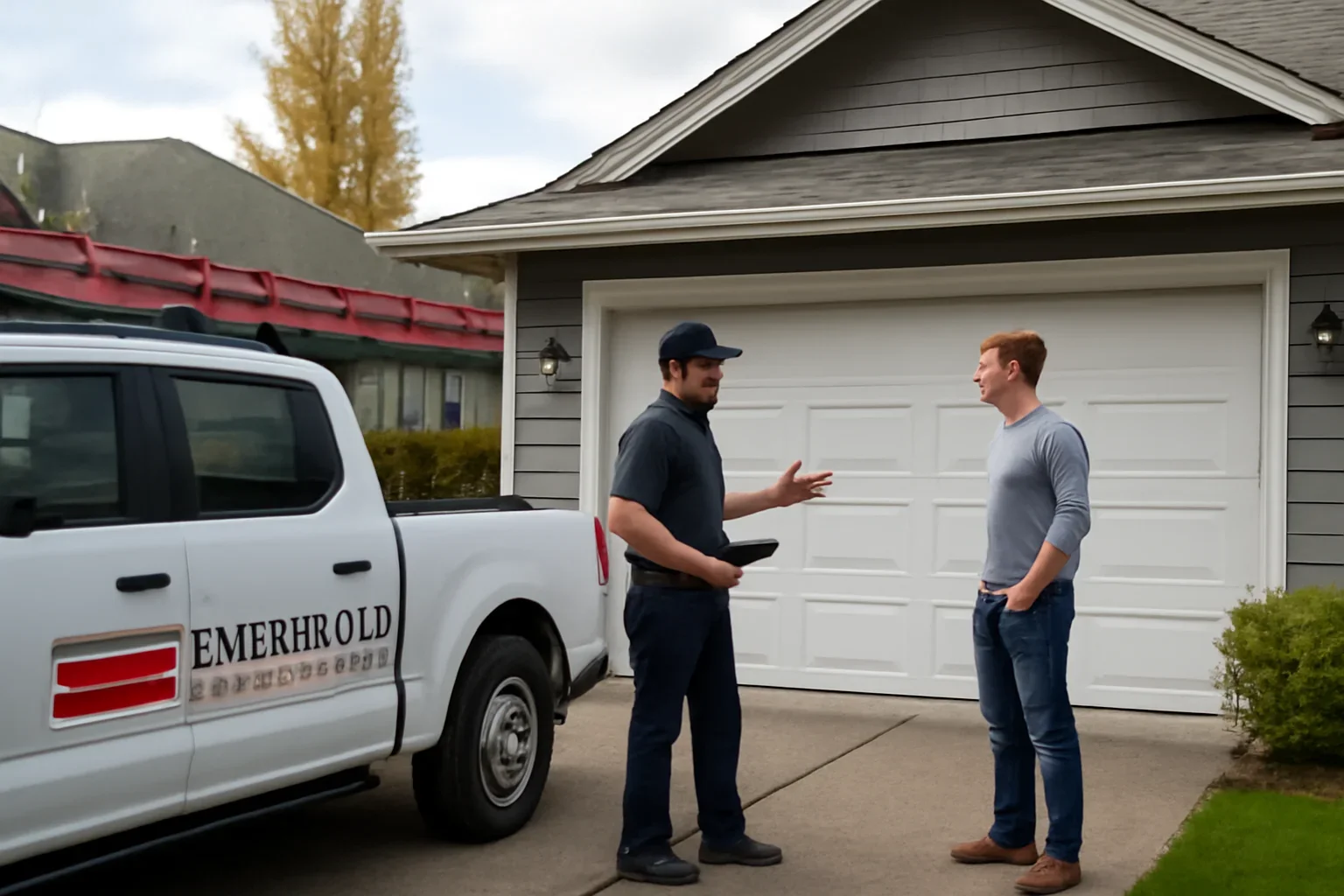
Urgency is based on safety, access, security, and the risk of further damage rather than noise alone.
An open door may leave vehicles, bicycles, storage, finished interiors, or the home exposed and may also be unstable.
A broken spring, cable fault, jammed roller, damaged track, opener problem, or locked control may interrupt access.
Uneven cable tension, off-track rollers, a broken spring, bent track, or damaged hinge can make the door shift unexpectedly.
A roller outside the track or a displaced section can turn continued operation into a larger panel, cable, or track failure.
Impact damage, a failed opener, damaged panels, broken hardware, or a door that will not close may create a security concern.
Vehicle, bicycle, mower, ladder, storage item, or delivery impact can affect panels, hinges, rollers, tracks, cables, brackets, and alignment.
Garage doors are heavy systems supported by springs, cables, tracks, rollers, brackets, and opener parts. A door that looks partly supported can move without warning.
A clear description helps distinguish a blocked-access problem from an unsafe high-tension failure and helps identify likely parts and access needs.
The visible symptom does not always identify the failed part. A stuck door may involve one component or several connected systems.
The door may feel extremely heavy, open only a few inches, close hard, or leave the opener unable to lift it.
The door may hang unevenly, show cable beside the track, leave one side lower, or become partly unsupported.
Impact, hinge failure, cable trouble, obstruction, or poor alignment can push the door outside its normal path.
The motor may hum, click, run without moving the door, stop partway, reverse, or fail to respond to controls.
The door may open normally but refuse to close because of alignment, wiring, sunlight, moisture, obstruction, or opener-control trouble.
A bent or cracked section can interfere with hinges, rollers, tracks, reinforcement, seals, and opener movement.
Tools, bins, trailer parts, ice, mud, stones, debris, storage, or shifted hardware can stop the door path.
A dead outlet, breaker, wiring fault, lock mode, remote issue, control failure, or detached-building power problem may interrupt operation.
Emergency-service availability cannot be assumed. Triage helps determine urgency, likely service type, access, parts, and whether a safe temporary outcome or complete repair is realistic.
The first step is understanding whether the door is open, closed, crooked, off-track, partly supported, or creating an immediate access or security issue.
Photos and symptoms help separate spring, cable, track, roller, panel, opener, sensor, control, or obstruction problems.
Driveway access, street parking, narrow side clearance, finished interiors, decorative door details, parked vehicles, and working space are reviewed.
Availability depends on current bookings, travel, the likely repair, suitable parts, door size, hardware type, and safe access.
The failed part and connected springs, cables, tracks, rollers, hinges, panels, balance, opener, sensors, and controls are assessed.
The outcome may be a complete repair, stabilization, restored access, secured closing, parts planning, or a follow-up replacement recommendation.
The practical outcome depends on the failure, door position, parts, connected damage, and whether the system can be returned to safe operation.
A complete repair may be possible when the fault is identified, compatible parts are available, connected components remain serviceable, and the door can be tested safely.
The priority may be freeing a blocked vehicle, workshop, trailer, or equipment opening without forcing damaged parts or creating a larger failure.
When a door is stuck open or damaged, the immediate goal may be a safe closed position while replacement parts or a larger repair are planned.
Uncommon hardware, severe impact, multiple damaged sections, custom doors, or larger shop systems may require stabilization and a planned return visit.
A door that remains safe, closed, secure, level, and usable may not need priority scheduling when the issue is limited to mild noise, cosmetic damage, maintenance, an occasional remote problem, or a planned upgrade.
Priority service is more appropriate when the door creates a real safety, access, or security problem and should remain unused until assessed.
Availability and pricing depend on the real repair rather than the emergency-service label alone. Clear details help avoid routing the request to the wrong service type.
A closed and supported door differs from one that is raised, crooked, off-track, jammed, or unable to secure the opening.
Spring, cable, track, roller, panel, opener, sensor, control, power, and impact problems require different parts and repair steps.
Single, double, insulated, reinforced, oversized, shop, custom, and high-lift doors may use different springs, tracks, cables, and openers.
Manufacturer, model, age, panel profile, spring size, cable length, track layout, opener type, and uncommon hardware affect options.
One visible failure may also involve panels, hinges, rollers, tracks, cables, balance, opener parts, sensors, or controls.
Street access, driveway width, parking, finished walls, decorative sections, detached garages, weather, and limited working clearance can affect planning.
Local context matters because a stuck garage door may block more than a daily-use vehicle. It may interrupt workshop access, trailer movement, tools, storage, deliveries, equipment use, or security at a detached building.
Share what is blocked, whether another entrance is available, and whether gate, driveway, weather, gravel, mud, equipment, or building layout affects safe service access.
Carriage-style panels, decorative windows, overlays, trim, and hardware may require careful handling when impact or misalignment affects the door.
Older tracks, springs, cables, hinges, rollers, panels, and openers may have mixed repair history or less common compatibility needs.
Nearby living space, finished walls, storage, quieter-operation goals, and limited access can influence the repair plan.
Street parking, narrow driveways, vehicles, bicycles, landscaping, and limited side clearance can affect urgent service access.
Specific details help route the request to the correct repair path and identify the most likely safety concerns.
Keep the door unused and the area clear when there is any sign of instability. Use another entrance when available and avoid moving vehicles, bicycles, tools, ladders, or storage beneath the door.
Garage door service is not a substitute for fire, medical, police, utility, or structural emergency response. Contact the appropriate emergency service when people are trapped or injured, electrical equipment is burning, a vehicle collision has damaged the building structure, or another immediate hazard extends beyond the garage door system.
Keep a safe distance from damaged electrical wiring, unstable walls, smoke, fire, fuel leaks, or structural movement.
These answers explain urgency, availability, stuck doors, access, safety, detached-shop conditions, likely outcomes, and what helps when booking.
Emergency requests commonly involve a door that is stuck open, blocking a vehicle or entrance, crooked, off-track, partly unsupported, unable to secure the home, or visibly affected by a spring, cable, track, panel, or opener failure.
No. Availability depends on current bookings, travel, Fort Langley access, weather, the type of failure, door style, suitable parts, and whether the site can be reached and worked on safely. Clear details help determine the most realistic next step.
Keep people, pets, vehicles, bicycles, tools, and storage away. Do not pull cables, adjust springs, force rollers, loosen tracks, or push a crooked door closed. Share the door position, visible damage, access details, and safe photos when requesting service.
Potentially. The repair depends on panel condition, hardware compatibility, spring and cable setup, tracks, decorative windows or overlays, opener condition, and whether the door can be stabilized without causing more damage.
No. Some issues can be repaired when compatible parts are available and connected components remain serviceable. Severe impact, decorative panels, custom hardware, multiple failures, or uncommon older systems may require stabilization, secured closing, parts planning, or follow-up work.
The goal is to restore safe function while avoiding unnecessary damage. Decorative sections, windows, overlays, trim, and carriage-style hardware should be documented so repair and replacement options can consider both operation and appearance.
Share the Fort Langley location, building type, door width and height, current position, what is blocked, visible spring, cable, track, roller, panel, or opener damage, recent impact, decorative features, driveway access, nearby vehicles, and clear photos when safe.
Do not keep testing a door that is heavy, crooked, off-track, scraping, jammed, partly open, or showing loose cables, broken springs, unstable panels, or track damage. Repeated operation can increase the repair scope and safety risk.
Send the building type, door width and height, current position, what is blocked, visible spring, cable, track, roller, panel, sensor, or opener damage, recent impact, decorative features, opener behaviour, driveway access, nearby vehicles or storage, and photos when safe. Emergency-service availability depends on schedule, travel, parts, access, and the actual repair.