The garage door will not close
Sensor, track, spring, cable, opener-travel or obstruction problems can leave the opening exposed. Avoid improvised restraints that interfere with the moving system.
Review closing problems
Request priority service when a garage door problem affects safe operation, building security, vehicle access or the ability to use an essential garage or outbuilding.
Same-day service is a priority request rather than an automatic guarantee. Availability depends on the time of the request, technician schedule, travel and property access, the condition of the door, repair complexity and whether suitable parts are available.
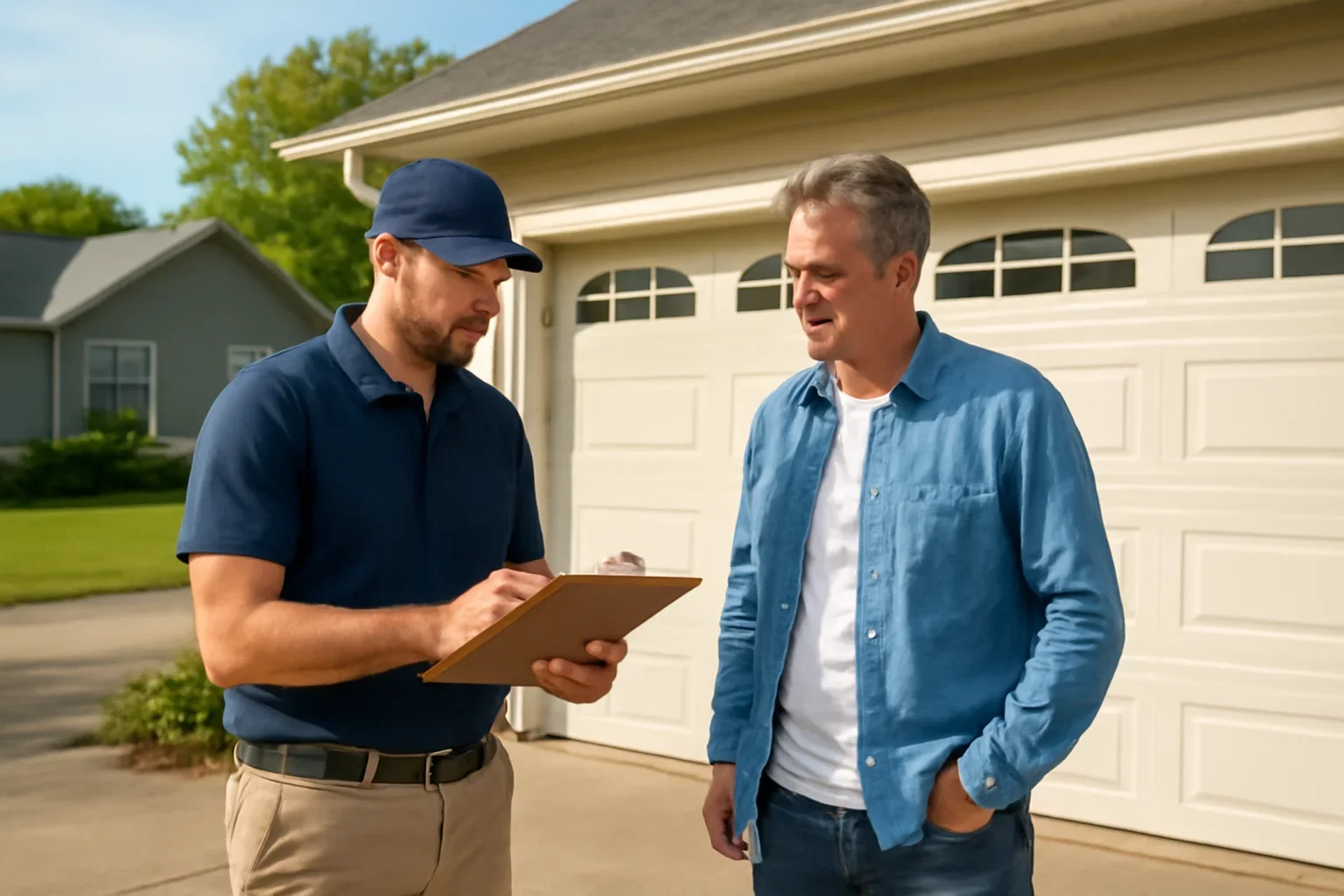
A stuck-open door can affect security and weather protection and may involve sensors, tracks, springs, cables or the opener.
Explain what is blocked and whether the door is heavy, crooked, off track or responding to the opener.
Leave the door unused when a spring or cable has failed, a roller is off track or the door hangs unevenly.
The strongest priority usually involves an unsafe door, an unsecured opening, trapped access or damage that may become worse if the system is operated again.
Sensor, track, spring, cable, opener-travel or obstruction problems can leave the opening exposed. Avoid improvised restraints that interfere with the moving system.
Review closing problemsA broken spring, failed cable, opener fault, jammed roller or off-track door can prevent safe opening and trap a vehicle or essential equipment.
Review opening problemsA tilted door can place uneven force on cables, rollers, tracks, hinges and panels. Leave it in position rather than trying to straighten or lift it.
Review off-track repairA loud snap, visible spring gap, loose cable or unexpectedly heavy door should be treated as a high-tension repair rather than a homeowner adjustment.
Review spring repairState whether the door is open, closed, partly open or crooked; whether a vehicle or essential equipment is blocked; and whether the property can currently be secured. Include safe photos when possible.
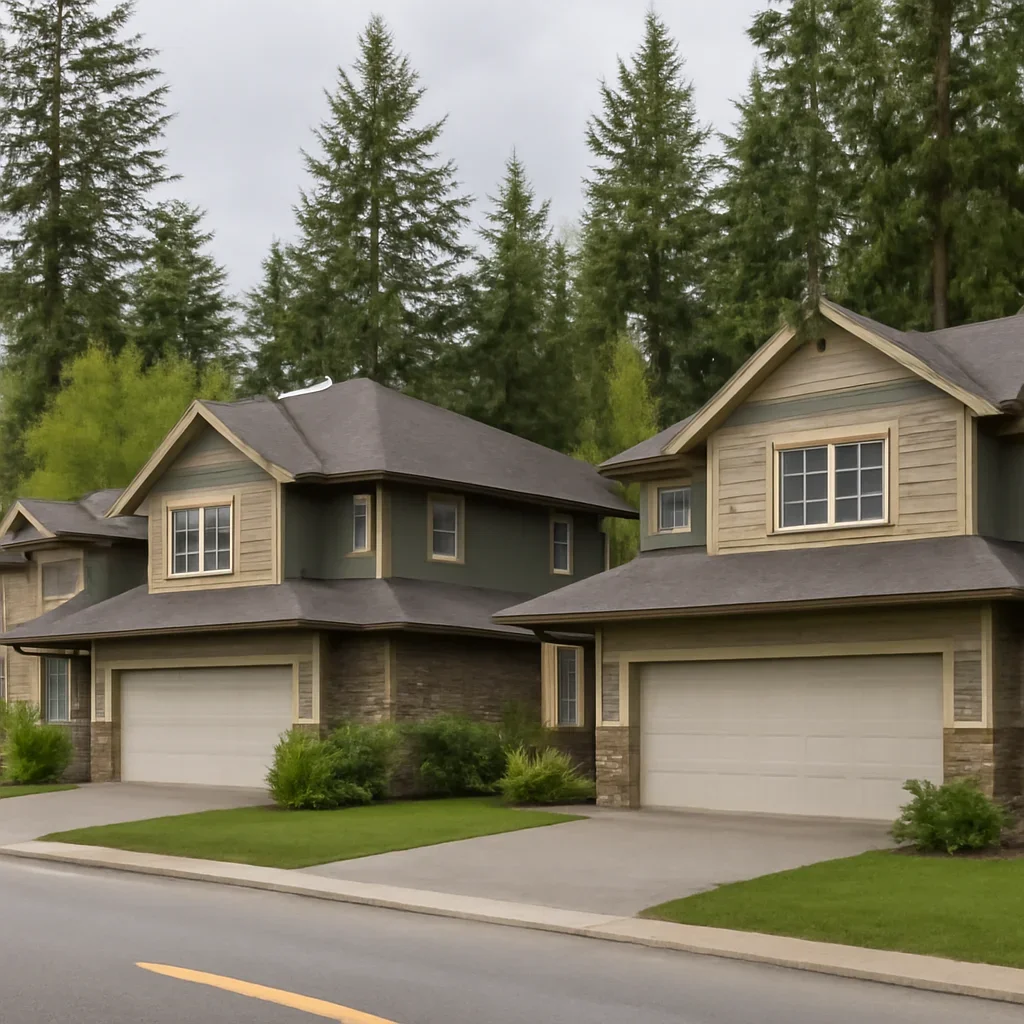
Glen Valley service requests may involve acreage homes, farms, detached garages, workshops, storage buildings and larger door openings. The failed door may be some distance from the main residence or behind a gate.
Driveway length and condition, weather, road access, daylight, parked equipment and the location of the affected building can all influence same-day scheduling and arrival planning. Sharing these details at the start makes the priority review more useful.
Provide the full service address, nearest access point, gate instructions, which building contains the door, driveway conditions and whether someone will be available to provide safe access.
An urgent request does not make it safe to force the system. The area should be kept clear until the door can be assessed and stabilized.
Continued cycling can add strain when a spring, cable, roller, track, hinge, panel or opener component has failed.
Cables, drums, springs and bottom fixtures can remain under significant tension even when the door is not moving.
A roller outside the track may be connected to a bent track, loose bracket, failed cable, impact damage or an unstable door.
A door without correct spring or cable support can be difficult to control and may shift without warning.
Do not stand under a hanging or partly open door. If there is smoke, a burning smell, exposed electrical damage or another immediate hazard, stop operating the opener and keep clear of the affected area.
The first goal is to understand the safety and access problem. Repair timing and scope can then be reviewed against location, door condition and available parts.
Confirm the door position, blocked access, security concern, visible damage, recent sounds or impact, opener behaviour and property location.
Scheduling is reviewed against technician availability, travel conditions, the Glen Valley address, driveway or gate access and the likely service type.
The visit may lead to a complete repair, safe stabilization, restored basic access or a planned follow-up when a specialized part or wider repair is needed.
“The door stopped working” can describe several different failures. The symptom helps direct the request while the actual repair is confirmed through inspection.
Relevant after a loud snap, visible spring gap, very heavy door or movement of only a few inches.
Review spring repairRelevant for loose, frayed, snapped or off-drum cables and a door that hangs lower on one side.
Review cable repairRelevant when a roller has left the track, a section is crooked, the track is bent or the opening is visibly unstable.
Review off-track repairRelevant when the motor, rail, trolley, drive system, sensors or controls prevent normal access or closing.
Review opener repairRelevant when the door will not close, reverses unexpectedly or the sensor lights show abnormal behaviour.
Review sensor repairRelevant when a vehicle or equipment impact bends a section and affects hinges, rollers, tracks, sealing or full-door alignment.
Review panel replacementRelevant when the door is stuck, noisy, shaking or unreliable and the failed component cannot be identified from the initial symptoms.
Review garage door repairReview the sitewide same-day service page for general availability, safety, timing and repair-scope information.
Review same-day servicePriority scheduling and same-day completion are separate questions. A visit may be possible while a lasting repair still depends on safe access, diagnosis and suitable parts.
Earlier requests may provide more scheduling options. Later requests can be limited by existing appointments, travel time and safe access conditions.
Road conditions, weather, gate access, driveway length and the distance to a detached building can affect arrival planning.
Standard components may be easier to source than custom panels, unusual springs, special tracks or older opener parts.
An unstable, heavily damaged or impacted door may require careful stabilization before a complete repair can be attempted.
In some situations, the responsible first outcome is to stabilize the door, secure the opening or restore limited access while a specialized part or broader repair is planned.
Completion may be possible when the failure is clear, the surrounding system remains serviceable, the door can be worked on safely and suitable parts are available.
A temporary safety outcome may be more realistic when the door is heavily damaged, a custom component is required or the opening must be secured before the complete repair can be planned.
The final scope is based on the actual failure, connected damage, door configuration, safe access and the approved repair outcome—not only the fact that the request is urgent.
Spring, cable, track, roller, sensor, opener or panel problems use different parts, labour and diagnostic steps.
Larger, insulated, windowed, custom or workshop doors may require different hardware and handling.
One failure or impact may affect panels, hinges, tracks, drums, cables, rollers, springs or the opener.
Stabilization, a complete repair, limited access restoration or replacement planning can result in different service scopes.
Review the repair cost factors for planning, but do not delay a priority request when the door is unstable, the property is unsecured or essential access is blocked.
You do not need to diagnose the failed part. Clear information about safety, access, door position and property conditions is more useful than guessing.
State whether the door is open, closed, partly open, crooked or off track and whether a person, vehicle, pet or essential equipment is blocked.
Mention a loud snap, impact, loose cable, visible spring gap, bent track, damaged panel, sensor lights, unusual smell or opener behaviour.
Provide the full Glen Valley address, gate instructions, driveway condition, affected building, available workspace, contact details and preferred timing.
Useful images include the full door, both tracks, the opener and visible damage. Do not stand under an unstable door or touch a loose cable, spring, roller or damaged track to take a closer photo.
These answers explain when to request priority service, what affects timing and what to do while the door is waiting for assessment.
Request priority service when the door cannot close, the opening cannot be secured, a vehicle or essential equipment is trapped, the door is crooked or off track, a spring or cable has failed, or continued use may worsen damage.
No. Timing depends on the time of the request, existing appointments, travel and access conditions, door safety, repair complexity and whether suitable parts are available. Availability should be confirmed after review.
Keep people, pets and vehicles away from unstable hardware, avoid repeatedly using the opener and do not pull cables or adjust springs. Protect the area only when this can be done without standing under or forcing the door.
A door with failed spring support may be extremely heavy and difficult to control. Do not try to lift it alone or disconnect the opener while the door is in an unstable position.
It may be possible when the fault is identified, the door can be worked on safely and compatible parts are available. Custom parts, extensive damage or instability may require stabilization and a planned follow-up.
Include that detail prominently in the request. Do not force a heavy, crooked or off-track door. The spring, cables, opener, rollers and tracks may need review before the door can be moved safely.
It can. Driveway length and condition, gates, weather, road access, the distance to a detached building and available workspace may affect arrival and service planning.
The first visit may focus on stabilizing the door, securing the opening or restoring limited access while the correct custom or specialized component is sourced. The practical next step should be explained before approval.
Scope depends on the failed component, connected damage, door condition, required parts, access and whether repair, stabilization or replacement is recommended. The work should be confirmed before approval.
Share the Glen Valley address, gate and building instructions, current door position, blocked access, security concern, recent sounds or impact, visible damage, opener behaviour, safe photos and preferred timing.
Include the exact address, door position, safety or security concern, anything blocked, visible damage, recent sounds or impact, opener behaviour, access instructions, safe photos and preferred timing.